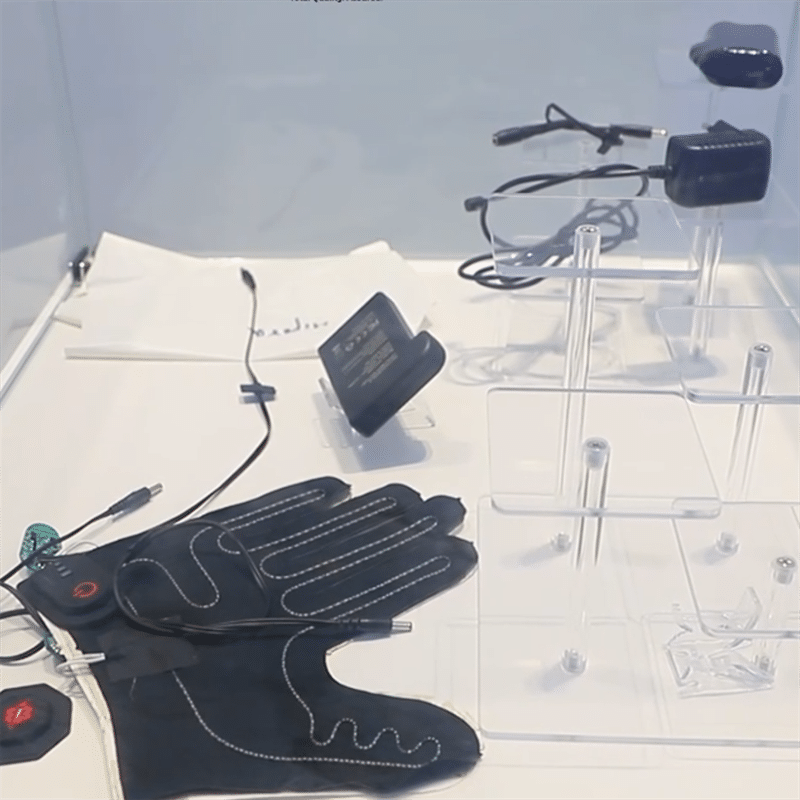

Hot garments are not always better with either 7.4V or 12 V batteries; the best choice depends on the application, heating system design and the expectation of the end-user. Most brands tend to think that the high voltage will translate to high warmth and in practice, it usually results in tradeoffs of battery size, safety, and general wearability. The decision to use 7.4V or 12V batteries in heated clothing does not involve choosing additional power but choosing the voltage that is the best fit with the heating system, the garment design, power requirements, and safety measures. Battery voltage in heated clothing must be selected on the basis of system compatibility as well as wearability, rather than possible maximum output.
The guide is based on the experience in the production of the heated apparel when the choice of the voltage affects product viability directly. We will divide the technical differences, trade-offs and decision factors to make OEMs, product managers, and engineers make this choice successfully.
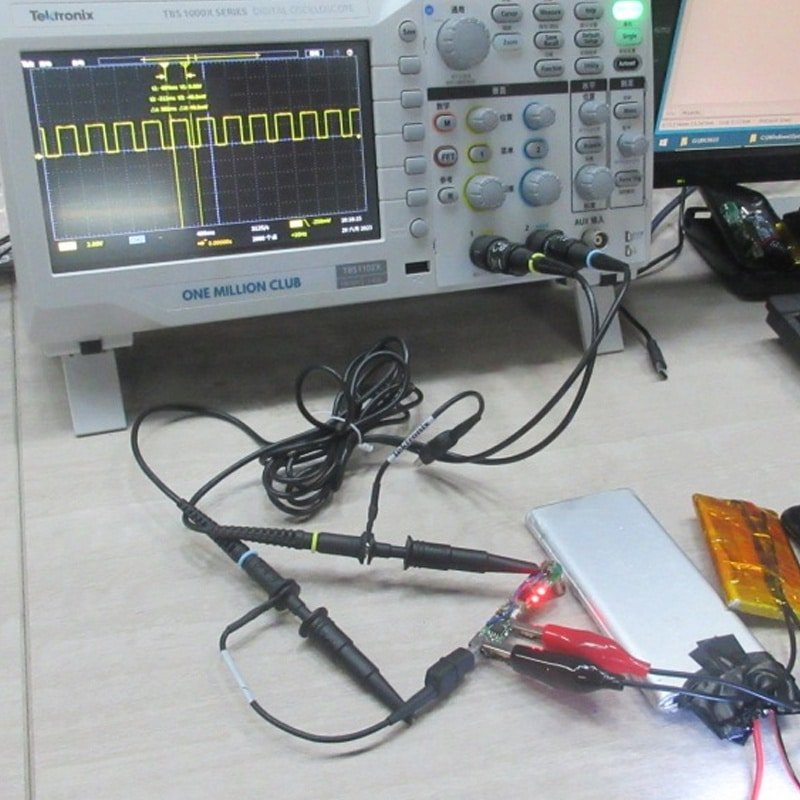
Understanding Voltage in Heated Clothing Systems
One of the key engineering choices a designer makes when developing heated apparel is the choice of voltage; it controls the entire power delivery system, ranging to heating elements to consumer safety. Voltage is used in a temperature-regulating apparel environment to determine the conversion of electrical energy to heat by using resistive components such as carbon fiber films or wires. Heated clothing systems have to compromise between heat production and factors such as flexibility of the garment, battery inclusion, and thermal control, unlike consumer electronics, where increased voltage may only increase charging rate or power consumption.
The correlation between the voltage (V), current (I), and resistance (R) is defined in the Ohm Law: Power (P) = V 2 / R or P = I 2 * R. In the case of heated clothing, this implies that a low voltage system will require more current to generate the same amount of heat as a higher voltage system, and less current, however, will need more robust insulation and protection. Heated clothing is not a gadget since it is placed on the body- considerations such as even distribution of heat, safety of skin contacts and battery hiddenness are more important than rudimentary power considerations.
| Parameter | 7.4V System | 12V System |
| Typical use | Gloves, socks, light jackets | Jackets, vests, workwear |
| Heating response | Balanced and stable | Faster heat-up |
| Battery size | Compact | Larger |
| System complexity | Lower | Higher |
The following table brings out major differences to the eye, but it is important to remember, they are just generalizations; the real performance of the system will be determined by the entire system design.
Voltage’s Role in Power Efficiency
The heating efficiency of a garment is not only a question of watts, but rather is a factor of the interaction of voltage and the resistance of the heating element. Indicatively, 7.4V may work well with lower-resistance components to provide constant warmness, but 12V may overload the same system, potentially creating hotspots or shortening the life.
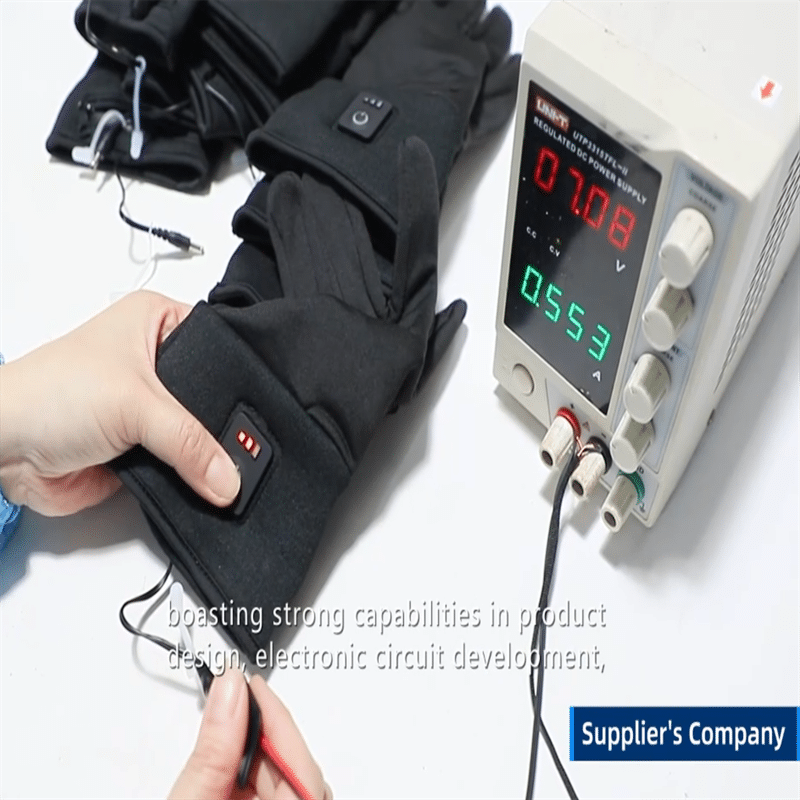
Why Not Treat It Like Electronics?
Voltage is commonly standardized in smart phones or laptops. However, hot clothing needs to be matched: incompatible voltage may cause ineffective heating, power consumption or even thermal danger such as overheating.
7.4V Batteries — Balanced Performance for Wearable Comfort
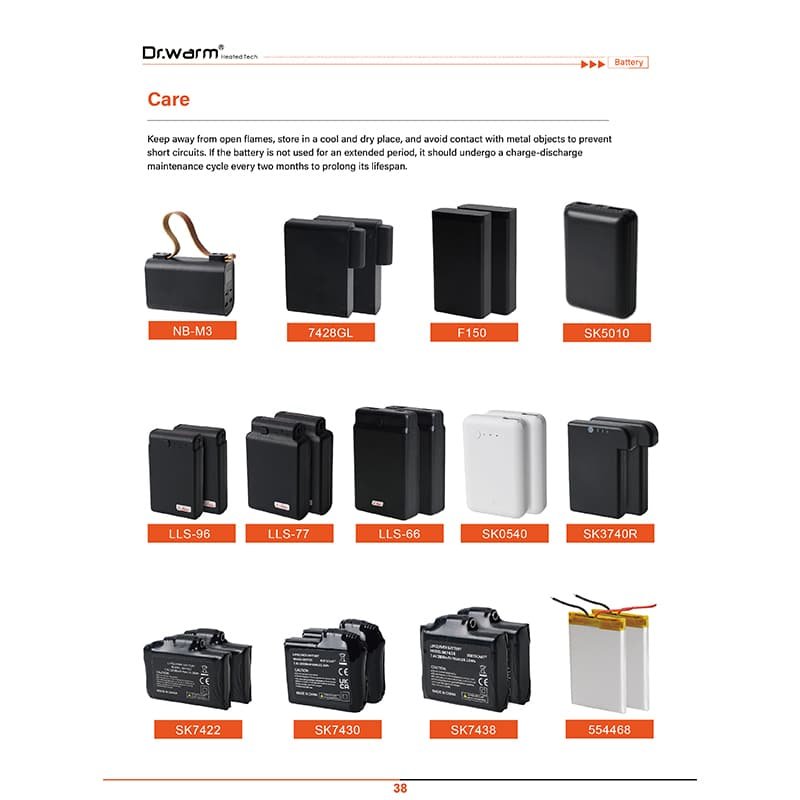
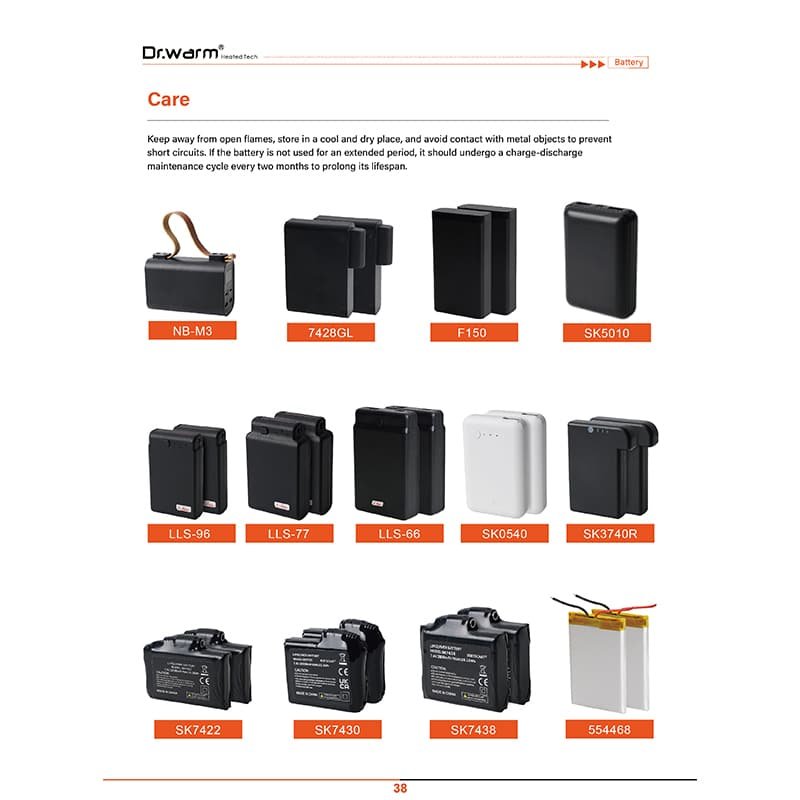
7.4V batteries are a time-tested power source that is known to perform well in many heated apparel designs without unneeded bulk and complexity. This is the voltage that can be attained, with 2 Lithium-ion cells in series (nominal 3.7V each), to become the standard wearable used in the industry since it can be used with a lightweight heating system.
Compatibility with Heating Elements
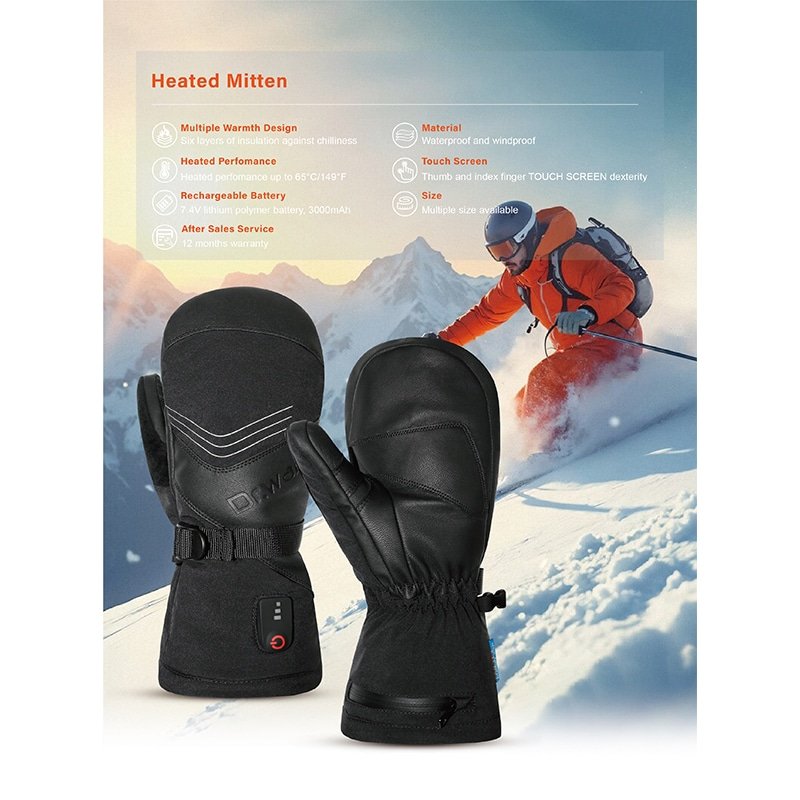
The 7.4V systems are compatible with carbon fiber heating films and flexible wires, both of which are prevalent in clothes. These elements have resistances optimized to lower voltages giving even heat distribution without high current. In the case of heated gloves, area is relatively small so 7.4V can be used so that battery packs can be slim and fit in cuffs without disturbing dexterity.
Advantages in Ergonomics and Weight
Batteries with high power (often 7.4V) are compact (less than 100g) and wearable. In insoles and hot socks, what this translates to are the users being able to walk or stand hours on them without feeling add weight. The medium settings are usually 4-8 hours of runtime, which is enough to cover daily commuting or outdoor activities. Another advantage is safety: when the voltage is lower, the chances of electrical arcing or skin irritation are less, thus the topic of certification such as CE or UL gets easier.
Application-Specific Insights
In the case of lightweight jackets, 7.4V will be used with a balanced warmth distribution in all body parts without the need to have large power sources. It is commonly used by engineers in consumer grade products where comfort is important more than maximum heat output. With our experience with OEMs, we have found that 7.4 V heated jacket battery batteries are the right balance between over-overwhelming power and under-whelming power of higher voltages.
12V Batteries — Higher Output for Demanding Applications
Batteries have been designed in 12V that is applicable in situations where continuous or high hot environment is needed, however it needs close system integration to overcome the limitations. Systems with 12V, consisting of three lithium-ion cells in series, provide more potential energy, faster ramp-up times and larger heating spaces.
Justification for Higher Voltage
Multi-zone heated jackets are electrically powered (12 V) to distribute the power in the back of the jackets, the chest and sleeves with minimal spiking current. In the case of industrial heated work clothing, like vests in cold warehouses, the additional voltage is useful to allow long use in heavy loads. Heated clothing in motorcycle, also has advantages, and wind chill requires a high output, quickly warmed gear.
Trade-Offs in Design and Integration
Nevertheless, 12V battery packs are larger and heavier by nature and may need reinforced pockets or harnesses which may stiffer a garment. Battery management systems (BMS) are to be more advanced in terms of more voltages, such as over-voltage protection and thermal cutoffs. This makes the systems more complex and expensive, and in any flexible clothing, it may compromise the total comfort of movement.
Runtime and Practical Considerations
The expected 3-6 hours of running time will also depend on the settings, yet it can go higher when combined with large-capacity cells. In the case of 12V batteries in the heated workwear, it is more about durability, rather than about portability, thus fitting in stationary or mobile requirements.
Performance vs Wearability — Why Voltage Affects Comfort
Voltage options in heated clothes go beyond electrical requirements, and directly affect the comfort of users and the usability of the product. Increased voltage has the potential to support increased power at the cost of wearability because battery size and heat dissipation become very important.
| Factor | 7.4V | 12V |
| Battery thickness | Thinner | Thicker |
| Wear comfort | Higher | Moderate |
| Suitable for long-term wear | Yes | Design-dependent |
Impact on Battery Size and Placement
The 7.4V system can be used with narrower profiles, which suits flawlessly in terms of insertion into gloves or socks. Conversely, 12V packs may be protruding resulting in pressure points when worn over a long period. Placement: both require lower back positioning in the jackets, however the bulk of 12V can redistribute the weight balance which causes fatigue.
Overlooked Comfort Factors
I recommend that engineers take into account thermal inertia which is the rate at which heat accumulates and dissipates. 7.4V systems will provide gradual warmth thereby minimizing the accumulation of sweat whereas battery solutions for heated apparel 12 V systems will be more responsive at a beginning. When it is necessary to use battery solutions to power heated clothing, the wearability is frequently prioritized, thus leaning towards all-day power, which is 7.4 V.
Fatigue and User Experience
The practice of long-term wear tests shows that 12V indirectly influences the ergonomics: heavy units of 12V may cause discomfort to the shoulders of persons wearing the vest, but 7.4V preserves the natural motion.
Safety, Control, and System Stability Considerations
Increased battery volts in hot garments increase the possible hazards and thus, sophisticated controls are required to maintain systems steady and secure to users. Fundamentally, safety engages the avoidance of thermal runaway, electrical defect, and irregular heating.
Voltage and Risk Amplification
The 12 V systems have higher energy and the stakes are higher regarding faults such as short circuits. That is why, battery technology of heated clothing focuses on powerful BMS with such functions as over-current shutdowns and cell balancing battery technology for heated apparel .
Importance of Matching Components
Voltage should be equal to the resistance of the heating elements to prevent inefficiencies, higher, and you are likely to have hotspots; lower, and heating is slow. To be stable, add thermal sensors to check the temperatures of the skin, and more so in body-contact regions.
Certification Challenges
Smaller voltage such as 7.4V makes it easier to meet standard requirements such as RoHS / FCC because it has fewer electromagnetic interference problems. Conversely, 12V requires additional tests of insulation integrity.
How OEMs Should Choose Between 7.4V and 12V Batteries
The choice of battery voltage should not be based on a whimsical choice, but the systematic analysis of the needs of the product. This checklist allows evaluating fit without any bias to one system.
Decision Checklist
- Product Type: Adjust product to apparel type–compact devices prefer 7.4V.
- User Behavior: When used continuously, the heating power requirement is 12 V; when used intermittently, the heating power requirement is skewed towards 7.4 V efficiency.
- Garment Structure: Flexible designs have the benefit of lighter 7.4V packs.
- Certification and Markets: 7.4V easier to globalize.
| Product Type | Recommended Voltage | Engineering Reason |
| Heated gloves | 7.4V | Compact, safe, lightweight |
| Heated jackets | 7.4V or 12V | Depends on zones and design |
| Industrial workwear | 12V | Higher sustained output |
To make battery voltage choices in heated clothing battery, also make battery choice in heated clothing to match your voltage choice battery capacity for heated clothing.
Integrating with Heating Systems
Ensure voltage aligns with element specs—consult resources on match your heating system with the right battery pack for optimal results.
Common Misconceptions About Battery Voltage in Heated Clothing
The misconceptions regarding battery voltages usually appear as a result of simplification of electrical concepts, which result in inefficient designs of heated clothing. Among the common myths is that more voltage will provide a better warm, the truth is that more voltage may result in an uneven heating unless equalised to the resistance of the system.
Voltage and Warmth Myths
Increased voltage does not necessarily imply increased heat, again it is the power equation that matters and mismatches is a waste of energy.
Runtime Assumptions
Another fallacy: voltage determines the run time. In fact, capacity (mAh) and efficiency are more important, a well-designed 7.4V system can be lasted longer than a 12V one designed poorly.
Universal Voltage Fallacy
There is no standard voltage that fits everything, as gloves require a small size and workwear requires energy battery safety for heated apparel . Avoid these pitfalls by addressing the issue of battery safety in heated apparel early.
Conclusion — The Right Voltage Is a Design Decision, Not a Spec Choice
Battery voltage is one of the central engineering parameters used in heated clothing that should be incorporated into the system and user requirements with no inconveniences. With compatibility as a priority, OEMs can reduce risks, increase wearability, and provide the reliable performance. Brands that tend to view some of the voltage as a holistic design factor such as considering the safety, comfort, and application details eventually attain higher results when developing their products and their market success.