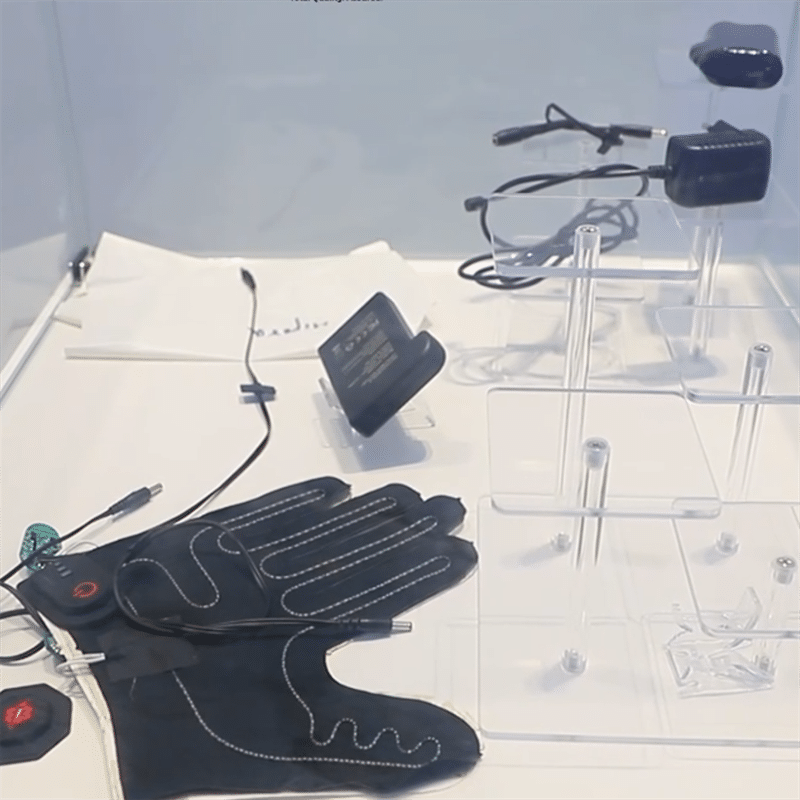

The correct battery capacity to use in a heated garment has to do with the trade-off between effective run time, comfort during wear and efficiency of the system, rather than trying to achieve the highest possible mAh at any price.
In warm apparel design, battery capacity is important as it dictates the duration of heating, but not its severity, which is dependent on factors and power distribution. Greater capacities lead to heavier bulkier batteries, and this affects wearability of products such as gloves, jackets and socks. The bigger is better assumption in regards to user experience is often wrong in wearables as bigger sizes tend to make the product less comfortable because of the additional weight and imbalance.
In hot clothes, the appropriate battery capacity provides sufficient run time without compromising comfort, safety, or style. Based on the experience of more than 10-years working with OEMs to design heated systems, incompatible selections have resulted in user complaints and redesigns. To product managers or engineers, the trick is achieving the mastery of these trade-offs in order to guarantee real-world performance.
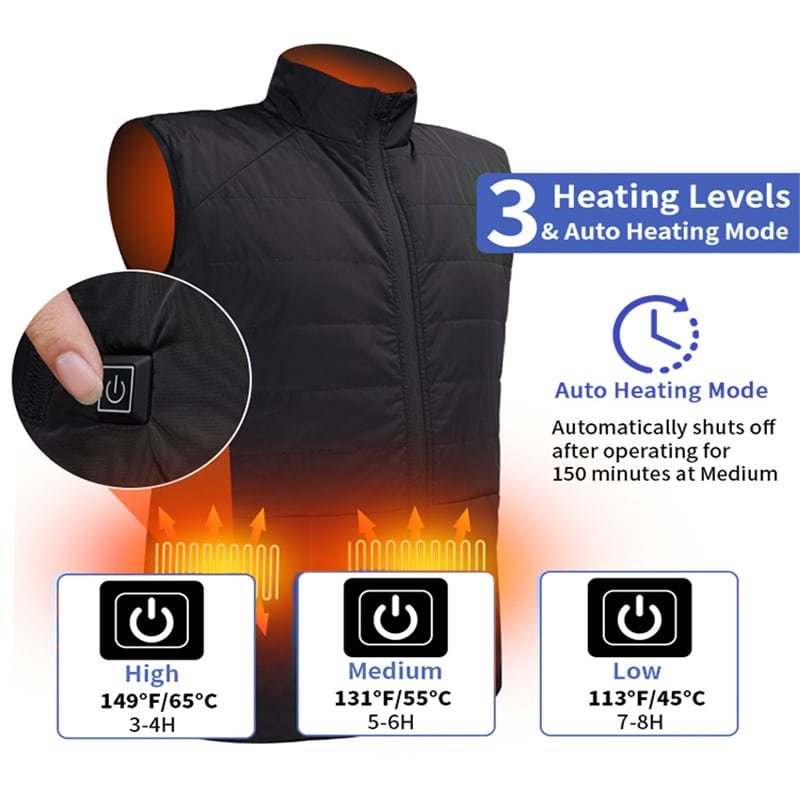
What Battery Capacity Really Means in Heated Apparel
The capacity of batteries in heated clothing is not merely an amount of money, but rather the basis of the integration of power with the requirements of the user.
In essence, the capacity of a battery is defined as milliamp-hours (mAh) or watt-hours (Wh), though without context these two cannot be used interchangeably, and mAh provides information about the current that a battery can deliver at a given voltage and Wh provides information about the voltage to give a real understanding of the energy in a battery Wh = mAh x voltage / 1000. Practically, this implies that capacity and voltage need to be considered together a 3000mAh battery at 3.7V gets approximately 11Wh, whereas the same mAh at 7.4V gets 22Wh, and this may not necessarily result in a proportional increase in size.
Heated clothing is not the same as conventional electronics in that the heating components will consume more power depending on the temperature sensors and other variables. The power of heated gloves or jackets, unlike a phone, is spikey (when hitting a zone) and hence raw capacity may not be predictive without accounting efficiency. This is why batteries with the same mAh may be used to provide dissimilar runtimes: one of them can be combined with low-voltage heating wires that are efficient, and the other one may be combined with high-resistance elements that waste energy as heat loss.
Sourcing the batteries, as an OEM, a good rule to follow is to always find the effective capacity under load. Our systems have been designed such that neglecting the voltage meant the prototypes underperformed–we learned this lesson when we were making designs of gloves where small 3.7V packs performed better than large 7.4V packs in dexterity-sensitive applications.
Why “Bigger Capacity” Is Not Always Better
In hot apparel design, a larger battery size may provide more issues than it will resolve unless wear dynamics is taken into account.
The bigger batteries are bound to introduce weight and bulk which, in the case of wearables such as heated socks or gloves, can move the center of gravity and make them uncomfortable when worn over time. As an example, adding 5000mAh of pack to a glove may significantly add an hour to run time, but the increase in weight makes fine motor work, such as tool gripping, feel bulky, and causes fatigue in the user.
A heavy pocket-mounted pack also impacts garment balance; in jackets, the pack is heavy and would impact the garment out of position, limiting movement in an outdoors work or sport situation. We have also experienced the brands that pursue high mAh only to be returned with the state of being bulky, more so when the design is slim enough to suit a woman or an athlete.
This is the most important tradeoff: the larger the capacity, the longer the heat it may have, although as long as the product negatively affects usability, users will not wear it. Herein in the system level design, battery solutions of apparel battery solutions for heated apparel to be heated are essential; balancing capacity with location and materials to be worn naturally.
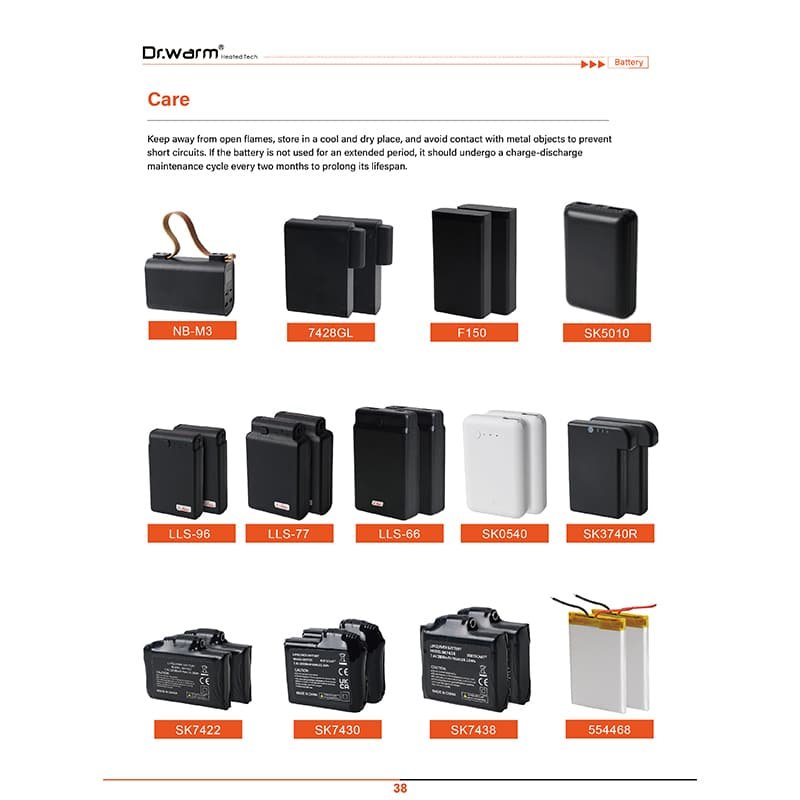
Battery Capacity Requirements by Product Type
Jackets, gloves and socks require custom battery capacity since the heating requirement, insulation and the application are highly diversified.
The connection between heating area size and power consumption is inherent, smaller parts such as in gloves will not need as much energy, and multi-zone jackets need more power which is why the capacity increases are necessary, so that they do not need to charge their batteries so often.
Key Differences in Capacity Needs
Only dexterity is taken into account with gloves, so the batteries should be small to fit in the cuffs without interference with the grip. Socks should have slender profiles to fit boots with reduced attention on feet-specific heating. Jackets are loosely fitting yet they require a long-run to cover the whole body.
| Product Type | Typical Capacity Range | Design Priority |
| Heated gloves | 2000–3000mAh | Lightweight, dexterity |
| Heated socks | 2000–3500mAh | Slim profile, comfort |
| Heated jackets | 5000–10000mAh | Runtime, multi-zone heating |
To fit heated gloves in a battery, think low to middle range to ensure the weight is under 2 ounces per glove, which is necessary when using the gloves on the road (tactical) or motorcycle. The capacity of the battery used in heated jackets tends to increase with a bigger heating area, but the size of the battery must be less than 10000mAh or the shells will be bulky. The size battery of heated socks ought to consider insulation; finer wool blends are thinner so that smaller packs can be used when worn all day.
In ODM projects we have scaled capacities depending on these- we do not make gloves larger than 2500mAh in case of the flexibility and jackets up to 7000mAh in case of 4-6 hour medium-heat operations.
Runtime Expectations vs Real-World Usage
Laboratory run time claims do not always reflect real life applications in warm clothing, where the environmental conditions and users preferences determine the conditions in the field.
This is due to controlled tests and field conditions: in labs, there is constant medium heat in mild cold, whereas users are cranking high in sub-zero temperatures and reducing effective time by half. This is more affected by heating level than raw capacity a 3000mAh battery might have 3 hours of low power but only 1.5 hours on high since power has doubled.
Battery Life vs runtime heated clothes The relationship between battery capacity and runtime is nonlinear under the influence of wind, humidity and layering. In reviews of engineering prototypes, we test-stress in the outdoors, and find a well-looking pack to fail miserably in the wet.
For deeper insights into real-world battery runtime, look to the real-world usage patterns of users, such as the intermittent usage, which may increase the effective battery life by more than the specifications.
How Capacity Interacts with Battery Technology and Safety
An increase in battery capacity increases the safety issue in heated clothing and requires strong management, lest thermal problems emerge.
The interactions between the capacity and discharge rate and the amount of heat accumulated are key: the bigger packs are capable of maintaining high draws but produce higher amounts of heat, which can cause degradation or failure without an adequate cooling mechanism. In wearables, this implies the incorporation of sophisticated BMS (Battery Management Systems) to check the voltages, current, and temperature which is critical in avoiding over-discharge during cold weather where lithium cells become hard.
On the design side we have been faced with situations where we have exceeded the capacity without safety margin, and found ourselves not to pass the certification. Battery technology considerations become extremely significant in this case since the polymer cells are flexible but less dense in energy as compared to the cylindrical cells which affects the overall system safety.
When managing battery safety in heated clothing, it is always important to consider how capacity affects load spikes as oversizing with no corresponding protection can be taken to violate the UL requirement.
Capacity Selection Checklist for OEMs and Brands
Heated apparel battery capacity should be chosen with the help of a systematic checklist to present specification with a reasonable limit.
This is not about fixed rules but trade-offs in runtime, placement and safety, to prevent the revisions at the cost of expensive changes.
| Decision Factor | Key Question |
| Runtime target | How many hours at medium heat? |
| Wear comfort | Where is the battery placed? |
| Heating zones | Single or multi-zone? |
| Safety margin | Is BMS designed for this load? |
Begin with runtime: to select battery size to use in heated clothing, a 2-4 hour medium runtime is recommended in gloves/socks, 4-8 in jackets, and voltage efficiency must be calculated. Battery is placed to influence comfort- cuff mounted gloves, which have to be less than 50g to avoid any strain on the wrist.
Multi-zone systems attract more, thus, scale to that, but never be less than 20 per cent larger than real world variances. This checklist has simplified the decision process in OEM consultations, with products having certification without being over-engineered.
Common Capacity Selection Mistakes in Heated Apparel
Among the commonest traps in the design of heated apparel is prioritizing the highest capacity with no justification by wearing tests.
The frequent mistakes made by designers are that, user behavior patterns are not taken into account in the design, most wearers cycle the heat, and therefore, the packs are oversized, which unnecessarily adds weight. This is complicated by considering all the heated apparel products as one; gloves simply do not have the ability to manage the capacities of a jacket without losing dexterity.
Another error is overlooking overall heating system design, the overall design of the heating system whereby incompatible components waste capacity by being inefficient. Through experience in product development, these errors are revealed in beta testing which compels redesigning that delays launches.
Conclusion — Capacity Should Serve the Wearer, Not the Spec Sheet
When selecting battery capacity in heated apparel, one must consider how the product is worn and used and not what numerical specifications the battery can hold. This implies that realistic operation should be prioritized, and it should be in, or complementary to the everyday tasks, and the setup should improve comfort and not impede it. Safety cannot be compromised because overcapacity may come with a risk when not handled with care. Eventually, a compromise between the battery as something that provides warmth but is still not a burden is the desired outcome: something that OEMs can be guided towards in cold conditions, where the battery is accepted by people.