
Battery safety is not a feature in hot clothes because it is more of a system requirement than a feature (it is essential to sell, wear, and scale the product, etc. safely).
Smart clothes are not a typical battery-powered product, which is used intermittently, yet instead requires constant power around the body due to cold weather conditions- increasing risks such as overheating or shutdown.
The certification of cells is a fallacy that many brands use to ensure that their products are safe. However, the real battery safety in case of powered apparel presupposes the targeted system design, where batteries, heating components, and controllers are synchronized.
Why Heated Apparel Batteries Face Unique Safety Risks
The safety issues facing heated apparel batteries are quite different than those of a typical consumer electronic product, mainly because they are used in a different context.
Continuous Heating Load Versus Intermittent Use
In most common devices such as earbuds or fitness trackers, batteries provide power in brief discharges, which enables cooling down and taking a rest. Heated garments, however, require a consistent current to keep heating components at constant temperatures- usually 40-60 o C where people would be comfortable. This delayed release may cause a slow accumulation of heat in the battery pack which may result in a risk of thermal runaway unless adequately addressed.
Proximity to the Human Body
Heated apparel batteries are also used directly against the skin or embedded within clothing layers unlike remote or handheld devices. This proximity implies that any failure, e.g., swelling or leakage, may lead to direct injuries, e.g., burns or chemical exposure. Engineers should hence emphasize on designs that reduce such risks with flexible, light weight packs with tough enclosures.
Environmental Stress from Cold and Moisture
Battery performance is affected by cold weather which is the main application of heated clothing. Cold conditions reduce the speed of ion movement in lithium cells which increase the internal resistance and demand even fewer voltages to sustain output straining the system. Another layer that may cause short circuits is the incoming moisture as a result of sweat, rain or snow. The conceptualization of such as contextual risks points to the necessity of closed, robust designs that are adjusted to the actual conditions of the world.
Overheating Risks and Their Root Causes
Excessive heat on batteries used in heated garments is frequently due to a mixture of factors which, when ignored, may lead to catastrophic malfunctions.
How Overheating Occurs in Heated Systems
Overheating in hot clothing It occurs in hot clothes when the battery provides power to resistive heating components, producing unnecessary heat which is not cooled effectively. An example would be that when the system pulls more current than expected such as when a user adjusts the heating system higher, the internal temperature in the battery is likely to climb quickly to unsafe temperatures over 60-70C.
Electrical Contributors to Overheating
One of the electrical root cause is high discharge rates. Hot clothes are commonly powered by Lithium-ion batteries that use C-rates (discharge/capacity) of 1C or more, as compared to 0.5C in most wearables. This is further worsened by overcurrent due to faulty wiring or glitches of the controller that drives cells to instability.
Thermal and Mechanical Factors
This is worsened by poor heat dissipation; the batteries would be inserted in insulating material that retains warmness, and this would lead to hotspots. Mechanically, the vibration caused by movement or hitting may cause damage to internal structures, which results in micro-shorts that cause local heat. The knowledge of these failure modes, like the development of dendrite in overcharged cells assists in the development of preventative mechanisms without laying blame on the particular component.
The Role of BMS in Heated Apparel Safety
The main protective measure in the field of heated apparel is a Battery Management System (BMS), which continuously monitors and regulates the parameters in order to prevent dangers.
Core Functions of BMS in Heated Clothing
The BMS is no passive chip, as in the hot systems is a active controller that coordinates cell voltages, controls the charging/discharging, and interferes with anomalies. As an example, it can disable power when the temperatures become excessively high which will stop thermal runaway.
Key Protections Provided by BMS
Overcurrent and Overvoltage Safeguards
The overcurrent protection activates when the load is high which is usually in the situation such as long heating effects at low temperatures by ensuring that current is restricted to safe values. Overvoltage prevents overcharging which may lead to the degradation of cells or gassing.
Undervoltage and Overtemperature Controls
Under voltage detection prevents charging to the point that the cells become permanently damaged. Overtemperature devices are frequent in the form of NTC thermistors, which close upon a predetermined temperature when used on heating circuits, which are specifically adjusted to the heating load when cold ambient conditions are opposed by internal heat.
Tuning BMS for Heating-Specific Loads
Off-the-shelf battery standard BMS settings might not be adequate; settings need to be adjusted to the constant loads of heated clothing. This will be a reliable one without undue interruptions. Considering battery solutions used to power warm clothing, battery solutions for heated apparel, integrating a robust BMS is essential for system-level safety.
Safety Is a System Problem, Not a Battery Problem
This is not the case, and battery safety in heated clothes cannot be taken separately to the power source, as it is the result of the collaboration of all elements in the ecosystem.
Interactions Between Battery, Heating Element, and Controller
The battery ought to match the resistance of the heating component and logic of the controller. Mismatch- a big capacity battery with inefficient wiring may result in the uneven distribution of power and overheating in a localized area.
Risks from Mismatched Components
Mechanical integration is important as well; a battery pack can be very rigid and therefore stress fracture in a flexible garment may occur. These problems are identified early through coordinated testing such as simulation of a cycle at cold conditions.
Importance of System-Level Testing
Verification End to end testing, prototype to Production: Compatibility. This is a holistic stance that reflects actual manufacturing realities whereby isolated testing tends to overlook emergent risks. To gain more understanding, see the design of the heating system as a whole in order to maximize such interactions overall heating system design to optimize these interactions.
Certification Standards and What They Actually Cover
Certifications of the heated apparel batteries present a level of compliance but must be used with caution when applied in the system.
Purpose of Key Standards
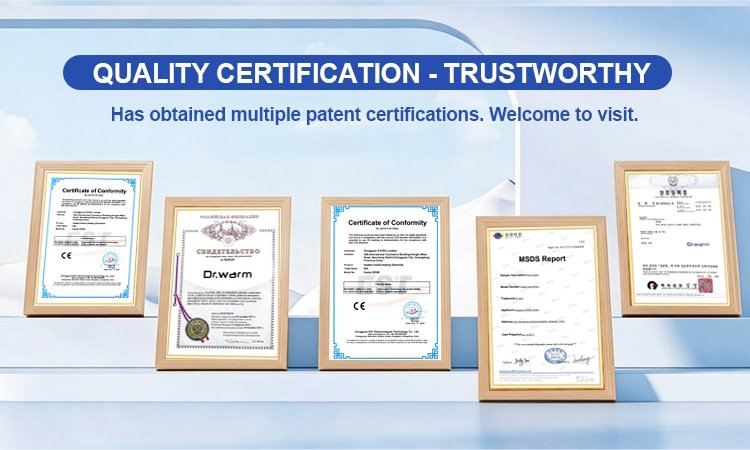
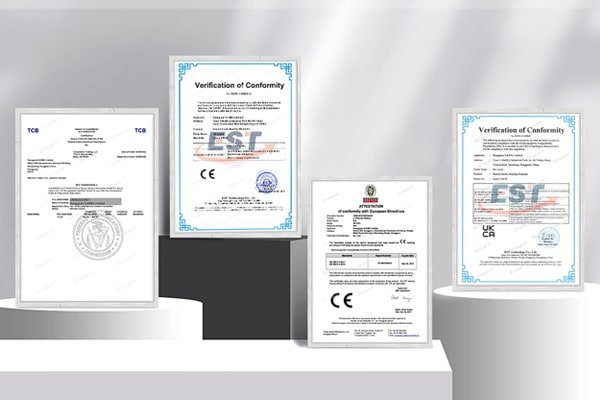
CE marking signifies the compliance to the EU safety requirements, including electromagnetic compatibility and low voltages. RoHS limits the harmful chemicals such as lead in batteries. FCC deals with radio frequency interference by wireless controllers while UL deals with fire and electrical safety by subjecting the product to rigorous testing.
Component vs. System Compliance
One of the pitfalls is that cell-level certification applies to the entire product. UL 1642 covers individual lithium cells, but heated apparel needs system-level validation at the battery-pack level, where the whole assembly passes abuse tests.
Limitations of Certifications
These standards contain risks through the imposition of minimum criteria but remain without getting rid of them completely- real life variables such as user abuse can also be dangerous. Certifications should be seen as an entry point to the markets by the brands. To be more precise, turn to certifications of heated apparel batteries certifications for heated apparel batteries be able to maneuver in these requirements.
How Safety Design Affects Long-Term Reliability
Good safety design of the heated garments does not only reduce the failures that may occur immediately, but also increases the product longevity.
Safety Margins and Product Lifespan
The inclusion of conservative thresholds in BMS e.g. reduced maximum discharge rates provides buffers that enhance cycle life beyond 500 charges before much capacity is lost.
Impact of Performance Tuning on Battery Life
Higher heat output can be accelerated by aggressive environments, which, as a result, reduces the lifespan of the device due to repeated thermal cycling over a few seasons. Balanced tuning puts more emphasis on sustainability.
Observed Field Failure Patterns
In weakly insulated systems, the usual problems are swelling due to overcharge or capacity degradation due to undervoltage, seen in the field return of cold weather operation. These should be tackled by designing in an enhanced reliability. In order to alleviate these issues, review long-term battery reliability strategies.
Common Safety Misconceptions in Heated Apparel Design
Some assumptions made in the design of heated apparel do not consider the specificities of the safety of lithium batteries in wearable heating systems, which creates preventable risk.
Misconception: Certified Batteries Are Automatically Safe
Although certifications confirm the elements, they do not consider system integration. An example of CE-certified cell failing is when it is used with incompatible heating loads, and the holistic validation is necessary.
Misconception: Lower Voltage Systems Don’t Need Protection
BMS is needed even with 3.7V systems; low voltage does not get rid of the overcurrent or thermal hazards, particularly when used continuously.
Misconception: BMS Solves All Safety Problems
BMS cannot be used alone as sufficient, it has to be accompanied by appropriate mechanical design and environmental sealing. The reason that these myths fail is that they do not consider the multifacetedness of the safety design of heated clothing. To put into wider perspective, look at battery technology considerations as a way of affecting performance and risk battery technology considerations.
Conclusion — Battery Safety Is Engineered, Tested, and Maintained
Battery safety in heated apparel comes as a result of a rigorous engineering process that considers protective means, rigorous validation and continuous compliance checks. Designers can develop systems that meet the real-world requirements by mitigating the risks associated with overheating of heated clothes by providing tuned BMS protection to batteries used to power straightjackets and heated clothing and following the certification of heated apparel batteries. This is a prevention-based approach instead of reaction-oriented, so that products would not be obsolete in controlled markets, which is in tune with the realities of production and consumption. Safety is not an attribute or a one-time situation but rather a sustained effect of proper planning.