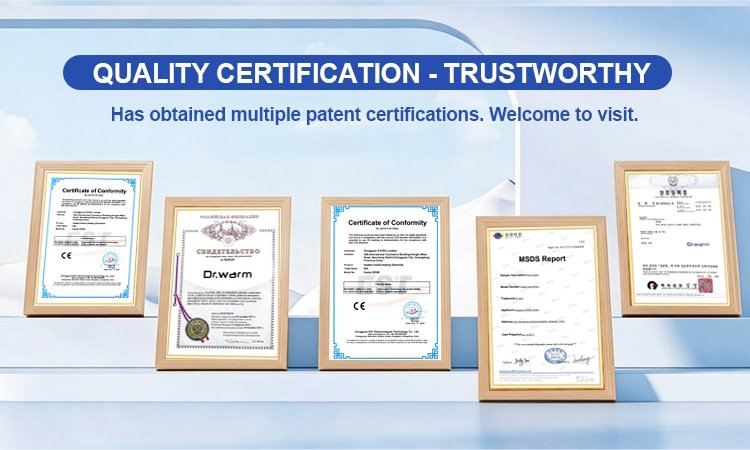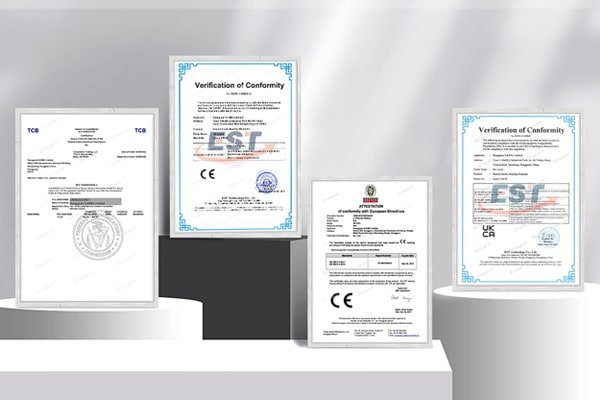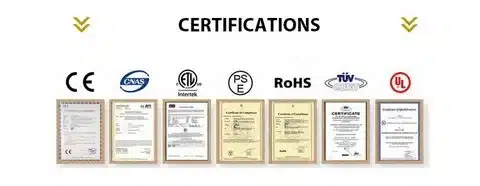

Labeling of certifications of heated apparel batteries are not interchangeable, but regulatory instruments that have well-defined scope and limitations. When designing and producing an apparel that is heated, certification depends on the design of the target market, overall scope of the product, and integrated system design. These requirements vary among the components: a battery cell may comply with one of the criteria, and electronics, heating elements, and finalized garment require a different evaluation. The first myth that emerges in this regard is that many brands believe that by getting a certified battery, they would have the whole product in the line of heated apparel being compliant. This is not normally the case since the compliance may have to be evaluated at the assembly level.
Certifications in hot apparel minimize regulatory risk by appropriately applied components and systems. Any errors in this field will result in shipment holds, product recall, or market audit failure especially when it comes to the exporting of products to the EU or the US. To OEMs and brands that are focused on regulated markets, these distinctions are important to note so as to work through compliance without undue delays.
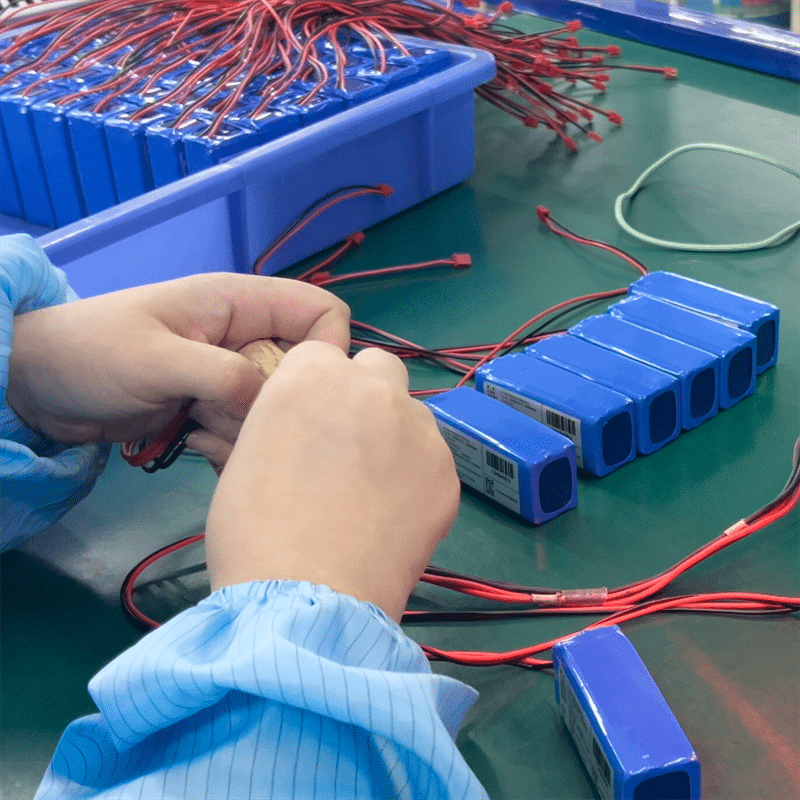
Why Heated Apparel Batteries Face Regulatory Scrutiny
The regulatory oversight of heated apparel batteries is extreme due to the fact that they are considered as safety critical components in wearable electronics. These batteries may be lithium-ion or lithium-polymer, and directly heat against the body, which poses a risk of thermal rampage, electrical shorting, or chemical leakage. These hazards are highly considered by regulators because of the wearable characteristics of the products unlike standalone products, the thermal clothing entails the extended contacts of the skin, locomotions induced stress, and unpredictable environments all of which increase the possible failures.
The regulation is due to historical events of battery fires in consumer electronics and as a result, frameworks have emerged to respond to the risk of fire, electrical and chemical. An example of this is the regulation of overheating, electromagnetic interference, and exposure to hazardous materials by the authorities in the EU and the US. This does not merely limit itself to the battery, but the interaction of the battery with controllers, wiring, and fabrics, so that the entire system is not a cause of excessively high risks. Even minor design oversights are prone to cause compliance failures in the process of import inspection or post-market surveillance without proper alignment.
Key Regulatory Drivers
- Safety-Critical Classification: The reason why batteries in heated apparel are categorized as a high-risk product is because of their energy density and closeness to the user.
- Wearable-Specific Risks: Daily use loads and flexing, as well as daily use moisture and impact, increase the risk of robust testing.
- Global Hazard Focus: This focuses on fire prevention (e.g., due to overcharge), shock (e.g. caused by faulty insulation), and leak (e.g. due to damaged cells) prevention.
CE Marking — What It Covers and What It Doesn’t
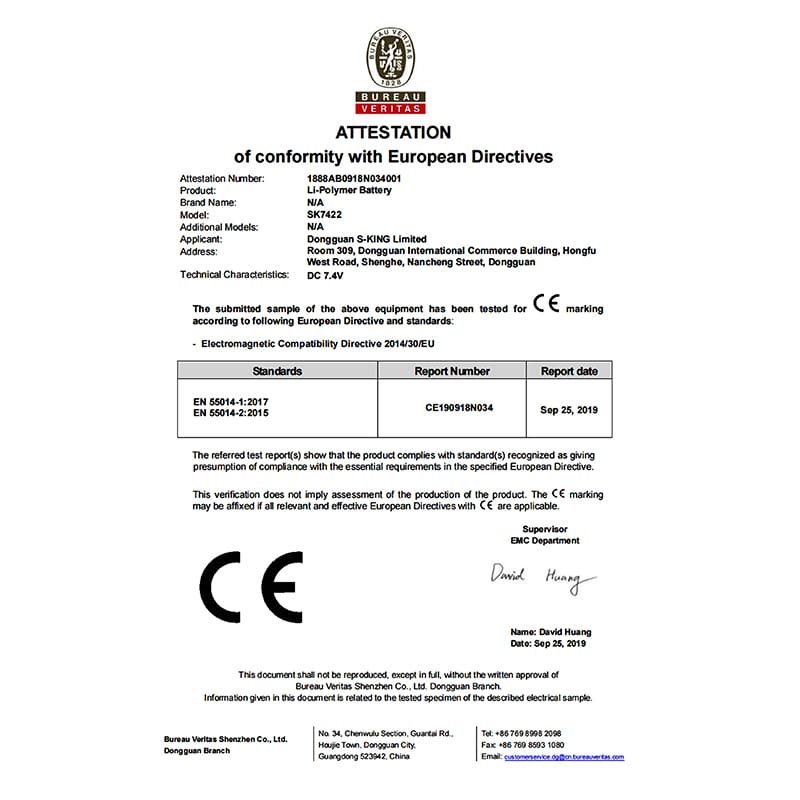
CE marking is a self-proclaimed declaration of conformity with the EU directives, and not a third party certification, as well as a full safety guarantee on the part of a manufacturer. In the case of heated apparel batteries, CE is implemented mainly by the directive such as Low Voltage Directive (LVD) of electrical safety below 75V DC, Electromagnetic Compatibility (EMC) Directive of interference control, and, possibly, Radio Equipment Directive (RED) in case wireless components such as Bluetooth controllers are used. This involves making a technical file containing risk assessment, test report and declaration, which in some cases may need a notified body to complete the higher risk module.
Nonetheless, CE excludes hazards affecting the environment, such as substance restrictions which is under RoHS or transport safety which is under UN 38.3. Importantly, CE marking has to be applied on the completed product, but not on individual parts. A cell battery could help towards compliance, yet the entire system of the heated apparel, with wiring and controls, must be reviewed. Brands seeking compliance-ready battery solutions for heated apparel to their heated apparel easily overlook this, and often, redesigns are required.
Scope of CE Directives
Low Voltage Directive (LVD)
Concentrates on electrical hazards, and tests are necessary to insulate, overcurrent and fault.
Electromagnetic Compatibility (EMC)
Makes sure that the device does not radiate or give in to too much interference, which is tested through radiated and conducted emissions.
Limitations
CE is an EU market access tool and not a standard globally and it is not under continuous surveillance unless indicated.
RoHS — Material Restrictions and Environmental Compliance
RoHS compliance is essentially a congestion of the usage of hazardous materials in electrical and electronic devices, yet it does not cover the electrical safety and performance. The directive (2011/65/EU) capped ten substances, such as lead, mercury, cadmium, and hexavalent chromium, to their thresholds such as 0.1% by weight in homogeneous substances. In the case of heated apparel batteries, it implies that cells, casings and solder are to be screened charged with these limited materials, with a possible exemption of some alloys or batteries that are under consideration.
This is relevant to the difference between battery material compliance and system-level RoHS: a RoHS-compliant cell does not necessarily render the whole garment to be compliant when the connectors or PCBs contain restricted substances. The most widespread misconceptions are the belief that RoHS labeling presupposes environmental friendliness or even safety of the material: it is only about the material restrictions that will decrease the environmental impact of the material during its disposal. Practically, the compliance of RoHS to heated clothing entails supplier declarations and periodic testing of products, particularly the EU markets where failure to comply may lead to banning of products.
Restricted Substances Overview
- Lead (Pb): Maximum of 0.1 and may occur in solders.
- Cadmium (Cd): Limited to 0.01 percent, usually as a pigment or stabilizer.
- Mercury (Hg): Prohibited in the majority of the uses because of being toxic.
Common Pitfalls
There exist instances when brands accept verbal guarantees by the suppliers disregarding the fact that conformity tests which would trace materials to the origin must be done.
FCC — When Heated Apparel Batteries Fall Under EMC Rules
FCC requirements on the batteries in heated apparel are applied selectively, that is, when the system contains components that have the potential to generate radio frequency interference, but otherwise batteries do not normally prompt certification. Indirect processes Unintentional radiators are required to comply with 47 CFR Part 15 under the unintentional radiators rule. In case the heated clothing includes wireless modules to control the app or remotely operate the device, it can be deemed as intentional radiator that will have to undergo more rigorous testing.
The first distinction: unintentional radiators (e.g. basic DC circuits) are verified or declared by the supplier of conformity (SDoC), whereas intentional ones must be completely certified. They are normally exempt with pure battery packs unless combined with radiating components.. This is why system-level power and control design must be evaluated early—a single microcontroller can push the system into the FCC, and it requires to be tested with regard to its emissions, to not interfere with other devices.
Applicability Thresholds
Unintentional Radiators
Conducted and radiated emissions (at frequencies below 30 MHz) are tested.
Intentional Radiators
Add ID grants to such frequencies as 2.4 GHz in Bluetooth-based heaters.
Exemptions
Batteries in their standalone form do not require any electronics and therefore do not come under FCC but this is changed once they are integrated.
UL and Safety Testing — What Buyers Often Expect
Although optional in most countries, UL certification is a powerful tool as a measure of safety, although not a legal requirement everywhere. Components (e.g. UL 1642 of lithium cells, which concentrates on crush, impact and thermal abuse tests) are recognized by Underwriters Laboratories (UL) and end products (e.g. UL 2054 of battery packs, which includes overcharge and short-circuit protection tests). Retailers such as Amazon usually require UL test reports to reduce liability particularly in the case of heated clothes batteries that are likely to cause fire.
The difference between recognition (component level) and listing (system level) is essential: a UL-recognized cell does not mean an apparel product that is listed. Battery safety validation practices, including endurance and fault simulation, help bridge this gap, but buyers must verify applicability—although buyers need to ensure that these are applicable, which in the US and Canada is UL but in the EU it is IEC 62133, and so on.
UL Standards Breakdown
UL 1642: Cell-Level
Beefs lithium-ion cells against mechanical and thermal loads.
UL 2054: Pack-Level
Evaluates bundled batteries to be used in homes and businesses.
Market Expectations
Even without legal mandates, some insurers or distributors also demand UL in order to mitigate the risk of recall.
Component Certification vs Finished Product Compliance
Battery certifications Component certifications in batteries offer a base, however, battery certifications do not replace finished product compliance in heated apparel. Certified cells (e.g., under UL 1642) provide minimum safety at the material level, but the contact with controllers, heating elements and fabrics introduces new variables such as voltage discrepancies or heat concentration. Testing should also include the assembled system to ensure that there is general integrity, which is usually revealed when the system is tested as a whole and not when the tests are conducted individually.
Battery system engineering considerations are paramount here—in that compatibility design eliminates compliance gaps, where a certified battery overheats because of inadequate thermal management in the garment. This stratified strategy explains the significance of OEMs audits: the regulators do not examine the parts, but the product itself that is sold.
Integration Challenges
- Interaction of Voltage and Current: Compatibility of components can cancel the certifications.
- Environmental Factors: The use of Wearable requires further drop and flex tests.
Common Certification Misconceptions in Heated Apparel
The common stereotypes associated with certifications often hinder compliance activities within the heated apparel industry, the first being that a battery with a CE certification guarantees a CE-compliant product. This disregards system level instructions, in which integration may create non-conformity. In like manner, a comparison between RoHS and electrical safety misses the point that RoHS is a material issue and not a shock or fire issue. One more mistake: assuming that UL is legally obligatory on the global level, when it is frequently done in the market, but not on the statute.
Such assumptions increase the risk of custom rejection or lawsuits, as they are based on the simplification of the scopes of regulation. To interpret the standards appropriately, it is necessary to trace standards to their intents without marketing hype to inflate the value of certification.
Top Misconceptions
“CE on Battery = Product Compliance”
Forgives LVD/EMC to assemblies.
“RoHS Means Safe”
Mistakes material limitations with hazard prevention.
“UL Everywhere”
Ignores local differences, such as IEC in Europe.
How OEMs Should Approach Certification Planning
The OEMs need to approach certification planning in this way.
To ensure that the regulatory risks are controlled, OEMs have to have market-specific certification planning in the very beginning. Start with mapping target areas EU requires CE and RoHS, US needs FCC and UL, make compliance part of prototyping, not an extra. This is done through supplier early audits, technical files assembly and testing repeated to match components with system requirements.
There should be no compromise on documentation management: keep records of tests, declarations and revisions that can be traced. Fluctuate this as a risk mitigation process, where the OEM battery pack development process anticipates integration challenges, reducing delays from failed audits or redesigns.
Planning Steps
- Market Mapping: Find region guidelines.
- Design Integration: Implement compliance in CAD and prototyping.
- Preparations to Auditing inspections: Be ready to be inspected.
Conclusion — Certifications Define Market Access, Not Product Quality
Certifications are regulatory points of entry in heated apparel, where legal entry is possible, but there is no inherent guarantee of high performance or longevity. Their advantage is in scoped hazard control CE to EU conformity, RoHS to materials, FCC to emissions, UL to safety, but going beyond the limits brings traps to compliance. The success of brands and OEMs is attained by using them as risk management devices at the exact component and system levels, but not as general approvals. Finally, although the certifications are helpful to gain access, the actual integrity of the product is not a simple task that only requires engineering up to the regulatory minimum.