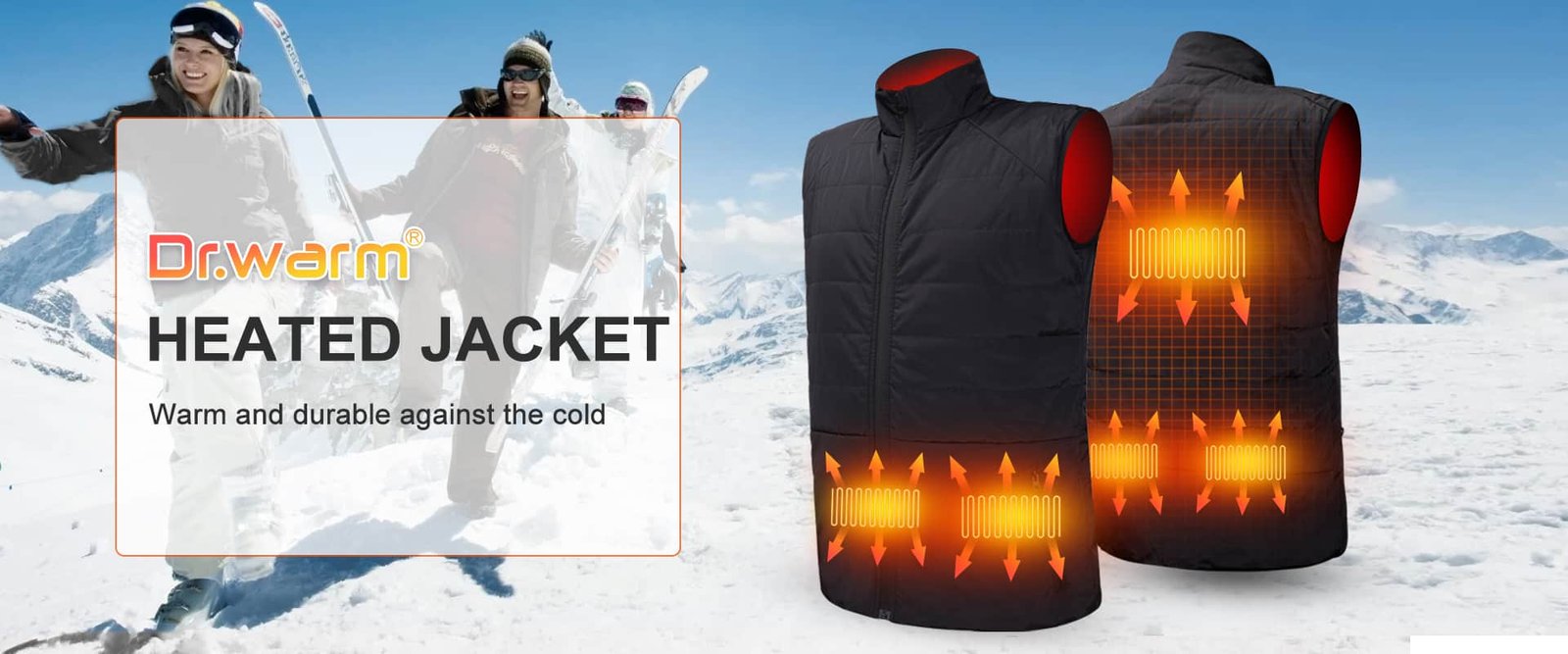

Battery technology in heated clothing is going to be shaped by system integration and safety limitations rather than the headline battery enhancements in the future.
Electric vehicles (EVs) and consumer electronics are full of many thrilling battery progressions that promise radical enhancements in the energy density, charging capability and charge life. But heated clothes are never run in the same set of rules. Such wear heating devices require such lightweight, flexible, non-contact with body-safe batteries, and ability to stay discharged in extreme cold conditions, which eliminate much intersectional high-profile innovations.
There is a general misunderstanding that any battery chemistry breakthrough in the laboratory may transfer directly to heated garments. In practice, wearable heating systems have much more restrictive requirements on form factor, thermal performance, and safety to users. The developments in batteries in the future will only be valuable to the heated clothing when it is in line with the wearable standards of safety, comfort, and the system reliability.
Being a senior engineer on battery integration in products that are heated, I have observed how the hype numbs reality. Progress in the real sense will be on subcutaneous, system level improvements which will not cross these limits.
Why Heated Apparel Has Unique Battery Technology Constraints
The requirements of the apparel batteries are quite different, when compared with the majority of other applications.
Heated clothes have power requirements that are unlike smartphones or laptops in which power incomes are intermittent (and the high discharge currents are discontinuous). Heated clothing typically has power-needs that are consistent, continuous, and high-discharge currents–typically 2-5 or higher–to provide the clothing with consistent levels of heat throughout all heating circuits. This continuous load puts cells through strains that consumer electronics hardly ever does.
It is further complicated by the direct bodily contact. Burns or discomfort occur due to any heat that escapes or excessive heat generated, and thus, the safety margins cannot be compromised. Batteries need to work in low temperatures where the performance of lithium-ions is automatic, and be lightweight (under 300g per pack) and small enough to be inconspicuous when in wearable clothes and in pockets.
Space and weight are further inhibiting selections. A big or heavy battery nullifies the use of comfort of wearing, particularly in gloves, socks, or base layers. Such boundary conditions imply that future technologies will be tested not only in laboratory specifications, but in wearable integration, i.e. capacity, discharge rate, cold-weather performance, and most importantly, safety.
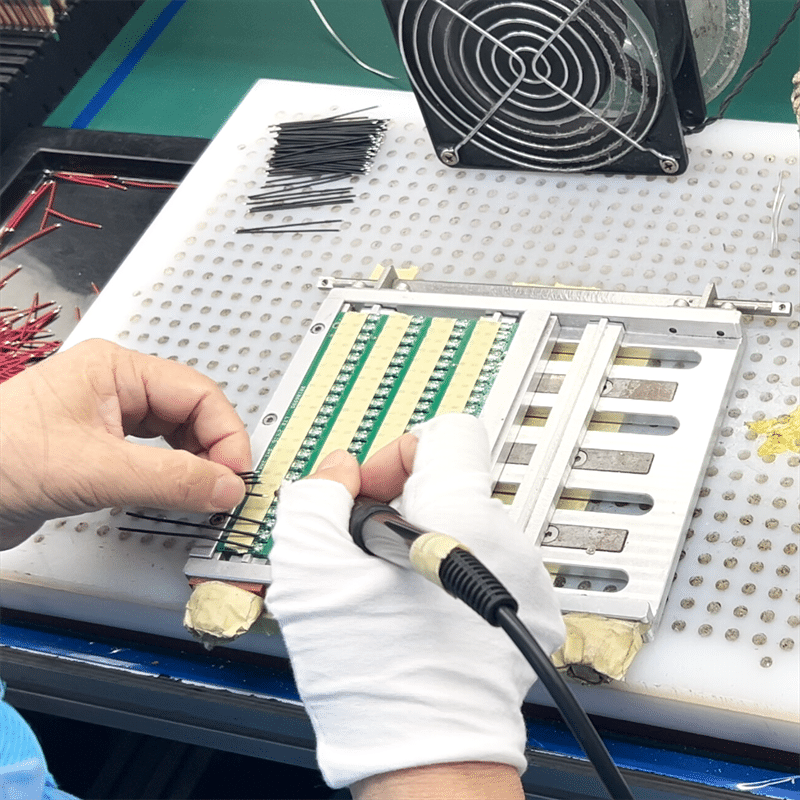
Graphene and Advanced Materials — Promise vs Practicality
Theoretical improvements of graphene-enhanced batteries provide the benefits that rap on wearables on paper: increase conductivity, enhancement fast charging, heat dissipation, increase in energy density, and can possibly be flexible.
In real life, graphene is today more prevalent to enhance the design of lithium-ions designs, as a secondary part, e.g. as an electrode or a conductive additives, and not to allow fully plastics or pure grape-based batteries. These improvements can work to extend the cycle life and lessen internal resistance, which works to sustain heating performance.
But there is a significant challenge of scalability. High-quality and uniform graphene volumes, at industrial scales, are costly to produce and difficult to do on a technical basis, and between batches. The shortage of costs is influential in heated apparel because batteries should not be too expensive to be chosen by the masses.
Even due to these reasons, it is much more realistic to assume that partial material adoption is possible rather than a full replacement. Heat element Graphene coatings are showcasing upgraded heating components or minor electrode enhancements at the cutting edge of design, and this is already bringing some primary efficiency and longevity improvements with minimal effect on existing production.Brands interested in a long-term battery system roadmap for heated apparel should focus on these hybrid approaches rather than waiting for revolutionary full-graphene cells.
Fast Charging and Its Impact on Heated Apparel Design
Fast charging is obviously a great attraction to the users of the apparel that requires heating because they need as little time as possible between outdoor activities.
Reduced recharge times may be revolutionary on user experience including professional cold environment operators, or sportspeople on multi-day journeys, with the shortest recharge times being 3060 minutes on average. This is technically possible by means of advances in the lithium-ion chemistry and improvement of higher-current acceptance.
But rapid charging has severe thermal and safety issues. An increase in current will increase the amount of heat and this will also hasten degradation or cause protective shutdowns in cold environments. Below freezing charging may cause lithium plating on the anode, which permanently decreases capacity and increases risks of failure.
Another impediment is infrastructure compatibility. Standard USB-C or PD chargers are expected, yet only ultra-fast protocols can need specialized arguably inaccessible equipment. Based on these reasons, the moderate rates of fast charging (e.g., 23C) with powerful thermal management are more feasible than the extreme rates.
Designs that are current limiting and temperature monitoring are also part of the smart designs that should be given a priority by engineers. To be more specific with instructions, have a look at our implementation guide of the USB-C charging system into heated clothing B-C charging architecture in heated clothing.
Smart Control and Battery Intelligence
The most significant short-term development of heated apparel batteries is contributed by smarter control systems as opposed to the radical change of chemistry.
Modern Battery Management Systems (BMS) do not just exist to provide basic protection but can also allow the adaptive power management. They operate real time monitoring of cell temperature, voltage and patterns of discharge and regulate output to avoid hotspots while maximizing runtime.
The superior capabilities take into consideration a predictive battery-health algorithm which notifies the user of poor performance, and the option to use app-based controls to have individual heating profiles. This smartness ensures battery life and safety- a key factor in the proximity of the packs to the body.
With wearables becoming more involved with complex user experiences, BMS is likely to transform to become a full system brain, linking up heating zones with environmental sensors. This is a higher level of intelligence compared to the increase in marginal capacity. Explore more in our guide to intelligent power management in heated apparel.

Safety, Certification, and Regulatory Impact on Adoption
New battery technologies are characterised by high barriers to adoption since they must undergo stringent certification review on safety.
There is a lot of testing that has to be done in the agencies regarding new materials or chemistries to ensure the novelty of the materials or chemistries as well as the stability of the materials or chemistries in the long run of use as wearables. The implementation of untested components may postpone entry to the market by up to one and half year or longer.
Even potential improvements are risky, when they modify the failure modes, i.e. when their operation is more flammable or more susceptible to mechanical loads. The most orthodox lithium-ion structures with a track record ((in terms of UN 38.3 and proven cell chemistries)) are the only way to go.
Innovation versus compliance schedule- This is where brands have to balance innovation and compliance schedule. To enumerate these requirements,refer to our explanation of regulatory approval challenges for heated apparel batteries.
Manufacturing Readiness and Cost Reality
The majority of the developing battery technologies will be appearing slowly due to the fact that the production infrastructure can not allow an overnight change.
New materials will need new tooling, tested supply chains, and high initial yields due to which the costs and MOQs increase. In the case of heated apparel, where the quantities of production fluctuate between small-production custom batches to large-scale production orders, these realities turn towards familiar practices.
It is the nature of many of the so-called future features as being additions to components as opposed to total redesigns that allow costs to remain in check. Vertically integrated manufacturers production-ready battery development considerations when planning your next collection.
What the Future Likely Looks Like for Heated Apparel Batteries
The concerned trend of the hot clothing batteries is likely to have a direction of calculated, viable advancement.
Keep looking at the small steps to make materials better, like better separators, or conductive additives, or low-temperature optimized electrolytes, providing greater cold-weather performance and longevity with less significant risks involved.
Faster control systems and more refined BMS will be available earlier with adaptive heating, high effective run time and greater user feedback. High charging will take a long time, at safe levels with developed infrastructure.
rage chemistry Radical chemistry moves, such as solid-state or full-graphene, are still out in the future – probably 510 years to be cost-efficiently incorporated in wearables at scale. The discussion will continue to revolve around the optimization of the system which honours the safety, comfort, and manufacturability.
Conclusion — Innovation Must Serve Wearability and Safety
In warmed clothing, battery technology adoption in the future will not be influenced as much by the idolized technologies but by the degree to which the technologies can be incorporated into safe, wearable and reliable systems.
Brands can use concerns about engineering to overtake hype to create substantial roadmaps that can add value to the user. The only way to move is with mindful evolution- by improving what is already working and weighing how it will be true to the next stage thoroughly.