
When used in 1 heated clothing systems, the controller is not a single device, rather it is the logic or governing algorithm that determines how to allocate heat, power, and battery reaction at different conditions. The decisions made during the early development phase of the controller can often create a strict constraint on all aspects of the process including the safety of the user, and the flexibility of the product with all decisions that become somewhat difficult to undo in the future. Another common misunderstanding among teams would be looking at off-the-shelf controllers as a faster track towards a custom solution but that is a misinterpretation of the actual truth: they represent a vision of the wide usage at the cost of specific control. Selection of a controller in heated clothing is more a system-architecture rather than a sourcing shortcut.
Such a decision has a ripple effect on the product lifecycle. As an example, an off-the-shelf controller may be good enough in modest temperature conditions but fail miserably in extreme cold conditions when temperature variations of a narrow band are of utmost importance such as found in an outdoor worker in a heated jacket. A PCB with a custom design, in contrast, can permit the engineer to incorporate logic with respect to actual forces in the real world, like how often ambient temperature changes or inconsistent patterns of use. This has been the basis where projects have or have failed, depending on the wisdom of the advisor in who they were guiding through these waters as OEMs. What then follows is a sub-division of the major differences which are based on real world trade-offs and not ideals.
What Off-the-Shelf Heating Controllers Are Designed For
Hacking controllers Standalone heating controllers are more efficient in applications where control speed and ease are valued more than integration. All these units have been designed as generic use typically simple things like simple heated pad or low-end clothing where no one is concerned about customization. The product manufacturers of these controllers are concerned with universality, that is, developing a plug-and-play product that can be used on a broad range of products without the need to completely reconfigure the product. This implies encrypted code which processes standard accessions such as button presses to heat settings but is difficult to adapt to special garment designs or user habits.
Practically, this design will be appropriate to low-volume prototypes or markets that have limited regulatory challenges. So one such situation is a typical controller where the thresholds of an overheat are set to a standard value, with a standard size of a heating element and a standard type of battery. But this universality has its prisers: lack of flexibility to special purpose, such as special provision of the type and use of complicated sensors, moisture sensors in sports equipment outdoors. Teams who choose such usually have their reasons; they might want to speed up the time to market, yet they have to be content with the fact that the logic you have in the controller is not owned, but borrowed; it might be challenging to troubleshoot or upgrade in the future.
Typical Use Cases and Limitations
As an example, we will have a start up releasing a simple line of heated vests. A controller can be built off-the-shelf that is assembled with other off-the-rack components keeping costs low at first. However, as the product advances, such as by introducing app connectivity, it begins to choose the fixed firmware which becomes a hindrance or it results in workarounds to provide their complexities. It is not a weakness in the controllers; it is just a consequence of what they are: to offer a dependable background of non-specialized heating products, rather than the foundation of new, scalable systems.
What Custom PCBA Design Enables in Heated Clothing Systems
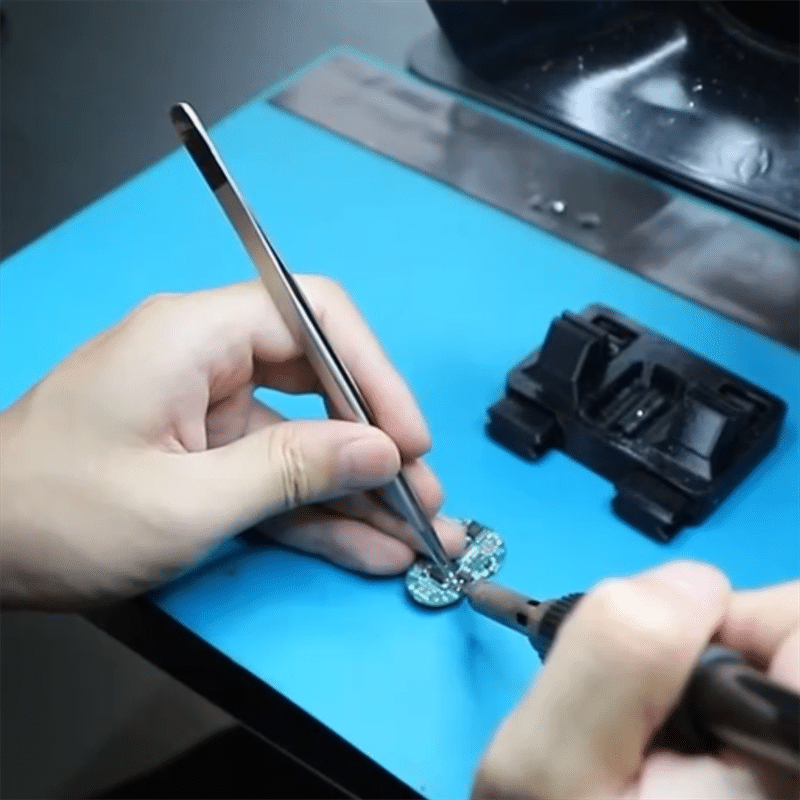
Custom PCBA design is the process of converting a collection of parts to a unified, optimized system of a collection of parts into a heating clothes product. In its essence this method enables OEMs to create a control board that must be naturally associated with the unique needs of the garment which would include the layout design of heating components on the garment or how user interfaces are incorporated. Since custom designs allow modification of power delivery algorithms whereas standardized options do not do so, they allow the fine-tuning of zone power delivery to minimize wastage in powerspeaks and evenly allocate heat to specific body zones such as sleeves or torso.
This degree of ownership yields in foreseeability. In the case of heated gloves being used construction (efforts to heat a human hand), a dedicated PCBA may include logic allowing it to vary temperature depending on grip pressure or environmental inputs, eliminating the possibility of unevenies that causes pain or poor resistance. This enhances safety since the engineers are able to provide multi-level safeguards according to the specifications of the batteries and elements as opposed to depending on generic settings. Simply put, bespoke PCBA system development of a heated clothing enables the team to have the entire control of the behavior of the system, and hence innovations to the system can be done easily, custom PCBA system design for heated clothing empowers teams to own the system’s behavior end-to-end, fostering innovations that off-the-shelf units simply can’t accommodate without significant hacks.
System-Level Ownership Benefits
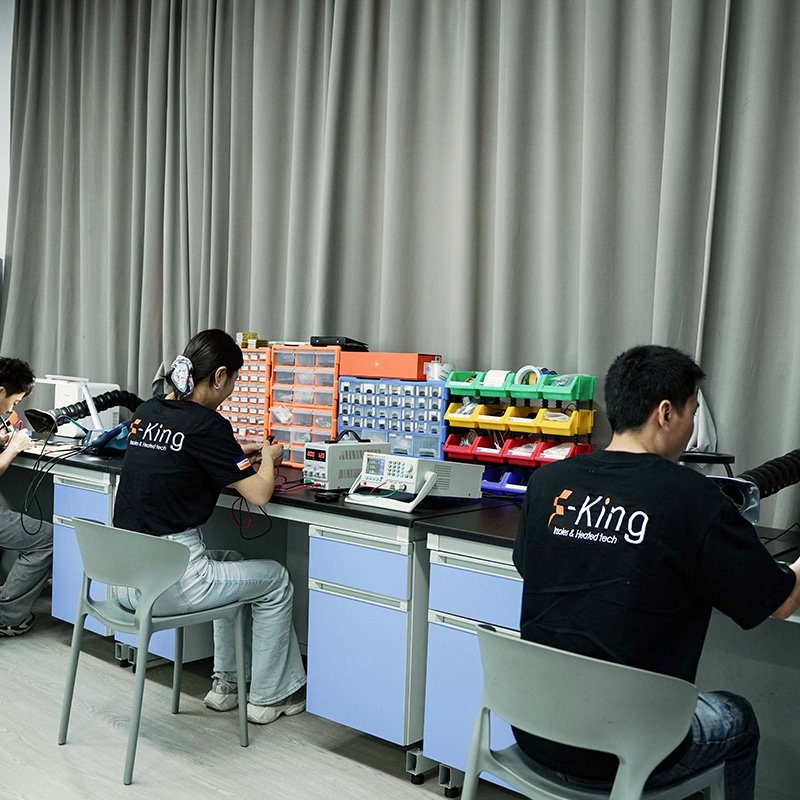
In my experience with hardware engineers, PCBA serves as the central nervous system, and the custom design prevails in multi-functional apparel. It enables configurable thresholds that are upgradeable with firmware that prolongs life of the product. This is never about over-engineering, it is about ensuring that the controller successfully fits the lifecycle of the product, including prototype and mass production.
Safety Control Differences Between Custom PCBA and Standard Controllers
The issue of safety in hot clothing depends on the control measures that the controller has taken to predict and avoid dangers such as thermal runaway or electric and electrical faults. Pre-manufactured controllers can offer a firm foundation of fundamental protection, but fail in more subtle environments, where PCB macrosystems provide depth protection. This can be explained by the approach to design philosophy: standards focus on the wide compatibility, whereas customs concentrate on the resilience of the applications.
As an example, we can take the following analogy:
| Dimension | Off-the-Shelf Controller | Custom PCBA Design |
| Temperature feedback | Generic thresholds | Application-specific logic |
| Fault detection | Limited | Multi-layer monitoring |
| Safety margin tuning | Fixed | Adjustable |
| Fail-safe behavior | Basic | Programmable |
An example of this in the real-world setting would be an off-the-shelf unit will be shut off at a set point of 60 0 C, acceptable in most settings but dangerous in positions of excessive humidity where heat accumulates faster. Custom designs, though, may also include sensor feedback loops which dynamically change the margins to avoid problems before they start to escalate. This is the point at which PCBA design contributes to safety in heated wearable products, PCBA design affects safety in heated wearable products, such as dual-circuit monitoring, which standards do not always consider because of cost limitations.
Implications for Risk Management
Engineers considering alternatives ought to observe that off-the-shelf controllers fulfill the baseline certifications though pass part of the risks back to the OEM to do the integration tests. Traditions relieve this load by permitting a priori design refinements, which eventually results in fewer failures in the field.
Battery Management Limitations of Off-the-Shelf Controllers
The high-draw heating cycles that battery performance in heated clothing are unique with idle periods between heating cycles which are not necessarily optimized by regular controllers. otic units are often based on generic discharge curves, which presuppose constant loads and do not consider the dynamic demands associated with clothes such as warm pants when an intermittent activity occurs. This may cause the premature aging of the battery or unstable run time, due to the controller having insufficient granularity to tune protection logic to the particular heating profile.
As an example, a generic controller with a standard low-voltage limit may be used in a heated sock system on the skier to prevent an abrupt cutoff of the system when cold temperatures cause capacity reduction, creating a risk of the controller abruptly halting operation in the middle of a session. Custom designs address this by incorporating tailored battery protection circuit design for heated clothing, there are adaptive charging algorithms that add to the battery protection circuit design without making the user experience complicated.
Why Heating Loads Matter
These constraints, in sourcing terms, imply that OEMs need in many cases to undersize other parts in compensation, adding weight and cost. It is a trade off which points at the limitations of un-customized management.
Temperature Control Precision and User Comfort Trade-Offs
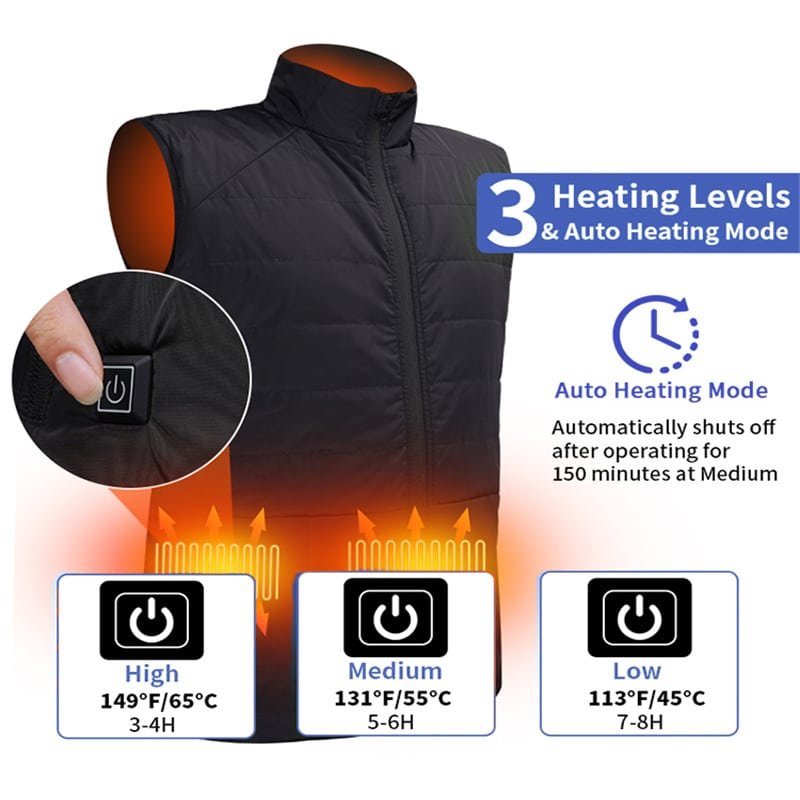
Accuracy in temperature regulation has a direct effect on the perception the users have of the reliability and comfortability of the product. Ready-made controllers provide imprecise controls, or sometimes three to five heat settings, which are sufficient with simple and everyday uses but would not work with finer controls, resulting in a hot spot or a difference in felt warmness. Custom PCBA, however, enables finer resolution through advanced temperature control circuits in heated wearables, such as PID algorithms to preserve constant output in response to external varied conditions.
This accuracy will be important in user oriented designs; when a user wants a heated vest in an unpredictable weather, the generic reasoning could get out of control and the user may end up with mixed dripping clothes whereas the customized reasoning will cue the transition and make every day wearable.
Comfort as a Quality Metric
Companies need to consider the balance of control granularity versus review and returns: poor precision can be perceived as poor quality.
Scalability, Compliance, and Multi-Model Product Planning
Due to the scale of products lines, off-the-shelf controllers may become a bottleneck to scalability and have to be redesigned per variant. With their fixed architectures, it becomes difficult to change to suit the new models such as when it is necessary to apply jackets in place of insoles without having compatibility problems. There is also compliance: the generic units can fail on the first tests, but make the regional-specific modifications more difficult, including different EMC standards.
The custom designs will enable the planning process as the, PCBA design requirements for CE, FCC, and UL, ensuring smoother certifications across markets.
Long-Term Planning Considerations
This translates to the brands considering multi-generational lines assessing the controller selection based on maintaining evolution without complete changes.
How OEMs Should Decide Between Custom PCBA and Standard Controllers
This decision needs to be made with a sense of priorities by OEMs as they have to balance between short-term and long-term demands. The next outline points out the main criteria:
| Factor | Off-the-Shelf Controller | Custom PCBA |
| Time to market | Faster | Moderate |
| Safety margin | Limited | High |
| Long-term flexibility | Low | High |
| Product differentiation | Minimal | Strong |
When working in an advisory, with in-house PCBA design capability tend to be more inclined to custom as a method of differentiation, whereas teams with deadlines that are close tend to begin with standards but design migrations.
Building a Decision Process
Begin with mapping requirements to these factors, with cross-functional input to escape siloed options.
Conclusion — Controller Choice Defines Control and Risk
Finally, when choosing off-the-shelf controllers in heated apparel, the primary emphasis is on instant convenience at the expense of control over such vital processes as heat control and battery life. This is enough to achieve direct launches but can easily present the unknown limit when ambitions are expanded. To achieve the real control over the safety measures, scalable structures, and certification via an iterative process, the custom PCBA design will require additional start-up costs in planning and testing, but will provide OEMs with the actual control. It comes down to the question of whether an organization is short-term expediency-oriented, or long-term system mastery-oriented that does not only calculate the product, but also long-term market viability.