

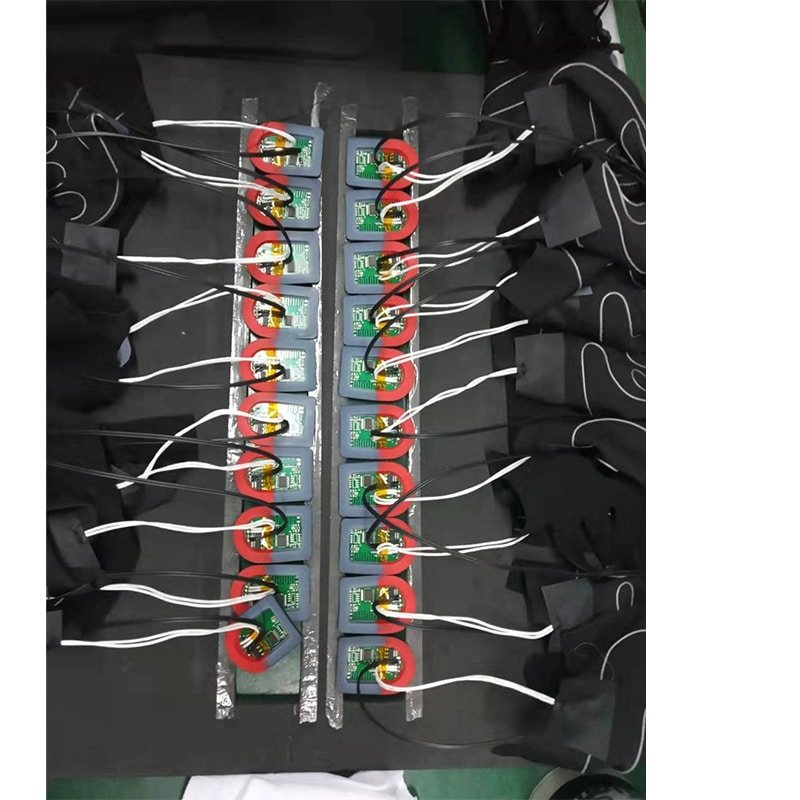
The working of the heated gloves and insoles cannot work in wet conditions not due to the exposure to water but due to the fact that the PCBA was not developed to work well under the exposure to water.
Numerous OEMs and brands believe that it takes only a waterproof outer fabric, closed pockets, or simply potting compound to put a barrier around the electronics. These are measures in practice very superficial. Even the finest enclosures admire the passage of time as the sweat and condensation and the damp-dry cycling all in any case assault the printed circuit board assembly (PCBA) directly. In the cases where the PCBA does not have inherent moisture resistance, intermittent operation, abrupt shutdowns, and total failures are bound to occur and most often when the warranty has been exceeded.
Based on a decade of experience in analysing returned products and accelerated life testing on heated wearables, there is one trend that is evident, and that is the difference between a product that manages to live through three winters of heavy wear and one that simply dies after the first season almost always goes back to the design of the PCBA to accommodate constant exposure to moisture.
Why Heated Gloves and Insoles Face Extreme Moisture Exposure
Heated gloves and insoles work in one of the most hostile moisture conditions of the consumer-wearable items.
Hands and feet are some of the main sweat glands of the body, particularly when a person is involved in some physical activity. Sweat is trapped in a comparatively closed microclimate and very little sweat evaporates simply because of the insulation layers and tightly fitted gloves. It is still more dreadful with insoles: body weight hurts the insoles with its constant pressures pushing the discharge of sweats into seams, stitches, areas of components, and the insoles absorb the heat and humidity.
There are other difficulties brought about by temperature gradients. Users who change cold outdoor conditions to warm indoor conditions, or have elements that quickly heat the foot / hand and leave the outside cold will cause condensation in the garment – in the very area where the PCBA is also found.
The flexing, compression and mechanical stress are repeated, thus, hastening the absorption of moisture. All grips and steps put wet air and liquid under microscopic pressure through tissues. Gloves and insoles cannot easily have big drainage channels or breathable holes because this can interfere with their thermal protection and structural quality unlike jackets or vests. Moisture is no longer an accidental event, it is a regular condition of operation.
Common Moisture-Related PCBA Failure Modes in Heated Wearables
Failing under the influence of moisture of heated gloves and insoles do not occur in isolation and instead occur gradually, making them a fatal behavior especially in terms of reliability and warranty.
The main mechanisms in the field returns are as follows:
| Moisture Source | PCBA Vulnerability | Typical Failure Outcome |
| Sweat ingress | Atomized corrosion of solders, particularly lead-free SAC alloys. | Discontinuous heating or short circuity. |
| Condensation | Sensor signal drift (NTC thermistors, moisture-sensitive resistors) | Unstable temperature control, overheating or underheating |
| Repeated damp/dry cycles | Insulation breakdown of PCB traces and component coatings | Short brookages between high voltage traces |
| Pressure + moisture | Micro-crack propagation in solder joints and component packages | Sudden catastrophic failure after hundreds of cycles |
These are a degradational process which are time dependent and cumulative. The solder joint might not fail laboratory tests, but several months of sweat exposure and thermal cycling results in the onset of electrochemical migration (dendrite growth), an event that ultimately bridges pads and short circuits. Condensation across sensor faces changes the value of the resistance slowly creating erratic temperature feedback which disorients the control algorithm. Micro-cracks caused by pressure develop over time under repetitive mechanical stress and then expand totally to cause failure at the worst time possible which is during the actual use in cold weather.
How PCBA Design Determines Waterproof and Sweat Resistance
The performance servers of the heated wearables need to be true sweat and moisture resistant, which does not begin with the PCBA level which ensures that it is enclosed.
The distinction between a robust design and the one with high failure probability is the fact that moisture is addressed as a normal environmental stressor instead of an exception event. Important aspects of design are:
- Selective conformal coating and thickness of coating.
- New component layout with spacing out between high-voltage traces.
- Close choice of moisture-insensitive components (e.g. non-use of some types of electrolytic capacitor).
- Through tenting and solder mask coverage patterns, which reduce the wicking paths.
The engineers have to create the board on the assumption that some moisture will someday be exposed to sensitive portions. This means that the claim of generic waterproofing should be dropped and be paid attention to the long-term electrochemical stability in a combination of heat, humidity, and mechanical stresses.
To ensure reliable solutions, OEMs want to invest in protective protective PCBA design for heated wearable electronics early in development significantly reduces field failure rates.
PCBA Protection Techniques Used in Heated Gloves and Insoles
There are several protection layers usually implemented that are typically balanced between each other in terms of engineering trade-offs.
The initial defense is still the conformal coatings. Acrylics are flexible and easy to remake, whereas urethanes and silicones are more effective moisture resistant barriers, but like heat dissipation can be limited with a heat sink where subminible amounts of current are required on heating elements. Selective coating (provided to vulnerable regions only) can be quite effective in preserving thermal paths whilst covering high-risk areas.
The potting compounds are the best in offering the maximum protection rate, but they add rigidity that may lower the dexterity of the gloves, and create hot spots in the insoles. Selective potting about connectors and high-voltage sections is often the most effective compromise.
The design rationale: all the design protection decisions should be checked against a given mechanical, thermal, and moisture profile of the intended product. Excessive protection leads to compromise of usability, and insufficient protection assures failure in the end.
The above is because moisture-related failures are frequently observed following the launch of a product to the market.
Short-term tests of IP ratings (IPX4, IPX7, etc.) subject boards to minutes or hours of contact with clean water – conditions that hardly relate to actual practice.
Sweat of human beings contains salts, urea, lactic acid, fatty acids which are extremely corrosive than distilled water. Practical tests done in the laboratory deny the long-term consequences of repeated wetting-drying cycles, which act to fuel electrochemical corrosion and dendritic growth. Majority of failures occur after 618 months of normal operation, at the time when the warranty claims are on the increase, and the brand image is damaged.
Being aware of these loopholes aids in the explanation of why several heated items which survive simple tests of waterproofing still record high rates of returns. To take a closer look at common traps, refer to common PCB design errors that lead to the failure of heated apparel.
Why Moisture-Related Failures Often Appear After Market Release
Exposure to moisture conditions drastically elevates risks of the battery in heated gloves and insoles.
Leakage current paths, protection circuit false triggering or, in worst case, internal cell short circuits may be caused by the sweat or condensation that may reach the battery management system (BMS). Thermal runaway is more likely to occur due to even small levels of ionic contamination, which promotes lithium dendrite development.
These stresses should then be considered as high-risk conditions by designers in combination with moisture. This involves adding unnecessary isolation barriers, moisture-sealing gasketing of battery housings, and BMS software that takes into consideration possible wet condition exceptions review common PCBA design mistakes that cause heated apparel failure.
Interaction Between Moisture Protection and Battery Safety
Moisture exposure dramatically increases battery-related risks in heated gloves and insoles.
Sweat or condensation that reaches the battery management system (BMS) can cause leakage current paths, false triggering of protection circuits, or — worst case — internal short circuits inside the cell. Even small amounts of ionic contamination accelerate lithium dendrite formation, raising the probability of thermal runaway.
Designers must therefore treat moisture + battery stress as a high-risk combination. This means incorporating redundant isolation barriers, moisture-blocking gaskets around battery compartments, and BMS firmware that accounts for potential wet-condition anomalies.
For detailed engineering guidance, see battery protection circuit design for heated clothing systems.
How OEMs Should Evaluate Moisture-Resistant PCBA Capability
In qualifying ODM partners of heated gloves and insoles, OEMs must reach beyond the shallow statements and investigate deeper into verifiable ability.
Key questions include:
- Which accelerated life testing procedures (e.g 850 C/85 percent RH with cycling of power) have you maintained at least 1000 hours?
- Is it possible to demonstrate cross-section analysis of solder joints following long exposure to damp heat?
- How do you deal with high voltage trace separation and via protection under humid conditions?
- Do you carry out sweat-simulant tests (with simulated sweat according to ISO 3160)?
External silicone seals/ fabric treatments/ cosmetic waterproofing (external) This is unique as it looks nice in pictures, but does not protect much after the moisture penetrates the PCBA. System-long-term reliability testing is only indicative of true moisture-resistant performance.
In case of partners whose processes have been proven, explore in-house PCBA design and validation capability for heated wearables.
Conclusion — Moisture Resistance Must Be Designed Into the PCBA
Moisture exposure cannot be avoided in heated gloves and insoles. The hostile environment by sweat, condensation and mechanical pressure on electronics is never ending. PCBA designs which presuppose the steady sweat and condensation, and which are designed to operate safely in such a manner can only provide safe and reliable operation throughout the lifespan of the product. The most critical action that can be taken to minimize field failures and create sustainable customer trust is to move the liability of sealing at superficial levels to that of the board.