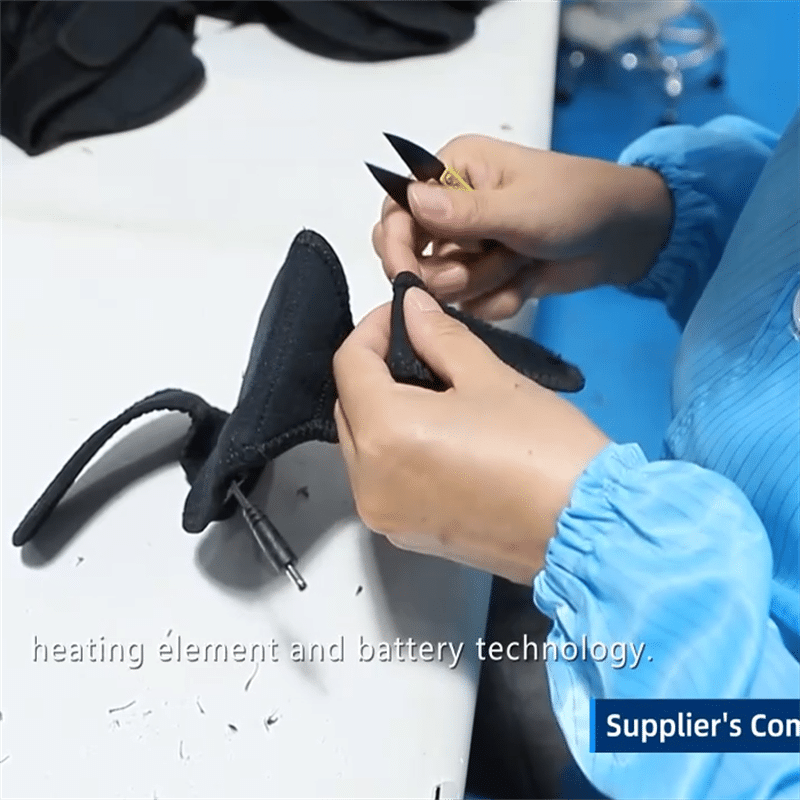

The PCBA, rather than the app, dictates the safety of heating behavior, as well as its responsiveness and predictability, in app-controlled heated clothing.
Most OEMs and brands have assumed that their presence of Bluetooth connectivity and a smartphone app comes with more accurate, convenient temperature control. Practically, wireless communication and remote decision-making are resolved by employing complex systems and introducing absolutely new groups of failure modes that never occur in the case of simple manually operated thermostats. The app is not an executable and only offers a user interface. All the commands, all the delays, all the lost packets and all the unforeseen user inputs should be decoded, verified and responded to by the onboard firmware and hardware logic in the PCBA.
Based on actual field recoveries and long-term reliability tests of smart control-heat devices, one tenant becomes evident, it is the quality of the user experience in the field that surrounds the currently unknown puzzles that concern the wireless control that is done with greater acumen, not the polish of the mobile interface.
Why App-Controlled Heated Clothing Is a System-Level Challenge
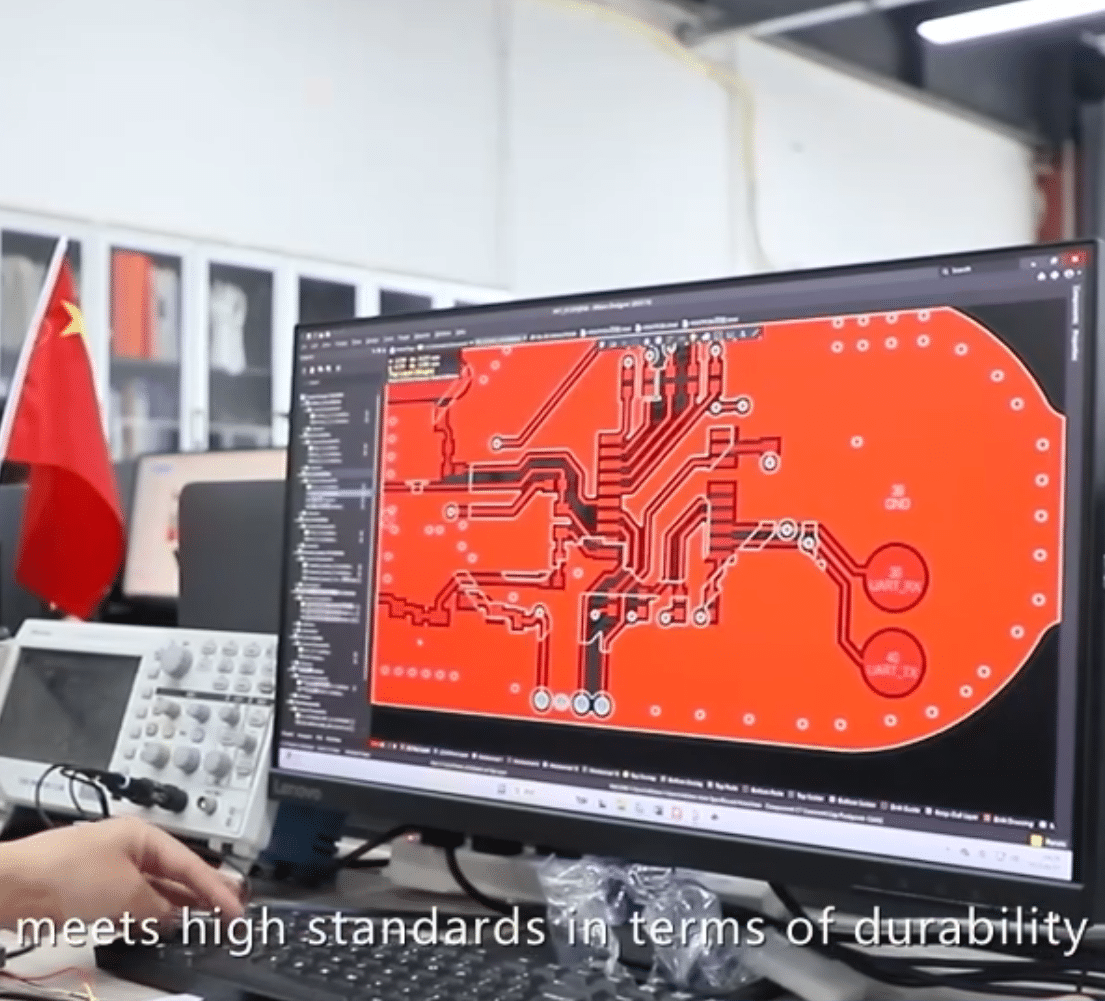
The App control changes a deterministic piece of hardware, which is a piece of heated clothing, into a multi-point, multi-failure, distributed, real-time control system.
Traditionally heated clothing Heating CHOICE is made locally (here and now) and at no more than simple digital thresholds: temperature hits X, switch is turned off. Under app control, all change requests go through multiple layers: smartphone user interface → Bluetooth protocol stack → MCU receiver → firmware interpretation → safety verification → power execution. Latency and risks of losing packets and potential of malformed commands are present in every layer.
No more hardwired safety thresholds can be relied on to provide heating. The system should constantly resolve the conflict between the will of the user (in asynchronous mode) and the rigid physical mandates (battery voltage, temperature sensors, current draw). This change requires a radically new control architecture one where the app is no longer a trusted advisor, but a master of control.
Role of the PCBA in App-Controlled Heating Systems
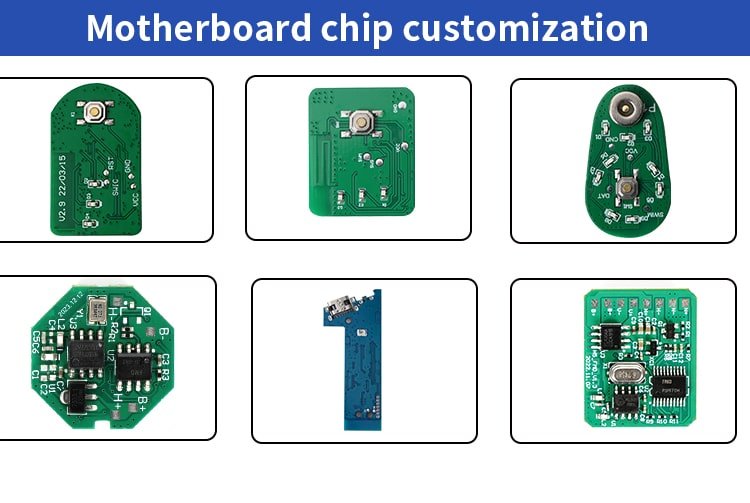
In any system of heated app operated by an app, it is PCBA that is the sole decision-maker.
However fancy the mobile application may look, it is simply passing the requests. These requests are sent to the PCBA which verifies them against the existing operating conditions, verifies them against predefined safety envelopes and makes a decision, possibly none, on what to do. This distinction of user intentions versus hardware implementation is essential.
As an example, when the app user moves the temperature to the maximum range, it does not imply that the heating parts should switch to full power. PCBA should impose ramp rates, check instances of over-heating, and override the request in case of declining battery voltage, or sensor feed back of unsafe surface temperatures. The PCBA in a sense is a conservative arbitrator between human will and physical nature.
In the case of OEMs working on the next-generation smart wearables, early investment in the smart PCBA system design, which is suited to the application of the heated wearables products, investing early in robust smart PCBA system design for heated wearable products establishes the foundation for safe, reliable app integration.
Control Logic and Fail-Safe Design in App-Controlled Heating
Fail-safe logic in the PCBA firmware is needed to prevent app-controlled heating systems because this requires reliable failure reporting.
There is no strong thing about wireless connections. The Bluetooth may become dropped because of distance, interference, shielding, and low phone battery. The apps may crash, re-boot or a user may close the application half-way through. In every one of these scenarios the PCBA would have to work safely devoid of outside Council.
Handling Lost Connections and Communication Delays
Effect: The loss of Bluetooth connection is suddenly lost.
Consequence: PCBA is not commanded with anything further.
Mitigation: Immediately switch to a pre-defined default safe state (usually 30 40 percent power or the final confirmed temperature setting over a restricted time interval)
Delayed or Out-of-Order Commands
Reason: Network jitter or packet re-arrange.
Result: Consequence: There is a delay in receiving heating level commands or they are received in a disorderly manner.
Mitigation: Timestamp validation + command queue with rejection of timeouts.
App Crashes or User Exits
Reason: The user closes the application in an unexpected manner.
Consequence No additional overriding of potential safety.
Mitigation: Fall back to additional heating profile within 60-120 seconds of silence.
History The independent safety monitors (rule-driven logic) should use its priority over the command-driven logic (app requests). This hierarchy helps to avoid unsafe situations when a pseudo-frozen application or malicious code may take a toll on thermal protection.
Battery and Power Management Challenges in App-Controlled Systems
App control raises the dynamic stress on the power delivery subsystem to the battery by a large margin.
Repeated cycles of temperature changes ordered using the app lead to recurring bursts of current and voltage fluctuations that cannot be found in the manual system. Users also like to push the limits of using sliders by going to the lowest power, and then highest power multiple times within a relatively short time period, which causes a cyclic loading that is much worse than steady operation.
The battery protection rules should be imposed entirely regardless of the app by the PCBA. This consists of hard current limiting, low-voltage cutoff, over-discharge safeguarding, and temperature throttling, despite the app still requiring full output. App-level enforcement is not a permissible approach either in terms of safety or liability.
To gain further understanding on this region,, refer to battery protection circuit design for app-controlled heated clothing.
Temperature Control Accuracy vs User Perceived Comfort
Exact temperature control in systems that are controlled by an app is not synonymous with providing the user with the sense of comfort.
In most cases, app slides can make the user believe they have finished control at a fine level. As a matter of fact, there is a lag, hysteresis introduced by thermal mass, sensor positioning, contact pressure, and ambient conditions which no app resolution can remove. Any change in temperature requested through an app can take 3090 seconds to be registered at the skin.
Stability in closed-loop PCB-PID or fuzzy-logic controlled is nevertheless necessary. Close proximity of sensors (to heating elements) and high-resolution ADC sampling have a direct impact on the closeness of heat provided to user expectations. The lack of good hardware control loops causes overshoot, oscillation or it causes the response to be slow- a problem that the user attributes to the entire smart system.
Temperature control circuit design is discussed in more detail in relation to app-controlled heated wearables. temperature control circuit design for app-controlled heated wearables.
Why App-Controlled Heating Failures Often Appear After Launch
During the adoption of hot clothing, failures associated with apps tend to appear months after the release, as opposed to during validation.
The ideal Bluetooth conditions and short-duration cycles are normally utilized in laboratory testing. The actual users impose much more variability: irregular phone models, background application prohibitions, low signal conditions, and unchanged behavioral patterns (e.g., the heating turned on/off after every few minutes during a walk). Regressions not considered by lab tests can also inadvertently be introduced in firmware updates being pushed after the launch.
In these cases of failure, almost all failures can be established to stem out of a lack of PCBA ownership over decisions at the PCBA level, when the hardware blindly accepted an incoming command with no proper sanity checking or fallback.
How OEMs Should Evaluate PCBA Capability for App-Controlled Heating
To choose the correct partner in controlling the heated apparel by apps, it is essential to investigate further than simple connectivity assertions.
Questions that the OEMs ought to ask are:
- What does your firmware do when there is a long connection loss? Present the precise fallback state diagram.
- Which hard safety overrides cannot be obviated using an app command?
- What do you do to test system behavior in the presence of Bluetooth interference and packet loss in the real world?
- Are you capable of exhibiting extended-period (several minutes) mixed-mode testing (app + manual + disconnected states)?
- To what extent are PCBA hardware and firmware development teams highly integrated?
A demonstration of a unified, in-house hardware-firmware test, not SkyWest silos, radically decreases the chances of integration failures and post launch epiphany.
The partners that have mature processes are in-house PCBA design and firmware validation for heated apparel.
Conclusion — App Control Increases Responsibility at the PCBA Level
The use of smartclothes controlled by an app does not make the heating more basic it simply transfers the responsibility. The introduction of wireless communication and user-facing software causes the number of cases the system has to deal with safely and predictably to explode.
In order to ensure that the software variability, forced safety logic, and strict separation between the user and hardware implementation of the product can provide consistent safety and reliable performances throughout the entire product lifecycle, only PCBAs that consider the importance of software variability, the mandatory safety logic, and the maximum distance between the user and the hardware implementation can be reliably considered safe. With smart heating clothes, the smart part, and the liability of such smarts, lies in the circuit board.