
There is no predetermined period of time of the wash-cycle life of a heating element; the result of material selection, structural design, insulation plan, and validation procedure.
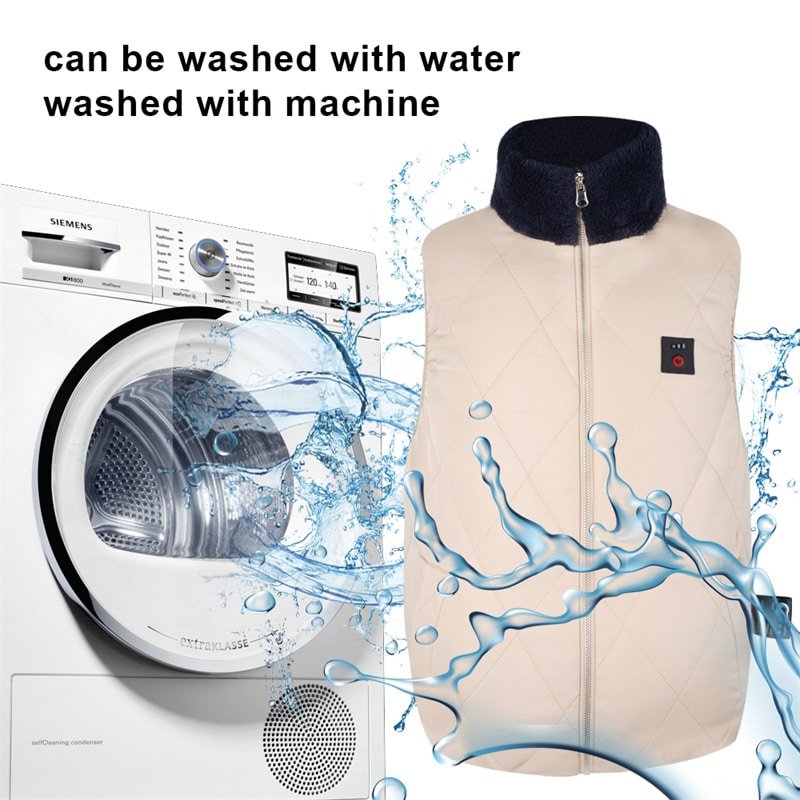
Machine-washable claims are the kinds of claims that are popular in the market of heated apparel, but the actual results are often radically different as perceived by the end-users and OEMs. Certain heating elements will last dozens of cycles with consistent performance, whereas other heating elements may exhibit negative performance in the form of higher resistance, hot spots, or even a full breakdown, considerably earlier. This difference is not a result of mere chance but rather a choice of an engineer during the initial stages of the design. One washable color designates us virtually nothing regarding actual lifespan; it seldom identifies the number of cycles, test conditions and failure parameters.
Being a person that has been working on durability qualification and failure analysis of wearable heating systems over the years, I have observed first hand the way these two factors work themselves in actual production and field returns.
Why Wash-Cycle Lifespan Matters in Heated Clothing
The wash durability has a direct impact on the product safety, warranty, and the rate of returns as well as the brand reputation in the long term in the market of heated apparel.
Washing causes much more aggressive stresses than normal use. Everyday use involves the controlled bending and flexing within body temperature, however, one wash cycle includes mechanical movement, exposure to moisture, chemical detergents, and massive centrifugal force during spinning. All these operate to enhance cumulative damage on the heating component, insulation, and the electrical connections. The low wash life results in both safety (insulation failure as a result of shorts) and financial (higher returns and negative feedback) outcomes.
This is a brief explanation of why washing can be considered a high-stress situation when compared with regular use:
| Stress Type | Impact on Heating Element | Why It’s More Damaging Than Normal Use |
| Water | Allows penetration of moisture and short. | Long-lasting submersion as compared to short sweat exposure. |
| Agitation | Bending, twisting, abrasion repeated. | Vigorous, multi-directional forces against supine body movement. |
| Detergents | Increases rate of chemical degradation of insulation. | Severe alkaline / surfactants vs skin pH. |
| Spin cycles | Causes stress and exhaustion at the ends. | Strong G-forces against low-frequency bending. |
What Actually Limits the Number of Wash Cycles
Normal failure of heating elements during washing is nearly cumulative, each wash causes on a microscopic scale and at some point the microscopic damage accumulates to an unstable level.
The main restraints are synergistic influence of mechanical wears, water vapour and chemical assault on the conductor, encapsulation, and joints. These affect electrical continuity, resistance (resulting in nonuniform heating or inefficiency), or insulation (increasing chances of a short circuit) over time. These interactions are important to understand in order to predict lifespan.
To gain more in-depth understanding of the mechanisms of failure, refer to our analysis on the issue of failure of why heating elements fail in heated clothing.
Material and Structural Factors That Affect Wash Durability
Wash resistance is based on material selection and structural integration, bad decisions in this respect cannot be corrected in the future.
Such conductors as carbon fiber or printed films do not work under repeated stress. Carbon fiber strands are good tensile strength but when bent, they may experience micro-fractures without being well stabilized. Printed heating films are uniform in heat and they are more susceptible to delamination in case ofencapsulation failure. Moisture is shielded by encapsulation (e.g. silicone, TPU or waterproof films), joint and termination constructions (crimps, soldering, conductive adhesives) are often prime areas at which loads come into focus.
The choice of materials has a great impact —explore a comparison in carbon fiber vs heating film durability.
Mechanical Stress During Washing and Its Long-Term Effects
Washing exposes heating elements to even more violent mechanical abuse than normal wear.
Agitation cycles form cyclical bending radii of few millimeters, twisting forces, and compressive loads in the drum. These stresses lead to fatigue cracking of conductors, delamination of layered structures and creep of polymer encapsulations. On over cycles this appears as resistance drift, cold spots or open circuits. Washing is more severe, as it causes such forces to be multiplied by thousands of operations compared to the flexing during work.
These challenges are explored further in our guide to flexible heating element challenges.
Moisture and Insulation Breakdown Over Repeated Washes
Entry points may be micro-cracks of encapsulation, manufacturing pinholes, or seam/termination wear. After being inside, water causes hydrolysis of the polymers, corrosion at metal interface (in case it exists), and electrochemical migration on the conductive traces. The insulation resistance reduces with cycles to an extent that leakage currents or shorts occur.
Effective moisture management requires multi-layer barriers and robust sealing—learn more about moisture resistance and insulation design.
For a comprehensive overview of core principles, refer to our hub on heating element design.
How Manufacturers Test Wash-Cycle Durability
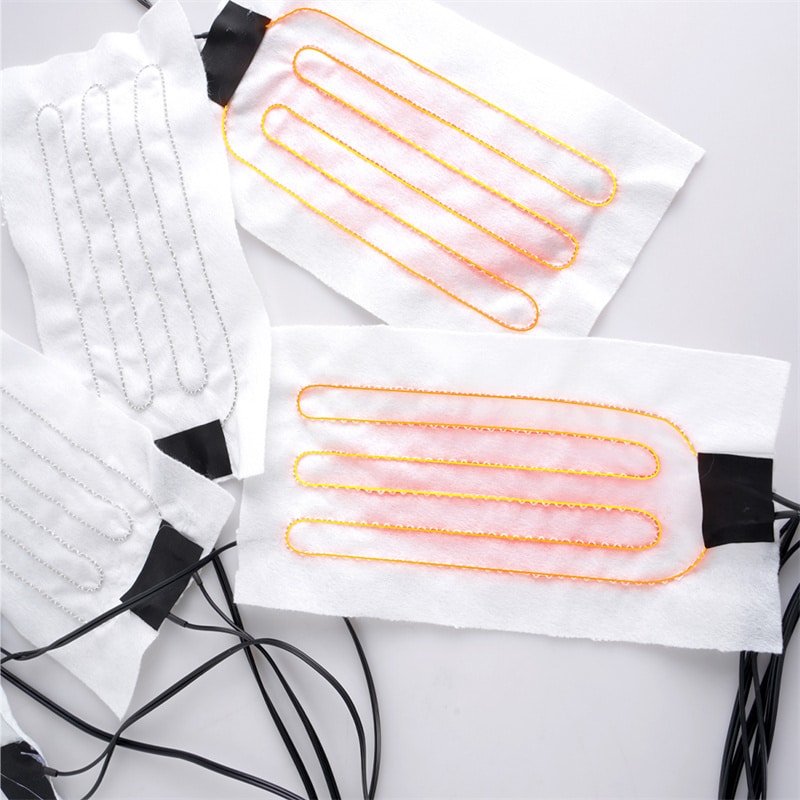
The trust-worthy manufacturers use accelerated and instrumented tests to measure the rate of wash before manufacturing.
Testing is usually done to adopted protocols (e.g. based on ISO 6330 of textiles, or new IEC 63203 series of e-textiles), with accelerated cycles representing domestic washing. Following every cycle, engineers check electrical resistance, insulation resistance, visual integrity and thermal performance.
Common methods include:
| Test Method | Purpose |
| Accelerated wash cycles | Lifecycle simulation (e.g., 5–10x real speed) |
| Resistance measurement | Electrical stability tracking |
| Insulation testing | Safety verification (leakage current) |
| Visual & structural inspection | Detect cracks, delamination, or conductor damage |
These protocols assist in justifying designs—see related strategies in washable heating element design.
Why Test Results Vary Between Manufacturers
There is disparity in test results because of the inconsistency in the protocols, admission criteria, and transparency.
There are those that employ mild household cycles and those that are aggressive acceleration procedures (e.g. more temperature or concentration of detergent). The range of pass/fail thresholds is between no observable damage and strict electrical limits (e.g. less than 10% change in resistance). There is no standardized reporting, which makes the direct comparisons unreliable.
The structural differences are significant-—review variations in wearable heating element structure.
Why Wash Durability Must Be Designed, Not Claimed
Durability is not something that can be added after the design, it requires initial trade-offs in materials, encapsulation and layout.
Changes in the late-stage are expensive and restricted. Longevity is made through trial and error, FEA input of stress, and loop-back loops beginning with the concept.
Realistic Expectations for Wash-Cycle Lifespan
Heated clothing engineering The lifetime of the heating elements in heated garments is commonly 30-100+ wash cycles depending on the design and circumstances.
At entry-levels, there might be problems after 20-30 cycles whereas with premium designs which achieve good encapsulation and fatigue-resistant materials, they might take more than 50-80 cycles in the standard gentle washing. Experimental outcomes depend on care (cold water, no wringing, air drying) and usage. It may be a loss in efficiency which may manifest gradually before failure.
Monitor long-term changes via heating element efficiency loss.
How OEMs Should Evaluate Wash Durability Claims
OEMs cannot afford to only require evidence other than marketing statements.
Important issues to be asked to the suppliers: What was the test standard? What was the number of completed cycles? What were the pass criteria (e.g. resistance change limits)? Are you able to give raw data or third party reports? Contextualization of claims is made possible by technology-related comparisons such as heating wire vs printed heating film durability, help contextualize claims.
Conclusion — Wash-Cycle Lifespan Is an Engineered Outcome
The life expectancy of a heating element in the number of wash cycles is not an aspiration, but the quantifiable outcome of engineering choices, material performance, and validation practice.
Through placing emphasis on transparent testing and strong design early in development, manufacturers are able to create products with reliable operation over time thus reducing risks to both the brand and the end-user. The durability is not attempted, but designed.