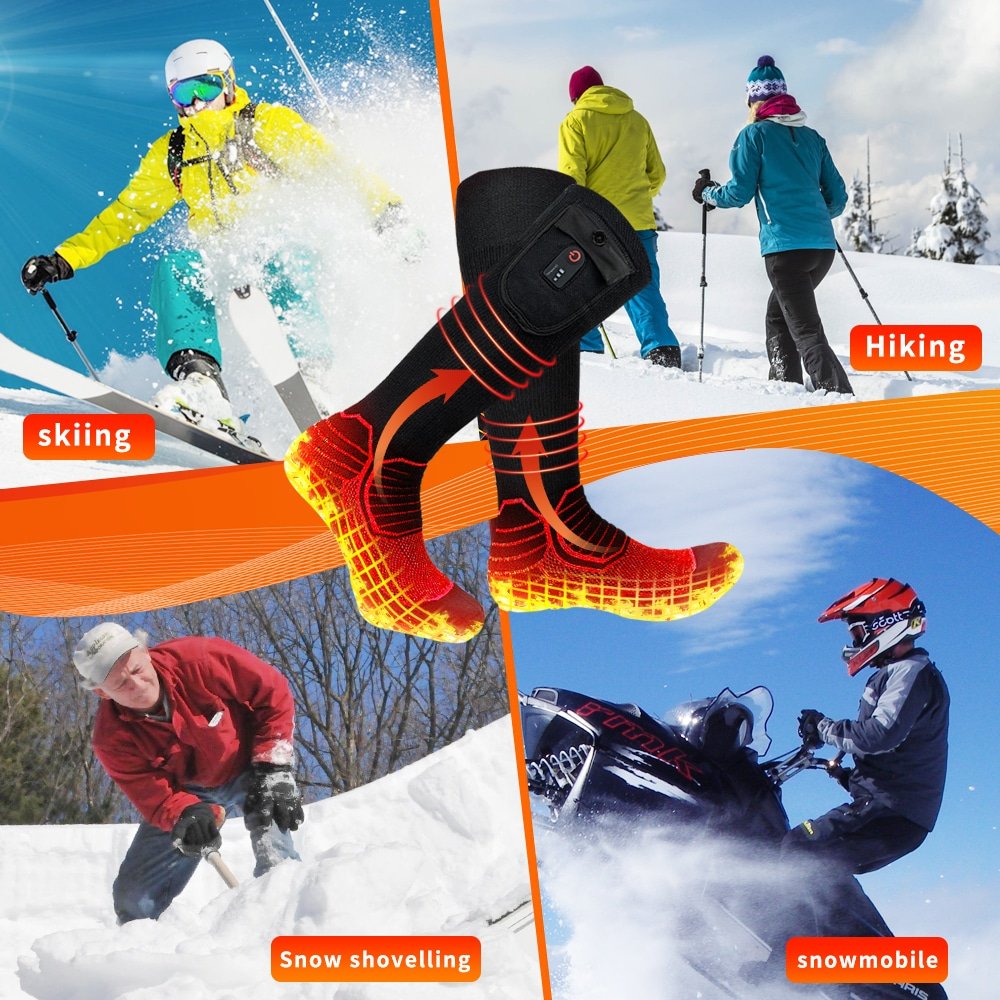

Bluetooth applications and manual controllers are two fundamentally different control interfaces to the heated clothing, which have different benefits and drawbacks depending on system design and user needs. Both of these approaches are common in the industry, whether it is simple outdoor equipment or high-tech wearable clothes, but both approaches are not universally better. The assumption made by many buyers is that, the performance of Bluetooth app control is always better, which is not true because the effectiveness of control is determined by the stability of the system and the context of the user. The trade-offs between Bluetooth applications and manual controllers in heated clothing are a matter of system level thus must be used to make the choice rather than feature by feature.
This analogy is based on the engineering thinking of heated wearable systems, in terms of the integration of these interfaces into the general architecture. We will analyze their working mechanism, thermo regulation accuracy, stability in other circumstances, battery usage, and applicability. This article seeks to inform OEMs, product managers and engineers in choosing the appropriate approach they can use when choosing the right control method to use in their lines of heated apparel by emphasizing trade-offs.
What Control Interfaces Do in Heated Clothing Systems
The heat clothing systems have control interfaces that mediate between the user input and the thermal output of the system, but these do not generate energy, and are command oriented. On a basic scale, a control interface converts the wills of the user, such as the heating of a certain item, into signals that are comprehensible by the electronics in a system. This may imply transfer of digital instructions through wireless protocols or use of physical switches to change the flow of power.
Notably, control interfaces themselves do not produce heat, that is the task of the heating elements, usually carbon fiber wires or flexible films in the fabric. They instead connect to the controller or printed circuit board assembly (PCBA) that controls the voltage and current to the elements. This separation guarantees that the core system is concerned with safety and efficiency with the interface being centered on usability.
In order to explain the functions of a standard heated clothing system, we can allow the following breakdown:
| Interface Type | Primary Function |
| Bluetooth App | Digital command interface |
| Manual Controller | Physical input device |
| Controller / PCBA | Executes power regulation |
| Heating Element | Generates heat |
This table shows that the parts are not overlapping, and that the selection of interface influences the responses of the whole system and its complexity.
Key System Considerations
Engineers should consider the effect of the control interface on integration when developing heated wearables. An example is that a Bluetooth-based system will need more (wireless communication) modules and this may add variables such as signal latency. Manual configurations, on the contrary, emphasize simplicity and minimize points of failure in the architecture.
How Bluetooth Applications Control Heated Clothing
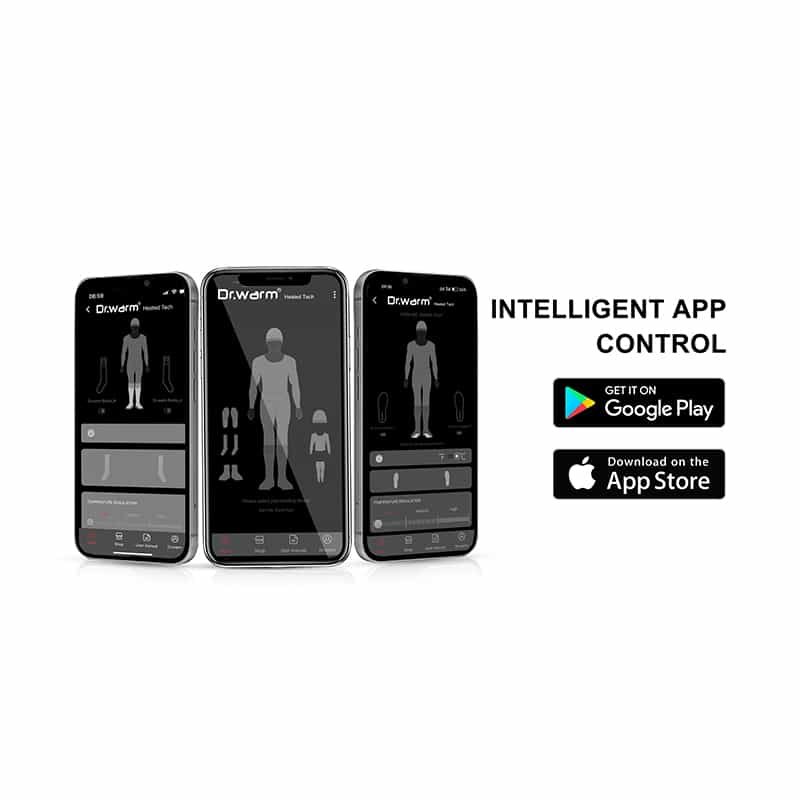
The applications of Bluetooth have been proved to offer a software-based, flexible method of controlling heated clothing, however, their success depends on the seamless relationship of the app, device firmware, and hardware. The control flow usually begins with the user interfaceing to the garment through a mobile application, transmitting instructions via the Bluetooth Low Energy (BLE) protocol to the controller embedded in the garment. This controller will then modify the amount of power delivered to heating elements allowing options such as adjustable temperature or scheduled operation.
The pros of software-based interfaces are remote accessibility and the possibility to be customized. Users are able to check on the battery, adjust on the exact heat areas or even connect it with other smart gadgets. This will however depend on the stability of Bluetooth connection and effective app development to prevent frustrations by users during the pairing process or software malfunctions.
To brands venturing into the more advanced side, integration of an smart heating app control system for heated clothing can elevate product tiers, allowing for zoned heating or data logging without physical buttons cluttering the design.
Advantages in Detail
Scalability of Bluetooth apps is one of the advantages. OTA enables engineers to update the firmware, increase the lifetime of the product by adding features after the product is manufactured. This comes in handy especially when OEMs are aiming at the tech-savvy markets where its users want app ecosystems.
Potential Drawbacks
On the downside, Bluetooth creates a reliance on other systems such as smartphones that could not always be feasible in extreme conditions. System designers need to consider the overheads of power due to continuous scanning of the wireless, which can have an insidious effect on power consumption.
How Manual Controllers Work in Heated Apparel
Manual controllers provide a simple, hardware-focused approach to the process of controlling the heating of clothing, focusing on immediate feedback instead of hi-tech effectiveness. They are usually physical buttons or dials that are built into the garment, and are hard-wired to the PCB itself. A button is used to switch between preset heat levels, low, medium, high, by adjusting the duty cycle of power to heating elements.
The principle is straightforward: every button press will cause a circuit switch, and since the amount of output to send out can be controlled by pulse-width modulation (PWM) without any external signals. This minimizes complexity of systems since one does not depend on wireless protocols or software layers hence it is best suited to where reliability is the main requirement.
For a deeper dive into the nuances, explore this analysis on bluetooth app vs manual controller heated apparel, which highlights practical differences in implementation.
Operational Simplicity
Sticky heat level switching is predictable; one can provide consistent results without having to navigate through the app. This technique reduces the latency, because the commands are handled immediately at the hardware level.
Limitations in Flexibility
Although useful in manual mode with the basic needs, manual systems are not as granular as advanced zoning or automation and so their attraction is limited in the higher ends.
Temperature Control Precision — App vs Button Control
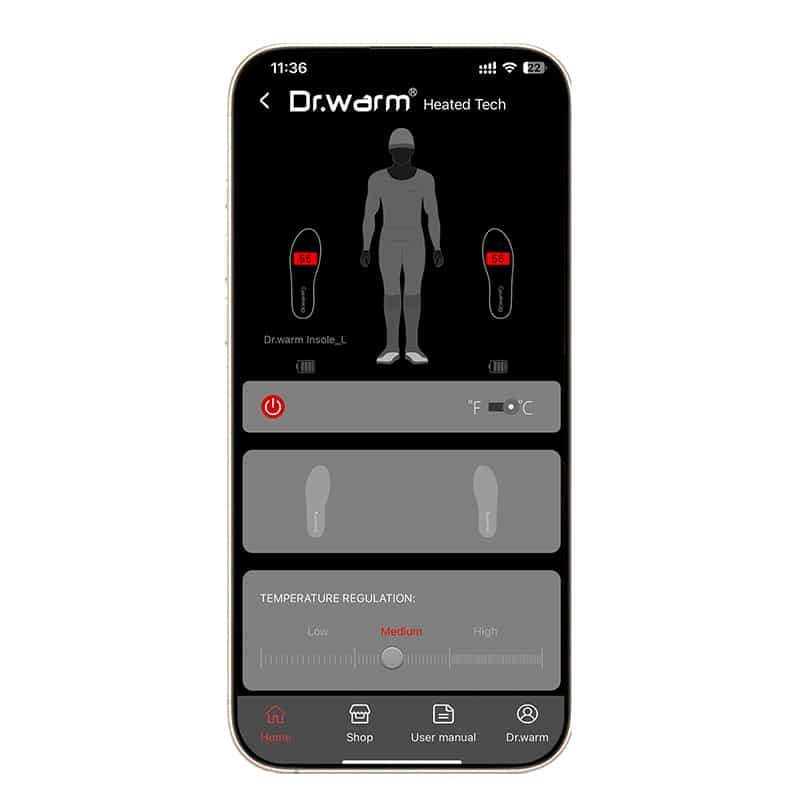
The accuracy of controls in a heated garment is vastly different when comparing Bluetooth applications and physical buttons with the former giving much more control and the latter giving complete predictability in operation. With Bluetooth applications, it is possible to do an incremental change by a few separate degrees (usually 1-2 C) via slider interfaces or presets, so the user can control multiple zones independently.
Physical controllers on the other hand usually provide 3-5 discrete settings, and this is more easily manipulated with gloved hands, but less programmable. This predictability comes as a result of the hardcoded logic, and it does not permit the flexibility provided by the interactions of app-firmware.
To compare key aspects:
| Aspect | Bluetooth App | Manual Controller |
| Adjustment granularity | High | Low |
| Feedback | Visual | Minimal |
| Response behavior | System-dependent | Immediate |
Learn more about the underlying mechanisms in this piece on mobile app temperature control heated clothing, which details how apps achieve zoned precision.
Factors Influencing Precision
App based systems can be improved with environmental sensors that do not need any human intervention and change their settings automatically based on the environmental conditions.
Reliability and Stability in Real-World Conditions
The reliability and stability of control methods used in hot clothing varies depending on the situation and Bluetooth is known to have problems with signal interference whereas, manual controllers are very durable in extreme use. The Bluetooth signals are prone to deterioration during cold weather or during crowded frequencies hence drop of connection or delayed reply, which is important in an outdoor environment.
Manual controllers are non-wireless and are fully integrated avoiding these traps, in addition to being consistent in operation even in wet or dusty surroundings. Their mechanical property, though, demands a strong sealing in order to avoid wear.
To get some understanding of general pitfalls, check this discussion on bluetooth stability heated apparel, focusing on mitigation strategies for app-controlled systems.
Environmental Impacts
Manual choices in the industrial environment minimize failure modes, since there is no application failure and battery loss during connection maintenance.
Battery Consumption Differences Between Control Methods
Manual choices in the industrial environment minimize failure modes, since there is no application failure and battery loss during connection maintenance.
Comparison of Battery Consumption between Control methods.
The power usage of heated clothing varies greatly between control modes with Bluetooth having overhead on the power usage that manual controllers mostly can circumvent to be more efficient. Bluetooth applications need constant power to run modules, scan and data transfer which may cost 5-15 percent of total power consumption with frequency of use.
The direct wiring of manual controllers takes minimal standby energy with all the energy directed at heating. This is vital in long wear in remote locations.
Learn more in this article about heating apps battery life, which breaks down optimization techniques.
Optimization Strategies
Bluetooth drainage can be reduced by low-power states, which designers apply, but manual systems are focused on long-lastingness.
Which Control Method Fits Which Use Case
The choice of the control method to use when working with a heated piece of clothing must be consistent with the particular use case because Bluetooth suits have feature-driven applications, whereas manuals are more reliable. In outdoor activities such as skiing, the Bluetooth applications can be used to provide in-sport changes through the phone, which combines with fitness trackers.
Manual controllers have been used in industrial workwear, such as cold-storage operations, and allow operation with no glitches without a device. Older consumers might be fond of using manuals, and they do not want to learn how to use an app. OEMs have the ability to differentiate products: low-end with manuals to save money, high-end with applications to distinguish.
The following is an overview of suitability:
| Use Case | Recommended Control |
| Tech-savvy users | Bluetooth app |
| Cold-storage work | Manual controller |
| Long battery priority | Manual controller |
| Feature-rich products | Bluetooth app |
For brands planning launches, review this guide on developing app-controlled heated products, outlining key considerations.
Additional Use Case Insights
Medical usage may prefer manuals due to the reliability of warmness without technology restrictions, whereas fashion-based lines may use the apps to engage the users.
Conclusion — Control Interface Choice Is a Design Decision
The applications of Bluetooth and manual controllers are the solutions to various problems related to heated clothes. Knowing the strengths and weaknesses of their system at the system-level enables both brands and buyers to select a control interface that best fits their real-world application as opposed to how they see the features. In the end, it is a question of whether the reliability, user behavior and environmental factors should be more important in the design process. Through such trade-offs, OEMs will be able to create heated wearables that do their best in different situations, which may result in safety and satisfaction without going after trends.