
The mass production of smart wearables with heating capabilities exposes hazards that are only noticed in the prototyping stage, including failure to integrate the various systems of a smart wearable, which may result in failures in the field or regulatory problems. These products are products with unique multi-system features, software, electronics, heating and mechanical assembly into a single unit. The biggest delusion amongst brands is that scaling is a factory issue, concerned with increasing the volumes of production. As a matter of fact, it requires a coordinated validation of all the components in order to guarantee reliability. The design of the app, the behavior of the hardware, and the production processes need to be consistent to achieve a repeatable system that will bring successful industrialization of smart heated wearables.
Core positioning: To industrialize smart heated wearables, it is necessary to align app design, electronics, heating performance and manufacturing into a one-time, repeatable system.
Why Smart Heated Wearables Are Difficult to Industrialize
Challenges of industrialization of smart heated wearables are based on the necessity to handle the interdependent subsystems in the conditions of real-world variability in production. These machines come with active electronics and thermal controls, unlike simpler clothing, even a slight deviation may lead to a chain of performance problems or safety risks. The challenge is that prototypes tend to be run in controlled conditions which hides issues that only become evident when the process reaches thousands of units and material and process variations all become apparent.
Multiple Interacting Subsystems
Smart heated wearables are based on the layers of technology, which should work together. The app communicates with the firmware to regulate heating whereas the hardware regulates power flow and heat production. Any mismatch including an application command taking up too much battery space can lead to overheating, diminished battery life or unreliable user experience. In the case of industrialization, such interactions need to be stress-tested through environmental factors such as temperature changes or human motions, which prototypes do not typically scale to.
Tight Tolerances in Heating and Safety
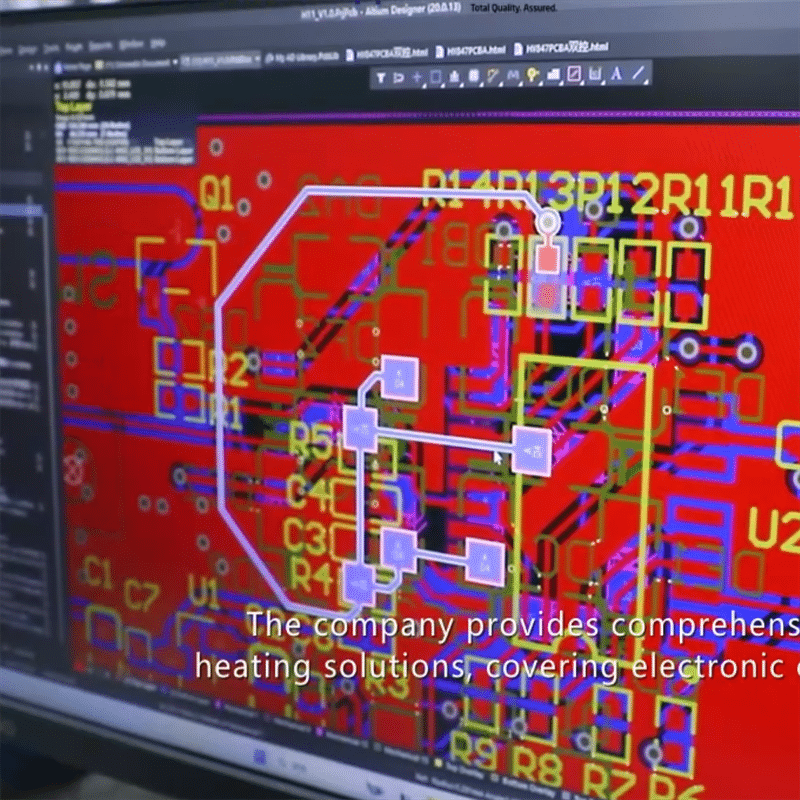
Heating components should also provide even heating without hot areas and should follow the safety standards such as UL or CE. Most temperature accuracy tolerances are in the 1-2C range, and power consumption has to be efficient not to run the battery dry. When left unchecked, industrialization reveals a fluctuation in the raw materials, like carbon fiber resistance or the quality of battery cells, which can increase these tolerances. This involves process engineering that is stern and precise in order to sustain uniformity which is much beyond the efforts of small-scale prototyping.
In order to depict the main challenges:
| System Element | Industrialization Challenge |
| App logic | Version consistency across devices |
| Controller & firmware | Constant behavior at changing loads. |
| Heating elements | Standardized working even though the materials change. |
| Assembly process | Repetition in large-volume production. |
This table demonstrates that each component presents distinct threats, and it is necessary to coordinate the whole system in the design of apps to manufacture wearables in large volumes.
App Design Must Be Production-Ready, Not Just Functional
Applications used in testing prototype applications can break down in the face of mass production because of unaccounted scalability considerations such as variation in device types and diversity of users. The design of applications to be used in heated wearables should be developed not as a mere demonstration of functionality but as a functional system with versions that can be deployed in reality. It is also a very crucial shift as apps have a direct impact on the hardware performance, and instability may spread across the whole product lifecycle.
Why Prototype Apps Fail at Scale
With prototyping, the apps are normally tested on a few units with perfect conditions without considering other variables such as network latency, or mismatch of firmware. Scalability at scale means that the difference in the versions of smartphone OS or Bluetooth connectivity may result in command failure, resulting in intermittent heating or application crashes. Industrialization demands the integration of error handling control and backward compatibility in order to make the app reliable in a diverse user base.
For brands transitioning to production, investing in custom app design for heated clothing to produce only to the limits of software functions, avoiding the hardware drawbacks associated with the new technology.
Importance of Version Control and Testing
Production-ready apps cannot do without version control. It makes sure that the updates do not interfere with the existing devices, continuing the consistency in the production of the app-controlled heated clothing. Back-end testing Comprehensive testing (even with simulated mass deployments) verifies app logic with edge cases, e.g. low battery state, interrupting connection. This is essential in order to make the scaling of the app-controlled heating products a gamble with a bug in the software coming in the forms of a manufacturing bug.
Hardware and Firmware Validation Before Scale-Up
Before scale-up, hardware and firmware have to be strictly tested to ensure that there is no variation in performance between batches of production. This should be done as firmware determines the way the controllers read app commands and any instability served as a factor to disparage the reliability of the complete system. Lake of proper checks may result in expensive reworking or recalls.
Controller Behavior Consistency
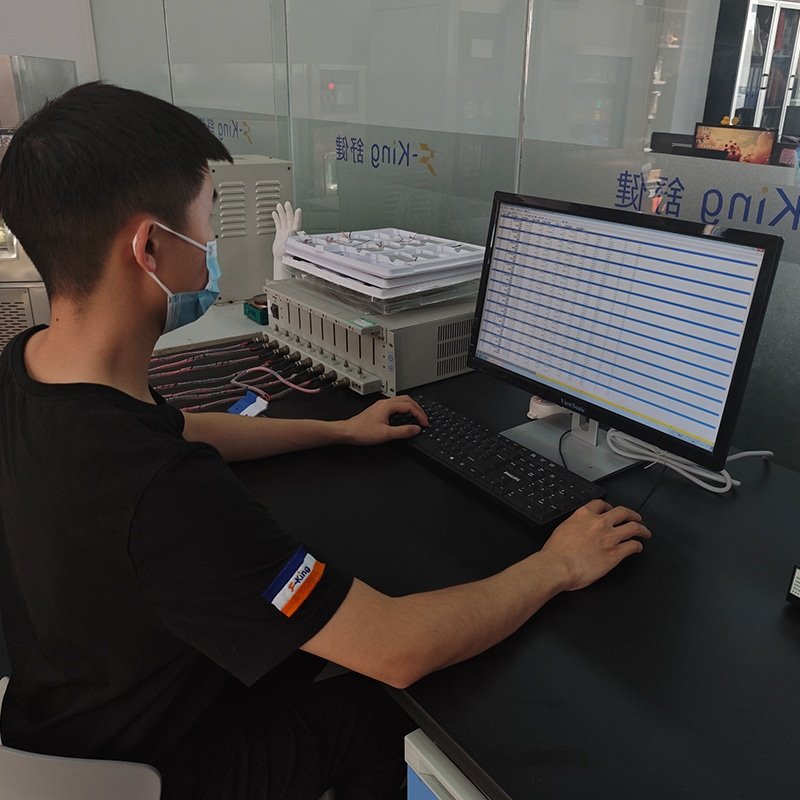
Smart heated wearable controllers take the form of apps and control the power cycle. Validation entails the checking of consistency of time and error rates of a variety of units. Change in component sourcing, such as microcontrollers or sensors, can generate delays, and thus industrialization also has burn-in testing to detect any outliers early.
Thermal and Power Stability Across Batches
Thermal stability refers to the ability of heating components to react in predictable ways, whereas power management eliminates over-discharge. The batch testing is used to model the extended use cycles and ensure that the optimizations in the firmware can be sustained under the production variances. It is especially important in the design of an app-controlled heating system, This is particularly vital in app-controlled heating system design, where misalignment can lead to uneven warmth or reduced battery life.
Manufacturing Process Control for Heated Wearables
Repetitive manufacturing of the production of the heated wearables depends on the proper control of the manufacturing process, which requires standardization to reduce the number of defects. In its absence, even the well-created apps and hardware may fail to work because of the inconsistencies in their assembly. This is not only in material handling but also in final inspection whereby a particular unit must be able to meet specifications.
Assembly Standardization
Standardization deals with the recording of the working processes of imparting heating elements onto the fabrics like accurate placement to prevent stress areas. Automated jigs and operator training minimize the human error which is important in ensuring consistency in mass production of the smart heated apparel.
Heating Performance Verification
Inline testing such as thermal and electrical integrity is present. This identifies problems such as poor solder joints in time before they get into the hands of consumers. In the context of smart heated wearables manufacturing process, since it means that the scale of production will not affect the core functionality.
Scaling Without Sacrificing Safety and Battery Performance
The scaling magnifies small safety concerns to mass problems and it is therefore crucial that validation should be emphasized rather than expansion speed. Safety measures have to be incorporated throughout the process to ensure that the users are not at risk of exposing themselves to such dangers as thermal runaway and that the end product will be limited by how well the batteries will perform.
Why Scale Magnifies Small Safety Issues
During prototype levels, it is possible that isolated anomalies may not be detected, however, during mass production, they are quantifiable as statistical certainties. As an example, a minor software malfunction in temperature detection might cause overheating to a small portion of units, which will result in regulatory investigation. These are mitigated by probabilistic risk assessment that is required by industrialization.
Importance of Batch-Level Validation
Validation through Batch validation In this type of validation, production runs are sampled to ensure safety margins and battery efficiency. It involves cycle testing to test the longevity and stress tests to test the extreme conditions. Attention to heating app energy efficiency ensures that scaling doesn’t erode performance, maintaining user trust.
What Brands Should Prepare Before Mass Production
Brands should ensure that prior to committing to mass production they do complete OEM preparedness tests or face downstream disruptions. This preparation is concerned with documentation and controls between the design intent and the manufacturing reality.
OEM Readiness Checks
Evaluation of OEM capabilities involves auditing of their process controls and stability of their supply chain. Brands ought to ensure that their suppliers can deal with volume without compromises in quality, with pilot runs being used to identify failures.
Documentation and Change Control
Powerful documentation defines requirements of apps, firmware and hardware and change control deters change of control so as to avoid unauthorized changes that may put production at a risk.
Post-Launch Support Planning
Firmware updates/ warranty planning would guarantee long-term longevity and deal with the problems that will emerge after scaling.
To guide preparation:
| Preparation Area | Why It Matters |
| App version control | Eliminates discrepancy between deployments. |
| Firmware locking | Assures stability in the production process. |
| Process documentation | Eliminates malfunctions with guidelines. |
| QA validation | Minimizes brand reputation failures. |
This table also highlights the premises of a successful transition.
Conclusion — Industrialization Is a System Discipline
The smart heated wearables are not going to move straight off the lab to the factory. It is a system discipline where design of apps, the electronics, heating performance and the manufacturing processes are meant to grow in tandem with each other and then stable mass production is attained. Scale is the one that reveals the weaknesses that tiny runs hide, and preparation instead of a rush should be considered a priority. Through coordinated validation, the brands and OEMs will be able to reduce risks and produce reliable products.