
Failure of the apps in hot wearables occurs way more often than most developers predict, and they usually become visible once the products are launched and users begin to test them in the real world. These are no accidental glitches, but foreseeable design flaws based on sloppy planning. One of the main mistakes many teams make is that they perceive the problems with the applications as minor UX changes, when it is actually often even more critical in terms of the connection between the app and the hardware environment. To avoid errors in designing apps in heated wearables, one should be aware of the impact of the software choices on the power, safety, and real-world applicability.
This is because most errors in the design of apps in wearables do not constitute technical bugs, but incorrect assumptions related to user behavior, power management and system responsibility. Based on years of auditing OEM prototypes and post-launch field reports, it becomes obvious that such mistakes are created due to the fact that apps are usually developed in a vacuum without paying full attention to the limitations of the wearable such as varying conditions, battery and intermittent connectivity. It causes safety risks, a fast wearing battery, and dissatisfaction among users that would have otherwise been avoided through a more holistic approach.
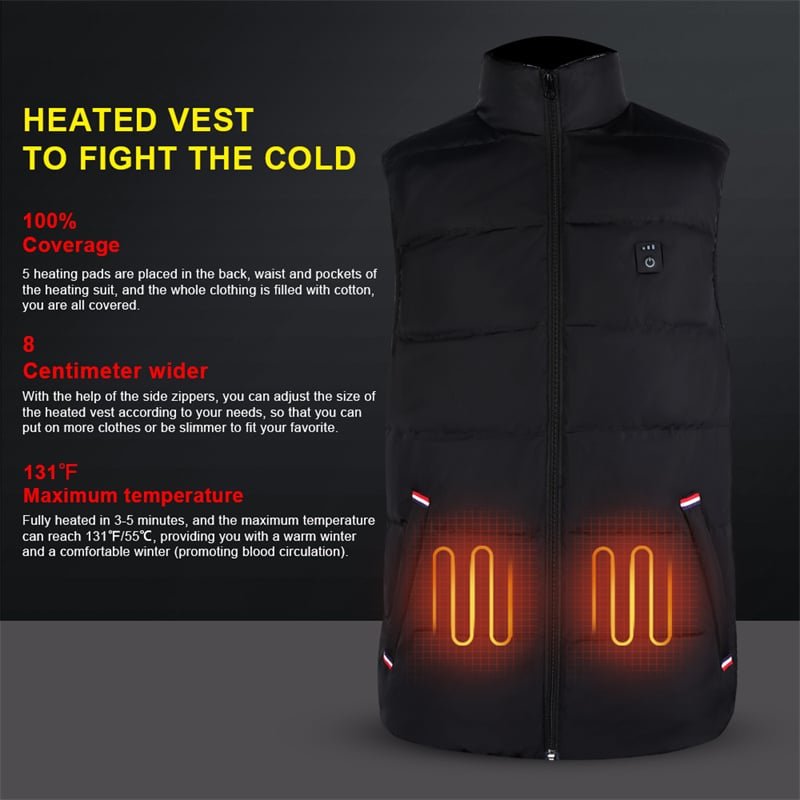
Mistake 1 — Treating App Control as a Feature, Not a System Role
The initial major pitfall in the heating app design issues is to view the app as a convenient additional feature to the product, instead of a fundamental part of its ecosystem. The teams usually focus on flashy interfaces when developing and see the app as a remote control to heat the elements. This is in ignorance of defining clear roles between the app, hardware firmware, and user inputs in the first place.
In reality, this error will occur when the app does not have a grace case that covers situations when the app is unavailable, like when using it offline or in low-signal zones. As an example, when the app is the sole means of making adjustments, users will feel frustrated when making increases or hikes as well as in commutes when connectivity becomes unavailable. Worse still, it introduces discrepancies: the hardware may not perform safely to high-heat conditions without the supervision of applications, which may cause overheating or unwarranted power use.
To make the matter worse, there is no specific system role which would make updates a risky endeavor. An update patch to the application could accidentally break hardware synchronization resulting in slow execution of commands. This is particularly troublesome in the case of app-controlled heated clothes failures, where an app is supposed to be a mediator rather than the undisputed authority. This one should be tackled early by mapping out the boundaries of the app- hard-ware must be able to work on its own, but the app must be able to give better control.
For deeper insights into foundational integration, explore app-controlled heating system design.
Why This Mistake Persists
It is usually a result of isolated innovation: software teams are working on compatibility with the mobile operating systems, and hardware engineers are working on the wearables. In the absence of cross-team alignment, the app will not become a cohesive part of the system, but instead an afterthought.
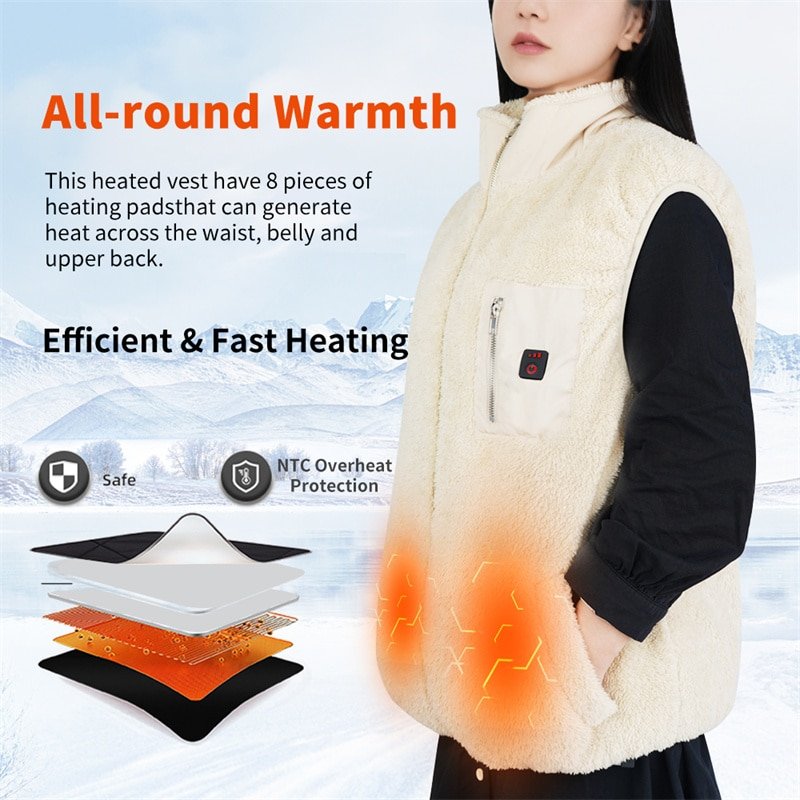
Mistake 2 — Poor Temperature Control Logic and Feedback
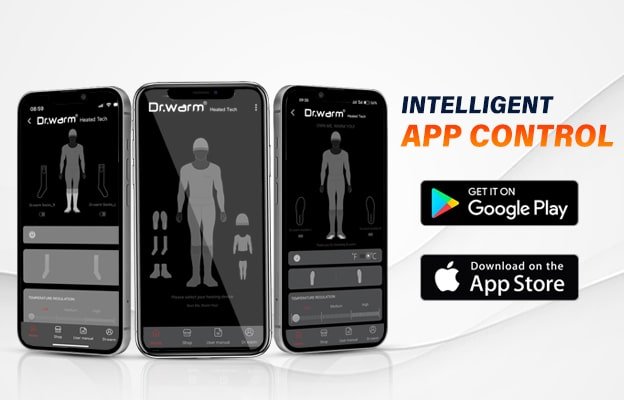
Another common trap with typical errors of heating app design includes creating imprecise or unwise temperature setting controls that do not take into account the changing user requirements. The developers could provide heat options of low, medium, and high without indicating the specific temperatures or times assuming them to understand the differences.
The result of this is real world issues such as a lack of consistency in warm conditions, where a medium level of warmness is felt to be too warm in moderate weather conditions and too cold in high temperatures because of logical imprecision. The users would not be able to confirm whether the system is doing what it is expected to do without real time feedback like the live temperature readings on the embedded sensors. According to field report, this will result in excessive trust in trial and error corrections, which will hasten the battery wear-out and user frustration.
Besides, bad reasoning tends to disregard the surroundings, such as the effect of movement or layering of the body on the distribution of heat. During the audits of unsuccessful prototypes, we have encountered applications that do not record or show past information, and it is difficult to customize settings with time. This not only reduces trust but also points to app design errors in hot wearables where feedback loops are needed to ensure safe and efficient functioning.
Check out more on app-based heat adjustment in heated clothing.
Common Symptoms in User Complaints
Reasons given by users include unpredictable heating, or settings that change without any indication, which can be traced to logic without sensor data validation.
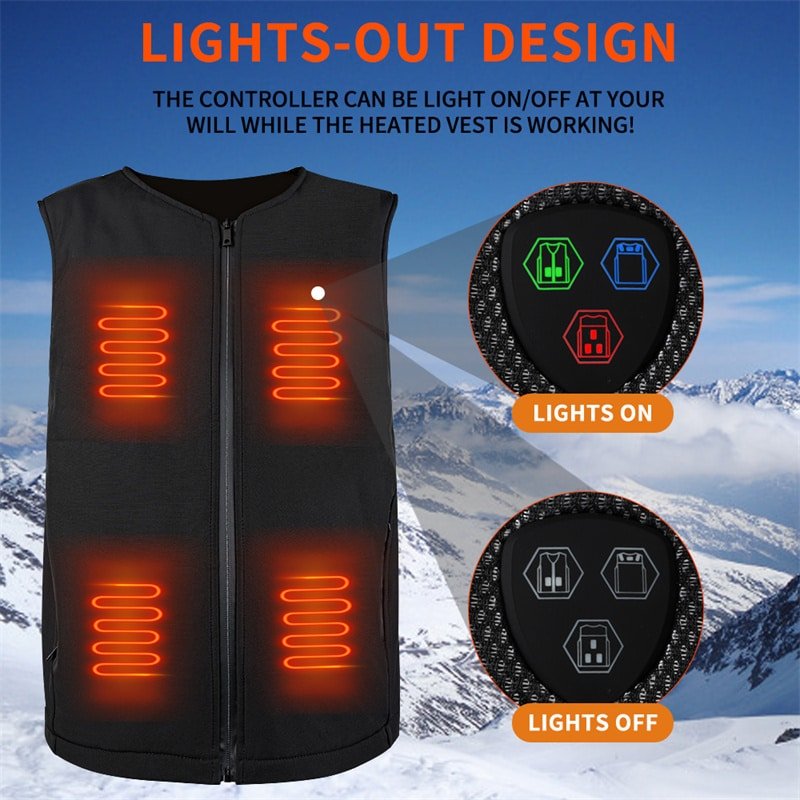
Mistake 3 — Ignoring Battery Behavior in App Design
Ignoring battery dynamics is an organizational flaw that seals the fate of most apps by forcing them to drain themselves and abandonment by the user. Designers often permit free access to maximum temperatures without simulating the effects of this to runtime, relying on users to manage themselves.
The reality is that the use of continuous high-heat command may drain batteries within hours, particularly during cold weather when lithium cells do not work well. Applications whose runtime cannot be estimated, i.e. based on existing settings, surroundings temperature and battery condition, do not notify the user and leave them stranded. This has been noted as one of the leading complaints in the post-launch reviews, where the devices would be switched off during use without any control of power consumption.
This error is magnified in multi-zone wearables such as jacket with detachable arm and torso heating devices, in which the app does not sum total usage. It reveals how to avoid design problems of hot wearables by proactive modelling: incorporate models that estimate and show the drain rates, to avoid surprises.
For details on troubleshooting, see fast battery drain heated clothing app.
Impact on Product Longevity
Recurring severe drainage of battery by bad app management reduces battery life, which causes warranty claims and social losses.
Mistake 4 — Relying on the App for Safety Enforcement
It is a dangerous ideology to rely on the app as a substitute of important safety functions that neglect the lack of reliability in the network. Over-temperature disconnection is commonly coded as app-side alerts by teams, assuming that they are constantly connected.
Non-however, the latency of apps can be triggered by various things such as delays in the OS or signal interference, leading to overheating before the start of interventions, potentially causing burns or damaged fabrics. In practice, such as when a person is physically active, Bluetooth drops allow the app to do nothing to restrict it, which exposes hardware. This is identified by audits as one of the root causes during the recall-level incidents, safety should be embedded into the hardware and served as secondary monitors of the app.
This points to the issues with heating app designs, where redundancy is a critical factor: it is always important to make sure that firmware-level protection is implemented to be safe even with a failed app.
Learn about safeguards in heating app temperature safety.
Risk Assessment Considerations
Analyze the possible failure modes such as offline states to develop resilient systems.
Mistake 5 — Underestimating Bluetooth Stability Constraints
The limitations of Bluetooth are widely misunderstood, resulting in applications that presuppose flawless constant connectivity, which can hardly be true in reality. The developers could create an ideal lab environment that does not consider the disruption of pairing by weather, distance, and device interference.
This leads to regular loss of connection and the user is then required to reopen the app again and again to regain a connection- annoying in the outdoors. In severe situations, it does not allow to make timely accommodation, worsening the safety or comfort problem. Tests involving OEM reviews have indicated that applications that do not contain strong error-handling such as auto-reconnect queues have increased return rates.
The solution to this failure of app-controlled heated clothing is to design with intermittency: buffer commands and give offline modes.
Explore common fixes in heating app connectivity problems.
Environmental Factors
Coldness may cause weakening of signals, hence test under simulated field conditions.
Mistake 6 — Designing Without Real User Behavior Data
Assuming how to build apps instead of using empirical evidence is a shortcut that is counterproductive by the time products are subjected to various usage. Laboratory samples may be clean, but field conditions, such as constant adjustments in settings or using multiple devices, reflect flaws.
The result of such a mismatch is interfaces that are easy to use in controlled environments but difficult to use in motion resulting in features being abandoned. Patterns that are common in user logs of deployed units, like heaviest use during mornings, may be used to better defaults. In the absence of this, there will still be widespread errors in heating application design that will decrease the overall value of the product.
For a balanced view, consider are app-controlled heated jackets worth it.
Gathering Effective Data
Include beta testing and include telemetry to optimize pre-launch assumptions.
Mistake 7 — Failing to Plan for Scale and Production
Disregarding scalability during app design regards prototypes as ultimate and ignores manufacturing differences and update requirements. Small-batch created apps frequently do not have modular code and thus mass-rollouts are likely to have inconsistencies between hardware revisions.
Being left with no version control, no plans to rollback, a single update can create incompatibilities that leave the user with a bricked functionality. According to production audits, this is an insidious cost driver in that the untested scaling results in fractured user experiences.
This highlights the app design errors on hot wearables that arise later: architect and design variability early.
Dive into industrialization in scaling app-controlled heating products.
Production Pitfalls
Hardware tolerances are not fixed, thus an app has to be able to accept minor changes in components.
How to Avoid These App Design Mistakes
These problems require an integrated strategy that prevents them, starting with the concept stage. Begin with the establishment of clear duties throughout the app, firmware, and hardware so none of the factors is overloaded.
| Mistake Category | Prevention Strategy |
| Control logic | Define clear app–hardware roles |
| Battery impact | Show runtime and limits |
| Safety | Implement hardware security. |
| Connectivity | Design fail-safe behavior |
| Scaling | Lock versions before production |
Early inclusion of cross-functional reviews, pretending to have real-world stressors such as cold exposure or signal loss. Protest assumptions with the data of users through iterative prototyping and pay attention to the efficiency of power consumption and redundant safety. This attitude of thought as a system transforms any potential failures into strong designs.
Building a Resilient Framework
Focus on modular architecture which can update without interference to basic functions.
Conclusion — Good App Design Prevents Problems Before They Appear
The errors in the design of apps developed in heated wearables are not the accidents. They are normally based on partial system thinking. Through comprehending the impact of apps choices on power, safety, connections, and production, brands and OEMs can evade most issues that arise once the products have reached actual people. The focus on preventive design, as well as improving reliability, help create long-term trust in the user due to the expectable behavior.