

The issue of Bluetooth instability in the app-controlled heated clothing is a frequent complaint, and in most cases, it is not random or something that cannot be explained. The largest problems are caused by the predictable effects of system behavior, which depends on environmental factors, hardware limitations, and software choices. Most of the users and even some product teams think that poor Bluetooth stability is an indicator of poor quality product when in actual sense this is as a result of environmental interference, power constraints or deliberate design compromise. Environmental factors, system design decisions, and power-management behavior tend to be the cause of Bluetooth stability problems in app-controlled heated apparel, and not Bluetooth technology itself. The problem of Bluetooth instability in the app-controlled heated clothing can be best seen as the problem of system-level reliability over an individual connectivity issue.
Such a view is fundamental to the owners of the heated apparel brand, OEM/ODM electronics and firmware engineers, product managers specifying control architectures, QA teams investigating connectivity customer complaints, and buyers assessing the quality of app-controlled heated garments. When we look at the underlying causes on a systems level, we will be able to get beyond applying some surface level troubleshooting to informed design and testing techniques.
What “Bluetooth Stability” Means in Heated Apparel
Stability of Bluetooth in the apparel applications in a hot environment is not just about being connected, but also the capacity of the system to ensure a stable communication with different conditions. In heated clothing controlled by the app, stability is the presence of a regular two-way communication between the mobile phone of the user and the controller built into the clothing, such that the commands are carried out without any break, such as temperature settings.
In order to explain, crucial terms in Bluetooth functions should be distinguished in these systems:
| Term | Meaning |
| Pairing | Initial device recognition |
| Connection | Active communication link |
| Stability | Connection maintenance ability. |
| Reconnection | Recovery after signal loss |
Bluetooth problems of heated clothing are unique because of the nature of the garments. In contrast to fixed equipment, hot clothes will be in constant movement, will have varying distances between the paired phone and cell, and will be combined with batteries with limited power capacity. All these increase the performance burden on the Bluetooth Low Energy (BLE) protocols, which have historically been relied upon due to the high performance but are often vulnerable to field effects. An example of this can be the low-latency response required in heating control which introduces a complexity in that the system will have to strike a balance between the responsiveness and the energy conservation.
Why Heated Apparel Is a Challenging Bluetooth Environment
The physical and electromagnetic environment of the wearable form factor of heated clothing is thus inherently challenging to Bluetooth, as both physical and electromagnetic factors have an adverse effect on testing connection boundaries. The effects of body shielding, such as the absorption and shielding of radio signals by the human body, decrease the range of effectiveness particularly when the controller is incorporated in the clothing such as jackets or insoles.
Signals may also be diluted by moisture (through sweat or other environmental humidity), since water molecules cause interference to the 2.4 GHz frequency band of Bluetooth. Layers of clothing further introduce additional obstruction that introduces scattering or absorption of waves, whereas the movement of the user also generates dynamic alterations in signal path resulting in multipath fading. Competitors in the same unlicensed spectrum include other devices, e.g. Wi-Fi routers, microwaves or other smartphones, which also worsen the instability.
In designing a bluetooth app for heated apparel, the engineers need to consider these factors by optimizing the antennas and monitoring the signal strength to counter the unstable bluetooth in warm clothing.
Environmental Interference Factors
In the real world, the users of heated apparel usually work in crowded or open areas where interference is at its highest point. In the case of OEMs, it implies adding adaptive frequency hopping in software to avoid noisy channels.
Common Bluetooth Stability Issues in App-Controlled Heated Clothing
One of the most frequently reported Bluetooth stability problems with heated clothing is intermittent disconnections, which typically appear in the form of the inability to control the app temporarily without explicit user notification. They are problems such as signal drops whereby environmental factors lead to temporary interruptions that result in heating interruptions that can leave the user in an inoptimal temperature.
Late response to temperature variations is a result of delay in the transmission of data which results in delayed execution of commands. There are repeated cycles of reconnection that the system tries to be automatically recovered, which may lead to inconsistent control at times the app switches between being connected and searching.
| Issue | User Impact |
| Signal drops | Heating interruptions |
| Latency | Delayed temperature changes |
| Reconnect loops | Inconsistent control |
Addressing bluetooth connection issues heated clothing app a holistic perspective of the ecosystem, including module hardware, app protocol, etc. should be taken to ensure that this does not culminate to be perceived failures of the product.
Signal Loss Mechanisms
The losses of signals in heated clothes can be related to the distance limits, where past 10-15 meters of the blocked space causes drops, and the issues with heating app connections complicate the matter.
Power Management and Its Impact on Bluetooth Stability
The approaches of power management have a direct impact on the reliability of Bluetooth in warm clothes because aggressive conservation modes may prioritize battery life over a continuous connection. BLE nips like an advertising and scanning cycle in low-power Bluetooth settings are adjusted to draw the least amount of energy, though this increases the duration of reconnection in case linkage is lost.
The controller firmware operates with aggressive sleep cycles which leaves the Bluetooth module in dormant states when idle which is necessary to extend the run time of battery-powered wearables but exposes it to disconnection. Trade-offs in this case are apparent because to improve stability, it may be necessary to increase the frequency of beacons, though this will make lithium-ion cell stitching into the clothing faster.
For deeper insights into power consumption of heating apps, it is worth examining how these dynamics influence the endurance of the system as a whole.
Battery-Connectivity Trade-Offs
To achieve a compromise between these factors, engineers frequently add adjustable parameters in the firmware, which gives the OEMs the option to tune to application scenarios such as outdoor sports versus everyday wear.
App Logic, Reconnection Behavior, and User Experience
The app logic is essential in the reconnection behavior, i.e., how well the system can be brought back online in the event of instability without annoying the users. Good applications use the exponential backoff retry logic and will make new attempts every time it fails, and to prevent flooding of the Bluetooth stack.
The correct time-out values are crucial, but excessively short ones will result in false positives where someone was disconnected, whereas excessively large time-out values would cause slower reaction time by the person. This logic should be combined with the state machine of the controller in order to maintain heating values in case of short-term loss.
Exploring smart app control logic in heated apparel reveals how these elements synchronize for seamless operation.
Reconnection Strategies
Practically, through notifications, apps can remind users of the reconnection attempts, which makes the instability seem less actual by establishing expectations.
How Bluetooth Instability Affects Heating Performance
Bluetooth stability issues directly affect the heating operation through interruption in the flow of commands, which usually causes the system to reboot to safe settings. Last-state heating behavior means that in an event of disconnection the controller keeps the last temperature set and eliminates sudden shutdowns.
Disconnection safety defaults can consist of turning itself down to a low-heat state or putting it into a hold state, as configured by the firmware. This reduces the risks but may result in non-optimal warmth in case of delay in reconnections.
For details on app-based temperature control for heated wearables, observe the impact instability has on accuracy in the dynamic setting.
Performance Degradation Patterns
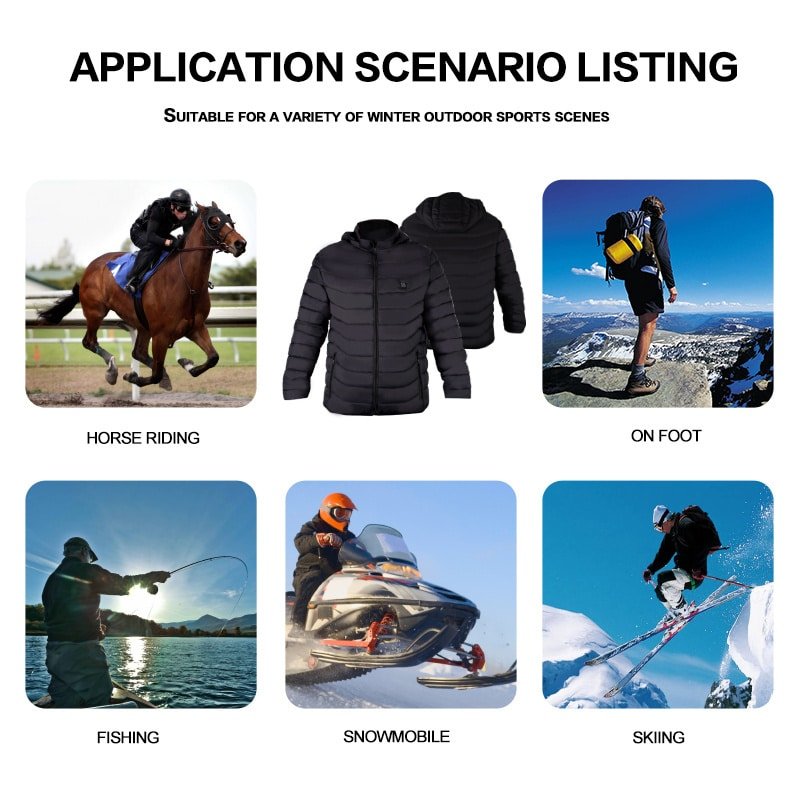
In sporting activities such as skiing where movement is constant, erratic heating cycles could also be a result of instability and hence strong buffering of the command.
Safety Implications of Bluetooth Disconnections
The heated apparel should also be safe without any Bluetooth connection to avoid dangers such as overheating when transmission is lost. The controller hardware is designed to operate safely in case of a failure, without requiring supervision because of insufficient testing or even deliberately, with disconnections causing the controller to move to a conservative state, like limiting the maximum temperature or starting cooldown timers.
The hardware level redundancy separates safety and dependency on apps so that the system can run safely even in case the Bluetooth completely fails.
Refer to discussions on heating app temperature safety will be referred to in order to put up these protections.
Fail-Safe Design Principles
In order to maintain the level of reliability, OEMs focus on intrinsic protection, such as thermal sensors instead of following app-specific monitoring.
User Behavior That Increases Bluetooth Instability
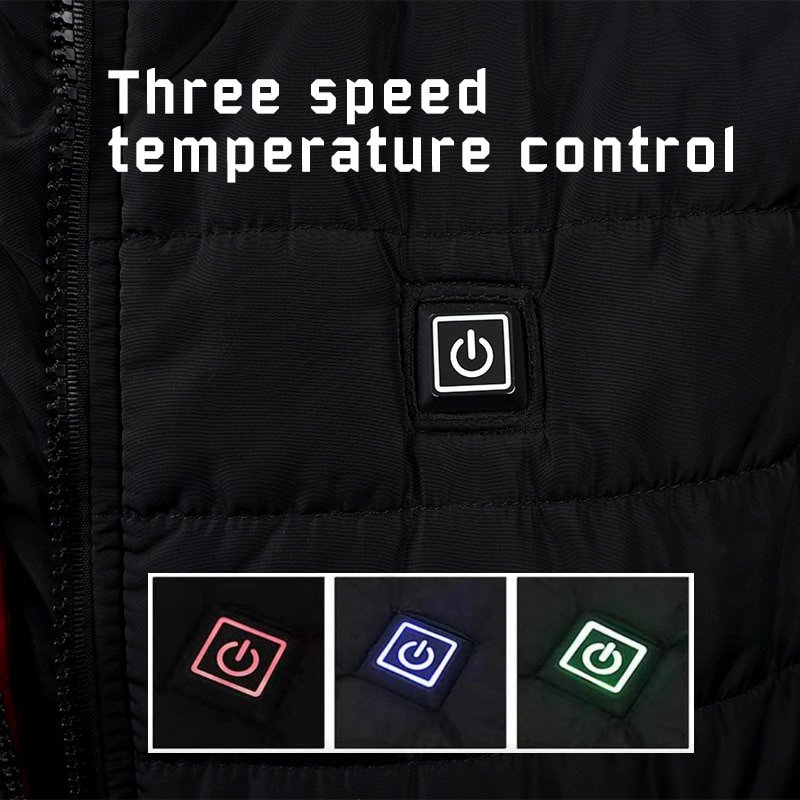
Some actions of the users unintentionally increase the instability of the Bluetooth, usually by amplifying environmental or system limitations. Placement of a phone e.g. in a backpack or in another pocket adds barriers and attenuates the signal.
This may be due to background app restrictions on mobile operating systems that can force-close the heating application resulting in unintended loss of connection. Several paired devices cause conflicts between pairing as Bluetooth resources are shared, and there may be a problem with priorities.
| User Behavior | Connectivity Impact |
| Phone in backpack | Signal attenuation |
| App force-closed | Connection loss |
| Device switching | Pairing conflicts |
Understanding how app-controlled heated clothing works controlled by apps can help users to prevent such pitfalls.
Behavioral Mitigation Tips
Training of users on the best practices such as keeping the phone in the pocket of the front can go a long way in improving the reliability of bluetooth in heated clothing.
How Brands and OEMs Can Improve Bluetooth Stability
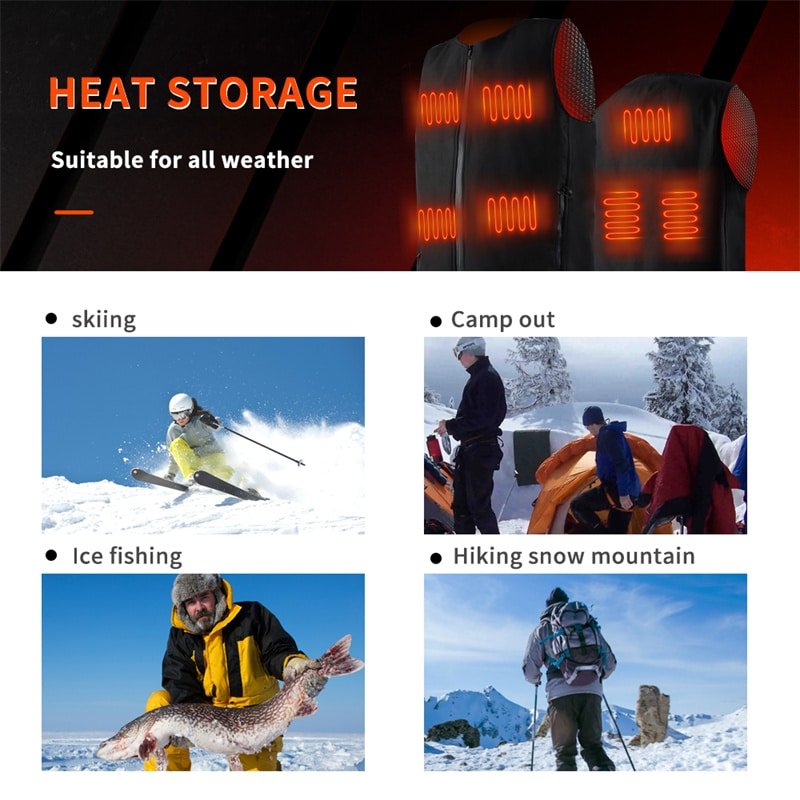
Optimizations in both software and hardware can be used to make Bluetooth more stable by brands and OEMs. Shielding effects can be reduced by putting the antenna in the garment, not over body-heavy parts.
Firmware tuning is a process of perfecting the connection intervals and error correction to manage the interference. Predictive linking, which is based on usage patterns, is one approach to streamline recovery through the application of app reconnection.
Guidance on heated clothing app OEM considerations is vital for these improvements.
Optimization Techniques
More complex methods involve mesh topology to support longer distance, but this complicates power management.
Bluetooth Stability vs Manual Control Reliability
The comparison between Bluetooth stability and manual control shows that there is a trade-off between the two systems by default, as app-controlled systems are flexible, whereas physical controllers do not. Manual systems offer incomparable stability, direct wiring but do not offer remote control.
App Control: The controls are also effective in customization, but require the strong design to be similar to manual.
For a full comparison, see manual controller vs app heated wearables.
Trade-Off Analysis
Manual reliability may be more important than smart features in high-mobility situations, so product managers can use it to determine architecture decisions.
Conclusion — Bluetooth Stability Is a Design Trade-Off
App-controlled heated apparel has stability challenges around Bluetooth and can be resolved by designing well, setting realistic user expectations, and providing strong fallback behavior. Once having connected as a component of a bigger mechanism, reliable heated wearables would be a possibility even in problematic real-life situations. The fact that Bluetooth is unstable is not a failure but an expression of conscious trade-offs in power and form factor and functionality. The brands can improve the overall performance by focusing on the integrated testing and user-friendly logic. For comprehensive strategies in smart heating app control system, focus on holistic ecosystem integration.