
The main safety concern with the heated wearables is overheating, which can lead to burns, damage to materials, or fire. The App interfaces do not actually have safety limits enforced on them; they act as user controls of settings. It is widely thought that temperature limits are managed by the app but temperature protection is done by hardware level mechanisms. App-controlled heated wearables require reliable over-temperature protection which relies on multi-layered hardware and firmware defenses as opposed to app-level settings.
Hardware and firmware safety measures are implemented to ensure over-temperature protection in the app-controlled heated wearables, and the app is not a main safety control, but instead simply a user interface to the safety control. This makes sure that intervention is undertaken even in case the app commands are beyond the safety. This is important to brand owners, OEM engineers and compliance managers in order to achieve safety standards and minimize risks in such applications as outdoor gear and workwear.
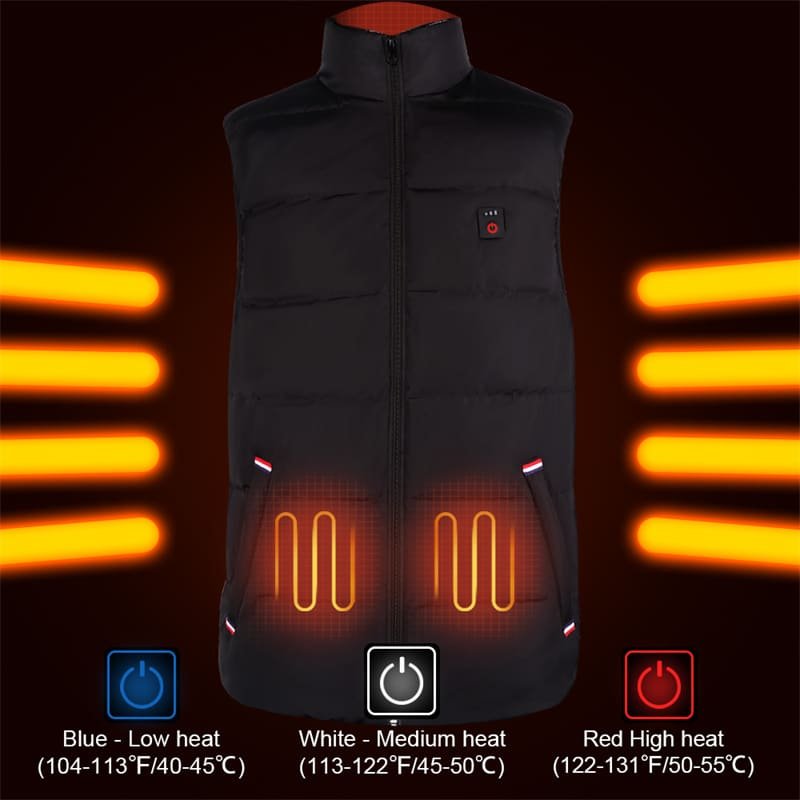
What “Over-Temperature Protection” Means in Heated Wearables
The base protection against thermal risks in hot wearables is over-temperature protection, which determines the margins beyond which it is unsafe to operate. This protection is fundamentally performed by controlling and measuring the amount of heat produced to avoid surpassing specific established norms that may pose threats or harm users or destroy components.
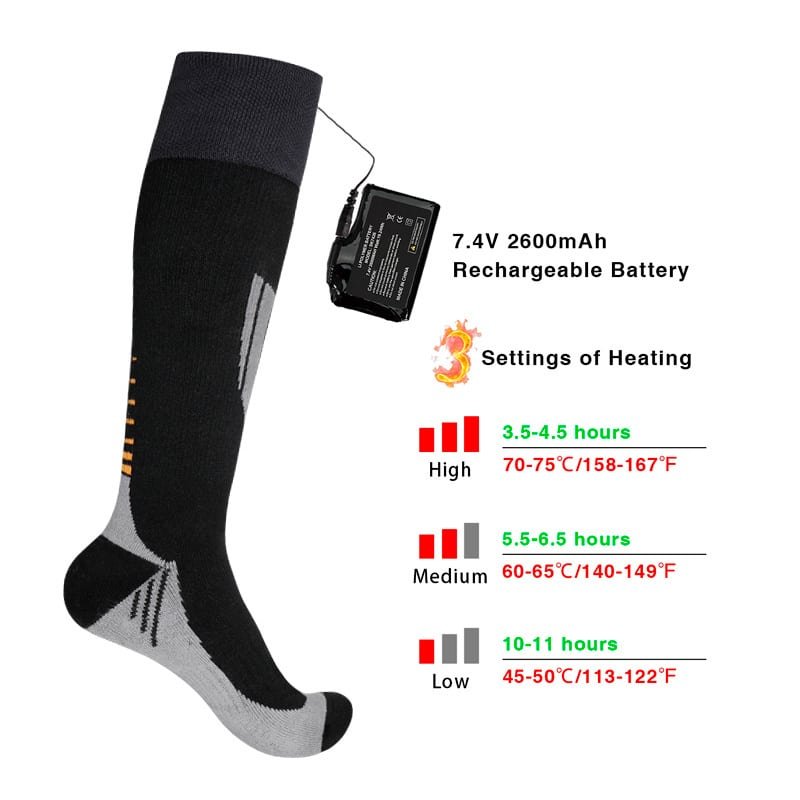
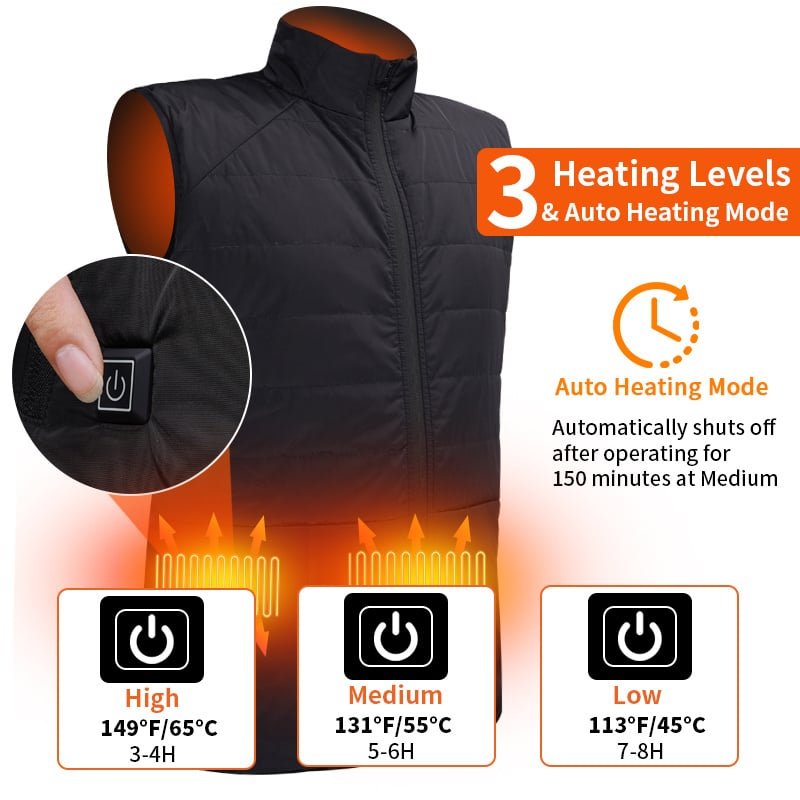
The major difference is between the comfort temperature and the safety temperature. Comfort temperature is the amount of warmth the user can choose, which can be controlled through an app to the preferences of the user, i.e. low, medium, or high, 35 o C to 50 o C. Safety temperature on the other hand sets the ultimate maximum permissible surface/internal heat (usually limited to 60 C -70 C) based on the material and length of contact, as a precaution to prevent burning skin or melting on the fabric.
There is no such thing as compromising on safety thresholds as they are determined by physiological and material boundaries of human beings. Surpassing them may lead to directly dangerous consequences such as getting second-degree burns due to many years of exposure or to chronic battery problems. Smart wearables have over-temperature protection built into their design, meaning these thresholds are factored in to the system design to allow the system to automatically intervene, whether the user takes action or not.
In order to explain the main concepts, consider the following definitions:
| Term | Meaning |
| Comfort temperature | Warmth level set by the user at their own convenience. |
| Safety temperature | Maximum maximum permissible surface temperature to avoid damage. |
| Thermal cutoff | The automatic shutdown in the case of threshold violation. |
| Overheat event | High temperature above safe range, initiating countermeasures. |
These words help to understand why over-temperature protection should not be an option, it is a compulsory tool of any heated wearable that wants to be featured on the market and trusted by the user.
Why App-Controlled Heated Wearables Face Unique Overheating Risks
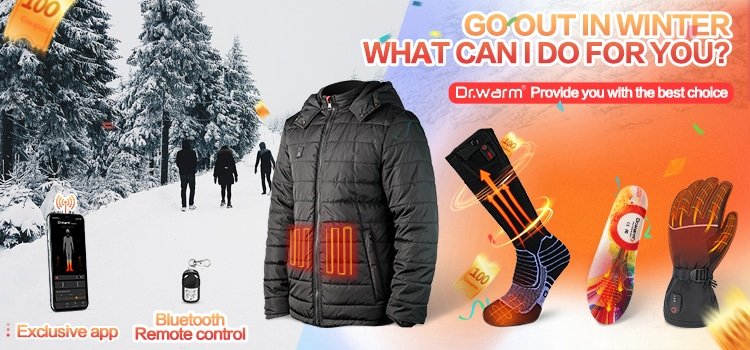
Heated wearables with app-controllable characteristics introduce certain overheating risks because of the use of remote user inputs that may accidentally push systems beyond safe operation limits. These devices can be adjusted dynamically, remotely, unlike traditional heated products, which have fixed switches, which enhances the possibility of being abused.
Remote control through apps is one of them, and the user may tend to dig the temperature high without exactly getting to touch the garment and feel the warmth. An example of this is in a case where a user switches the maximum heat on when the wearable is in a bag and this may result in excessive heat accumulation without the user noticing. This is unlike in manual controls where physical control can provide immediate sensory feedback.
The problem is reinforced by the risks of misconfiguration of the users. Beginners may turn off default settings or disregard warnings resulting in long-term high-power state In app-controlled heating system design, engineers must account for such behaviors by implementing fail-safes that override app commands when necessary.
Long heat conditions are also problematic particularly in unstable environments. A jacket that may be worn in cold weather would overheat in case the timer of the app was activated to work continuously, or in case the connection problems would not allow to turn it off in time. These dangers explain why overheating safety is necessary in hot clothing apps where thermal safety in hot wearables is not only limited to software but also to solid hardware surveillance.
Hardware-Level Thermal Protection Mechanisms
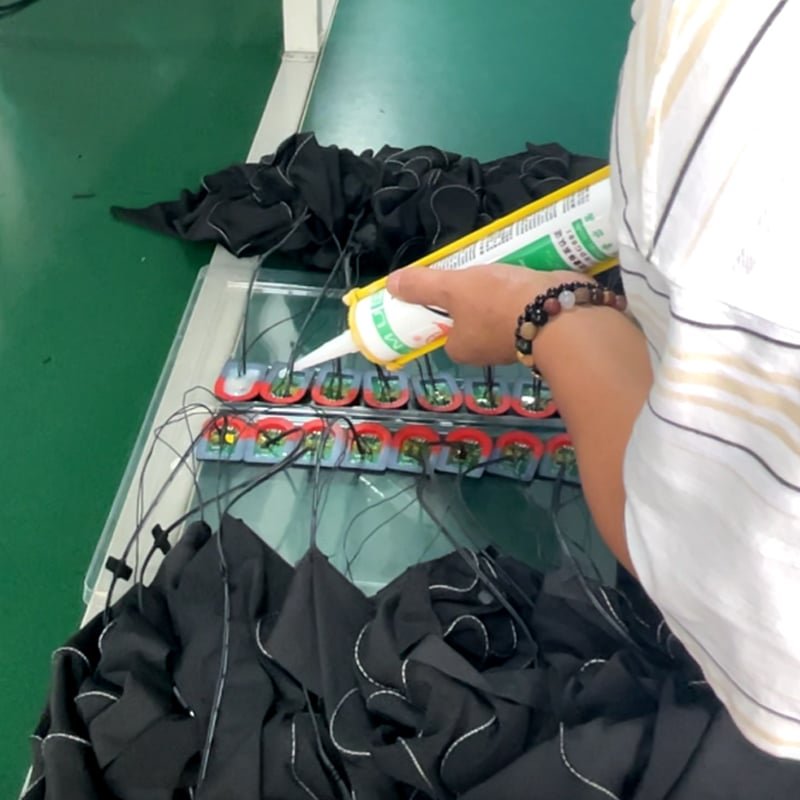
Thermal protection at the hardware level is the foundation of safety in heated wearables and does not rely on app inputs to set limits by using physical and electronic means. Even state-of-the-art app logic is not going to work without these mechanisms to preclude overheating.
Temperature sensors are included as temperature pads, e.g. NTC (Negative Temperature Coefficient) thermistors or PTC (Positive Temperature Coefficient) elements embedded in heating pads or close to the battery packs. NTC sensors also reduce resistance with increase in temperature and thus real-time monitoring of surface heat is possible. Variants of PTC, on the contrary, become resistant to self-limit current flow, which offers passive protection against runaway heating.
A sensor data is incorporated in the firmware of the microcontroller as controller cut-off logic. At the lower end of a range of readings, such as 65C in skin-contact regions, the controller will start a gradual response, gradually cutting the power delivery, and completely shutting it off when necessary. This code is coded to give safety precedence over user instruction such that app-asked settings are over-ruled upon the occurrence of risks.
Redundancy is provided by independent safety loops. These are independent circuits which bypass the main controller, and which use either fuses or bimetallic switches to mechanically cut power in event of electronic failsafes. As an illustration, a thermal fuse may melt at 80 o C, and this will completely disrupt the circuit until it is replaced.
To summarize these layers:
| Protection Layer | Function |
| Temperature sensor | Detects surface or internal heat |
| Controller firmware | Enforces safety limits through programmed logic |
| Power cutoff | Stops current flow via relays or switches |
Incorporating app-based safety control for heated apparel ensures these hardware elements align with overall system reliability, preventing over-temperature events from escalating.
Role of App Logic in Temperature Safety (and Its Limits)
App logic is a supportive role in temperature safety because it allows the user to choose preferences in predefined ranges, but it is by its nature not in the position of taking over the role of being the sole protector of overheating. This weakness is a result of the fact that the app is an external interface that is prone to connectivity problems or bugs in the software.
Temperature ceilings are usually set via user interfaces in apps (sliders topped at 55 o C, comfort). The settings are translated to commands that are sent to the controller of the wearable which in turn adjusts the power to heating elements. Nevertheless, when a sensor notices something wrong, such as a broken heating wire that leads to hotspots in a specific area, the app will not be able to interfere with the situation without hardware feedback.
The most significant challenge of apps is that it relies on communication technologies such as Bluetooth. The loss of connection may leave the device running at full heat without any control on the apps. Besides, apps are not physically able to measure temperature; they use information that is transmitted by onboard sensors. That is why the issue of heating app temperature safety should be considered complementary but not primary.
True app-controlled heating safety protection inputs be overridden when sensor data is at risk so that thermal safety in heated wearables is maintained even in case of app failure.
Over-Temperature Events and Battery Safety Interaction
Over-temperature can also overlap with battery performance, as the high temperatures caused by power consumption can cause a chain reaction of failures in an otherwise controlled situation. This interaction is important to understand how to prevent the situation when the thermal runaway in batteries worsens the overheating of the wearable.
The graph of heat accumulation versus the power consumption shows the dynamics: Intensive heating consumes more power in lithium-ion batteries, causing heat to be generated in the battery, which sensors have to monitor. In case of an overheat event, such as a short circuit, the system needs to be able to detect it in time so battery swelling or venting does not happen.
Power shutdown is normally caused by thermal events via built-in battery management systems (BMS). The BMS works as an independent body to ensure the monitoring of cell temperatures and discharge is suspended in case limits such as 60 o C are violated. This will prevent fire damage coupled with battery life.
In app-controlled setups, these interactions underscore the need for holistic design. For instance, common battery problems in app-controlled heated apparel, including over-discharge that can cause heat spikes; these problems need the mutual reactions of heating controllers and BMS.
Compliance and Safety Expectations for Heated Wearables
The international standards require strict over-temperature protection in heated wearable devices with products being tested to confirm the thermal protection in the worst-case scenario. These requirements should be a priority of OEMs and brands to gain market access and reduce the impact of legal risks.
Major certification such as CE, UL and FCC contain thermal safety requirements. CE marking according to Low Voltage Directive requires an ability to demonstrate that goods will not overheat under normal and fault conditions. UL battery-pack testing checks overheat resistance, whereas FCC checks the electromagnetic compatibility does not affect the safety circuits.
OEM documentation and verification contains extensive reports about sensor accuracy, cutoff response times and endurance tests. This involves testing under high settings during extended periods of time to ensure that there are no incidences of overheat. Here, it is vital to consider the heated clothing app OEM requirements because compliance teams need to confirm that the app integrations will not affect the hardware protection. . Heated clothing app OEM considerations are essential here, as compliance teams must validate that app integrations don’t compromise hardware protections.
Third-party labs may be needed to validate procedures such that safety levels are not dependent on application logic, which is consistent with international views of thermal safety in heated wearables.
Conclusion — Thermal Safety Is a System Responsibility
The coordinated system design, firmware, and hardware make possible over-temperature protection in app-controlled heated wearables. Applications aid in the interaction with the user, yet the real thermal safety is preserved by autonomous safety measures, being designed into the heating structure. These layers of protection guarantee integrity, so that there are no risks of user misuse or failures of components.
Manufacturers maintain safety standards without coding their systems to potentially insecure software through the primacy of hardware. To the engineers and compliance managers, this would not only address the regulatory requirements, but would also bring about confidence in the use of heated wearables as a reliable product that can be used in real life situations.