

USB-C has gained prevalence in heated apparel today as a result of the consumer demand toward universal and convenient connectivity that get rid of proprietary connectors. USB-C ports on the battery packs serving heated jackets, gloves, vests, and insoles become progressively more popular in the brands, enabling users to recharge them with ubiquitous chargers and power banks alike.
Nevertheless, USB-C streamlines the charging surfaces, though it does not do away with the suitable battery and power system design in warm-up apparel. Most brands presume that USB-C is automatically sure to make a fast, safe charge, where in reality charging relies on the total power system- battery chemistry and capacity, in-built charge controller and protection circuitry.
USB-C charging cannot work independently of battery systems but should be considered a component of an ingredient of heated clothes. It is an engineering-oriented guide that deconstructs the USB-C implementation realities in the heated apparel applications, focuses on electrical limitations, safety aspects, and practical decision criteria of OEMs, product managers, and teams.
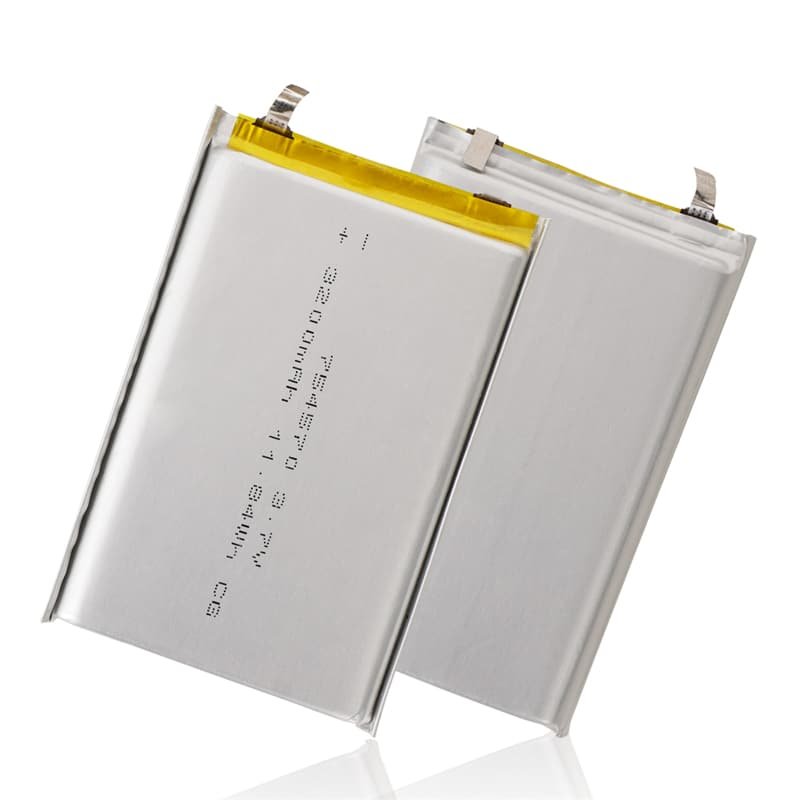
What USB-C Standardizes—and What It Doesn’t
USB-C is mostly a connector and cable standard, with the actual flexibility of power delivered by solely the USB Power Delivery (PD) protocol overlying it.
Physical form factor, reversibility and simple power delivery to a maximum of 15W (5V at 3A) are negotiation free with USB-C connector. With the introduction of USB PD (now usually PD 3.0 100W (until 240W) or PD 3.1 240W EPR), which supports intelligent negotiation of voltage and current, the system is now capable of power-smart negotiation.
Significant standardised factors involve:
- Unswerving voltage curves (e.g. 5V, 9V, 15V, 20 V in PD 3.0; up to 28 V, 36 V, 48 V in PD 3.1)
- Programmable Power Supply (PPS) to make fine-grained adjustments (e.g. 20mV steps in certain curves)
- Bidirectional power in most of the implementations.
- Such safety features as overvoltage protection during negotiation.
The only thing that USB-C is not specifying is how the sink device (the heated apparel battery pack) will treat the incoming power, thermal limits, and cell safety of the lithium-ion cells. The capabilities are offered by the charger but it is the device that determines what will be accepted, and improper implementation will result in slow charging, too much heat or even safety hazards.
The quality of the cables is important: The thickness of the standard cables can be a choice of 3A, and e-marked cables can hold 5A in order to increase power. The compatibility of chargers also differs with most consumer chargers having a maximum power of 20 V/5A (100 W) easily 10 times more than an average heating apparel but necessitating further matching to prevent mishaps.
Why Heated Clothing Has Different Charging Requirements
Heated apparel has its own set of electricity requirements that are not similar to smartphones or laptops. These devices have constant high loads (continuous discharge) running while in, say 10-30W or higher across heating elements), and battery capacities may be 2,000-10,000mAh at nominal operating voltages of 3.7V, 5 V, 7.4 V or sometimes 12 V.
This causes a dissonance: the discharge rate is much higher and longer, with recharging taking a short time and minimal weight of a pack. The stress on small cells, the rise in internal resistance and the heat produced in fast charging may bother wearable applications.
There is little or no charging on-body (on the garment) as some consumer-friendly devices have the option to be charged in-circuit. The dangers of thermal runaway are encouraged due to packs being pitted near the body, and the overcharging or an inappropriate voltage can deteriorate lithium-ion cells quickly.
The constraints require a system-level battery charge design which is balanced in speed of recharge, cycle life, thermal safety- not of an interface convenience as such. For deeper insights into overall battery architecture, refer to our guide on system-level battery charging design.
USB-C Charging Architectures Used in Heated Apparel
Various solutions incorporate USB-C systems on heated clothing batteries, and are all compromised by complexity, cost, and functionality.
Direct charge through the battery pack Connection to a charge controller on the board — The most universal is a USB-C connection that links to an onboard charge controller (usually of PD or QC protocol). To be consistent with the charging profile of the battery (typically 4.2V cell-per-cell), the controller modulates voltage which it is negotiating (9V or 12V) to the battery. It can be fast-charged by using compatible PD chargers but needs strong BMS integration to process variable-input.
USB-C charging with external adapter — There are USB-C-based systems which operate on a proprietary DC barrel or pogo-pin connector, using an external adapter cable. This is what keeps the universal interface and the native charging circuit of the battery apart, which provides flexibility at the cost of user friction and possible compatibility problems.
USB-C not for power delivery, just charge — In most applications, USB-C is only used to charge but not for power delivery, and the garment would have a special output connector. This avoids high-voltage bypass on heating elements in the process of charging.
The benefits of each approach are: Direct integration will decrease the number of parts used, and External adapters will enable backward compatibility. Current limitations Limitations Thermal buildup can occur when charging at high currents in compact packs and it requires e-marked cables to attain higher than 3A.
To learn more about the impact of these decisions on the actual performance, see our analysis of battery performance under different charging methods.
Safety and Power Management Considerations
The main issue concerning the application of USB-C to the heated apparel is safety. The battery types used in wearables, lithium-ion, are sensitive to overcurrent and overvoltage, and thermal stress, which is increased due to wearing conditions.
Key hazards include:
- Fast charging on overcurrent including cell swelling or venting.
- Overheating as a result of inefficient voltage conversion (or unsuited PD negotiation).
- Non-comparable chargers providing disrupted power characteristics.
There is a strong necessity of a powerful Battery Management System (BMS) and a specific charge controller. The BMS has to measure cell voltage, temperature, and current and apply balancing and cutoffs. Protection against over-temperature (under normal conditions this is 45-60 C) can be used to avoid charging during extreme conditions.
Compatible chargers are essential: The PPS needs a PD charger to use which may be forced to operate at levels that create more heat. There are minimum requirements that should be stated on the brands (e.g. 9V/2A minimum) and should be tested with typical chargers.
To get more specific requirements, review our breakdown of charging safety requirements for heated apparel batteries.
When USB-C Charging Makes Sense—and When It Doesn’t
USB-C charging can shine in the situations when the convenience of the user and its integration into the ecosystem are important. It makes sense for:
- Wild-to-large capacity packs (5,000mAh and above) in which the recharge time acceptable is less than 34 hours.
- Products aimed at targeting ordinary people, their owners of PD chargers/power banks.
- High thermal margin designs and modern BMS.
It adds unwanted risk or complexity where:
- The capacity of the battery is extremely low (<2,000mAh), which renders fast charging not practical or even unsafe.
- Use in extreme conditions requires maximum reliability, with simple charging (conventional DC jacks might be more robust),
- There are economical restrictions to BMS.
Brand decision checklist:
- Does the target battery voltage match between typical PD profiles (e.g 9V packs often negotiate 7.4V)?
- Does the charge controller undermine heatly when dealing with input variability?
- Have we tested on 20 or more typical PD chargers/power banks?
- Is there temperature controlled charging in the design?
- Is user education required to prevent poor quality cables/ chargers?
These are not general recommendations, but engineering judgments on trade-offs among the systems.
Conclusion — USB-C Is a Tool, Not a Shortcut
USB-C can make it easier to charge heated clothes, and unless included in a well-considered battery and power system, it will not be possible. The interface is convenient and universal, but the real performance, safety and reliability can be achieved through thoughtful electrical architecture, selection of components and validation.
USB-C adoption should be considered as a system-level compatibility and not interface trends in brands under consideration. It improves user satisfaction when implemented correctly, and may cause safety and product longevity issues when unnoticed. Consider it as a component of a larger power ecosystem – never as the entire solution by itself.