

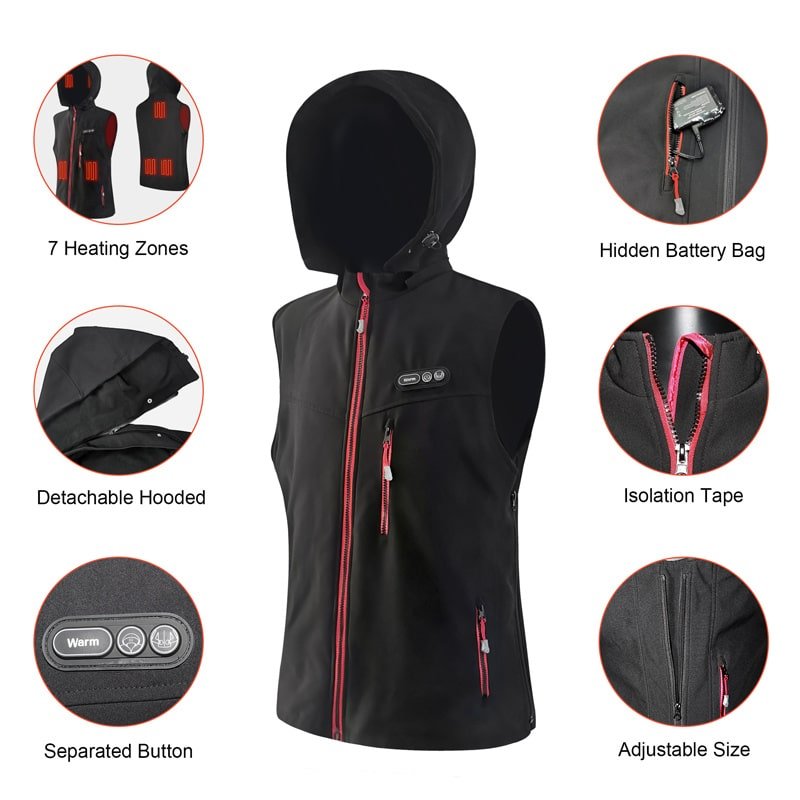
Having jackets that are controlled by apps is not always superior to the simple variant; the worth of such a solution depends on the fit between the needs and practices of the user and the system. The common misconception among buyers is that by default adding app control, overall warmth and comfort increase accordingly, however, in practice, the interface is only one of the factors that contribute to effective heating, along with insulation of the jacket, the location of the heating, and the control of power. Only when the control logic, battery design, and heating performance of app-controlled heated jackets is adjusted to the actual usage requirements, they are worth it. Otherwise the added features would add unnecessary complications that would not be accompanied by corresponding benefits.
This analysis is based on actual experimentations and production experience with warm-up clothing. It being my experience of evaluating the product designs in terms of durability and efficiency, I would break the factors to consider. The essence of positioning in this case is quite straightforward: The idea of app-controlled heated jackets being worth it will only work when its control mechanism, battery size, and heating design coincide with the scenario in which the product is supposed to be used, otherwise the complexity will be more than the advantages.
What Makes a Heated Jacket “App-Controlled”
App control in heated jackets is a step in the development of the user interface, but it does not change the nature of the heat generation operation. Essentially, app-controlled would indicate that the jacket would consist of Bluetooth or other wireless connectivity, which would enable a smart phone app to interact with the internal controller of the jacket. Such a system allows one to adjust the heat remotely, but the warmth itself is provided by the heating panels, which are also powered by the battery and not the app.
It is worth noting the difference: the application is like a dashboard that is handy, whereas the hardware in the jacket does the implementation. As an example, simple on/off and level choices are made with physical buttons in simple and simple heated jackets, but in apps controlled versions, a digital layer is added on top. This base is based on strong app design for heated wearables used in smart heated jacket systems, ensuring seamless integration without compromising core functionality.
To clarify the components involved:
| Component | Role in the Jacket |
| Mobile App | Heat level selection & control logic |
| Controller / PCB | Power regulation & safety limits |
| Battery Pack | Energy supply |
| Heating Panels | Heat generation |
Such a modular style can be customized, however, it implies that the effectiveness of app control will also rely on the level of the compatibility of these elements.
Key Differences from Basic Models
Simple heated jackets are heavy on simplicity, and commonly have 3-5 levels of heat that are switched on through buttons on the jacket. App-controlled versions can add to this with granular control, like percentage-based temperature control or zone heating (where supported by the design). However, it needs a stable Bluetooth connection and an easy-to-use application, which does not all manufacturers do as well.
Engineeringly speaking, the app does not produce any heat, it simply transmits the commands to the PCB (printed circuit board) which controls the amount of voltage the heating elements receive. There will be no app sophistication that will cover the lack of battery capacity or inefficient heating panels.
Pros of App-Controlled Heated Jackets
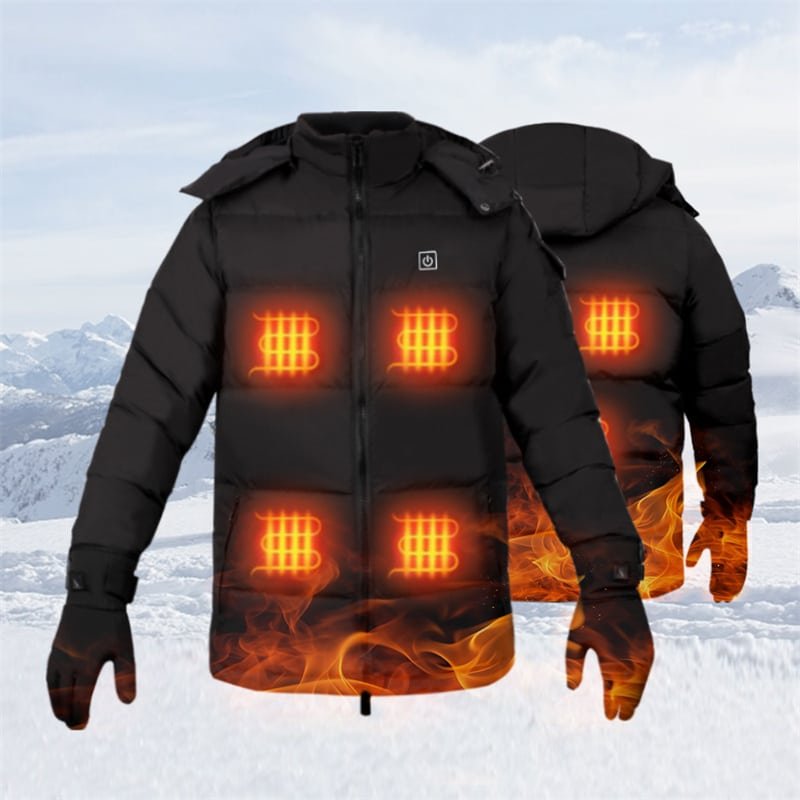
The benefits of app-controlled heated jackets revel in situations where the hands-free management of the jackets is accurate and adds value to the experience, yet they are not applied to all users with the same transformative effect. A major advantage is the possibility to make measurements on heating without having to press the buttons, particularly when it is cold and dexterity is minimal.
To techno savvy users, presets enable rapid switching of modes such as low-warmth in case of short commutes or high in case of longer outdoor exposure. The visual feedback provided by the app (a real-time battery status or temperature display) introduces a predictability that cannot be found on models based on buttons only.
The key advantages are listed below:
| Advantage | Practical Benefit |
| Multi-level adjustment | Personalized comfort |
| App presets | Convenience |
| Visual monitoring | Easier temperature management |
These characteristics can be the difference in changing settings, like changeable weather when there are elevation. For more on how mobile apps control temperature levels in heated jackets, consider how software algorithms optimize power distribution.
Enhanced Customization Options
In addition to fundamental pros, app control can also contain timers to avoid overheating or battery wastage which can be helpful when using it in forgetful mode. Manufacturing wise, this gives the OEMs the ability to distinguish the product layers and provide premiums with app-integrations to markets that require smart functions.
Those advantages, however, presuppose good connectivity; in reality, they can be maximized when the heating design of the jacket promotes evenness, and not the presence of hot spots, which no application can entirely address.
Cons of App-Controlled Heated Jackets
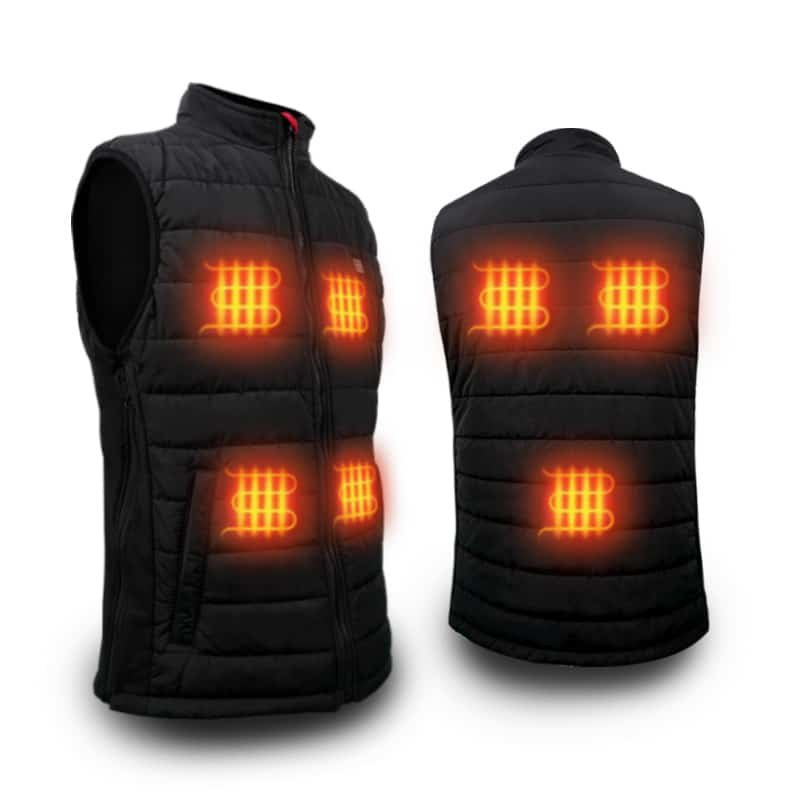
On the other hand, app control creates dependencies, which may compromise reliability in practice and such jackets are not as suitable to users who place high values on simplicity. The first weakness is that it depends on Bluetooth, which may fail in the high-interference and low-temperature regions where there is a loss of signal strength.
Also, the app itself would be a drain to the resources of the device and when not used well, it may cause frustration instead of relieving. Battery wise, the continuous contact between the app and controller is a drain booster, and it reduces the run time of the basic models.
Key cons include:
| Limitation | Real-World Impact |
| Connectivity reliance | Possible signal interruptions |
| App overhead | Faster battery drain |
| Learning curve | Less intuitive for some users |
These problems underscore the fact that not all app-controllable models are better; as an example, the battery life impact of heating apps in wearable jackets often stems from inefficient power management in the app’s background processes.
Potential for Increased Complexity
Another con is brought out in manufacturing awareness that added electronics raise failure points. It is important that the controller is waterproofed and then short circuiting may occur due to moisture intrusion. The tech might be overkill to users in rough environments, and more robust and no-frills options are required.
Comfort and Temperature Consistency in Real Use
The perceived comfort achieved by app control can be made more comfortable by fine-tuning, yet does not guarantee even-temperature distribution of the jacket under different conditions. The fit of the garment, its insulation with the material, and the external cold of the wind are also more significant factors of the total warmer effect.
To illustrate the point, despite the use of zone heating using an app, improper positioning of the panels may result in some areas such as the lower back not going consistently warm. Performance is also affected by environmental factors, like humidity or level of activity, in which app feedback promotes but cannot dominate physics.
App controlled jackets tend to work well in controlled conditions during testing, however in the real world, the limitations are revealed. Everything can be explained by how app control functions inside heated wearable systems reveals that software can optimize distribution, yet hardware constraints like battery output cap the results.
Factors Affecting Consistency
The quality of insulation is the most important; a properly insulated shell helps to keep the heat in and amplify app adjustments. The mobility of users is also important, as sitting still and walking around require a different amount of heat, and apps with adaptable features deal with it partially. Nonetheless, to achieve maximum uniformity, the design of the jacket should not be flashy controls but focus on the flow of heat.
Safety and Reliability Considerations
When the app-controlled heated jackets are enforced on the hardware level, the safety of the system is strong no matter whether the apps are involved, but the reliability can be negatively affected by the complexity. The controller usually has inbuilt safety measures such as automatic shut down to avoid burns, and does not require the app to run.
There should be fail-safe temperature limits, which limit the output to safe temperatures (e.g., 50-60 C) to prevent skin irritation. In the manufacturing process, they undergo stringent testing to meet the standards so that the system does not entirely depend on software which may malfunction.
There is an issue of reliability in the form of Bluetooth vulnerabilities; when an app is disconnected, the user will not be updated on their status but the jacket will remain operable at the last activated settings. The battery management is important, such as the over-discharge protection will eliminate the danger, still, cell stress can be eliminated by using the batteries often and this will decrease the life span.
In the engineering perspective, it is better to focus on redundancy of safety circuitry rather than on the functionality of application.
Durability in Harsh Conditions
Under extreme usage, such as low temperatures, other components, such as batteries, wear out sooner, and no extra protection is provided by app control. Connection checks, such as routine maintenance are recommended to remain reliable.
Who App-Controlled Heated Jackets Are (and Aren’t) For
Digitally integrated app-controlled jackets are appropriate to people who appreciate technology but are not the best, which is limited to the comfort of using technology and the intended use. Outdoor enthusiasts with technical backgrounds will be the greatest beneficiaries because with the help of apps, they can make changes in activities such as skiing without removing their gloves right away.
Urban commuters may be medium-value buyers, who enjoy presets in their day-to-day life but do not require high-tech apps. Contrary to this, industrial workers working in harsh environments tend to choose the simple models due to their ruggedness and absence of connectivity problems.
Older or non-technical users might have a problem with set up and it is more convenient to use simple jackets.
Suitability varies:
| User Type | Suitability |
| Tech-savvy outdoor users | High |
| Casual commuters | Medium |
| Industrial workwear | Low–Medium |
| Elderly users | Low |
In the case of brands differentiating the product, developing app-controlled heated products for specific user needs involves assessing these profiles to avoid over-engineering.
Matching Features to Profiles
Users of outdoor sports make use of timers in order to heat the sporting material in intervals, thereby saving on battery usage during breaks. Shoppers of workwear, however, put the focus on durability as opposed to apps, where quality overrides the convenience.
Conclusion — “Worth It” Depends on System Fit, Not Features
To conclude, the app-controlled heated jackets may also offer significant value to users, provided that their control logic, battery capacity, and heating design are consistent with the requirements of the users. It is also important to learn their strengths and weaknesses in order to determine whether they are worth doing it or not. Specific attributes such as smart jackets that are app-controlled are attractive to some profile type, yet the advantages and disadvantages of app-controlled jackets favor plain and uncomplicated ones. Mobile app-enabled heated jackets are the best in personalized applications, but the advantages of app-controlled heated jacket cannot be increased without similar hardware. Finally, judge by what you need, rather than by what the media claim to be the new hot thing, to see whether they will suit your needs.