

The most common safety failure in the field of heated clothing is battery incidents, which usually lead to recalls, injuries, or fire. These problems are often not related to the defects of battery cells themselves, but to the problematic PCBA (Printed Circuit Board Assembly) protection logic in which power is handled.
Most OEMs erroneously think that certified lithium-ion cells are safe. However, with hot wearables, those that are subjected to the changing loads and other associated environmental factors, system level protection design is the real difference maker when it comes to reliability.
The safety of batteries when used in heaters in garments should not depend on broadcasting specifications but rather on the protection circuit design. With heated items, battery safety cannot be ensured by the battery, but rather the way the PCBA regulates charging, discharging, and heat generation. Unless PCBA guarantees are in place, even quality cells are swollen, overheated or failed before its time, which makes the product compromised.
The article, which is based on real-life engineering in heated clothing, analyzes the main risks, protection capabilities, implementation, and evaluation strategy towards ODM partners of the OEM.
Why Batteries Represent the Highest Safety Risk in Heated Clothing
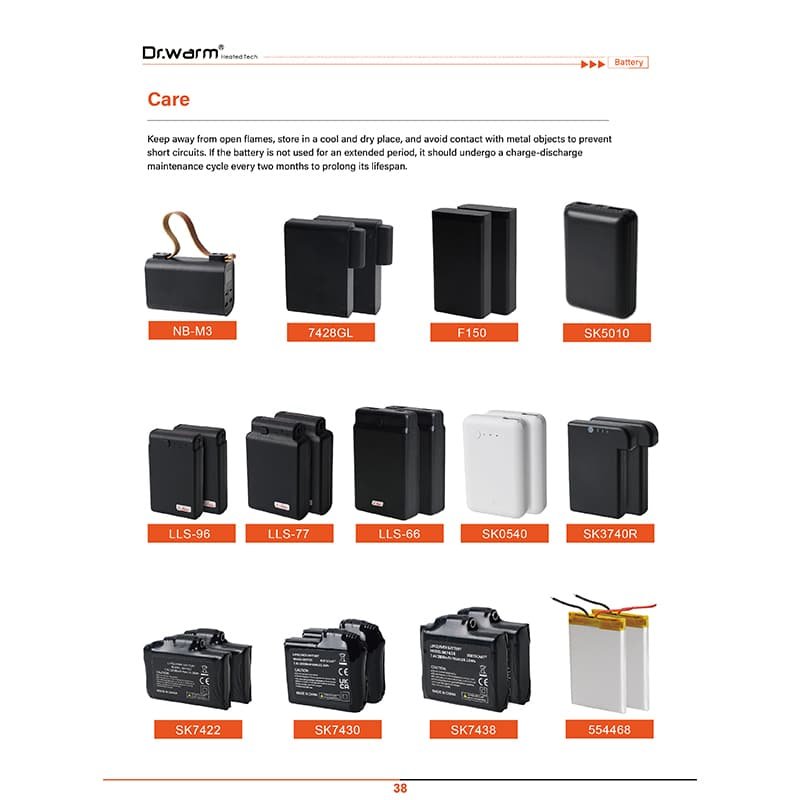
Batteries have special requirements in the field of heated apparel which puts greater stress on them compared to the requirements of typical consumer electronics. Repeated stress on cells through the continuous discharge of required power to energize heating elements, with many being 1-2 amps continuously during hours, is not repeated like devices such as smartphones.
This is only aggravated by frequent thermal cycling once clothing is cooled and heated in and out of the different ambient conditions (sub-zero cold outdoors and charging in), it experiences expansion and contraction, potentially, ultimately damaging separators and electrolytes. Physical stresses such as bending, body movement compression, exposure to moisture or sweat are also applied to wearables, and are not typically experienced by standard electronics. These factors are use case specific because unless custom protection is added, batteries in hot garments are subjected to internal short circuiting, capacity loss, or thermal runaway as has been observed in case studies of insoles accidentally igniting during regular use is due to uncontrolled degradation occurring regardless of protection.
Key Risk Factors in Heated Apparel Applications
- High-Current Discharge The electrode wear rate can be increased when constant power is provided, such as by heating pads, which may draw currents of up to 6A once unregulated.
- Environmental Variability: the low temperatures decrease battery performance, forcing users to use increased heat, which further tortures cells.
- Induced Stresses by the user: Folding jackets or dropping the gloves are some of the stresses that may cause mechanical damage to the cell resulting in the emergence of undetected faults.
Identifying and making efforts early on during design reduces cascading failures and in turn could attract recalls or lawsuits.
What Battery Protection Circuits Are Responsible For
Protection of batteries in heated clothing should be an active management of multiple parameters to prevent the threat, as the point of defense against failures that cannot be addressed by cell-level protection.
| Protection Function | Controlled Risk | Failure Outcome if Missing |
| Over-current protection | Excessive load from heating elements or shorts | Overheating, potential fire |
| Over-charge protection | Voltage spikes during charging | Cell degradation, swelling |
| Over-discharge protection | Prolonged use results in deep drainage. | Permanent capacity loss |
| Thermal cut-off | Heat increase due to ambient or internal heat. | Dangerous temperature, dangerous heat problem. |
| Short-circuit protection | Wiring faults or physical damage | Instant shutdown, user hazard |
These functions are not able to work independently but have to be synchronized by integrated logic. As an example, the thermal monitoring should be activated by over-current detection to avoid compounding complications since high load can rise to high temperatures in a short period of time. It is important in hot clothes where batteries are stitched in proximity to the human body; not only does this interplay guarantee prolonged battery life but also human safety due to poor coordination, burns have been recorded as a result of this.
Coordinating Protection for Optimal Performance
The circuits are designed to utilize the concept of a feedback loop: in case the concept of over-discharge is detected the system may cut off heating output slowly, instead of directly switching off, and keep the system usable without damaging the battery.
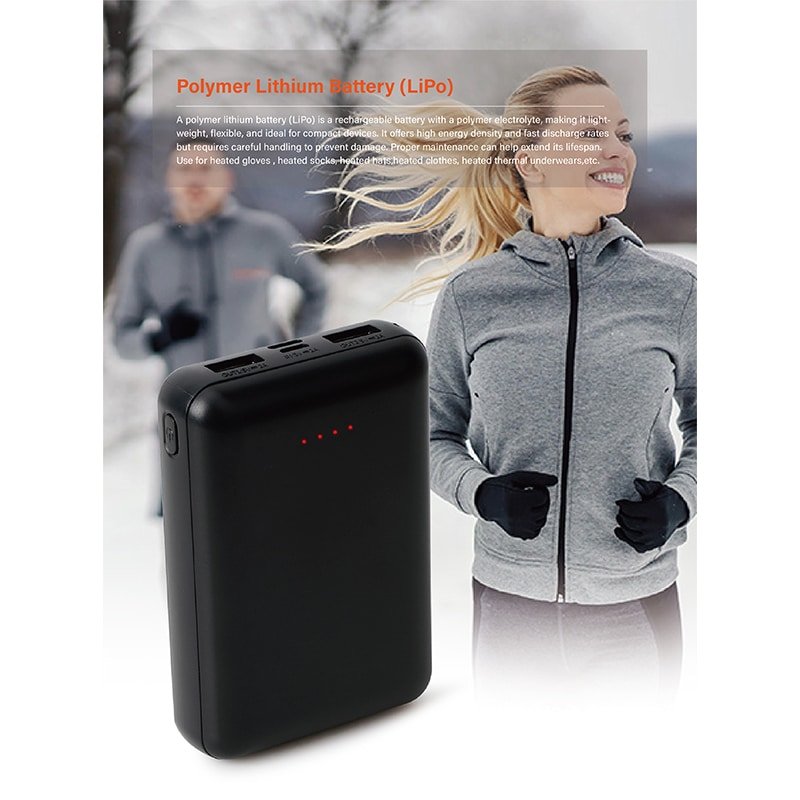
How Battery Protection Logic Is Implemented at the PCBA Level
Battery protection logic at the PCBA level represents a particularly important point that relays the interactions between the battery pack, heating load and general system control and provides safe operation in the dynamic scenario.
The PCB is attached to a battery pack that has ICs (such as DW01 or others used as temperature, current, voltage controllers) that detect the voltage, current and temperature based on NTC-detected temperature sensors like NTC thermistors. These ICs control MOSFETs, which are commonly N-channel back-to-back types, to either charge or discharge paths and therefore serve as gating switches. The embedded firmware of the PCBA is equally important: it can be active-controlled: it can regulate the rate of discharge on the basis of real-time conditions, like throttling heat production in case temperatures reach the limit.
This is unlike passive protection (e.g., mere fuses that respond to extremes only) in that predictive interventions are also possible, e.g. firmware programs can study usage patterns and avert over-discharge before it happens. This is vital in wearables that are heated and the loads depend on settings of the user. To get a more detailed understanding of the integration of these components, it would be a good idea to refer to the full-fledged PCBA design of heated wearable items,, consider reviewing comprehensive PCBA design for heated wearable products, should be synchronized to meet the specific requirements of integrating the wearable with apparel.
Hardware vs. Firmware in Protection Logic
Eliminating shorts can be done by immediate responses (e.g., cutoffs in tens of microseconds with MOSFETs), and further smartening can be done by software, such as smart thermal management to ensure the maximum possible service without declining performance.
Why Battery Cell Certification Alone Does Not Ensure Safety
Basic safety through battery cell certification (UL 1642 or IEC 62133) has been shown to be limited to controlled setting, but fails to meet the unpredictable real-world situations of heated clothing.
Supplier datasheets usually outline limits such as maximum discharge rates or temperature limits under ideal conditions- however heating loads in apparel are dynamic and depend on the manipulation of the user and temperature, as well as the layer of insulation as well as the temperature of the external weather. A certified cell could easily run 2A in a lab setting but could easily get higher than safe thresholds in a jacket that is drawing uneven currents can cause irregular currents under the body heat.
In this case system responsibility overrides component responsibility: PCBA should compensate it with dynamic limits, e.g., throttling the current at cold boot: at these times the battery resistance is the highest. The only option that should not be considered is cell certs because this will overlook the risks of integration that may cause failures such as over-charging swelling in wearables when subjected to varying voltages.
System vs. Component Accountability
OEMs should understand that certifications do not understand the interaction of cells; it is the way PCBA coordinates the whole power ecosystem where safety is seen as being tested.
Common Battery-Related Failures Caused by Poor PCBA Design
Failure of battery in heated clothing is often caused by poor PCBA design, and thus, inconveniences turned out to be significant failures.
| Failure Mode | PCBA Design Gap | User Impact |
| Rapid capacity loss | Limitless discharge curve that is aggressive. | Reduced usage time, recharged often. |
| Battery swelling | Weak charge cutoff logic | Safety issue, possible bursting. |
| Sudden shutdown | No margin of monitoring voltages. | Unpleasant user experience, disrupted coziness. |
| Excessive heat | No temperature or current limiting feedback. | Burn risk, discomfort |
The causes of such modes frequently lead to poor reasoning, including the lack of health monitoring to detect a premature degeneration due to cyclic stress. As an example, cells may fall below 2.8V which may irreversibly damage cells without adequate over-discharge protection. To prevent these pitfalls, OEMs would examine the most frequent PCBA design errors in the heated apparel,OEMs should study common PCBA design mistakes in heated apparel, which details how gaps like insufficient MOSFET sizing lead to cascading failures.
Preventing Failures Through Design Best Practices
These risks can be reduced by adding extra sensors and redundant algorithms which will make failures not global but isolated.
Battery Protection Design and Its Impact on Compliance Testing
A well-designed battery protection is critical in passing compliance test because a compliance controller not only examines the performance of the basic cells used, but also the fault management in the system.
CE, UL and FCC standards focus on battery behavior with stress tests, which are tests designed to stimulate over-charge, short circuits, and thermal extremes, both of which result in protection logic. Bad designs may be cleared by nominal checks and fail abuse cases, such as being operated with sustained high-current draws simulating wearing something warm, and so not be compliant.
The fixes that come in later in the product life-cycle like the retrofitting of superior ICs are expensive, as they may need a redesign that can put the product behind by months. The key lies in the proactive incorporation of protection at the very beginning that makes the certification run fairly. For specifics on aligning designs, refer to PCBA design requirements for CE, FCC, and UL in heated wearables.
Strategies for Compliance Success
Introduce tests simulation early, with protection limits of more than minimum levels of real world margins.
How OEMs Should Evaluate Battery Protection Capability in ODM Partners
ODM partners need to have battery protection competency stringently evaluated by OEMs to prevent the transfer of design weaknesses that undermine product quality.
Some of the questions are: What types of ICs and MOSFETs do you have in over- current and thermal protection? What do you test against the changeable loads in against against heated clothes? Demand ownership transient shows, proprietary BMS implementation or own testing records, instead of off-the-shelf get-up-and-go packages.
Separate system or assembly of a cabinet with a simple wiring system and casing (i.e. assembling a simple pack) with the actual protection architecture design that requires special logic to be active. Partners with in-house PCBA design capability can be considered more competent and eliminate risks of generic solutions collapsing under pressure.
Evaluation Checklist for ODMs
- Examine previous failure experiences and recollections.
- Demand prototypes with built in protection in order to test independently.
- Give preference to those partners that are experienced in wearable-specific stresses.
Conclusion — Battery Safety Is a Design Responsibility
Battery safety is not a supplier characteristic in heated clothing and neither a certification check box. It consists of the result of premeditated protection circuit design choices made on the PCBA level. System-level accountability can be taken seriously at the very beginning, which means that OEMs will be able to avoid failures, maximize the life cycle of a product, and at the same time achieve compliance. This engineering-oriented solution moves towards not correcting, but designing to prevent accidents in the long-run, protecting the end-users and the brands.