

There are numerous battery failures that make it through in the heated apparel production and are avertable with strict manufacturing techniques. Complaints that often arise in the end-users such as short run times or unexpected shutdowns are usually as a result of decisions made at an early stage of design, assembly and validation- rather than handling in the field. These are often falsely blamed on misuse by the user, like over-discharge, when they are actually in the design of the batteries in the heated clothes, and associated with the problems of integrating the system. The majority of battery issues in heated clothing are injected into the manufacturing and system integration- and not in the customer usage. In hot apparel, the ability of batteries to maintain discipline and system validation is the key aspect of battery reliability.
Based on the many years of experience that I had as a manager in charge of production lines dealing with heated jackets, gloves and vests, I have observed how simple integration oversights may result in massive failures. OEMs and teams can minimize factory-level returns, warranty claims and risks by focusing on factory-level prevention. Some of the common problems, root causes, and preventative controls are discussed below as to why problems start in the manufacturing.
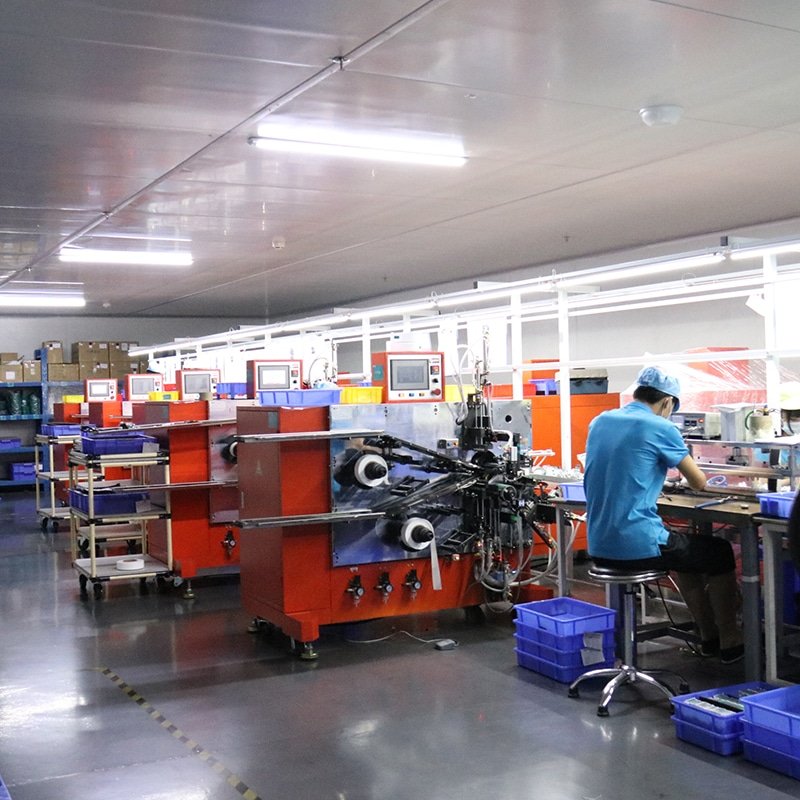
Why Battery Problems Often Originate in Manufacturing
Unusual component behavior in heated apparel is seldom a solitary component failure; rather it is a system failure of the way the battery is handled and assembled in the production process. At the heart of it all, lies a severe difference between the quality of each battery cell and the stability of the whole system. An expensive lithium-ion battery could be fine during test standards but when incorporated into a heated garment, it will be susceptible to stresses created during assembly and undermine its performance.
Thanks to the dynamic nature of the environments in which they work (flexing with the fabric, withstanding temperature changes, providing power to heating components in different quantities), heated apparel batteries are especially susceptible to manufacturing errors. Even minor process control variations, like bad soldering or poor sealing, do not happen to a single unit; they can propagate throughout the batches and cause high failure rates in the field. As an example, what might seem as a “user error” such as a battery not holding charge is usually a validation of the system that was assembled whereby the capacity of the battery was not correctly matched with the power requirements of the apparel.
This is not the aspect of throwing blame on the production teams but the reality of manufacturing power: heated garments are complicated processes of interaction between electronics, textiles, and sources of power. Even minor breaks in the integration become more and more noticeable without strict measures, transforming what would be a simple quality escape into an expensive recall. Handling them on the initial stages-with improved incoming inspections and in-process tests-will be treating the symptom instead of the underlying pathology.
The Role of System Integration in Battery Reliability
The integration of certain components is where most battery failures in heated clothing root because an incompatible component leads to a domino effect. An example of this is when the discharge curve of battery is not synchronized with the voltage requirement of heating system, this will result into efficient power delivery and wear and tear. This is why adopting manufacturing-grade battery solutions for heated apparel in heated apparel should be considered at the earliest stage in the product design; it helps them in compatibility and also in cut back variability in production batches.
The Most Common Battery Problems Seen in Heated Apparel
The commonest battery issues in warm apparel can be reported as symptoms that can be foreseen to be a result of quality workmanship in the production, rather than the consumer behaviors. Based on my experience during the auditing of factory lines, these problems can be observed regularly in cases where the controls of the processes are weakened, and it concerns not only the heated jackets and gloves but also the vests and insoles.
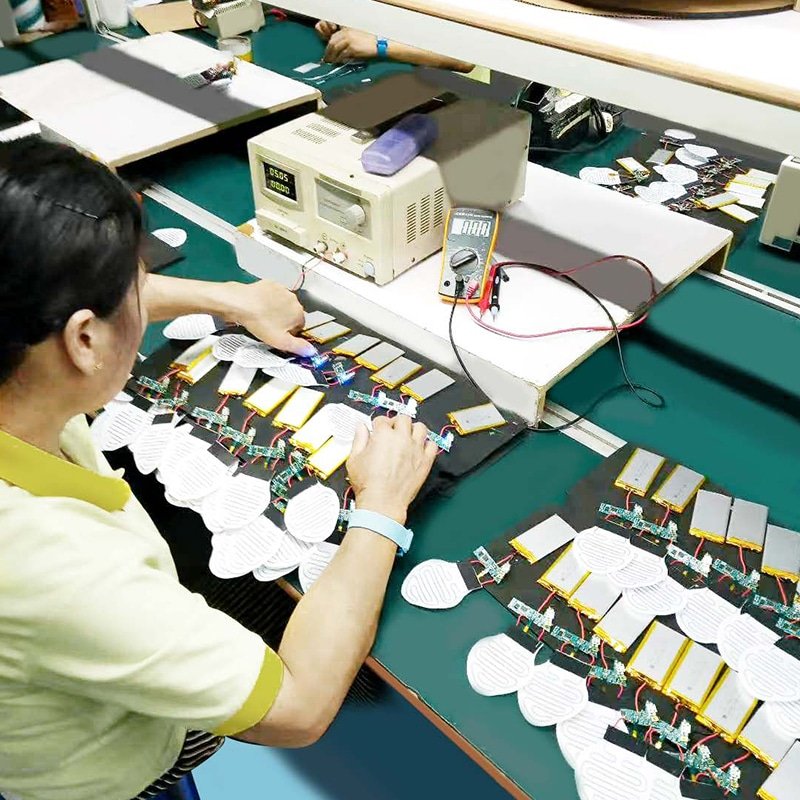
Premature Shutdown Under Load
The most common complaint is that sometimes the batteries turn off due to peak power consumption by the heating elements, e.g. when the heating is on high and the cold weather is on. This is not normally caused by over use but is often caused by lack of testing of load profiles during assembly where the internal resistance of the battery is not further characterized.
Inconsistent Runtime Between Units
Fluctuating run time – a jacket can be used 8 hours on a charge, but another cannot be used longer than 4 hours – accentuates inconsistencies between batches. This is due to the fact that there are inconsistencies in the calibration during the manufacturing process, which results in the fact that cell balancing and the rates of discharges differ among the different products.
Swelling or Deformation After Limited Cycles
A safety risk, battery swelling takes place after only a few charge cycles in haphazardly handled production. It is generally related to the risks of overcharging of the apparel caused by controller incompatibility or poor ventilation of the apparel design.
Intermittent Power Loss
The lapse of quality control of the laps in battery control of heated clothing is frequent in intermittent failures such as flickering heat or sudden drop-offs. These are symptomatic of instabilities in connections that were added in the course of wiring and soldering.
These symptoms are not random and the consequences of unchecked gaps in the processes but rather expected results and this is why preventive action is needed in the manufacturing processes to assure uniformity in the way things are done.
Root Causes Behind These Battery Problems
In the background of any typical issue with batteries in heated apparel are the root causes that are connected with the manufacturing choices, which may include a lack of fit, or an oversight that would render identification with the correct protocols. Knowledge of these assists the production managers to make specific remedies.
Battery Capacity and Discharge Mismatch
One of the main sinners is the choice of batteries with capacity that is not consistent with the energy demands of the apparel, which results in over-discharge and shorter life span. Such a mismatch increases during production when there is no standardization of load testing.
Poor Electrical Connections or Wiring Stress
Flexing fabrics create wiring stress which leads to micro-fractures, leading to intermittent failures. This is compounded by poor strain relief during assembly that results in major disconnects out of minor vibrations.
Inadequate Thermal Management
Electronics release internal heat which requires proper dissipation designs as otherwise, batteries become overheated and degrade faster. This root cause usually arises because of omission of thermal simulations during prototyping.
Insufficient Incoming Inspection
By not conducting rigorous inspection on incoming cells, low quality parts are introduced into the process where later in the process defects such as internal shorts are observed as swellings or shutdowns.
Tracking these to the factory processes, the manufacturers will be able to change the symptom control to the root-cause eradication to avoid the issues of the batteries in heated apparel prior to market release.
How System Integration Errors Amplify Battery Failures
The system integration faults in the production of heated apparel are multipliers and a minor variation in batteries becomes a mass failure that can compromise the reliability of the products. The trick is in the way the battery communicates with controllers, wires, and heating components, which are the points where the lack of calibration leads to the problem of compounding.
To begin with, the variation between the output and heating element demand of the battery will result in voltage drop, leading to premature shutdowns during load. This is not an issue in battery per se, but a system level issue where the power profile does not match the actual draw pattern in the real world. The calibration of controllers is also crucial; incorrect calibration will end up forcing batteries into unsuitable cycles, reducing their run time and promoting swelling.
Cable routing and connector choice also are important factors. Poor choice of connectors may either corrode or loosen as time goes by, and poor routing exposes the wires to stress caused by fabrics and as a result intermittent loss of power occurs. These errors can increase the field failure rate by 20-30 per cent on a single error in the advice I have given to OEMs, where the integration tolerances are different by 5 per cent.
To address this, factories need to focus on end-to-end simulations in the course of integration. This involves subjecting the assemblies to stress testing tests in simulated wear conditions to identify any mismatches beforehand. Emphasizing system-level battery and heating matching it is crucial to make sure that batteries are not overloaded so that their integrity is maintained during the lifetime of the product.
Manufacturing Controls That Prevent Battery Issues
The first line defense against battery problems in heated jackets and gloves lies in effective manufacturing controls, which involve the prevention of the battery problems in the form of structured inspections and validations, instead of making corrections after the production is done. These applied in a systematic manner instill reliability into each unit.
Incoming Material Inspection
Begin with the strict inspection of battery deliveries: check the cell voltage, capacity and impedance against specifications. This detects faults in the manufacturing process of the defective batteries of the heating clothes at an early stage and faulty parts are not progressed.
In-Process Electrical and Thermal Testing
Conduct real-time tests such as continuity tests and thermal imaging during assembly to make sure that connections are not subjected to flex and heat. This determines wiring stress or mismatches prior to encapsulation.
End-of-Line Functional Validation
Final validations are done to complete a complete cycle of charging, discharging under load, and environmental stresses to ensure stability of the system. Efforts with automatic aging tests help to identify the possible swelling or irregularities in the run time in a much faster manner.
In this case, focus is on preventing, rather than fixing: the problem is detected during the process and it eliminates scrap and improves uniformity.. This approach demands battery system engineering discipline, with each step being in line with established procedures to eliminate risks as much as possible.
Why Post-Sale Fixes Cannot Replace Manufacturing Prevention
Fixes to battery issues in heated apparel after sales consider the symptoms but not the causes of the initial failures in manufacturing, so the costs and lost trust recur. Warranty changes may meet short-term customer requirements, but do not address structural causes of weaknesses such as integration incompatibilities.
The economic cost is quite high: returns may be more than 10 percent in irregularly managed lines, and shipping, refurbishing, and lost sales can be added to them. The damage to reputation is more difficult to calculate – the adverse reviews of battery problems in heated jackets and gloves will never forget the experience to keep future customers away. Field fixes, including updates of programs or changing parts, provide short-term relief, but leave root causes that are inherent in production, so the same issues continue to occur in new batches.
This highlights the significance of first-time-right production: even the initial investment in the control would pay out much more significantly than reactive actions. To ensure sustainable quality, brands and OEMs should remember that proper prevention occurs at the factory line and not in queues when attending to customers.
Conclusion — Battery Quality Is Built Into the Process
When it comes to heated apparel, battery issues can be stopped way before the products get to the customer- by longstanding processes of manufacturing in alignment, validation and consistency of the system. With disciplined design decisions, extensive testing, and integration check, the factories can eradicate most of the problems in the quality control of the heated clothing batteries through the root. This does not only minimize defects and returns but also builds a long-term reliability that promotes brand development. After all, battery performance is no accident, it is the literal result of rigor in production.