

The problem of safety in heated clothing systems is a shared concern at the level of hardware, firmware, and software where every part of the system helps to avoid the risk of such things as overheating or electrical malfunctions. Although apps may increase awareness and direction in user interactions, they do not substitute the fundamental hardware protection of imposing safety boundaries. Another myth is that the app interface directly governs safety, but actually, it is a supplementary feature as it affects the actions of the user, but not to the point of injuring the physical protection. The primary use of app design to enhance the safety of heated clothing systems, instead of direct enforcement of temperature limits, is to minimize misuse and assist in protecting logic.
The design of app enhances safety in the system of heated clothing by informing user actions, controlling heating patterns, and assisting hardware protection, whereas final safety control lies at the controller and firmware level. Such a layered solution will provide chances to ensure that there are safe app-controlled heated wearable devices to reduce threats without overreliance on software that can be affected by connection failures or user controls.
App design must be considered as a component of an overall safety ecosystem as a system architect specializing in heated wearables. To OEMs and product managers, this boundary is essential in spelling out requirements that emphasize reliability rather than superficial features.
What “Safety” Means in Heated Clothing Systems
Heated clothing systems are not just concerned with the functionality but also with preventive measures against any threats that might arise in all the levels of functioning. Fundamentally, safety is characterized by non-negotiable limits that shield users against burns, electrical problems, or failures of the system which makes it unique compared to comfort settings such as variable heat settings.
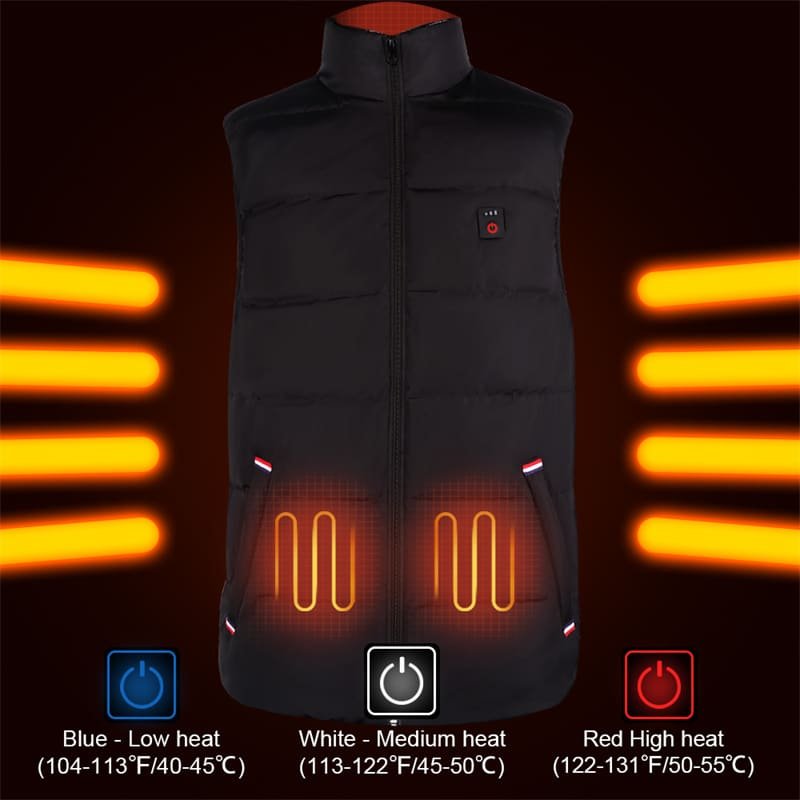
Comfort control can be used to choose in safe settings, these being low, medium or high levels of heat, however, safety protection has hard limits which cannot be ignored, no matter how the user selects the setting. These levels are crucial since even when heated clothing is used, it is usually in direct contact with the skin and any slight variation may cause harm. Examples of this would be thermal safety limits the highest temperatures that can be reached without burns and electrical safety limits the maximum current that may be drawn to prevent battery overload.
In order to explain the complexity of the concept of safety, we can state the following definitions:
| Safety Aspect | Description |
| Thermal safety | Avoids excessive heating through the imposition of temperature limits and cutoffs. |
| Electrical safety | Avoids over-current, short circuit, or battery failure by use of monitoring and fuses. |
| Usage safety | Minimises the risk of misuse through instruction on proper operation as well as warning of unsafe trends. |
| System safety | Arrange and organize the layers, so that the hardware, the software, and the firmware work in order to protect the whole system. |
This framework explains why the hardware-led approach is necessary, and apps should serve as supportive measures. The engineers that are involved in the design of heating applications safety design should combine all these factors to produce systems that are resilient to real-life factors such as environmental factors or human mistakes.
How App Design Reduces User-Driven Safety Risks
Properly designed apps reduce the safety hazard caused by the user due to the encouragement of user-friendly engagement that discourages risky actions in hot clothing systems. Users tend to push systems to the limit either accidentally, like leaving them running on full heat all night, which may put pressure on batteries or heating coils. This is solved by preventive features in the app design which does not frustrate the experience by educating and limiting it.
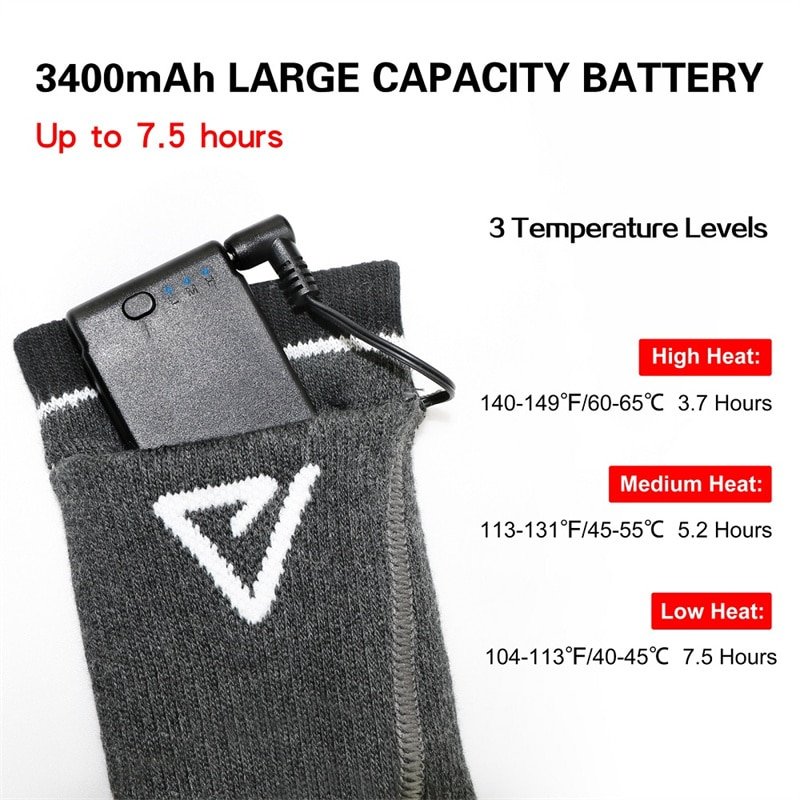
Good heat-level labeling is one of the principles. Rather than imprecise icons, apps need to display clear descriptions, such as Low (Safe All-Day) or High (Limited to 30 Minutes). This also minimizes chances of users choosing inappropriate environment to their activity like extended high heat when performing sedentary activities and may cause some discomfort or slight thermal accumulation.
Auto-shuts and timers are additional safeguards to usage. Through the introduction of countdowns visible on the app dashboard, mechanisms can encourage users to review their settings to ensure they do not operate the device in a forgetful manner that could lead to draining the batteries without much precaution or uneven heating. An example would be an application alerting: “You are on high heat and have been doing it 20 minutes–you may need to switch to medium to get comfortable.
Intelligent logic, like the use cap restricting heat after a set period of time, or allowing the user to override postponement, prevents the prolonged use at maximum level. This does not only increase the life of the products, but also conforms to safety measures, as it prevents circumstances when users do not pay attention to the physical responses.
To apply these features to brands, the investigation custom app design for heated clothing can provide tailored solutions that integrate seamlessly with existing hardware.
Key Strategies for Risk Reduction
Within this umbrella, one can suggest splitting the app interfaces into areas: a main control panel where the user can make a quick readjustment and a safety dashboard where the user can track the usage history. This framework enables users with strong incentives and convinces users to safer behavior with subtle hints implemented in the gamified incentives on balanced heat use.
App-Level Safeguards That Support Hardware Protection
App-level protection is a fortification of hardware protection that offers software-based checks that foresee and notify in advance possible malfunctions before they grow out of control. These capabilities are a defense in the first line feeding information to the controller as well as giving users actionable data.
Soft temperature limits, e.g., can suggest or automatically adapt settings lower than hardware-imposed limits. In case a user tries to set the heat to a level that is not safely ambient adjusted, the application may step in with a contextual message: “Ambient temperature of 32 F detected- recommend medium heat to ensure maximum battery duration and safety.
Another important tool is usage warning, which is invoked by pattern recognition. The app can interpret the data on the session and raise an alert to an abnormality, such as clicking through heating levels quickly, which could represent a fault or abuse. Messages like Unusual heating pattern detected -check connections are to show the user the corrective measures to take, thus indirectly assisting in electrical safety.
Time constraints placed on heating at the application level make it impossible to have marathon sessions that can overload the system. Apps make sure the hardware is in line with its capabilities by capping continuous use and periodic resets to minimize the wear of other parts, such as lithium batteries.
These measures can be used in the app-based safety control for heated apparel, as examples of how software can be expanded to cover physical protection without crossing the line.
Implementing Effective Safeguards
Integrate machine learning to act predictively as the app learns the habits of the user to prevent a threat. This will guarantee safety functionality in the heat application of clothes to be dynamic and user-centric.
Why Apps Cannot Replace Hardware Safety Mechanisms
The hardware safety measures cannot be substituted by apps because using software is limited by the nature of its reliability: it requires connectivity and may have a latency in real-time control. There are hardware like thermal sensors and cutoffs that are independent in order to implement safety to ensure that the hardware is protected even when the app becomes unconnected or malfunctions.
App latency is caused by Bluetooth or Wi-Fi dependencies, when signal delivery delays may temporarily permit the existence of unsafe conditions. So, as an example, an app command to turn down the heat would require seconds to execute, hardware must interfere immediately, through inbuilt fuses, or thermostats.
This is further supported by connectivity, which makes apps useless in far corners or when signal is distorted and the only option is safety which is in the hands of controller and firmware. Autonomous thermal limits are therefore necessary, which are hard wired to turn off power at set limits such as 140 F, irrespective of an app.
The separation ensures integrity of the system since programs are subject to exploits or system attacks by users, but hardware cannot.
For deeper insights into overheating protection in heated clothing apps, the way that these mechanisms work in conjunction with an app logic could be interesting.
Boundaries in System Architecture
Engineering-wise, this gap is resolved by firmware that checks the inputs of the apps against safety parameters and blocks the applications that breach them. This guarantees that the apps will add functionality, not undermine basic protection.
Safety Failures Caused by Poor App Design
Ineffective app design may contribute to subpar safety failures by adding ambiguities that cause mistakes on the part of the user or slowness of the response during heated clothing systems. In cases where interfaces are not clear enough, users are likely to cause a risky situation, and detailed design verification is required.
The unclear elements of UI (labeled buttons, misunderstood icons, etc.) may lead to a situation when a user chooses unsafe heat levels without realizing all the consequences. An example would be a slider without number feed back that would prompt overheating and thermal hazards.
The lack of warnings also contributes to this, because apps that do not have proactive warnings will not remind users of any problems that are about to occur, such as low battery when using in high heat, which may cause an abrupt shutoff or uneven heating.
Inconsistent and slow user feedbacks, such as slow updating of the status, undermine trust as well as slows down corrective measures, and small problems can grow large.
As an illustration of pitfalls:
| App Design Issue | Safety Risk |
| No heat duration alerts | Extended over heating because of forgotten sessions. |
| Unclear heat levels | People are abusing it by choosing too many or too few intensities. |
| No system feedback | Slow reaction to errors or defects. |
These need to be solved through an OEM perspective through trial and error. Learn more about common mistakes in heating app design to avoid these traps.
Preventing Design-Induced Failures
Carry out user simulations in the development to detect and correct these problems at an early stage so that apps will add value to the overall safety.
Conclusion — App Design Supports Safety, It Does Not Enforce It
Overall, the app design can assist in the safety of the heated clothing systems by instructing the user behavior and providing hardware protection, yet does not impose essential safeguards. Such a supporting role will be crucial in preventing misuse and raising awareness but a real reliability lies in a layered philosophy in which enforcement is done by controllers and protection circuits.
OEMs and engineers will need to focus on designs that add apps as complements and not replacements to create coordinated systems that will effectively avoid overheating and misuse. This balance makes heated wearables safer and does not weaken the usability.