

With heated clothing, the ability of users to feel comfortable is not so much a matter of the amount of heat generated, but rather how that heat is distributed throughout the body; how even and predictable that is. At safe average temperatures, imbalance in heat distribution will result in discomfort. The human skin is extremely sensitive and it is sensitive to recognize relative changes in temperature and not the absolute temperature. Even a small hot area may cause pain or burning, and nearby cold area may create the effect of the permanent cold, and the wearer will decide to change the garment or to remove it completely.
The biggest myth held by the designers is that, poor layout can be countered by adding more heating power or changing controller settings. Practically, this will hardly ever help, surplus power where it is not needed will only increase hot spots and leave cold spots cold. Real comfort means that the heating element layout should be carefully considered during its design.
To get a better understanding of the underlying materials and design, see our guide on wearable heating element structure.
What Heat Uniformity Means in Heated Clothing
Heat uniformity is a term used to describe how evenly temperature is distributed over the hot area of a garment, and how much of these differences can be felt by the wearer.
The amount of energy emitted by the system is heat output (which is usually measured in watts) and heat uniformity is how that energy is converted to even surface temperatures. Even high production and low uniformity may lead to discomfort, as local extremes are experienced by the body instead of uniform warmth.
Key Differences Between Heat Output and Heat Uniformity
The difference is as seen in the table below:
| Aspect | Description | Primary Driver | Comfort Impact |
| Heat output | Total energy generated by the heating system | Power input, element resistance | Determines maximum possible warmth |
| Heat uniformity | Sum of energy produced by the heating system. | Electrode resistance, element resistance | Calculates optimum potential warmth. |
| Comfort impact | How the wearer experiences the heat | Primarily uniformity | Uniformity overrides raw output for daily wear |
In practice, medium-output, highly uniform garments tend to be more comfortable than high-output constructions with localized distribution.
Human Comfort Sensitivity to Temperature Differences
Human skin is sensitive to temperature differences with an impressive level of accuracy that even a small local difference is quite noticeable and possibly uncomfortable.
In most of the skin parts, skin thermoreceptors are very sensitive to changes by as little as 1-2 degrees Celsius. When the gradients are larger, the body sends protective discomfort signals, since it takes them as a possible thermal stressor.
Why Hot Spots and Cold Zones Matter
Hot spots (place that is hotter than its surrounding by more than a few degrees) may be burning or uncomfortable and yet the average temperature may be considered safe. Cold areas cause continuing feeling of absence of warmth, which results in general discontent.
Studies of thermal sensation have indicated that asymmetries are especially troubling to the body and cold in specific locations can provoke pain more rapidly than even the same amount of warmth in neutral situations.
Human Thermal Perception Thresholds
| Temperature Variation | Typical Sensation |
| ±1–2°C | Comfortable, barely noticeable |
| ±3–5°C | Noticeable, may prompt adjustment |
| >5°C | Uncomfortable / potentially unsafe |
Such importance is very slightly different when it comes to body parts (trunk not so sensitive as extremities), yet it highlights the fact that layout should focus on evenness.
Common Heating Element Layout Patterns in Heated Wearables
The heating element routing pattern affects the distribution of heat on the garment directly.
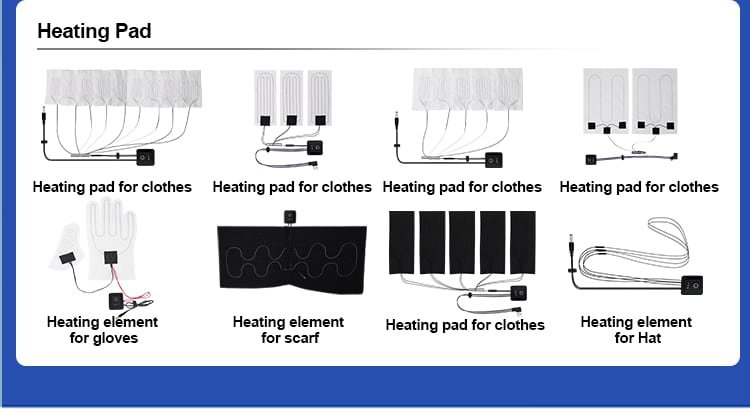
There are three main trends that prevail in the modern designs: linear, grid, and zoned.
- Linear routing is used along straightforward routes, which are usually snake lines.
- Patterns in grids make overlapping networks to assume larger coverages.
- The zoned layouts separate the garment into autonomous sections.
Layout Pattern Comparison
| Layout Type | Strength | Weakness |
| Linear | Simple to implement and repair | Prone to hot spots along paths |
| Grid | More balanced distribution | Higher complexity and cost |
| Zoned | Targeted comfort in key areas | Requires advanced controls |
The patterns will be appropriate to different types of clothing and applications, yet all of them require balanced spacing to prevent the extremes.
Spacing, Density, and Heat Distribution Balance
The heating elements should be spaced out appropriately to avoid concentration of the heat in a certain area and leaving some areas cold.
Overcrowding may cause energy to be concentrated and overheated and moving too far may form cold areas particularly when the fabric moves.
Density should also counterbalance breathability, elements that are too dense can decrease the air permeability and also trap moisture.
To learn more about the related aspects of performance, refer to our analysis of factors affecting heating efficiency.
Layout-Driven Risks — Hot Spots and Cold Zones
The cause of localized overheating/underheating in well-insulated garments is poor layout choices.
Hot spots are common where elements meet, curve or bunch up in wear. Cold zones are seen in a gap or low density area especially between seams or high movement areas.
These problems not only inconvenience (they cause constant discomfort) but also endanger comfort (there is a risk of burns or lower thermal protection).
For insights into related durability concerns, see why heating elements fail.
Interaction Between Layout and Garment Construction
The layout of heating elements cannot be made in a vacuum capacity, it should take into consideration the construction of the garment.
The difference in the thickness of fabric, seams, padding, and insulation change the rate of heat transfer. Some of the areas are padded with heavier padding, and the seams can squeeze the elements and cause pressure points.
Movement also makes the situation more complex: stretching, bending or folding may alter the layout, dynamic heat distribution.
The mechanical interactions lead to the necessity of flexible and adaptive designs. Explore more in our discussion of flexible heating design challenges.
Core reference: For comprehensive guidance on integrating these considerations, visit our main heating element design hub.
Why Layout Must Be Defined During Design, Not After
Late layout choices done during development or even during the production corrects can nearly never provide the optimum comfort.
To redistribute heat, power adjustments cannot scale anything beyond patterns, it can only scale existing patterns. Zoning or poor spacing continues to be a problem irrespective of the watts.
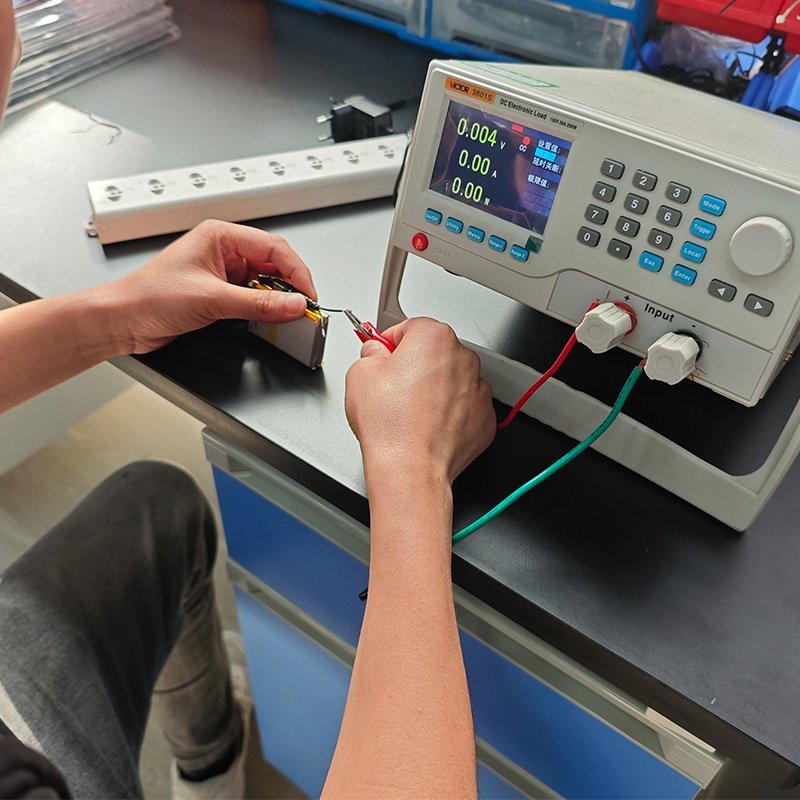
Preliminary thermal modelling, simulation and prototyping is a necessity to find out real-life performance.
Layout Optimization Practices Used by Manufacturers
The major manufacturers have systematic procedures that are used to perfect layouts.
During prototypes, heat mapping is a visualization of temperature gradient. User wear test is used to store the actual effects of movement and spacing and zoning is adjusted through iterative refinement based on feedback.
Advanced teams mimic body movements and postures to make the placement optimal.
For technology-specific comparisons, see heating wire vs printed heating film layout.
Conclusion — Comfort Is Designed Through Layout
Comfort in heated clothing is never really the by-product of heating power it is actually the conscious outcome of a premeditated set of heating elements layouts that does not ignore either human perception or the structure of the garment itself. Engineers producing goods with consistent warmth as the actual warmth gauge, by focusing on uniformity in terms of informed zoning, spacing and integration, are able to design goods with balance and predictable warmth.