

The battery life in a heated jacket does not exist as a constant value, but it is the outcome of the interaction of the battery, the heating system, and the behavior of its user under real conditions. In my experience testing the prototype of heated apparel and test production units in the field, a single charge of a heated jacket can take anywhere between 2 and 10 hours with the heat setting, environmental conditions, and the way of wearing the jacket all highly dependable. Bakers usually make their arguments based on the ideal laboratory conditions such as constant low heat in a controlled room at 20C (68F) which are not at all like real-life applications.
Another myth is that a hot jacket will provide the same duration of work irrespective of the level of heat. The fact is that, the higher the temperature the more power it consumes and its battery life reduces dramatically. An example is that what may take 8 hours on low may reduce to 3 hours on high. Combined with the use of the product, the rated capacity of a battery alone does not determine real battery run time in hot jackets. This lesson is important to prevent disappointments, be it on the end user who is layering up in the winter hiking or the product manager who is specifying claims to the line that their brand is using.
What “Battery Runtime” Really Means in Heated Jackets
The concept of battery life in heated jackets is based on the fact that the system can be effective in heating the body until a voltage point that is considered safe to operate under is reached. The runtime in the case of heated jackets is unlike smartphones or laptops where runtime may be defined by the screen-on time with variable power loads. This implies that the battery is actively discharging at a constant rate which is directly dependent on the heating output.
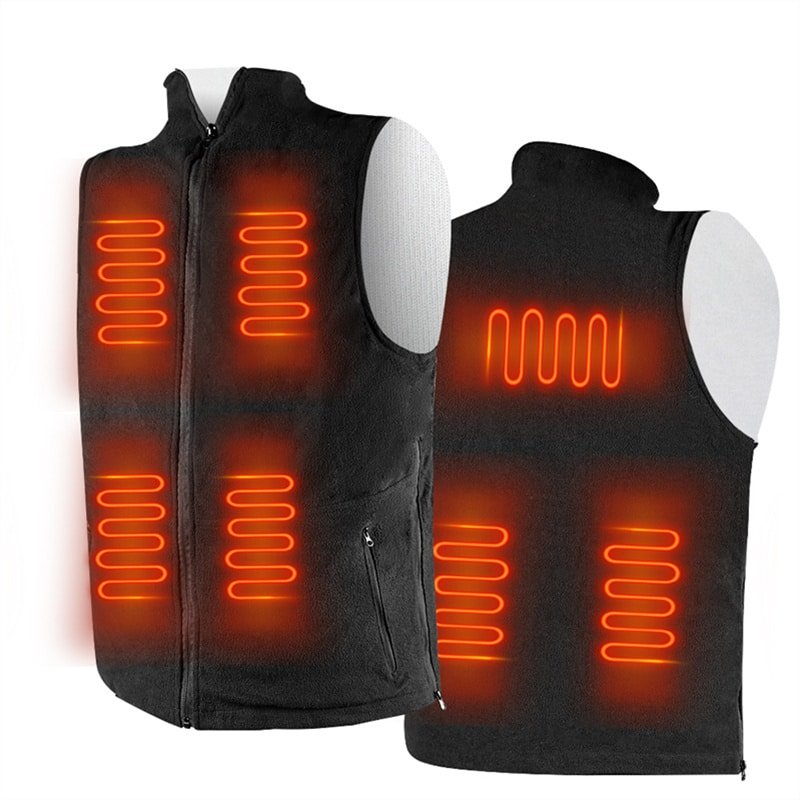
Difference Between Rated Capacity and Usable Runtime
Rated capacity Rated capacity is the theoretical storage of energy of a battery at standard discharge conditions, commonly expressed in milliamp-hours (mAh) or watt-hours (Wh). However in hot jackets, usable runtime takes into consideration such inefficiencies as heat loss through wiring and controller overheads as well as self discharge by the battery itself. As an example, a 5000mAh battery may label itself as providing 10Wh of energy, yet in practice the actual delivery of this energy may be 20-30% lower because of such factors.
Why Heated Jackets Draw Continuous Power
Analog devices such as earbuds deliver a pulse of power but heated jackets have to produce continuous thermal. This steady current draw increases depletion particularly because heating components use electricity directly to heat through Joule heating. Run time should also be accompanied by heat level such as low, medium and high as not doing so will create an unrealistic expectation.
Interpreting “Up to X Hours” Claims
The proclamations such as 10 hours can be generally attributed to low heat and no motion lab tests. They are supposed to be perceived as a roof, not a promise. Practically it may change due to movement of the user or layering but what is important is the fact that these figures are standards not realities.
Typical Runtime Ranges at Different Heat Levels
The only largest factor that will influence the performance of the heated jacket batteries is the level of heat you select, because this directly influences the amount of power consumed. High settings blast with a large amount of energy giving it rapid relief, whereas low settings consume a lot of energy to produce a slight amount of warmth causing extremely different run times.
Understanding the Relationship Between Heating Power and Discharge Speed
The amount of heating power is indicated in watts and the higher the heating power, the more current is consumed by the battery. In a normal 7.4 V system, low current could be 2-3W, medium current could be 4-6W and high current could be 8-10W and above. This has a negative impact on runtime: twice the power and you will have about half the time before recharge.
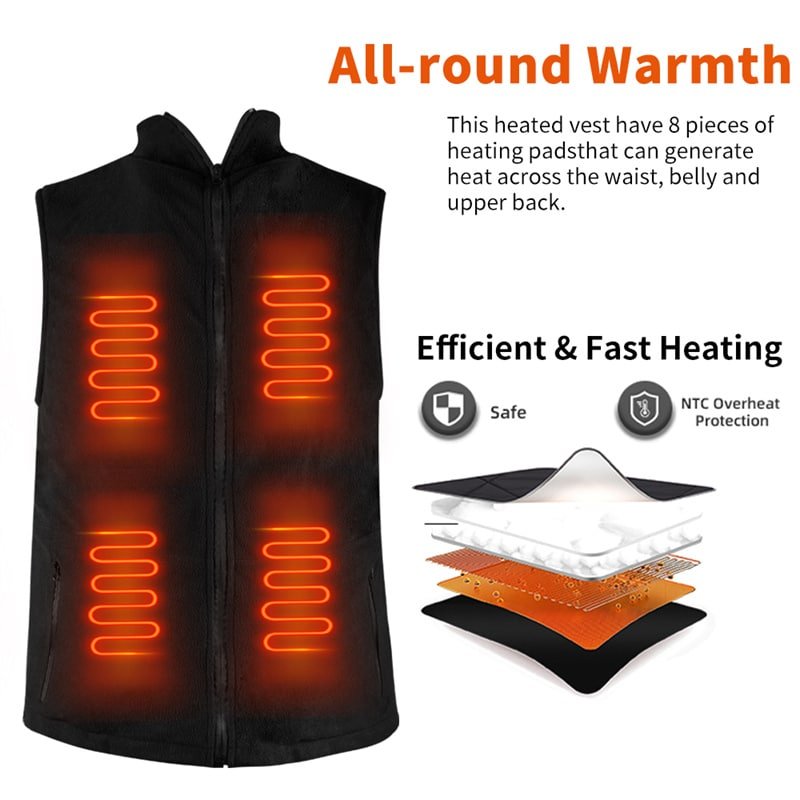
Runtime Expectations Based on Heat Settings
The following is the chart of the common runtime of a standard heated jacket with a 5000-7000mAh lithium-ion battery, as determined by field tests performed with a number of different prototypes:
| Heat Level | Typical Runtime Range | User Experience |
| Low | 6–10 hours | Background warmth, ideal for mild chill or extended wear |
| Medium | 4–6 hours | Balanced heating for active use in moderate cold |
| High | 2–4 hours | Rapid warmth for short bursts in severe conditions |
These are under normal environment such as ambient temperature 0-10 o C (32-50 o F) and intermittent operation. When it is colder or windier, shorter times are to be expected since the system works harder to keep the heat.
Why Real-World Runtime Differs From Advertised Numbers
Battery life of real world heated jackets is usually lower than that of the advertised ones since lab tests are done to give a better picture of the controlled and good conditions which are not a daily scenario. I have worked on dozens of verified lines of heated apparel and observed that small changes in usage can cause a 30-50 swing in runtime.
Laboratory Assumptions vs. Actual Usage
No motion by a user, under the assumption of ideal insulation Labs are tested at constant low heat. However, in practice, the users move between settings, circulate (increasing heat loss), and differentiated weather. This difference is the reason why a jacket which is rated to last 8 hours may not perform 5 in the field.
Impact of Ambient Temperature and Wind
Heat is taken away by cold air more quickly so the system has to make it up by using additional power. This is worsened by wind chill that may cut the runtime by 20-40%. As an example, at -5C -5F in the wind, when the wind blows even the medium heat can empty the battery faster than high in hot but calm air.
Intermittent vs. Continuous Heating Behavior
Not all users operate heating around the clock; they switch it depending on the necessity. This may increase runtime, however, when the controller of the jacket does not have effective standby modes, there is still background drain. The consideration of these behaviors is important battery solutions for heated apparel, when designing or choosing battery solutions to heated apparel to be able to claim the performance.
How Battery Capacity and Technology Influence Runtime
Although bigger batteries are an intuitive indication of longer run, capacity does not necessarily correlate with battery run times in the real world of heated jackets, but it is a question of efficiency in which the energy is used and managed. During my engineering tests, I have realized that incompatible technology could also lose 15-20 percent of the possible operating time.
Why Capacity Isn’t the Sole Determinant
A 10000mAh battery may appear better than a 5000mAh battery, but when the heating system is inefficient or when battery chemistry fails under load we is not going to see a doubling of the usable time. The cutoff voltages and internal resistance are also important aspects as bad designs cause premature shutdowns even when there is left power.
Battery Chemistry and Discharge Stability
Heated jackets are dominated by lithium-ion batteries due to their energy density, although other factors such as LiPo versus LiFePO4 can have an impact on stability. LiPo has high discharge but can sag at sustained high draw over time reducing operating life. To be more consistent think over battery technology battery technology considerations that align with your jacket’s demands.
Thresholds and Safety Features
Low-voltage cutoffs are installed in batteries to avoid damage, which would terminate the runtime sooner when cold conditions cause a rapid drop in voltage. Selecting appropriate battery capacity ibetween size, weight, and these limits to provide the best user experience.
The Role of Heating System Design and Power Control
The real performance of the heated jacket battery depends on the structure of the heating system and bad design may end up bloating the power consumption requirement. As a performance expert, I have maximized systems where the time of tweaking layouts has increased by up to a quarter without replacing the battery.
Heating Zone Layout and Energy Consumption
Concentrated jackets (e.g. core-only) have lower power requirements than full-coverage models, and therefore have longer battery life. Sprawling components enhance resistance and attractiveness, hence zoning is a strategic approach of his/her match of warmth to anatomy at a minimal waste.
Controllers and Regulation Logic
Power is controlled efficiently by smart controllers on the use of PWM (pulse-width modulation) to prevent full draw all the time. The thermostatic feedback loops vary the output depending on the temperature avoiding over-heating and protracting sessions. A matching power by the proper heating system is needed to ensure the controller does not overload the battery, keeping it with constant operation. Proper heating system power matching ensures the controller doesn’t overload the battery, maintaining stable runtime.
Integration with User Interfaces
Fine-tuned control is possible with apps or remotes, however, inefficient software may become a burden. When using basic button controls, which are seen to be simpler to use, in validations, I have seen them outperform app-linked ones because of lower overhead, and these controls need to be made very simple.
Battery Aging and Its Impact on Runtime Over Time
Even with a good jacket, batteries deteriorate with charge cycles eventually giving the usable runtime away even though the jacket was initially good. According to long term testing, a new battery could degrade its 10-20 percent capacity in 300 cycles and this is an aspect that could change the expectations of users.
Why Batteries Lose Capacity with Cycles
The chemistry is emphasized by each charge-discharge and forms internal resistance and decreases effective storage. This is enhanced in hot clothing with high draw cycles, particularly when subjected to high temperatures during the use or storage.
How Aging Affects Perceived Runtime
Reduced sessions can be detected by users as the battery runs out earlier even at common settings. This has the ability to resemble a falling system, yet it is usually merely an aging.. Monitoring long-term battery performance long term battery performance aids in predicting and preventing drops.
Mitigation Strategies in Design
Battery degradation is slowed down using batteries with solid BMS (battery management systems). Shallow discharges and partial discharging will save health, and will keep the runtime more like the original specifications as time passes.
Common Misunderstandings About Heated Jacket Battery Life
One common mistake is to assume that the highest heat setting will be the most runtime and not consider the physics of power consumption and get frustrated. These assumptions are based on fragmented information as a result of managing customer feedbacks during product validations.
Overlooking Heat Level Impact
A commonly used assumption is that a 10-hour battery implies 10 hours on high and that is hardly possible. Heat three times as much energy can be consumed by high heat as by low, and the result is that heated jacket batteries boil off more quickly comes down to this discrepancy.
Comparing Incompatible Jacket Designs
Jackets are not equal: because of various heating plans or efficiency, direct run time comparisons cannot be made. A lightweight model may have longer life cycles than a bulky one with smaller capacity, as it has more insulation.
Ignoring Environmental Conditions
Users do not remember that cold or wind increases effective power consumption and reduces actual battery life of the heated jacket. This ecological control is a key to the discontentment over advertised and real performance.
Conclusion — Runtime Is a Usage Outcome, Not a Fixed Promise
The battery life of the heated jackets cannot be interpreted as a fixed number, but rather as a range which is dependent on the level of heat, the environmental condition and the design of the system. When brands are matched to such realities, they will gain trust, and users can get the most out of their gear. Put at the center the usage habits and the informed decision making as opposed to pursuing exaggerated claims of the most fulfilling experience.