

The off the shelf battery packs often fail in the application in the sector that deals with heated apparel as these packs are not integrated with the heating components of the garment, its usage and environmental needs. Mandatory solution ideas do not often consider variable loads to heating pads or the necessity to have more compact, more flexible shapes that can endure daily use. Rather, the design of battery packs should start with the careful analysis of the requirements of the system, and each part of the battery pack should be designed to meet the overall functioning of the product. The second myth is that battery pack design begins with choosing the cells by their capacity or chemistry, however, the actual powerful design begins with system-level power management and safety studies to prevent inefficiencies or occurrence of hazards. The design of battery pack system should be supported by behavior of a system, rather than specifications of individual components in heated clothing.
Creating battery packs in clothes that are heated is not just a simple matter of attaching the cells and circuits but rather a multidisciplinary engineering task. It will require interdisciplinary synchronization of electrical, thermal and mechanical aspects in order to produce reliable, safe and performs systems designed to be used as wearables.
Defining System Requirements Before Battery Design
Any good battery pack is based on system requirements and determines decisions that avoid the situation of inappropriate power supply and demand. The absence of this step can lead to underperforming runtime, space, or structural breakdown of the designs in the actual application.
Understanding Heating Load Characteristics
The resistive heating elements used in heated apparel include carbon fiber wires or films, which have dynamic power consumption. An example is that a heated jacket could consume 10-20W at maximum, depending on temperature and environmental factors. We characterize these loads by modelling the usage patterns short bursts to get warm quickly versus long periods of low heating to characterise peak current loads, which are usually in the range of 1A to 5A depending on the type of garment.
Voltage and Current Specifications
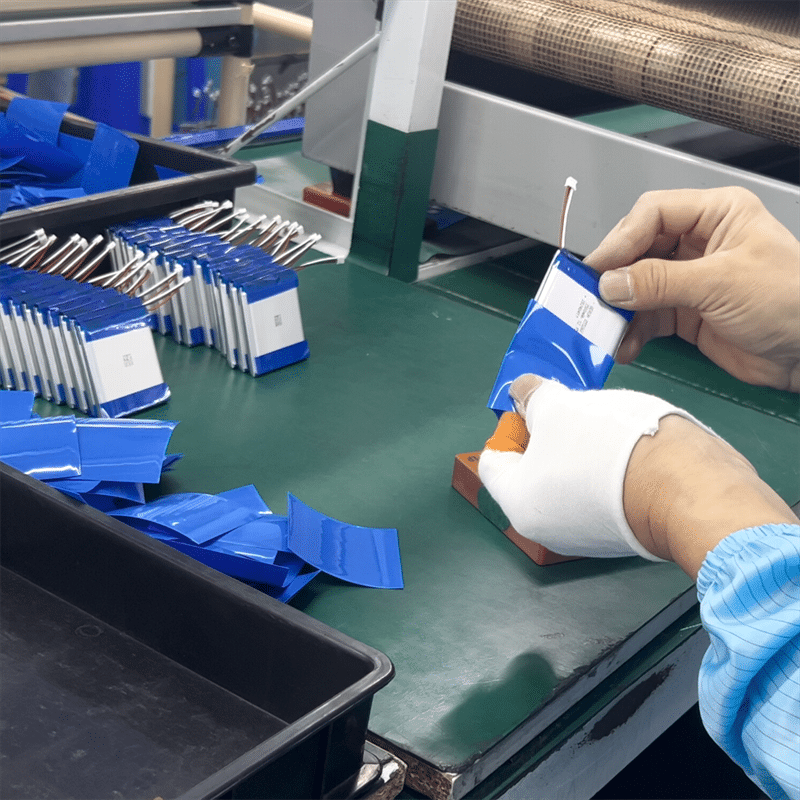
The heating system architecture results in voltage requirements. Lightweight gloves or insoles are better with a 7.4V system, whereas jackets or vests can be powered with a 12 V system. The current limits should consider the safety margin in order to prevent any drop in voltages that may reduce the warmth efficiency. This step entails the computation of overall energy requirements and in this case; power profiling can be used in order to stabilize the battery to maintain consistent output without over heating.
Usage Duration and Environmental Conditions
Heated clothing needs the ability to be charged to operate 4-8 hours, and with the loss of efficiency in operation in cold weather, the cold-weather performance of lithium-ion cells is at least 20% capacity below 0 C. Design tolerances are affected by wear conditions, e.g. flexing in socks or impact in workwear. Through system-driven battery solution planning, we align these factors to create scalable specifications that guide subsequent engineering decisions.
PCB Architecture and Protection Circuit Design
The PCB architecture is the navel of battery pack which includes control logic to protect against failures and maximize wearable space.
Core Functions of the PCB in Battery Packs
The battery management system (BMS) is placed on the printed circuit board (PCB) and it real-time monitors the cell voltage, current, and temperature. Multilayer PCBs are necessary in high-temperature versions of apparel where space is restricted to 50-100mm 2 and the components must be packed-in.
Implementing Protection Circuits
Safety will not compromise protection circuits. Through MOSFET switches, overcurrent protection is provided, and power is interrupted when draws exceed 150 percent of rated currents to avoid damaged heating wires in case of short circuiting. Overvoltage precautions are taken to protect the charging input of clamps to prevent the swelling of cells, and thermal overload is stopped in temperatures exceeding 60 C with NTC thermistors. Such aspects should be adjusted to the intermittent loads of the apparel and none of them should trigger when they are being normally used.
Layout Considerations for Long-Term Reliability
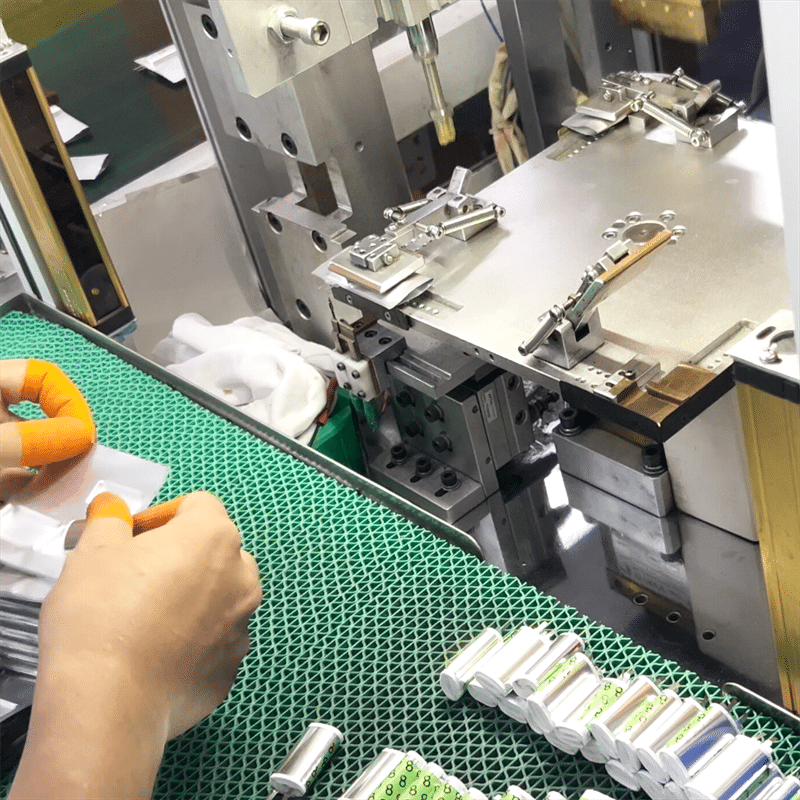
PCB layout is more focused on thermal dissipation and electromagnetic compatibility. High-current traces are expanded to minimize heating through resistance and planes on the ground attenuated noise that might get in the way of temperature sensors. We have had the experience of poor layouts resulting in hotspots in prototypical layouts, thereby the importance of simulation tools such as SPICE to test designs. For deeper insights into battery protection circuit design principles, these strategies ensure compliance with standards like UL 2054.
Cell Selection and Configuration Strategy
Following the requirement of the up stream system and not isolated specifications can result in optimal energy density and reliability; this is known as cell selection.
Series vs. Parallel Configurations
Classifications will dictate voltage and capacity. A 2S1P (two series one parallel) system produces 7.4V with medium capacity with compact insoles, pushing to 11.1V with doubled capacity with jackets, but doubling the size and complexity. Parallel strings improve redundancy, having reduced singular cell failure, which is paramount in wearable applications subject to vibrations.
Trade-Offs in Capacity, Size, and Output
Increased capacity cells (e.g. 2000mAh versus 1000mAh) will increase the duration of usage, though it will increase the weight, which can have an effect on the comfort of the garment. Flexibility Gauge Size Size limits tend to prefer the use of a pouch cell to a cylindrical cell. Production should meet heating requirements high-discharge cells (C-rate >2) can limit surges without voltage sag, but produce more heat, which should be cooled off.
Ensuring Compatibility with Heating Systems
The cells should be able to fit well with controllers to deliver power accurately. The preferred type of lithium-ion polymer is due to their formability, yet cycle life is confirmed after compatibility testing under conditions unique to apparel, such as partial discharges Decisions on voltage platform selection for heated apparel directly affect overall system efficiency and user experience.
Housing Design and Mechanical Integration
Housing design creates the interface between electrical internals and wearable realities, physical stresses to which the battery pack is subjected do not affect functionality.
Providing Structural Protection
The enclosure should be impact and compression absorptive journeys such as apparel, which has material such as ABS or polycarbonate to give it its rigidity. The stress points are predicted using Finite element analysis (FEA), which avoids cracks that can expose cells to moisture or puncturing.
Achieving Water Resistance and Durability
Targeted IP ratings include IP65 that was put to the test of condensation against sweat and rain using sealed gaskets and overmolded ports. Durability goes to flex cycles – socks housings can be made with silicone overmolds to break 10,000 and beyond with life.
Optimizing for Comfort and Garment Placement
Wearability determines slim profiles (less than 10mm thin) and rounded profiles to be able to fit in pockets or the seams. There is no bulk and the distribution of the weight prevents any hotspots on the skin according to simulations. Insights into battery form factor and wearability design highlight how these choices enhance user adoption in heated clothing.
Prototyping, Validation, and Reliability Testing
The conceptual idea is developed into a unit that can be tested and validation reveals problems that simulation failed to show making it field-ready.
Conducting Functional Testing
First prototypes are tested in bench tests to ensure that they are stable in voltage, charge/discharge performance, and can be integrated with heating controllers. Live monitoring by use of oscilloscopes checks the functioning of the protection circuits to fake faults such as the over-draws of defective components.
Performing Aging and Stress Tests
Accelerated aging is a test that simulates the effect of age under extreme temperatures (-20 o C to 50 o C) to evaluate the performance of capacity of items to be used in environmental adverse conditions (Gordon 1998). The vibration and drop tests simulate the use of the apparel, locating faulty solder joints or flaws within the housing.
Safety Validation for Production Readiness
Against CE and FCC compliance checks, third party labs are used to check against electromagnetic emissions and thermal overheat hazards. Recurring needs, e.g., improved insulation, are usually found during this stage. Strategies for preventing battery failures in heated apparel production emphasize rigorous validation to minimize recalls.
From Prototype to Production-Ready Battery Packs
A shift to production requires a disciplined process to execute the design integrity across the scales without any deviations that may affect the reliability.
Importance of Design Freeze
The scope creep (specification locked after validation) keeps the design design frozen. This involves generating PCB gerbers, BOM and assembly drawings so that they are reproducible.
Documentation and Traceability
The version control systems can trace the alteration, which enables audit and subsequent reiteration.
Assuring Production Consistency and Quality.
Ensuring Production Consistency and Quality Assurance
The pilot runs check tooling and solder quality is checked by in-line QA and cell balancing. Variance is monitored through the use of the Statistical Process Control which targets a rate of less than 1 percent defect. This is an engineering rigor that guarantees such custom lithium battery packs of heated apparel that does not compromise its safety or performance.
Conclusion — Custom Battery Pack Design Is a System Discipline
The design of wearable battery packs to be customized is more effective when electrical design, mechanical that the battery pack endures and thermal management can be considered as aspects of a unified system. Focusing on validation at all levels, starting with initial requirements to the handover of production, we reduce risks and provide solutions that will work under the specifications of the leadership. This system thinking is important because it highlights the importance of system thinking in developing effective, sustainable and user-friendly battery structures in heating clothing.