

In heated clothing, lithium-ion and lithium-polymer batteries can’t be interchanged – every chemistry results in its own unique trade-offs between performance, safety and product design. Both chemistries are common with heated apparel, however depending on how the garment is to be worn, anticipated heating requirements, and the environment of the apparel, both chemistries have other design priorities. The battery chemistry selected affects much more than energy storage, it determines direct discharge properties, thermal control and compatibility into pliable materials. A common misconception is that lithium-ion and lithium-polymer batteries are functionally the same especially considering they may have similar voltage and capacity ratings. However, in the application for heated clothing, they act very differently with sustained loads, and also in the case of cold temperatures where in application voltage stability and heat emission can very well vary.
In the case of heated clothing, it is not just the capacity or voltage of the batteries that is important; it is the battery chemistry that dictates how the battery will act during discharge, how far the safety margins are set, and how comfortable it is to wear. OEMs and engineers should know these differences so as to come up with the best performance of the system without affecting the user experience. This comparison is based on real-life manufacturing experience and the ability of the lithium battery chemistry with heated clothing to either succeed or fail the reliability of a product once it gets to the real world.
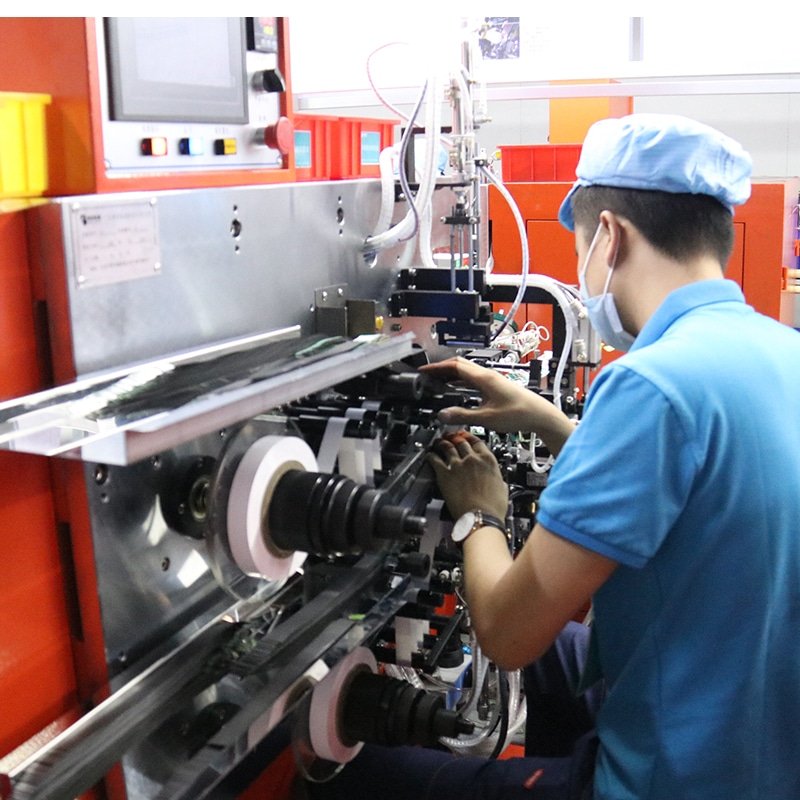
Why Battery Chemistry Matters in Heated Apparel
Current design choices in heated apparel are based on battery chemistry since they determine the manner in which power is supplied under dynamic conditions. Unlike regular consumer electronics, where power consumption may be intermittent, e.g. phone screens or wireless earbuds, the power consumption of heated clothing is continuous. Batteries are then required to supply sustained current to heating components in hot gear (which can be hours), and survive movement of the body and compressive forces, and low temperatures that can be lower than freezing.
This unremitting stress enhances the significance of choice of chemistry. An example of this is that at cold temperatures, the ion mobility in the battery becomes low imposing voltage drops that may cause uneven heating or early shutdowns. Hot clothing also needs batteries that are capable of fitting clothes smoothly without creating any discomfort to the wearer as far as energy requirements are concerned. This may cause a mismatch in chemistry leading to bulky designs that may not be mobile or cells that are delicate and may fail easily as flexing occurs. Finally, battery chemistry effects on heated clothing can be seen in system efficiency, including performance of the system in regard to runtime and certification. When evaluating battery solutions for heated apparel, initial stages of the prototyping phase to prevent making costly revisions to battery solutions of heated apparel.
Unique Demands of Heated Systems
Heated apparel batteries are a high-drain condition with a constant 1-3 amps of current flowing to achieve 40-60C temperatures on carbon fiber or wire coils. This is in contrast to the bursty loads in gadgets, and the chemistries used have to have stable discharge more important than peak power.
Cold Environment Challenges
Chemistry differences are further worsened by cold weather, as the lithium ions are slowed down, and internal resistance is increased. It is the reason that battery technology testing of the simulated winter conditions is paramount in validating battery technology for heated apparel.
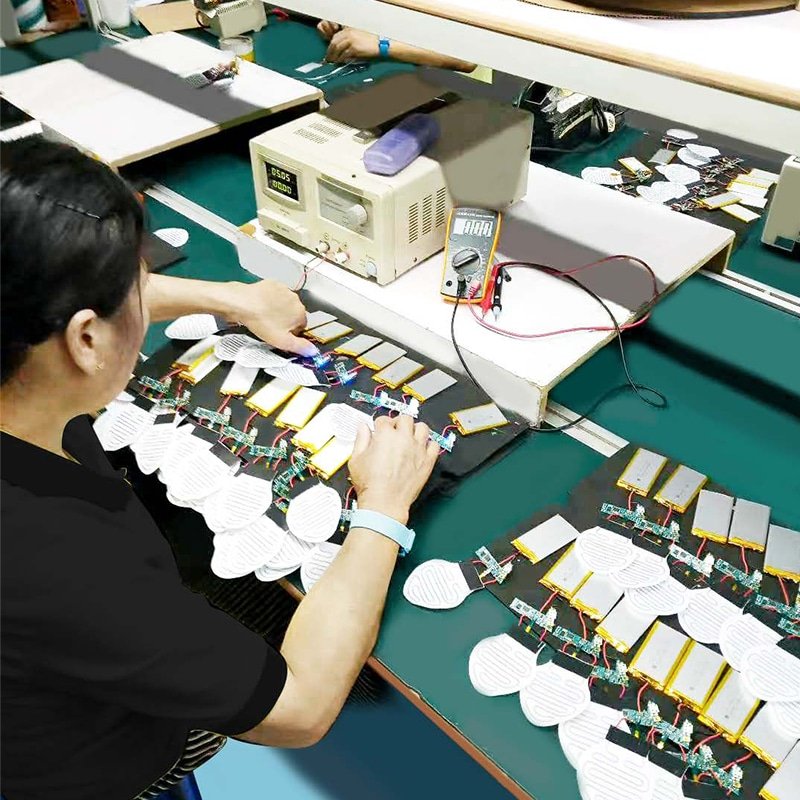
Lithium-Ion Batteries — Structure, Strengths, and Limitations
Li-ion batteries will continue to be used in heated apparel as they have proven to be reliable, but in form-fitting applications its inflexible construction frequently constrains its application. The batteries are normally in a cylindrical or prismatic shape with the electrodes being laid in a hard case which offers mechanical protection. This arrangement is very good in those applications where the flexibility is not as important as durability.
In their strengths, the lithium-ion cells have a high energy density, and therefore, it is able to store a large amount of power in the larger garments. They are cost stable and have a large availability of components which is due to their maturity in the market and is well suited to scale up production. Rigidity however has drawbacks in that it may cause pressure points in wearables and under heavy loads may cause voltage sag where the voltage falls as the battery becomes depleted. The other defect is cold performance, as movement of ions decreases at low temperatures, thus decreasing the effective capacity by up to 30 percent.
Ironically, lithium-ion batteries are applicable to heated jackets and vests, with more space to fit larger packs sewn into pockets or linings. Flexibility is diminished, which may have an impact on garment drape and comfort of the user during long usage. In the case of engineers, this implies giving more attention to battery capacity to power heated clothing battery capacity for heated clothing to offset the efficiency loss in challenging situations.
Cell Structure Breakdown
Cylindrical lithium-ion cells, such as 18650 formats, while common in their robustness, weigh down and thicken apparel.
Application Trade-Offs
Typically in hot workwear, long-lasting technology tends to prefer the lithium-ion albeit being limited in form factor.
Lithium-Polymer Batteries — Flexibility and Design Freedom
of adaptability being prioritized faster than pure rigid demonstrated, and it is the top choice to go to when the product is ergonomics-oriented. These batteries are constructed in pouch-cell formats, in which the electrolyte is a flexible polymer rather than a liquid, making the battery thin and bendable, and thus able to fit the shape of the body.
The structure has important benefits of thinness and weight distribution, which minimize bulk of compact objects. They are also better in ergonomics since the soft casing reduces hard edges discomfort. Lithium-polymer has improved stability in discharge in heating, including the ability to hold steady voltage at moderate loads, and therefore provides the more uniform warmth.
Lithium-polymer batteries are commonly used in heated gloves and socks and in tight garments, as they are glowing where there is not much space to contain them, such as in gloves cuff or the sole of socks, without limiting movement. The design freedom enables the creative placement, and in the end, the product provides a greater level of comfort such as the lithium-polymer battery on heated gloves. lithium-polymer battery for heated gloves. Nevertheless, this flexibility also has a possible price in puncture strength, and needs to be reinforced properly.
Pouch-Cell Advantages
This is because of the lack of a strict case that allows the lithium-polymer to be shaped to any irregular form, suitable to distributed heating systems.
Ergonomic Benefits
For skinny frames, bit of this kind of chemistry means no more of the “battery bulge” that can plague form fitting apparel.
Performance Comparison Under Heating Load
Under sustained heating loads the lithium-polymer batteries typically offer superior consistency of output in comparison to lithium-ion (the difference becoming less in optimized designs). Heated clothing draws power all of the time stressing the batteries in ways that interestingly show chemistry-specific behaviors. Lithium-ion can develop faster voltage decline resulting in more varying heat levels whereas lithium-polymer discharge curves are more constant.
The difference here is based on the characteristics of electrolytes: liquid in lithium-ion enables the quicker flow of the ion, though it becomes more susceptible to the changes in temperature, and polymer as a gel is resistant. In cold tests lithium-polymer holds up better, maintaining heat output in relative plunge ambient temperatures.
| Factor | Lithium-Ion | Lithium-Polymer |
| Discharge stability | Moderate, with noticeable sag at low charge | More stable, flatter curve |
| Cold-weather behavior | Performance drops faster due to ion slowdown | Better consistency in sub-zero conditions |
| Form factor | Rigid, suited for structured placements | Flexible / thin, ideal for body-conforming designs |
| Typical applications | Jackets, vests | Gloves, socks |
These comparisons point out that to select battery chemistry in a heated apparel, it is necessary to match it with load profiles.
Safety, Protection, and Risk Profiles
The difference between lithium-ion and lithium-polymer batteries in terms of safety has more to do with the hazards of thermal runaway and reactivity to mechanical forces, affecting the design of BMS. The liquid electrolyte of Lithium-ion is prone to increasing volatility in case its temperature is overheated and strong protection circuits may be required to check the temperature and current.
Conversely, the solid-state electrolyte in lithium-polymer minimizes leakage hazards but is prone to swellage in cases of abuse, requiring alternative protection. Both need overcurrent and overheat protection, however, chemistry influences BMS strategy, lithium-ion battery may need more aggressive cutoffs because it heats faster.
In the case of heated apparel, when batteries are in close proximity to the body battery safety for heated apparel protocols, such as UL-compliant enclosures, to mitigate risks like short circuits from flexing. To reduce the risk of such risks as short circuits caused by flexing, engineers need to incorporate battery safety into the protocol of heated apparel, including UL-approved enclosures.
Thermal Behavior Insights
Lithium-ion produces additional heat when charged, which could contribute to overheating of insulated clothes.
BMS Adaptation
Indeed, each chemistry has a custom BMS, but this is not over-engineered.
Battery Chemistry and Runtime Consistency
The consistency of heated clothes under heat conditions depends on the manner in which chemistry converts nominal capacity to useful power, which is usually inconsistent with the specification under field conditions. Both lithium-ion and mAh ratings may indicate a match, the differences in internal resistance of the two may reduce effective runtime by 10-20 percent when operating in the cold and continuous draws.
Lithium-polymer is less resistant, and thus offers more accurate rapidity, guaranteeing predictable operating time. This is important in the applications such as prolonged outdoor working, where users want to be able to be confident of dependability of warmth without having to recharge in a short time. Other aspects such as self-discharge and cycle life also affect longevity with both chemistries having a potential of 500+ cycles when properly managed.
In the case of accurate assessments, heated jacket battery runtime benchmarks (scaled to efficiencies unique to chemistry).
Usable vs Theoretical Runtime
The capacity loss due to cold is more severe with lithium-ion, which necessitates parity packs in excess size.
Common Misconceptions When Choosing Battery Chemistry
The most common myth is that lithium-polymer is always safer than lithium-ion without considering risks that may occur based on the context of using heated apparel. Polymer decreases the leakage of electrolytes, but may be prone to punctures when used in flexible clothing, which may raise the failure rate in high movement applications.
The other assumption, which states that lithium-ion always works longer, does not take into account the fact that the stability of polymer provides more effective working time with the changing loads. Lastly, the assumption that chemistry does not influence comfort does not explain form factor; inflexible lithium-ion may pose bulky shapes in slender outfits such as lithium-ion battery in heated jackets. lithium-ion battery for heated jackets.
These myths are due to generalized battery knowledge which in hot products, practical experiment has shown subtle trade-offs.
Debunking Safety Myths
Safety is not per se, but rather an integration and abuse tolerance phenomenon in wearable situations.
Comfort Assumptions
Flexibility is directly related to satisfaction by the users and it goes against the one-size-fits all perceptions.
How OEMs Should Choose Between Lithium-Ion and Lithium-Polymer
OEMs have a rational choice in battery chemistry by matching the product needs with the cell characteristics with a systematic trade-off evaluation. Some of the factors to consider are the type of garment, where flexibility requires polymer, and heating scheme, which may require the density of ion in case of the distributed elements.
Time of wear has an impact on preference: the length of wear time is advantageous to build on the reliability of polymer, and the certification of the safety requirements can be imposed on ion maturity protections. The framework of this decision will make sure that chemistry is supporting the entire system without providing loopholes.
| Product Type | Preferred Chemistry | Engineering Reason |
| Heated gloves | Lithium-polymer | Thin, flexible, lightweight for dexterity |
| Heated jackets | Lithium-ion / polymer | Depends on design; ion for bulk capacity, polymer for slim fits |
| Heated workwear | Lithium-ion | Capacity and durability for rugged use |
Conclusion — Battery Chemistry Is a Design Choice, Not a Specification
With heated clothes, it is more a matter of ensuring that the behavior of the battery is consistent with product design and user expectations as opposed to choosing the superior of the two chemistries between lithium-ion and lithium-polymer. Both provide engineering tradeoffs that define discharge reliability, integration capability and safety margins. Thinking in these practical implications instead of individual specs would allow designers to design heated apparel that would work in challenging conditions every time, basing their decisions on manufacturing realities.