

Regulatory compliance regarding a product in the wearables sector is dictated by PCBA design decisions long before a product makes it to the test lab.
There are few certification failures that are caused by poor testing or poor labs and the majority of these failures are designed into the board layout, component choice, trace routing and protection architecture during the schematic and PCB design. It is still a fact that many OEMs think that compliance is the responsibility of the testing-house: present the product, pass several tests, get the mark. The truth is very much more serious. The certification bodies are examining the real behavior of the completed system at worst-case conditions as opposed to the good intentions of the designer. Without the PCBA having appropriate isolation barriers, good filtering, good fault detection, or good thermal margins, the last-minute application of shielding tape or the presence of test-lab bargaining will ensure the product is compliant.
The post-years experience of sponsoring hot apparel projects under the many certification cycles has shown a consistent trend: when the product sails through CE, FCC and UL on the first or second try, then that is where compliance has been designed as a fundamental requirement at the beginning of the product design, rather than a factor added at the end.
Why Compliance Requirements Must Be Addressed at the PCBA Design Stage
The verification is a second and design endeavor is first.
The testing labs do not actually certify the products in the historical meaning of the word but reportedly verify its compliance to the minimum performance requirements established by the standard. In case the design simply cannot meet those requirements under conditions of foreseeable fault or environmental circumstances, then failure is assured. Certification authorities test at the system-level: the behavior of the product when one component fails, the electromagnetic interference that the product emits or the vulnerability to electromagnetic interference, and the possibility of the product posing unacceptable risk of fire, electric shock, or injury.
There are choices at PCBA so early in their development like power supply topology, creepage and clearance distances, component derating, and protection circuit implementation, that dictate directly the range of outcomes that can ever be achieved during testing. Any attempt to add compliance as an afterthought to a bad idea of a board nearly inevitably leads to more blueprinting, scraps of the design, and debugging.
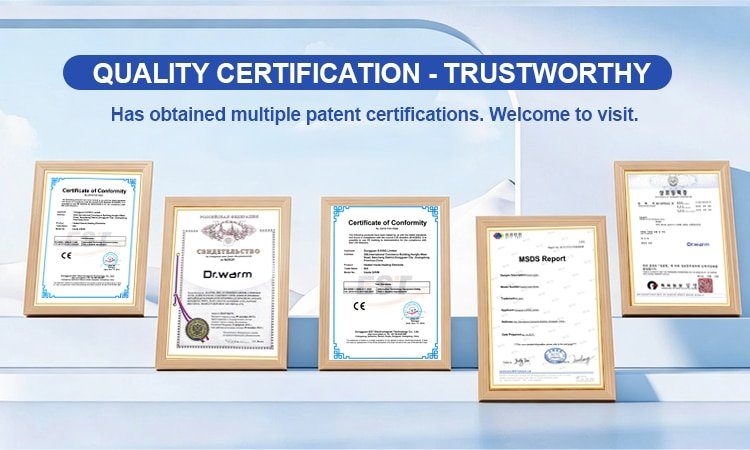
Overview of CE, FCC, and UL Focus Areas in Heated Wearables
Heated wearables represent a category of wearable that receives much more regulatory attention compared to passive consumer electronics due to its high energy density, direct contact with the body, and active heating, packaged in a flexible, wearable footprint.
| Standard | Primary Focus | PCBA Design Implications |
| CE | Directive electrical safety, EMC, low-voltage. | Isolation barriers to power, distances to creepage/clearance, EMC filtering, thermal runaway guarding. |
| FCC | Electromagnetic emission and immunity. | Clocks, ferrite beads, signal integrity, ground plane design, suttered traces. |
| UL | Fire and electrical hazards (UL 62368-1, UL 2272 elements) | Fault resilient battery protection, over-temperature sensing, short circuit resilience, faulty operation testing. |
This is enhanced by the rechargeable lithium batteries, the high-current heating elements and sanitized closeness to human skin. The regulators anticipate that heated wearables can act reasonably even under single fault conditions, variations during manufacturing, aging, and misuse by users, which are far beyond the reasonable limits of action of an ordinary Bluetooth speaker or a tracking exercise device.
How PCBA Design Determines Compliance Outcomes
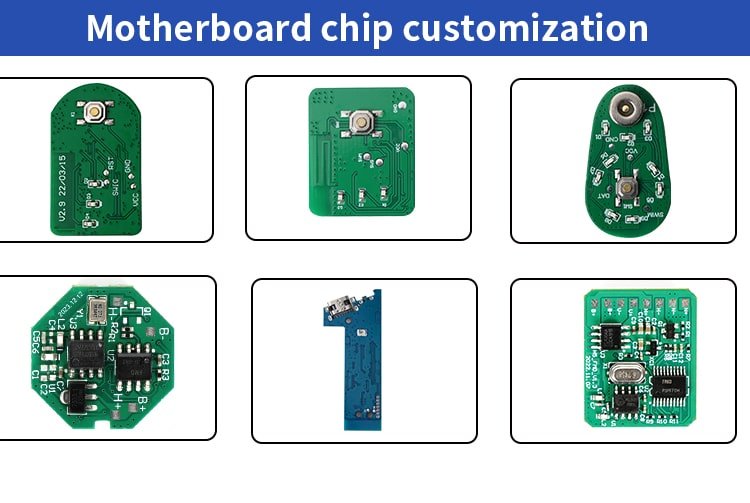
The PCBA architecture will be the final determinant of the ability of a heated wearable to obtain repeatable and defensible compliance.
Power control circuits have to fit within the rate of variation of voltage changes and load impulse, and fault conditions without surpassing the emission cap or thermal pathway. Fault detection and fault-opening logic should react within a short period of time so that in the event of an abnormal condition (short, component failure, obstructed airflow) there wouldn’t be excessive temperature or current flowing about. Thermal control loops are supposed to be with enough margin that allows; the surfaces to be kept within safe temperature even when sensors have drifted or the surrounding conditions are varied.
More importantly, the one-time passing of a pure lab sample does not make future adherence. There should be variation in production, tolerances of components and long-term degradation to be expected in the design. Skeleton boards with low design margin frequently do not pass repeatability tests or can be difficult to deal with little manufacturing variation.
To prevent certification risk earlier in the design phase, a team working on a concept of a product that would be an active, wearable, adopting compliance-ready PCBA design for heated wearable products during the concept phase dramatically improves first-pass success rates.
Common PCBA Design Issues That Lead to CE, FCC, or UL Failure
Most certification failures can be seen based on the common patterns which are a result of common PCBA design flaws.
| Failure Type | PCBA Design Gap | Typical Result |
| EMC failure | Diluted filtering, inefficient separation of the ground. | Radiated emissions- FFC test failure. |
| Overheating | The poor thermal control, derating of insufficient strength. | UL rejection, high surface temperature. |
| Battery incident | Deficient protection logic, lack of redundancy. | Safety recall, thermal runaway in fault test. |
| Leakage current | Insufficient isolation, narrow creepage | CE violation, hazard of electric shocks. |
The problems are hardly realized in the early product functional prototyping. They occur in formal pre-compliance tests or complete certification offensives – usually when the tooling is already in progress and time is running out. A deeper discussion of recurring pitfalls appears in common PCBA design mistakes that cause heated apparel failure.
Battery and Thermal Risks Under Regulatory Evaluation
The most risky area of electricity regulation in heated wearables is batteries.
Certification authorities are of special concern regarding the behaviour of the battery when it is operated in single fault conditions: internal short, external short, overcharge, over-discharge and thermal abuse. The PCBA should have independent protection mechanisms which cannot be compromised by bugs or malfunctions in the firmwares or other manufacturing errors. Rate behavior is also of utmost importance: the regulators insist on the demonstration that it cannot become dangerous even when the main control loop breaks down.
Abnormal situations that should be looked into by protection logic include blocked ventilation, pinned heating zones, or partial cell failure. Software monitoring designs or those that are single point protection often fall off when abnormal operation tests are conducted.
Battery protection circuit design includes detailed engineering considerations battery protection circuit design for regulatory compliance in heated clothing.
Why Compliance Failures Are Expensive to Fix After Prototyping
The cost and time implication of amending compliance problems towards the end of the development is harsh.
Restructuring PCB traces or changing clearance spacing, shielding layers or power structure can frequently necessitate a full respin of a PCB, a new BOM, and new assembly fixtures. Every cycle would increase both direct costs by tens of thousands of dollars and time lost due to failure to enter the market in time, that is on time.
Worse still is the brand risk and legal risk that may be incurred following recall or breaks of field. Making compliance-conscious design decisions in the early planning stages of the layout is much cheaper than any later schools will be corrected.
How OEMs Should Evaluate Compliance-Ready PCBA Capability
In the context of choosing an ODM partner to supply heated wearables, OEMs have to look further than boasting marketing and examine the reality of compliance engineering capacity.
Among the crucial questions, there are:
- What do you consider the specific standards (EN 62368-1, FCC Part 15, UL 2272 elements) that you have successfully certified in the past 24 months in regard to heated apparel?
- Do you present design rule checks on creepage, clearance and isolation in your schematic and layout?
- What do you do concerning regulatory derating and fault-mode analysis at the design stage?
- Do you conduct in-house pre-compliance EMC and safety tests prior before submission?
- What is the interaction between hardware and firmware teams? Seeing to it that the logic of fault-handling is so coordinated as to contain certification requirements?
Customers who have well developed in-house processes which incorporate compliance thinking during schematic capture through validation are far less risky. To have a better glimpse of such workflow see in-house PCBA design and compliance validation capability.
Conclusion — Compliance Is Engineered, Not Tested In
The compliance of CE, FCC, and UL of heated wearable is not done by means of shortcuts. It is the product of PCBA designs that contemplate regulatory examination very early indeed, designs that incorporate proper isolation, filtering, fault tolerance, and thermal margin and protection redundancy as inherent to the design and not as extravagances.
Creating the compliance process as an engineering process rather than a test process also lowers failure rates, shortens time-to-market, and insulates the brand and product both in the cost of manufacturing products late, or post-launch. Compliance in the small scale, safety-critical wearable heating system, is not proven but designed long prior to it being even tested.