

A wearable heating element is a stretchable electrical device designed to produce regulated heat inside clothing or accessories, of which the material selection and geometrical design directly affect comfort, safety and durability. In contrast to domestic heaters, which are inflexible and installed to be used in a stationary location within a device such as an oven or a space heater, a heating component to serve the purpose of wearable heating should be able to move with the body without limiting its movement. They are also not like industrial heating elements where power output of heating in controlled settings is more important than integration in fabric. The wearability also possesses certain limitations: the component should be flexible not to cause any discomfort, it should be safe at low voltages to prevent shocking when touching the skin, it should be able to withstand the washing process without deterioration, and it should be capable to work on battery power to be portable.
Definition — What Makes a Heating Element “Wearable”
Heatable devices should be more human-oriented in design to fit into clothes in a way that does not interfere with their functionality. These elements transform electrical energy to thermal energy at their core using resistive heating, but the designation of wearable is due to changes made to accommodate the requirements of close body contact and dynamic operation. Traditional heating coils, such as nichrome coils in toasters or ceramic rods in kilns, are based on a rigid structure and use high voltages, and are not suitable in clothes where bending, stretching, and exposure to moisture are common. Rather, wearable versions have flexible substrates and low power circuits to make them able to withstand flexing repeatedly and evenly distribute the heat.
| Criteria | Wearable Heating Element | Conventional Heating Element |
| Flexibility | Required | Not required |
| Voltage | Low (battery-powered) | Often high |
| Skin proximity | Direct / near-contact | Isolated |
| Washability | Required | Not required |
These differences can guarantee the use of wearable heating elements in such objects as gloves or jackets, where the safety and comfort are the main consideration.
Core Structural Components of a Wearable Heating Element
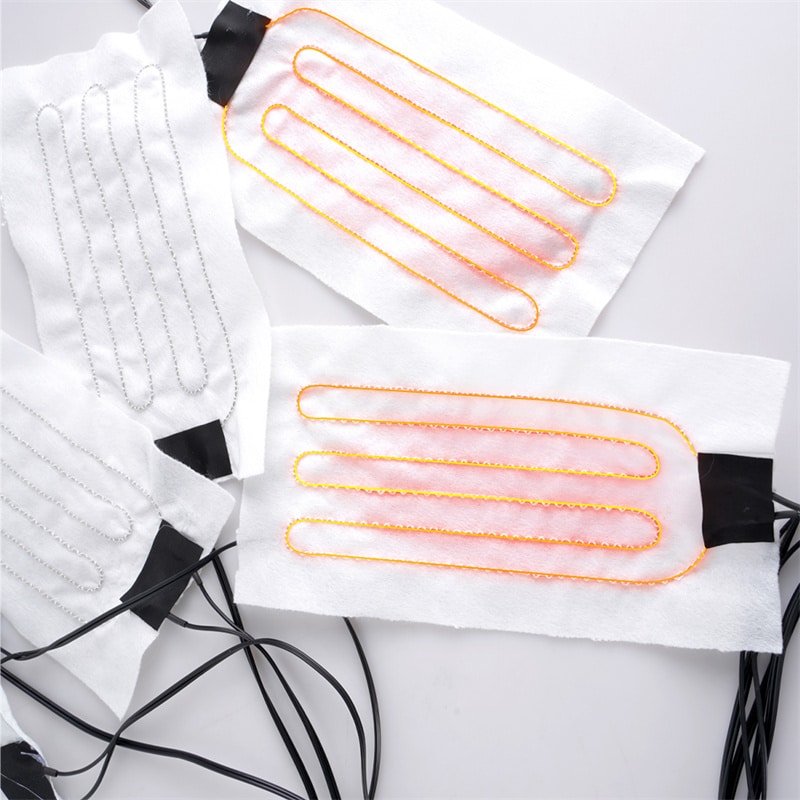
A wearable heating element design is of a layered nature in order to balance between heat generation and protection and integration. This multi-layer construction enables the element to perform reasonably under wear stresses; e.g. folding, abrasion. All the layers have their specific functions, such as carrying electricity and protecting against external influences, making the whole assembly thin and soft.
Heating Conductor Layer
It is the first layer where resistance generates heat which is usually composed of conductive materials which have some resistance to electrical flow sufficient to generate heat.
Substrate Layer
The substrate functions as a backbone, meaning that it provides mechanical support, which is usually achieved through flexible polymers to enable bending without breaking.
Insulation Layer
This layer is essential in electrical safety; short circuit and leakage of current is avoided and the user is not exposed to leakage particularly when they are in wet places.
Protective Coating Layer
The topmost layer protects the environment against environmental wear such as water, chemicals and physical damages as it is used or washed.
| Layer | Function |
| Heating conductor | Generates heat |
| Substrate | Supports structure |
| Insulation layer | Electrical safety |
| Protective coating | Moisture & wear resistance |
This has a multifaceted logic which allows the element to be sewn or laminated to fabrics without bulkiness.
Common Materials Used in Wearable Heating Elements
The wearable heating element selection of materials is an important issue since it determines factors such as thermal performance to the duration of use under flexure. The engineers select the materials according to their electric resistivity, mechanical properties, and compatibility with textile production processes. Typical choices would be conductive fibers, films and wires with trade-offs in weight, cost and heat-dispersal. An example is that carbon-based materials are even heating, but the critical encapsulation of the material is necessary, whereas metallic materials are robust but with extra rigidity.
To explore specific trade-offs, see this comparison of carbon fiber vs heating film heating elements.
| Material Type | Key Properties | Typical Use |
| Carbon fiber | Flexible, uniform heating | Apparel |
| Heating film (PET / PI) | Thin, lightweight | Insoles, socks |
| Metal wire | High durability | Workwear |
These materials should also be able to withstand oxidation and also should be conductive even after undergoing numerous heating and cooling processes.
Structural Design Variations in Wearable Heating Elements
The wearable heating elements are designed structurally to influence the distribution of heat and the physical load endured by a component. Differences come about due to the necessity to adjust to varied garment shapes and usage conditions e.g. covering the entire body in a vest and providing specific warmth in gloves. Printed patterns entail applying conductive inks to flexible backing so that it can be integrated seamlessly, and wire routing entails incorporating thin conductors on serpentine tracks in order to enable stretching. Zoned designs separate the component to be controlled independently, with the goal of saving power on parts of the body such as the torso or limbs.
| Design Type | Advantages | Limitations |
| Printed film | Uniform heat | Limited repair |
| Routed wire | Robust | Potential hot spots |
| Zoned layout | Targeted warmth | Higher design complexity |
These strategies will make the element compatible to the ergonomic needs of the product.
Performance Characteristics That Define Heating Element Quality
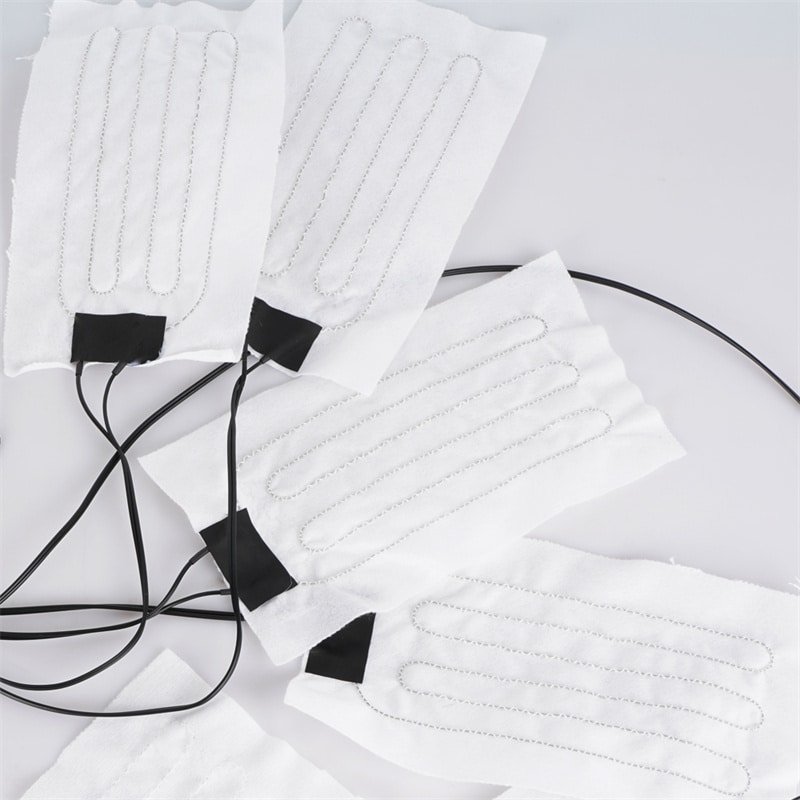
The measurement of performance in wearable heating elements depends on measures that have direct user experience and viability impacts on a product. Heat uniformity eliminates burns or cold spots by maintaining the heat dispersion throughout the surface which is very vital in ensuring comfort when one wears it over extended periods. Response time is a measure of thermal response, that is how fast the element can rise to operating temperature, and has an impact on the usability under varying conditions. Power efficiency is a factor that determines the efficiency of electrical input to heat output, which increases the battery life. The flex endurance is also known as durability under movement and is a measure of the resistance to cracking or failure under repeated bending, which is required in active work.
For deeper insights into optimization, refer to this discussion on heating element efficiency in heated clothing.
| Metric | Why It Matters |
| Heat uniformity | Comfort |
| Thermal response | User experience |
| Power efficiency | Battery life |
| Flex endurance | Long-term reliability |
All of these traits are interrelated, and material and structure decisions are either reinforcing or counteracting.
How Wearable Heating Elements Are Integrated Into Products
Wearable heating devices should be incorporated in products with serious regards to the architecture of garments so that the devices do not disrupt functionality or aesthetic. Placement is commonly undertaken by making the element sandwiched between pieces of fabric, e.g., the inside of a jacket, or the sole of an insole, to disperse the heat evenly without creating pressure points. The exposure to the materials in the environment, such as permeable fabrics to wick moisture, padding to insulate or waterproof membranes to protect, will see the element complementing the performance of the product and not suking it. Limitations to wearability, such as low thickness and weight, are used in this process to avoid the bulkiness which may limit movement.
For tailored solutions, explore custom heating element design for wearable products, which addresses specific integration challenges.
Relationship Between Heating Elements and Control Systems
Heating components of the wearable are based on interconnected systems to control the production and guarantee safe handling. They connect to controllers to control power flow by user input or environment feedback to avoid overheating by pulse-width modulation or other methods. Sensors, e.g. thermistors that are mounted near the element, give real-time information to keep temperatures desired, and create a feedback loop that is responsive to body heat or the ambient conditions. This advanced synergy also ensures that the element does not work in isolation but optimizes its operation in the overall requirements of the devices.
Learn more about how heating elements integrate with PCBA and temperature control circuits.
Why Wearable Heating Element Design Directly Affects Product Reliability
The systemic failures that bad wearable heating elements design can introduce are threatening to the entire product. An example is poor material flexibility which could result in cracks due to flexion resulting in the loss of heat and open circuits. Construction shortcomings such as non-even spacing of wires may lead to hot spots that may at some point impair insulation in the long run leading to short or burns. Repeated thermal cycling has a detrimental effect on long-term durability unless materials are selected to expand at the same rate, leading to delamination or decreased efficiency. These can be handled by making them testable in order to be reliable when subjected to tough conditions such as outdoor job or sports.
To understand prevention strategies, review why heating elements fail in heated clothing.
Conclusion — Understanding the Element Is the Foundation of Heated Wearables
Learning the concept of a wearable heating device, including the materials and design of these devices and how they affect the work process, is the key to creating a high-quality, comfortable, and safe piece of equipment that will be heated. Understanding the interaction between elastic substances, additive structures, and such essential measures as heat diffusivity and efficiency, engineers will be able to develop solutions to suit the specific needs of wearables. This understanding is the basis upon which the hot cloth technologies are enhanced to make sure that they can work under the conditions of the real world.