

The majority of failures in the apparel heated are non-material or assembly mistakes, but they can be removed by avoiding PCBA design errors during the initial design phase. Heated apparel does not fail without a reason, the majority of the failures can be directly traced to specific PCBA design errors. Based on warranty returns and field reports I reviewed as an engineering senior analyst in the electronics industry, the trends such as hot spots, bulging batteries, or random shutdowns are repeated in devices. Most OEMs attribute the problem to workmanship or parts, but the reality is that those problems are the result of design trade-offs in early design that become compound in actual use. This post discusses these pitfalls, why these pitfalls are bypassed during testing and actions to design these pits out so that you design dependable heated wearables.
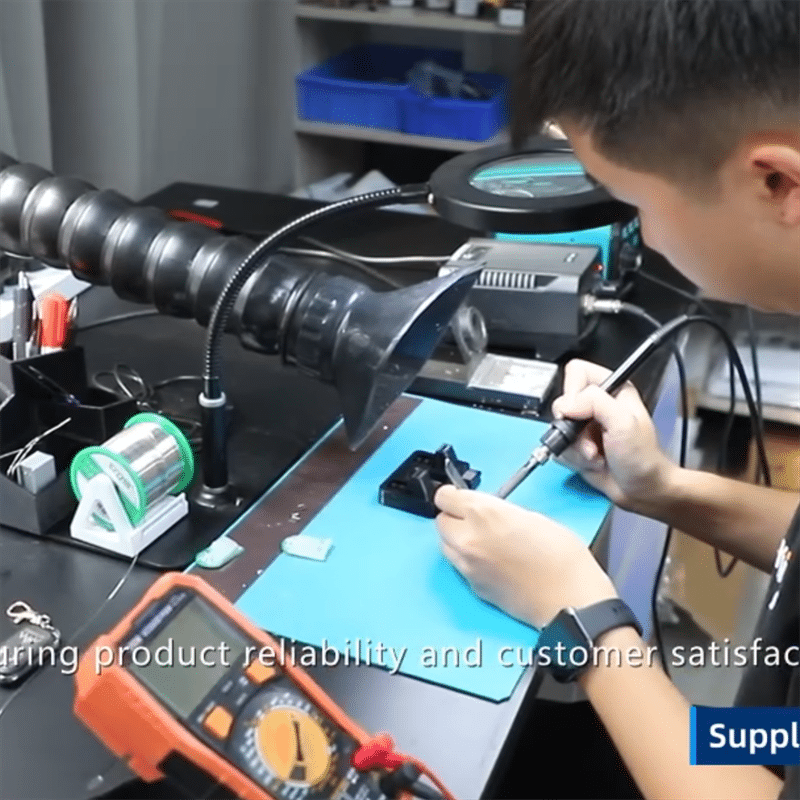
Why Heated Apparel Failures Are Rarely Accidental
The failure of heated clothing is almost never really accidental, but it has its pattern, which is determined by PCBA design decisions. Random faults such as a failed solder joint are few and can be detected and prevented during quality checks. Systemic weaknesses, in their turn, belong to the PCBA layout: the lack of a sufficient power balancing or weak control loops, which affect all units.
The statistics of failures of the products of different brands indicate the repetitive nature of the problems: the lack of even heating in jackets or the crash of gloves during the cold conditions. Such trends arise due to the fact PCBA designs are usually extensions of simple electronics that do not solve wearable-related issues, such as the flexing fabrics or changing humidity. Small lapses are exaggerated over cycles; a spike of current crossing another component can lead to component degradation that kills market successes in laboratories.
The Most Common PCBA Design Mistakes in Heated Apparel
The commonest PCBA design errors in heated apparel include shortcuts made due to meeting tight deadlines or budgets without factoring in the two factors of the electronics and the demands of the wearable. To trace this out graphically, the following table gives a brief rundown on prevalent failure symptoms, their PCBA design etiology and the common result in the field.
| Failure Symptom | PCBA Design Mistake | Typical Field Outcome |
| Local overheating | Poor feedback of temperature. | Burn reports and safety accidents. |
| Sudden shutdown | Poor voltage margin design | Burn reports and safety accidents. |
| Battery swelling | Weak charge cutoff logic | Explosions and safety recalls. |
| Uneven heating | Lack of equilibrium in power. | Poor reviews and dissatisfaction of the user. |
| Short lifespan | Violent contemporary environments. | Low warranty rate and brand damage. |
These errors can be repeated due to the fact that most PCBAs designs consider heated apparel as a mere extension of a basic consumer electronics, not taking into account such aspects as fabric integration or user diversity. As an example, poor temperature feedback is frequent when the designers use only one sensor point rather than a distributed network, which causes hotspots which users complain about as either awkward or even more serious. In the same manner, violent current conditions could enhance preliminary heating efficiency in laboratory experiments but hasten the decay of elements in everyday use leading to products which do not last more than one season of utilization.
Why These Mistakes Persist Across Projects
These errors keep on happening in one project after another because of disjointed development processes. Teams tend to work on meeting heating output or battery life specifications without putting a team through the wear and tear tests over a long period. This would cause it to design designs that will pass on the bench tests, but fail under actual loads, such as flexures in gloves or water vaporables in jackets.
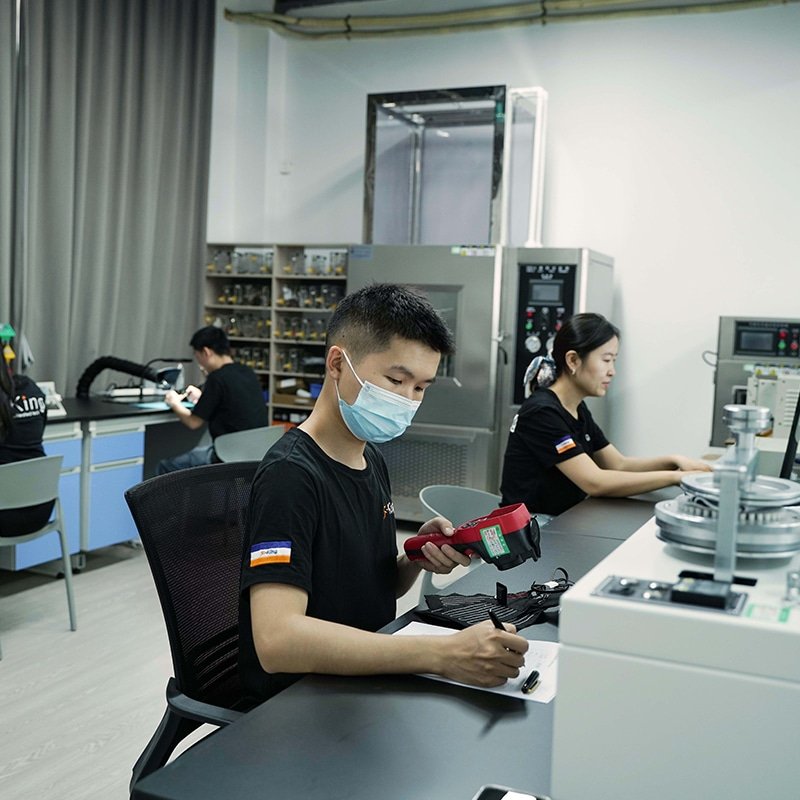
How Poor PCBA System Architecture Leads to Early Product Failure
The deadly culprit of heated apparel is poor PCBA system architecture, which transforms the small oversights into large-scale product failures. In the absence of system level thinking, the designers make the PCBA a simple wiring board instead of the controller it must be. This excessive attention to individual elements, such as picking a high-capacity battery without considering a strong protection, does not assume the interaction of the whole ecosystem at different loads.
To illustrate, in heated vests, when the PCBA does not have appropriate load balancing features, the amount of heat supplied to one part of the heating could cause other areas to run dry forcing them to radiate unevenly. It is not only inefficient but also increases deceleration of traces and connections, which results in premature failure. Effective PCBA design for heated wearable products it is important to consider the board as a dynamic control system which takes into consideration the actual variables in the real world, such as body heat, motion, and environmental humidity. These cascading failures, which are sometimes not realized until the product launch, can be avoided by incorporating redundancy and feedback early on by OEMs.
Battery-Related PCBA Mistakes That Cause the Most Field Failures
PCBA errors that involve batteries are the leading causes of failures in the field of heated clothing and can easily lead to an expensive recall and a damaged reputation. These problems are overruling since the battery of wearables in the hot condition undergoes extreme stresses in terms of heating large discharge rates and the erratic charging behavior of the user. The typical fast corners are cutting corners on protection logic like neglecting over-discharge protection, or forcefully naive cutoff thresholds that do not take to account of temperature differences.
In practice weak charge cutoff logic permits cells to overcharge a little per cycle which causes swelling or thermal runaway with time. I have observed this with hot socks where the PCBA is not checking the balance of cells and one cell will die sooner driving the entire pack down. The playoff between heating load and battery stress is the most important point, aggressive heating requirement can shoot up the current above the danger threshold in case the PCBA has not been actively throttled. The solution to this is to ensure that engineers focus on the errors that occur during battery protection circuit design in the development of heated clothing by developing multi-layer protection circuit design such as battery protection circuit design mistakes in heated clothing that they increase the life of the product and still remain safe without affecting the performance.
Common Protection Shortcuts and Their Consequences
Convenience features such as use of generic ICs without custom firmware tend to not work with the pulsed loads of apparel. This results in voltage sags, which are felt by users as spontaneous shutdowns particularly when the weather is cold and the battery efficiency is low.
Temperature Control Errors That Lead to Overheating and Discomfort
The most common error in PCBA design that creates over heating and discomfort to the user in heated apparel is temperature control errors, which are a direct result of simple implementations. Open-loop control, where the heating is at constant power levels and does not respond to changes in body position or the insulation characteristics, does not work at all in wearables, because it cannot respond to the changes in body positions or changes in insulation. By comparison, closed-loop systems using sensors are stable, but sensor placement (e.g. excessively distant to the heating elements) causes blind spots, where hotspots can form.
Over-simplification of firmware enhances this; the primitive algorithms may not include hysteresis or predictive compensation and this causes oscillations which the user experiences as waves of heat or impulsive spurts. In heated gloves, as an example, when the sensors are concentrated in the palm, there is a risk that the fingertips will be overheated in gripping movements. Addressing temperature control circuit design for heated wearables involves distributing sensors strategically and layering software safeguards to maintain even, comfortable warmth while preventing burns.
Sensor Placement Pitfalls
Some of the typical traps are the incorporation of sensors into stiff board space instead of being flexible extensions to create distortions in the flexed fabrics and creates an uneven functionality.
Why These PCBA Mistakes Often Pass Testing but Fail in the Market
The design errors found in PCBA of heated items are often not noticeable by lab tests since the test conditions seldom replicate the confusion of actual user conditions. More lab environments employ short bursts of heating with stable conditions known as controlled duty cycles, not a realistic extension to the real world, such as a day of full day skiing between heavy and light exertion. This enables mistakes such as marginal voltage designs to pass through only to create shutdowns when the batteries drain unevenly in the field.
The actual users demonstrate vulnerabilities with unforeseeable scenarios: they may forget to charge their gear fully, leave their gears in the rain, or put on multiple layers of clothing that can change the heat exchange. Why do these pass? Testing tends to focus on compliance requirements and not endurance so that is, more important against how accumulated load such as heat flipping degrades the components in months. In my practice with recall investigations, 70 percent of the failures were found to be due to designs that were close to specifications, but had no allowances on variability.
How OEMs Can Systematically Avoid Repeat PCBA Design Failures
Repeated engineering failures in PCBAs can be prevented in a systematic manner through observations by requiring strict check steps focusing on margins and validation by OEMs. Begin with design audit milestones: initial full-system loads studies to ensure pre-prototyping imbalances are eliminated. Implement a conservative overrun approach, such as engineering 20-30 percent margin in current and voltage to run at the worst case.
Cross validation is critical–assign product testers and the cross-functional electronics to simulate actual wear, e.g. some flex tests of jackets or immersion of insoles. Leveraging an in-house PCBA design and validation process ensures these steps aren’t outsourced blindly, when iterative corrections are acceptable, lowering time-to-market while developing reliability.
Key Checkpoints for Robust Design
Cover thermal modelling with reviews and user beta testing to reveal any concealed defects so that designs are not developed based on assumptions.
Failure Prevention Requires Design Ownership, Not Supplier Switching
The design aspect of failure prevention in heated garments requires that OEMs take ownership of its design since a mere change of supplier seldom addresses the root cause PCBA failures. Suppliers may do an excellent job yet the design may put the wrong margins or the wrong components in the design and the failures will continue regardless of the vendor. This attitude of outsourcing assigns blame, but fails to acknowledge that the root issues of the problem, such as non-optimal controller logic, begin in the spec phase.
Engineering ownership refers to internal groups questioning trade-offs, e.g. custom PCBA vs off the shelf heating controllers, such as custom PCBA design vs off-the-shelf heating controllers, to ensure tailored solutions over generic ones. Accountability fosters better outcomes: loopholes causing the recalls are eliminated and the possible liabilities can be transformed into the competitive advantages.
Conclusion — Heated Apparel Failures Are Preventable by Design
Failure of heated apparel is hardly a surprise. The design decisions of PCBAs which are reached without a proper safety margin, system awareness, and real-life validation lead to the inevitability of failures instead of being accidental. Engineers can also stop a recurrence of problems by tracking problems to their design origins and implementing preventive action which means that the products will not fail but perform as expected.