
Quick Answer — Heated Socks vs Regular Thermal Socks
When it comes to the battle of heated socks vs thermal socks, the heated ones can be used during active winter sports and extreme cold and provide warmth on demand by using battery-powered elements that can reach up to 1500 F, whereas thermal ones must use passive insulation to trap body heat, and therefore make them suitable in milder conditions or those who want to save money. The actual distinction is in the flexibility and reliability, battery heated socks can be set to a preset amount of heat to ensure reliable warmth in the cold both on the skiing or hiking trail, but at a higher cost and need charging, whilst regular thermal socks are easier, can be washed, as well as give consistent warmth and need minimal maintenance. When you need to deal with below zero temperatures or lack of circulation, then heated socks are the way to go, where deals with cold feet in general, thermal socks are a common and useful solution in winter.
What Are Regular Thermal Socks?
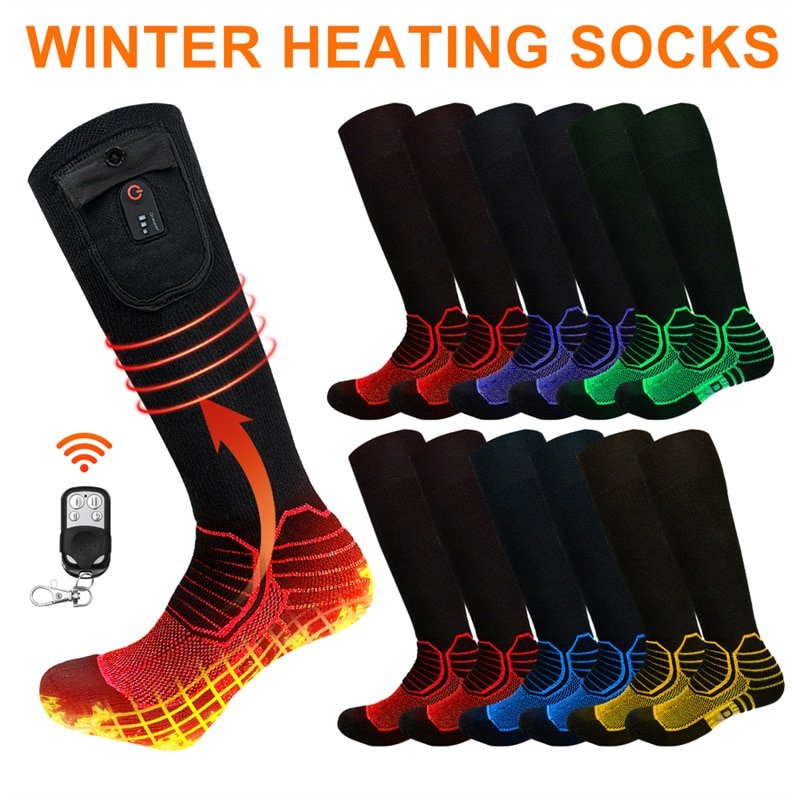
Any person would use regular thermal socks during the cold weather when they are needed to insulate the body and keep the natural heat of the body, without any technological interference. They are made with such material as merino wool, acrylic blends, or synthetic fibers like polyester and they operate in the principles of formation of air pockets that trap the warmth nearer to your skin. Imagine them as a warm shield against the cold- many wool helps to keep of moisture, keeps feet dry and a more massive knit gives more loft to keep them warmer.
In my experience of testing equipment in snowy backcountry, I realized that their advantages are simple: they have no batteries to lose, can be washed in the machine, and weight little to be put under boots. But cons? They become useless in wet environments or long exposure, because passive insulation will not be able to produce its own heat. In moderate temperatures To keep warm on cold days, they serve well, especially being labeled as meeting basic safety standards such as OEKO-TEX of chemical-free materials, however will not keep feet warm on an all day excursion.
What Are Heated Socks and How Do They Work?
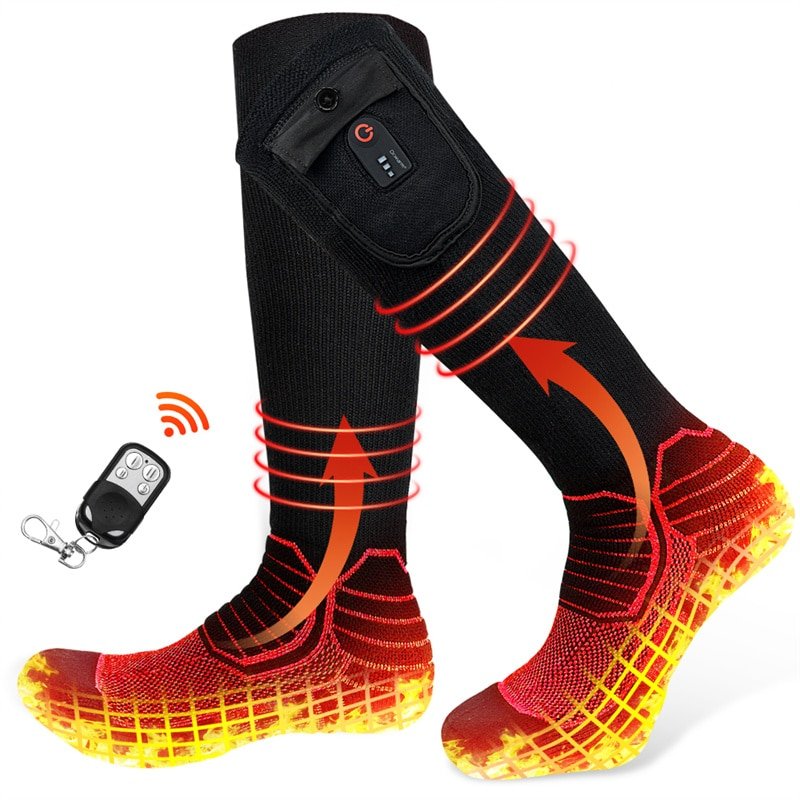
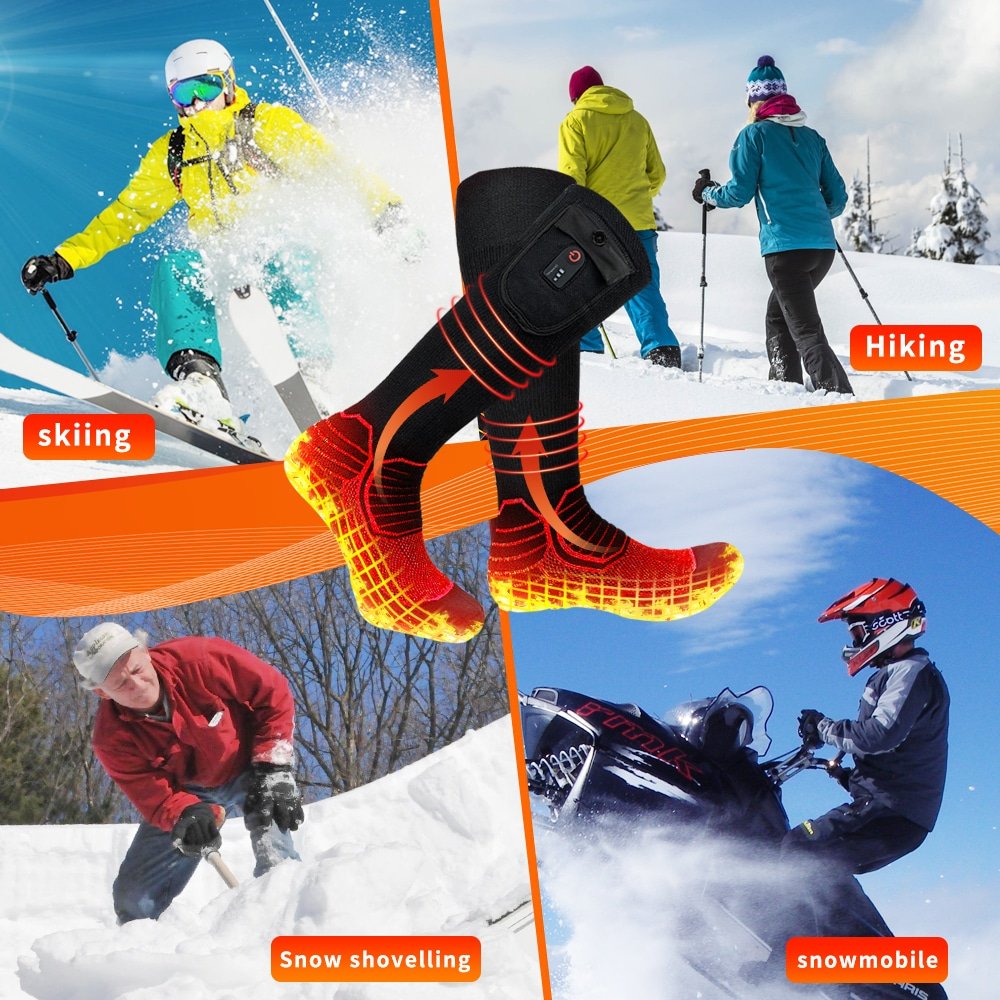
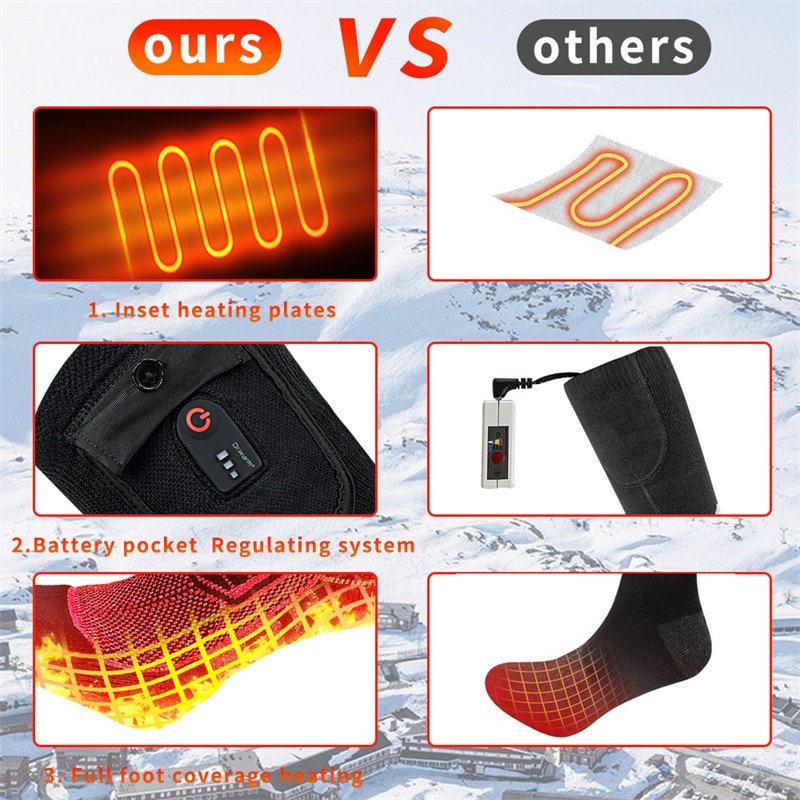
Heated socks are brought to the next stage of warmth having an electric heating system built in and being powered by rechargeable batteries embedded in a cuff or pocket. They are essentially made of heating elements such as carbon fiber threads or integrally woven fine wires that are then incorporated into the fabric to produce heat when the electric current passes through them. The batteries are normally lithium-ion and are connected to controllers that allow one to adjust the temperatures; low during warm days and high during snowfalls.
I have taken them out on dawn patrol in the mountains, where even distribution of heat provided by the carbon fiber (better than the rigid wires that can strangle toes) leaves toes warm without increasing the bulk. They usually have app or remote controls to be able to control it more accurately, and the safety measures such as auto-shutoff have no problems. These battery heated socks are based on the standard requirements of CE and ROHS that are prepared to last but they require proper charging unless they will skip performance under extreme temperatures.
Heated Socks vs Thermal Socks: Key Differences Explained
Going deeper into the differences between the heated and thermal socks, the differences emerge in the performance and design. The following is their comparison in terms of important factors.
Heat Output & Warmth Performance
Heated socks generate active heat, which reaches 100-150degree Fahrenheit at the toes and sole, much higher than passively retaining the normal thermal socks, which may merely keep body heat at 98degree Fahrenheit. On actual tests on winter increases, heated models keep warm in winds of -10o F, whereas thermals cool off in an hour.
This puts the heated socks on winter sports as the best in changing conditions, but the thermals in constant, dry cold with no need to enhance their performance.
Battery Power vs Passive Insulation
The huge difference: Battery heated socks are dependent on rechargeable power sources to provide hours of heat (4-8 usually), whereas regular thermal socks are dependent on no power needed with the use of natural fibers. This is added convenience but also comes with the hassles of recharging batteries- I have forgotten to charge my battery in the middle of my journey, and I have used it as a simple pair of socks.
Thermal has zero tech, is always available, so it is a foolproof winner of the winter socks comparison when going off-grid.
Temperature Control & Adjustability
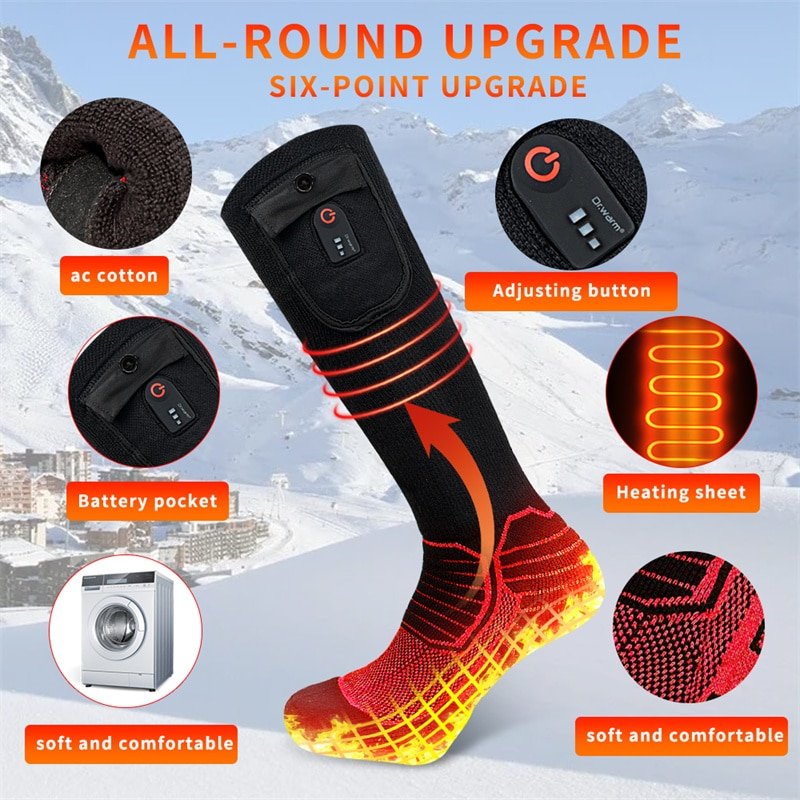
You have several degrees with the heated socks low, medium, high, to make an on-the-fly adjustment, which can be great when you are leaving the lodge to the slopes. None available in thermal socks, the warmth relies on activity and the layers.
With outdoor group coaching, the adjustment in heated models will avoid the problem of sweaty feet, an aspect of thermal problems that are common in warm weather.
Materials & Insulation Layers
They both incorporate insulating layers, but the heated socks combine technology-oriented fabrics such as nylon-spandex blends with usable Thinsulate to keep the battery warm. Frequently used electronics-free thermal socks are made of wool or fleece.
Heated may be smoother, but thermals usually have an advantage in guiding by the feel of the skin – I have liked wool thermals in a breathable form, when active in a light manner.
Comfort, Fit & Breathability
Fit-wise, thermal socks may be added to using battery packs, and therefore may be bulky, whereas regular thermal socks fit snugly with stretchy knits. The moisture-wicking wool of thermals is more breathable than the standard wool, which makes it less clammy.
Practically, warm-up versions are enhanced with merino layers, however, to have all day comfort in the mild cold, thermals seem less invasive.
Safety Features (Battery Certifications, Over-Temp Protection)
Socks featuring heat safety are protective with over-temperature control, auto-switches and battery standards, such as CE/RoHS in areas of fire risk. Thermal socks come with fewer issues- just wear or fabric allergies.
Authoritative note: There should be FCC marked on heated batteries; I have witnessed uncertified on heat overheating, but those of quality were as safe as houses.
Durability & Long-Term Wearability
Battery heated socks can survive 200-300 washes with proper care, and components may wear out, whereas plain thermal socks can last seasons with the simple use, with pilling that reduces with time. My gear logs show that heated durability is based on hard sports.
Thermals wear out due to friction, whereas electronics do not make it easier to live.
Cost Differences (Initial Cost + Longevity)
In the short term, at $50-150, including batteries, are heated socks, compared to thermal socks costing only 10-30. Heated long-term ones are cost-saving in terms of replacement in case they are durable, and battery replacement increases expenses.
When it comes to heated vs thermal socks, the latter is better in the case of casual wear; the heated is better in case of cold exposure.
Best Use Cases: When to Choose Each Type
Sock splicers to situations are the best way to be worn. Here’s expert guidance.
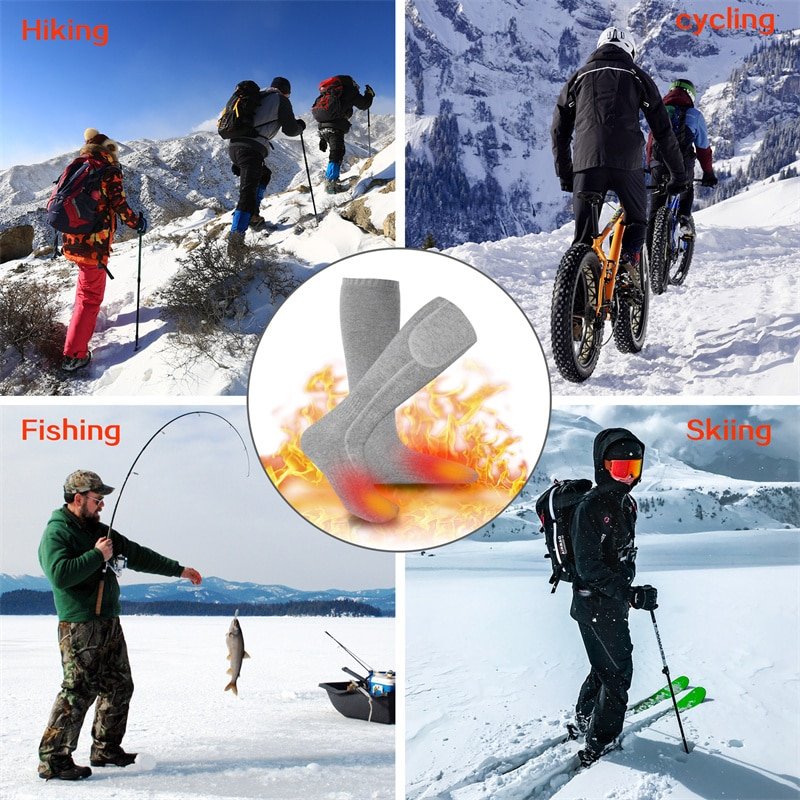
In a case of skiing and snowboarding, skiing heated socks take the lead with the regulated heat to boot liners, and overtake the thermal that chills on the lifts.
Hunting, fishing, hiking, excel are best at stationary cold (such as ice fishing), whereas thermals are best with active hikes where power is not an issue.
The cold-storage work in industries requires the use of heated temperature over a long period of time because thermals are not capable of countering the freezing temperatures.
Daily winter commuting? Thermals are convenient and discreet; warmed up in case of problems with circulation.
Heated provide is enhanced over basic thermals because of the targeted relief of cold-sensitive users or elderly users who need medical knowledge of the circulation.
Common Misconceptions About Heated Socks
Numerous individuals worried about having hot socks due to the possibility of batteries blowing up- very uncommon with CE approved sock models, however, this is prevented by using them correctly. Another myth: they heat feet and burn them–they do not have the power to do this, like uncontrolled chemical warmers.
Waterproofing? Not everything but good battery heated socks contain closed pockets. And complaints about it being too hot originate here; begin low. And last but not least they are not gadgets, true professionals in extreme cold, not hyped.
How to Maintain Heated Socks Properly
In order to make the full life, charge battery heated socks at room temperature, but do not leave them completely discharged, leave them at half charge. Wipe by hand or machine carefully, removing, first, batteries, air dry to keep elements dry.
Safe charging: Friendly use supplied adapters in well-ventilated locations which is in line with RoHS requirements. Storage? Cool, dry places away from sun. Wire inspection: seasonal: frayed? Replace. Such a routine makes them dependable over years.
Final Recommendation
When it comes to deciding between the use of heated and regular thermal socks, it is all about your requirements: In winter sport activities, or jobs under sub-zero conditions, the heated socks are the best choice with strong batteries and controls, but they need to be maintained, as nothing keeps you warmer than the heated socks do. When it is cold or when the budget is tight, then wear thermal socks to keep it hassle free. Refreezing- more than 2 hours? Heated. Daily errands? Thermal. Always make sure that you have a fitting and certified safety. Eventually, experiment in your situations; you have the feet, which will lead the optimal approach to winter warm-ups.