

Introduction — Why Overheating Protection Is the Most Important Safety Feature in Heated Apparel
Heated clothing combines normal clothes with state of the art technology- electronics, batteries, and heating additions, such as carbon fiber pads or graphene films all of which are coordinated to provide a method of warming when needed. However, this integration presents some special risks, and the prevention of overheating is the key to the safe design. Since 2013 we have engineered in the thermal apparel sector, and tested prototypes where thermal management failed resulting in hotspots or battery stress when hiking in the winter. In its absence, what begins as pleasant warmth can be transformed to uncomfortable or even unsafe, particularly in such products as gloves where the heat generates in and around the skin. Design of a heating wear is not a by-product but a prerequisite to the confidence of users, regulatory compliance, and product durability in actual conditions such as ski-boarding in cold weather or cold employment, which is exactly why professional heated product design matters from the beginning.
What Can Happen Without Overheating Protection?
These threats of uncontrolled heat in hot clothing are quite tangible and diverse: They show up both in laboratory crashes and in the field, which is why understanding how we test heated clothing is essential when evaluating overheating protection.
Skin Burns and Hot Spots
Distribution of overheating forms hazardous high temperature areas that may result in skin burn when elements exceed a safe temperature range such as 55-60degC during extended exposure. The uneven wiring on a hot vest with no protection may cause one part to reach 70degC and other parts remain tolerable.
Battery Stress and Thermal Runaway
Leaching Lithium-ion batteries undergoes overheating as a form of stress which causes thermal runaway: overheating cells either swell, leak, or explode-packs get disqualified in factory inspections because of thermal runaway.
Heating Element Damage
Unregulated carbon fiber and heating film may degrade or melt resulting in permanent failure. This is particularly susceptible to heating wire, which frayed when used in high temperatures and shorted.
Fire Risk in Extreme Situations
Uncontrolled systems are rarely used but are potential sources of fire due to ignited fabrics or batteries and are especially dangerous during wet weather because shorts increase the risks.
How Overheating Protection Systems Actually Work
Simply put, the concept of protection is based on smart electronics to track and control heat. Experience engineering heated socks for endurance athletes shows these systems bring problems under control by means of exact control.
PCB Temperature Regulation
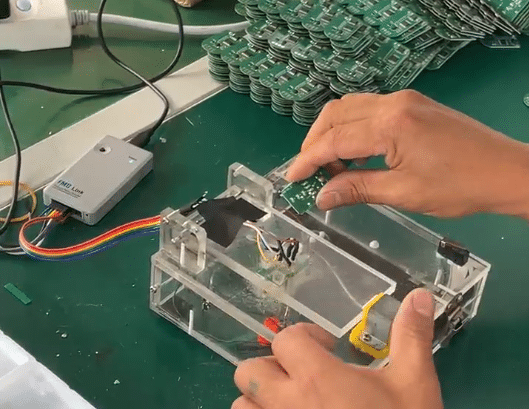
PCB temperature regulation is the brain of the system, modulating current flow as real-time data indicates to ensure safe levels throughout the heating zones.
PWM Control (Pulse Width Modulation)
PWM pulses can be switched on or off at a high rate, adjusting intensity, e.g. 100% duty cycle when it is hot, 50% when medium, maintaining constant temperature without staying fully open.
NTC / Thermistor Sensors
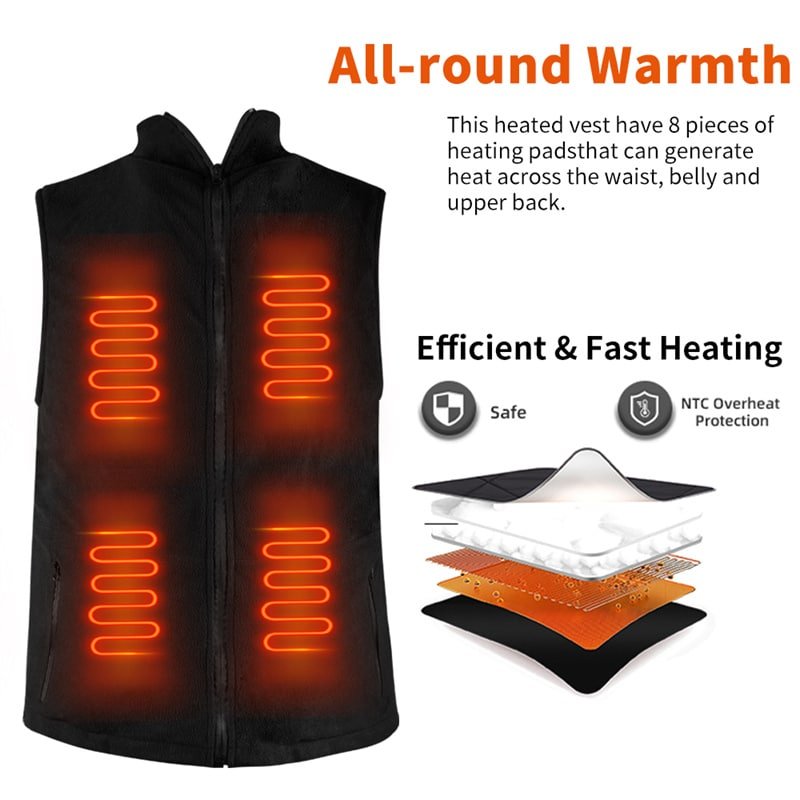
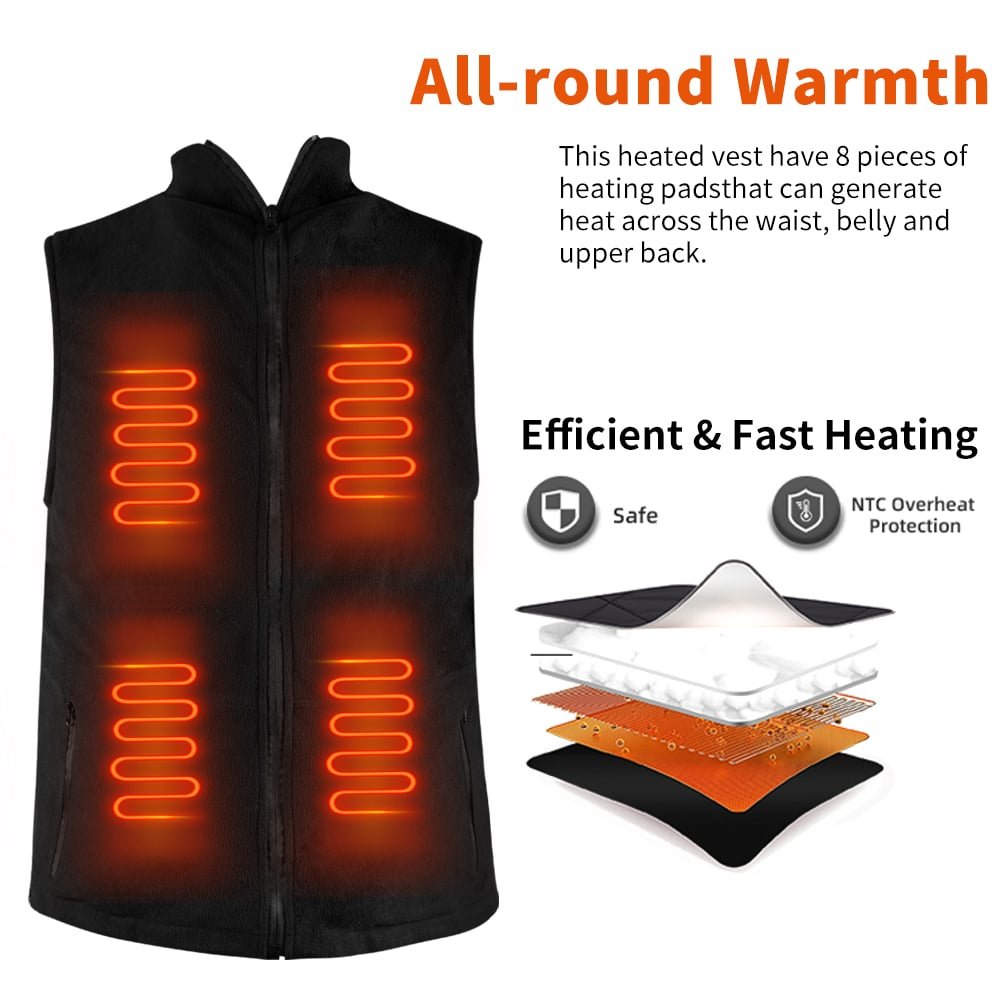
NTC sensors on the clothing, which are used to develop temperature-sensitive heaters, detect the resistance variation with temperature, which is fed to the controller to make changes to it-located close to elements, they detect an increase to 50degC in temperature immediately.
Automatic Shut-Off Logic
In the event that the temperature reaches a pre-programmed limit (say 65degC), the system turns off automatically, which is a failsafe device applied to glove designs as a means of protecting fingers.
Three-Level Switch Logic
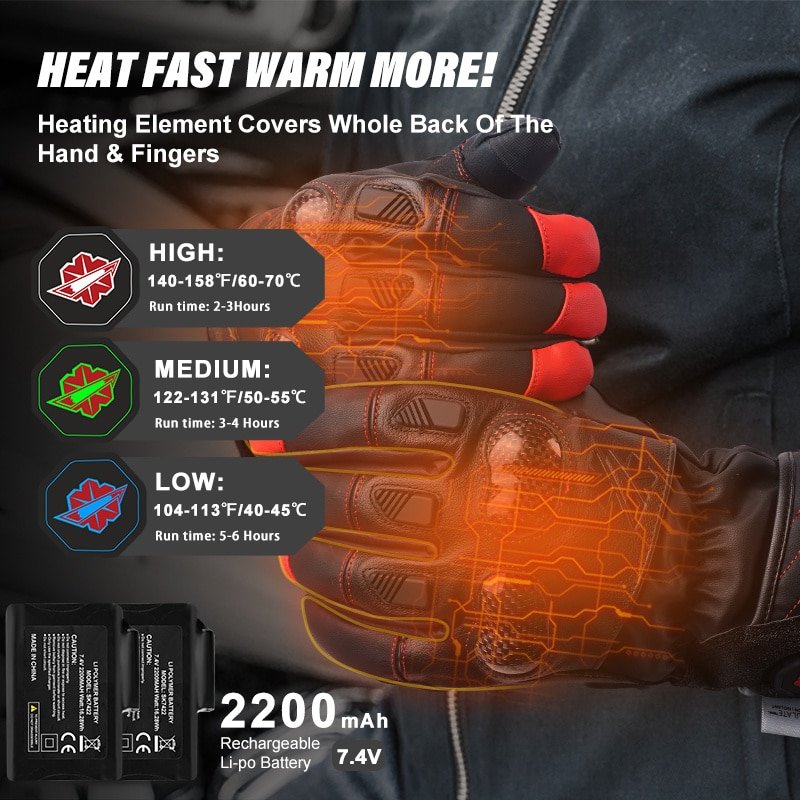
three-level switch uses Low / Medium / High modes correlated with varying degrees of power in heated garments, with built-in restraints to prevent spiking even on high.
Multi-Zone Temperature Balancing
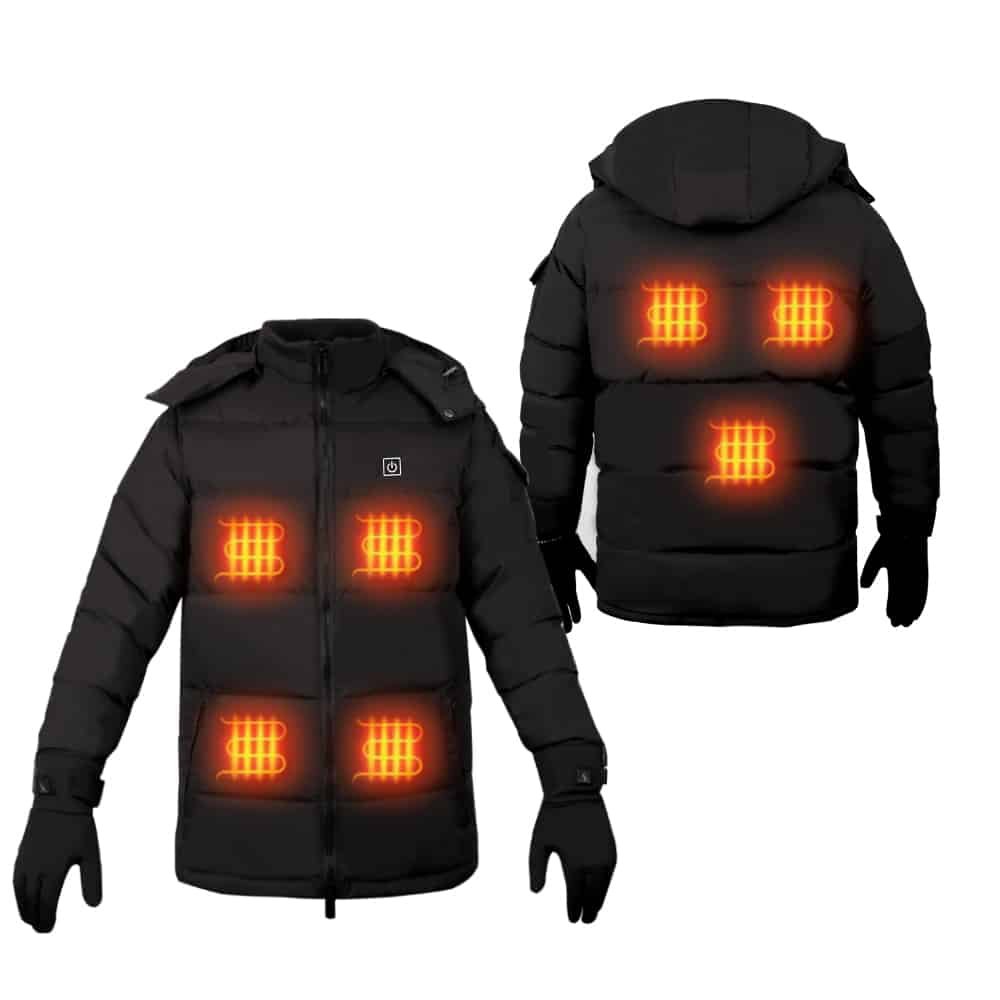
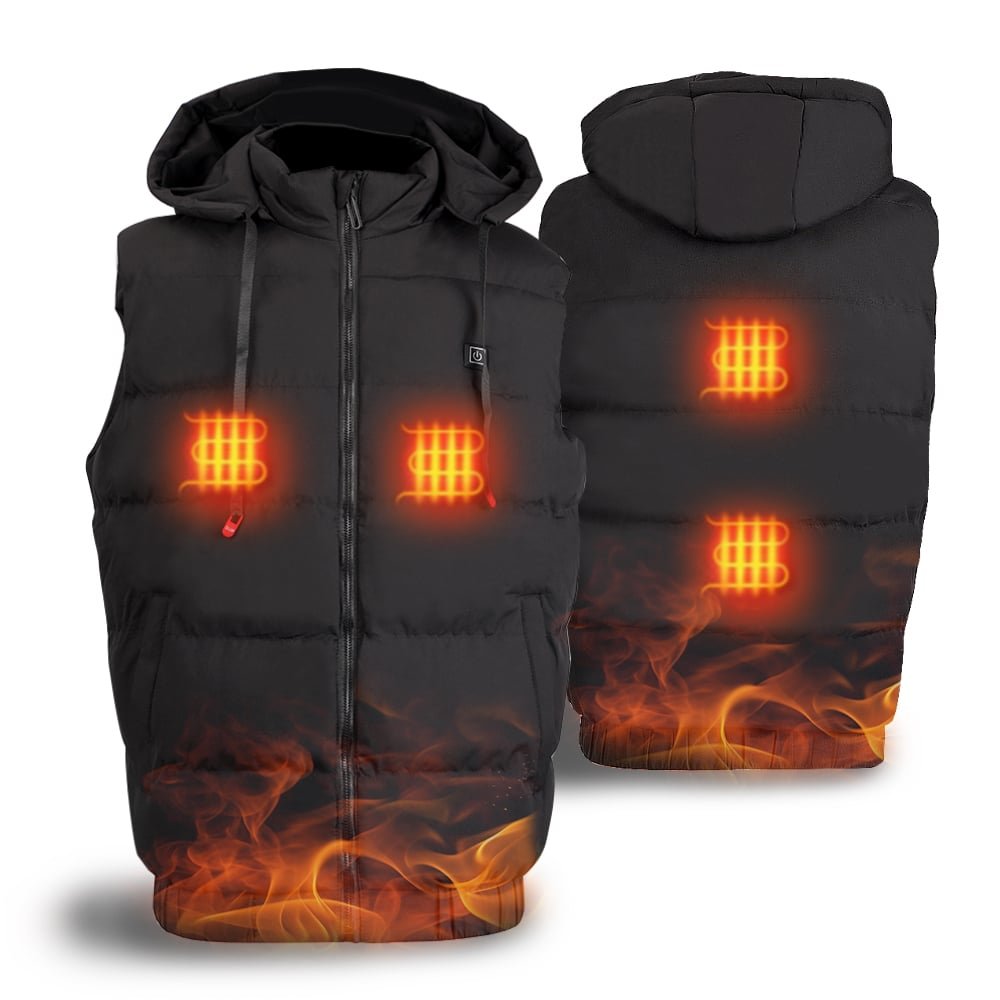
Professional installations provide heat throughout the space, with a series of sensors ensuring that no one area (such as the back of a jacket) gets hot and others are cold.
Battery Safety Features That Prevent Overheating
The power source is also a liability, so preventing battery overheating must never be compromised, especially in OEM heated workwear projects.
BMS (Battery Management System)
The BMS protects against overcharge, over-discharge, over current, short circuit, and thermal overload, while checking cell temperatures and voltages to hold output as required.
UN38.3 Requirements
Vinyl Battery chemistry can be impacted by cold, which decreases 20-30% of output at temperatures below 0degC; condensation of draw should be adjusted as the system does not include compensatory heating.
Temperature Performance Under Cold Conditions
Type of elements–it is essential that the risk should be matched with materials, and experiments with different films and wires show this.
Heating Element Considerations for Overheating Protection
Each heating element must be durable yet closely monitored by sensors so heat stays within safe levels without causing deterioration.
Carbon Fiber
Carbon fiber heats more evenly, making it easier to control and improving heat uniformity so overheating is less likely in heated clothing.
Graphene Heating Film
Increased susceptibility to localized hot spots in the linear design; must have a strong overcurrent and over-voltage protection.
Heating Wire
Wrong voltage (i.e. trying to apply 12V on 20 V elements) results in overheating quickly–always match to elements.
Power Matching with Voltage
Incorrect voltage (e.g., forcing 12V on low-rated wire) causes rapid overheating—always align with element specs.
How Overheating Protection Works in Real Use Cases
Practically, protection works best on the go- normal–designs have to handle situations where the amount of sweat or movement is the obstacle.
Heated Jackets
In heated jackets, multi-zone protection is necessary across large heating areas to manage torso warmth and avoid hot spots on the back during backpacking.
Heated Gloves
In heated gloves, fingers warm quickly, so safe designs need fingertip sensors to help prevent burns during use in cold warehouses or outdoor work.
Heated Socks & Insoles
In heated socks, electric heating parts can warm up rapidly, so protection logic should stop power delivery when toes rise above 45degC during lengthy walks.
Industrial Heated Workwear
Should work under severe conditions and be used long enough; a strong BMS eliminates failures at freezing locations.
Additional Engineering Measures That Improve Safety
There is more than just the basics, the layered defenses make it more reliable-on the evidence of prototype experiments.
Insulation Layers to Prevent Skin Contact
Thermal barriers can be prevented by thermal barriers such as fleece liners.
Fabric Heat Resistance
Fabrics are required to withstand 80degC+ and the flame resistant treatments are to be applied to protect the fabrics.
High-Quality Connectors & Wiring
Loose connectors give sparks or cause hot spots, reinforced and insulated connectors are long lasting.
Stitching & Layout Precision
Misaligned heating zones heating areas lead to imbalance in temperature; it requires meticulous sewing to be balanced.
Certification Requirements That Validate Overheating Protection
Relevant certifications help verify that these protection systems work properly in international markets.
CE Requirements
Electrical safety, thermal stability within the EU directives.
FCC Requirements
Controllers with wireless + electromagnetic control.
RoHS Requirements
Material safety, no hazardous substances in elements or batteries.
UL Testing (Recommended)
Battery and material safety to be used in the U.S.
OEM/ODM Guidelines for Brands Developing Heated Apparel
For safer OEM/ODM development, use these steps based on practical factory experience.
Perform Thermal Imaging Tests
Perform thermal imaging tests to check systematic heating with cameras and identify irregularities before mass production.
Conduct Runtime Tests on All Levels
Pay attention to High Heat Mode in order to be safe.
Check for Hot Spots with Sensors
In prototypes, make sure that no part goes past safe temperature.
Test Bending Durability
Wires have to endure 3,000-5,000 cycles in order to simulate wear.
Test in Real Cold Weather (–10°C to –20°C)
There is a great difference in battery behavior that shows latent risks.
Common Mistakes That Lead to Overheating Problems
Many overheating failures come from the same common mistakes brands make when customizing heated clothing during product development:
Using Cheap Heating Elements
Pronto unbalanced heat and breakdown.
No Temperature Sensor Installed
Rises blind to leaves systems.
Weak or Incorrect PCB Logic
Fails to regulate properly.
Wrong Voltage Pairing
Overloads elements.
Over-Packing Insulation (Reduces Heat Dissipation)
Traps excess warmth.
Final Recommendation — Why Overheating Protection Must Be the First Priority in Heated Apparel Design
Overheating may burn, damage batteries, and be hazardous in essence, thus, it is one of the priorities of engineering. Fashionable heated clothes should have several safety layers such as sensors and BMS to serve as a strong defense mechanism. Business: PCB, BMS, sensors and thermal design will be needed to strike a balance between warmth and protection. The brands should exercise discretion in dealing with factories that offer complete safety test to come up with compliant, reliable gear that the user can be guaranteed of even in cold seasons.
Frequently Asked Questions
Is there a universal cut-off temperature?
No, and quoting one across a whole range is a warning sign. The safe limit depends on how close the element sits to skin, how long the wearer stays in one position and whether the garment is worn over or under other layers. It is set per product against the measured surface temperature at the hand or torso, not against a number copied from a datasheet.
Is a thermal fuse enough on its own?
It is a floor, not a system. A fuse is a one-time device: it opens once and the product is finished. It has to sit alongside a controller that regulates and cuts off, and alongside a layout that avoids concentrating heat in one spot. Products that rely on a single layer of protection are the ones that fail when that layer is bypassed.
How is overheating protection actually validated?
By running the garment at full power with the heat path blocked — folded, covered, pressed against a surface — and measuring how quickly the limit engages and how far the surface temperature climbs before it does. Testing only in free air proves nothing, because the failure condition is exactly the one where heat cannot escape.
Can firmware alone provide the protection?
No. Firmware can regulate and it can cut off, but it depends on a microcontroller that can hang, brown out or be reflashed. A hardware layer — a thermal switch or a fuse in the power path — keeps working when the software does not. Designing both is what separates a product that passes a test from one that is safe when the test conditions are exceeded.