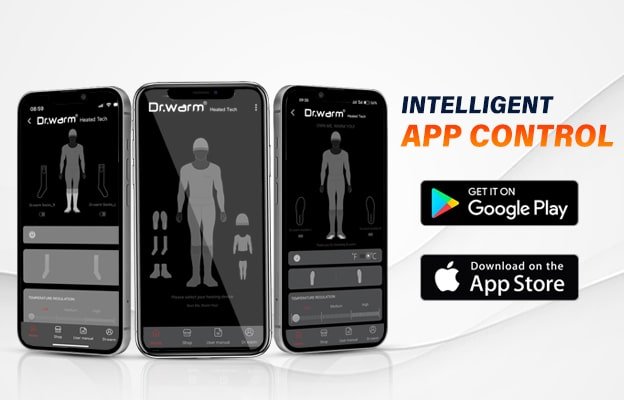

Heated clothing that can be controlled by an app is often the subject of battery drain complaints but they are not typically unintentional events. Most drain issues, instead, are repeatable patterns of systems that are a result of applying interactions between app commands, hardware reactions, and the environment. A high battery drain rate is believed by many users to be caused by low quality batteries, and in most instances it is due to expected heating loads and control characteristics. System level design decisions and usage patterns tend to cause battery drain issues in app-controlled heated clothing, and are typically not caused by battery defects.
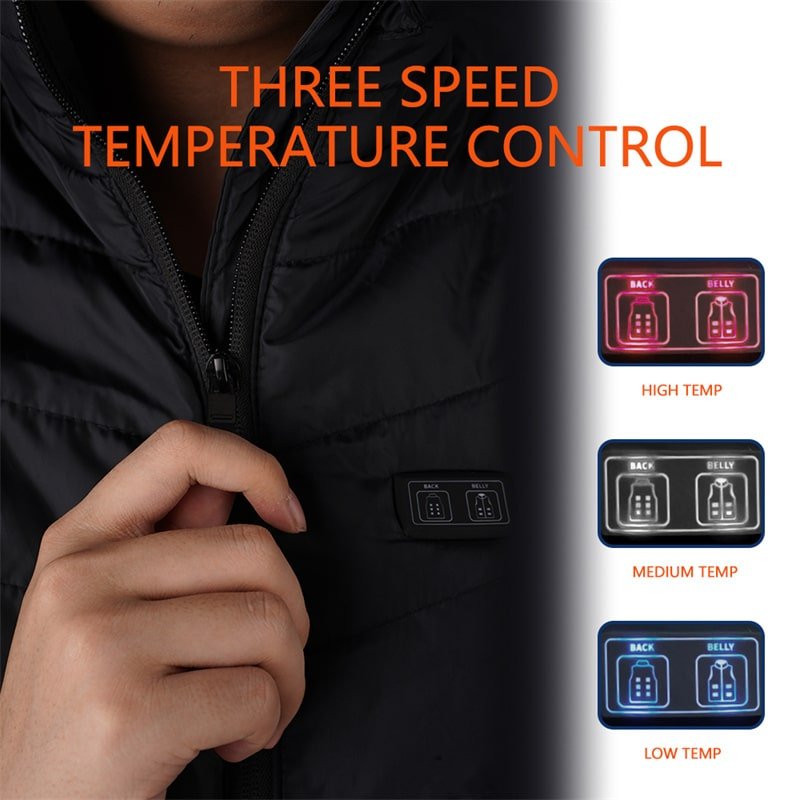
Majority of battery drain issues in app-controlled heated clothes are a result of how heating demand is requested, maintained, and controlled throughout the app, controller, and battery system rather than with the battery itself. These interactions are critical to understand by brands and OEMs that seek to minimize customer problems and enhance the reliability of the product. This discussion is based on a wealth of experience in troubleshooting wearable electronics, in which failures of power management can be linked to poor matches between software logic and hardware constraints.
What “Battery Drain” Means in Heated Wearables
Battery drain, a common symptom in systems when under heat load, is commonly perceived as a flaw in heated wearables. In order to be clear, normal consumption of energy and problematic depletion should be differentiated. Heated wearables are necessarily high-power devices due to the fact that they transform electrical power into thermal energy, which requires a large amount of current by lithium-ion batteries. This predisposes them to rapid discharge in contrast to low power gadgets such as fitness trackers.
Intentional heating cycles would be expected to have discharge as power is efficiently used to stay warm. Abnormal drain on the other hand occurs when the system is spending energy that is not proportional to the benefit usually because of inefficiencies in control or communication. Background power loss that happens when no heating occurs is called standby drain and can add up to a significant point unless optimized.
| Term | Meaning |
| Expected discharge | Normal energy use during heating |
| Rapid drain | Faster-than-designed depletion |
| Standby drain | Power use without active heating |
| Battery failure | Capacity or protection fault |
This differentiation is crucial for diagnostics, as it shifts focus from the battery to the broader ecosystem, including the smart heating app control system design that governs power flow.
Problem 1 — Continuous High-Output Heating Requests
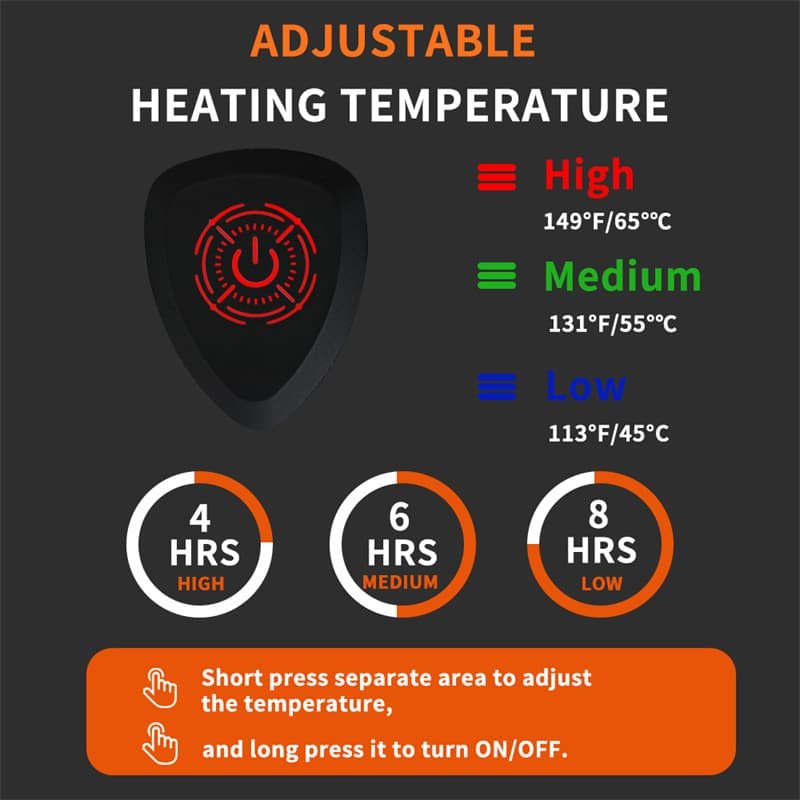
Constant high-output heating demand is one of the major causes of fast battery wear-off since it disregards the necessity of balanced energy consumption. A system with the control provided by apps or users may continuously adjust the synthesis of maximum heat without pause, which causes sustained current draws beyond the sustainable range of the battery capacity.
Sustained Maximum Heat Settings
When an application permits or defaults the long high-heat operations, the heating components demand the highest power at all times. It is to be expected in designs without some kind of auto throttling where the controller does not step in to avoid overloading. As an example, in hot jackets or gloves, hours of 100 percent output can reduce predicted run time by half.
Lack of Duty Cycling
The system does not provide built-in duty cycling, periodic on-off patterns to control temperature, which means that each request is treated as absolute and wastes energy on unnecessary peaks. This mismatch increases the drain particularly in variable conditions where they may not require an output of constant high level.
| Cause | Battery Effect |
| Prolonged max output | Very fast discharge |
| No heating cycles | Inefficient energy use |
The solution to this involves incorporation of adaptive algorithms in the application to tune requests in response to real time feedbacks.
Problem 2 — Inefficient App-Based Power Requests
The non-efficient app-based requests of power are usually caused by inefficient software logic that does not correspond with the hardware capabilities, leading to the waste of energy. Applications with frequent or untimely commands can produce a loop of unnecessary power consumption, which worsens the problem of heating battery drainage of apps.
Poor Timing Logic
Most apps do not have on-demand heating which results in overlapping or duplicate requests. An example of this is when an app polls the controller every few seconds and the app has no requirement to do so.
Overly Aggressive Heat Requests
The violent presets such as launching into full heat without progressively stepping up to full heat cause the battery to pump out maximum current immediately, lowering efficiency in general.
Lack of Adaptive Behavior
In the absence of user pattern or sensor data adjustment, applications fail to respond to user demands with the opportunity to preserve. This is common in early-stage designs where efficient app design for heated wearables hasn’t been prioritized, the fast battery drain situations of heated clothing applications are the result.
Problem 3 — Controller Limits vs App Demand
Requested versus demanded by the applications of a controller create a clash between the software request and the hardware protection where an inefficient power cycle is initiated and a drain is incurred. Controllers are programmed to impose limits on current and voltage to protect components, yet poorly matched app code can repeatedly violate such limits.
How Controllers Cap Current and Power
Heated clothing contains embedded controllers to control the output to avoid overheating or damage to the batteries. When an application requires over the limit, the controller cuts off the request, however, the request still requires processing capacity.
Why Repeated Limit-Hitting Wastes Energy
Every failed high-demand cycle is associated with overhead costs of retries or error management, potentially converted into waste. This is evident in systems where smart app control logic in heated apparel in heated apparel is not programmed to be sensitive to controller thresholds thus causing widespread battery issues in app-controlled heated apparel.
Problem 4 — Bluetooth Communication and Background Power Loss
The Bluetooth communication and loss of background power are the issues of incurable requirements to have connection with the app-controlled structure that can drain the battery silently even when in the idle mode. The overheads imposed by the protocol requirements on pairing and data exchange are not properly considered during design.
Reconnection Attempts
Unstable environments also cause frequent disconnection that activates automatic reconnections, which incur power to scan and authenticate. This is magnified during cold weather or when there is interference and the modules struggle to have links.
Idle Communication Overhead
Background syncing such as the status updates or keep-alive pings also uses standby power even when it is connected. This can be a big drain with poorly tuned stacks as is the case with bluetooth connection problems in heated clothing applications bluetooth connection issues in heated clothing apps, where inefficient polling shortens runtime without user awareness.
Problem 5 — Cold Environment Battery Performance Loss
It is a chemical fact that cold environment battery performance loss increases the drain of heated wearables because low temperatures lower the efficiency of lithium-ion irrespective of software attempts. This is the environmental factor that reacts with the system requirements to form disproportional power loss.
Lithium Battery Behavior in Cold
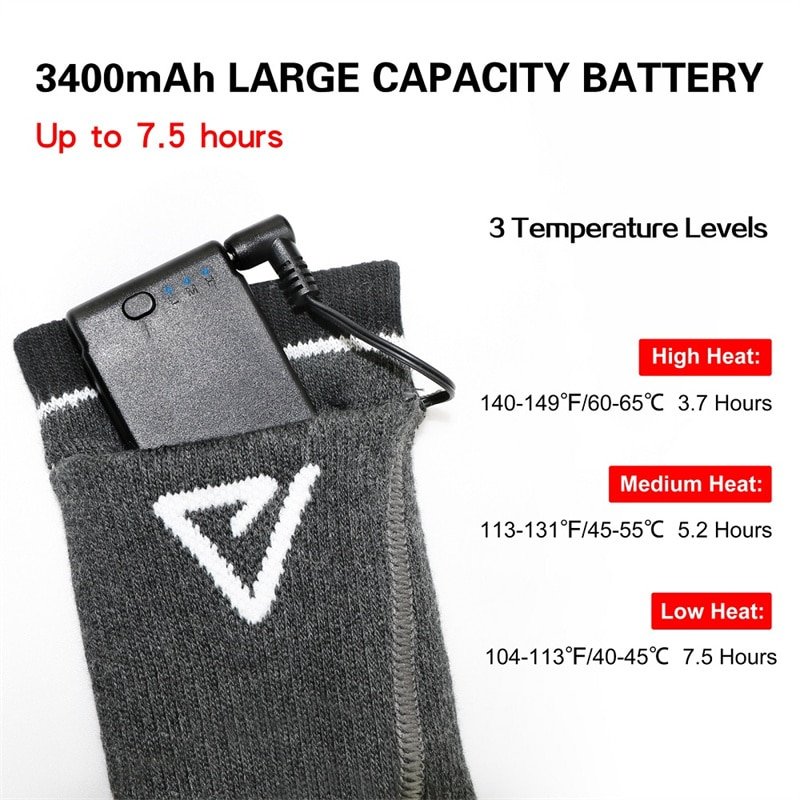
Internal resistance is amplified at low temperatures, requiring higher voltage potentials to produce the same power, and depletes faster. This is not a flaw but an expected characteristic of battery chemistry.
Why Software Cannot Override Chemistry
The compensation can be tried with adjusted requests by apps, yet they cannot modify the basic limits. Even optimized systems have a lower capacity in extreme cold, which is a contributing factor to battery performance problems in heated wearables.For deeper insights, consider how power consumption of heating apps compounds this in real-world use.
Problem 6 — Missing or Poorly Tuned Safety Thresholds
The absence or incorrectly tuned safety thresholds result in unstable behavior and unneeded drain through permitting edge-case behavior. The safety features are to prevent the overloads, yet implementation loopholes may lead to reactive shutdowns or other inefficient recoveries.
Over-Current and Thermal Protection
Systems can operate to the limit without a well-built over-current detection and waste power in the process. Thermal protections which activate too slowly or in too harsh a fashion interfere with normal flow.
Why Missing Safeguards Cause Instability and Drain
Untuned thresholds cause instability that causes frequent resets or partial discharge, which wears down the battery life. This is essential in designs where there is no extensive heating app-controlled heating safety protection, where unchecked demands lead to avoidable losses.
Problem 7 — User Behavior and Misaligned Expectations
The contribution of user behavior and unsuited expectations to drain is that they cause usage patterns which are not in accordance to design assumptions, transforming good systems into poor performers. Although this is not a design flaw, it shows that more education and adaptive features are needed.
Misunderstanding of Heat Levels
Marketers tend to use max settings with the assumption of linear gains, unknowingly, higher settings exponentially increase draw.
Unrealistic Runtime Expectations
Assuming twenty four hour operation under austere circumstances is disregard of capacity limits thus creating an illusion of failure.
| User Pattern | Battery Outcome |
| Max heat all day | Extremely short runtime |
| No cycling | Accelerated drain |
| Cold exposure | Reduced capacity |
Evaluating pros and cons of app-controlled heated jackets can help align expectations with reality.
How Brands and OEMs Can Prevent Battery Drain Issues
OEMs and brands can avoid battery drain problems by means of proactive system integration and testing that predicts real-world interactions. This begins by designing holistically instead of focusing on optimization of individual components.
App Logic Optimization
Enhance the algorithms with adaptive duty cycles and demand prediction, decreasing the useless requests.
Real-World Usage Profiling
Test different conditions such as cold exposure, Bluetooth variability, and so on to profile the power consumption.
Battery Capacity Planning and Testing
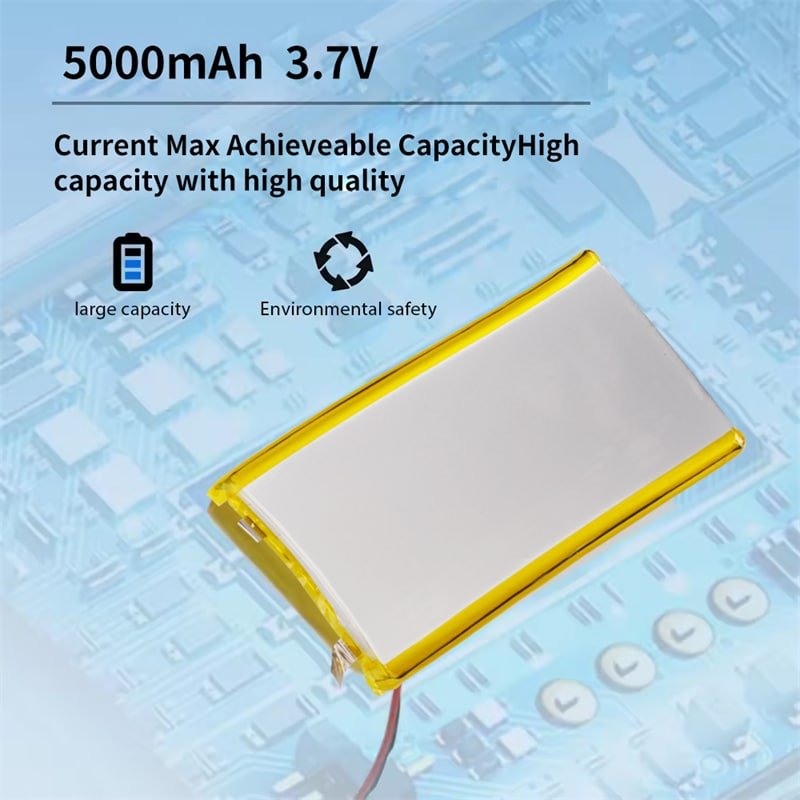
Balance the capacities of the match against anticipated loads with allowance against inefficiencies, confirmed in the endurance cycles. Incorporating these in heated clothing app OEM considerations ensures longevity from the outset.
Conclusion — Battery Drain Is a Predictable System Outcome
The issue of battery drainage in app-controlled heated apparel is typically an expected result of control code, heating long-term memory, and actual use. These factors can be identified and resolved early on to enable the brands and OEMs to produce more reliable and durable heated wearables. Due to the emphasis on system-level compatibility and responsiveness, and not on reactive corrections, manufacturers will reduce complaints and increase user satisfaction without necessarily working on bigger batteries or complex workarounds.