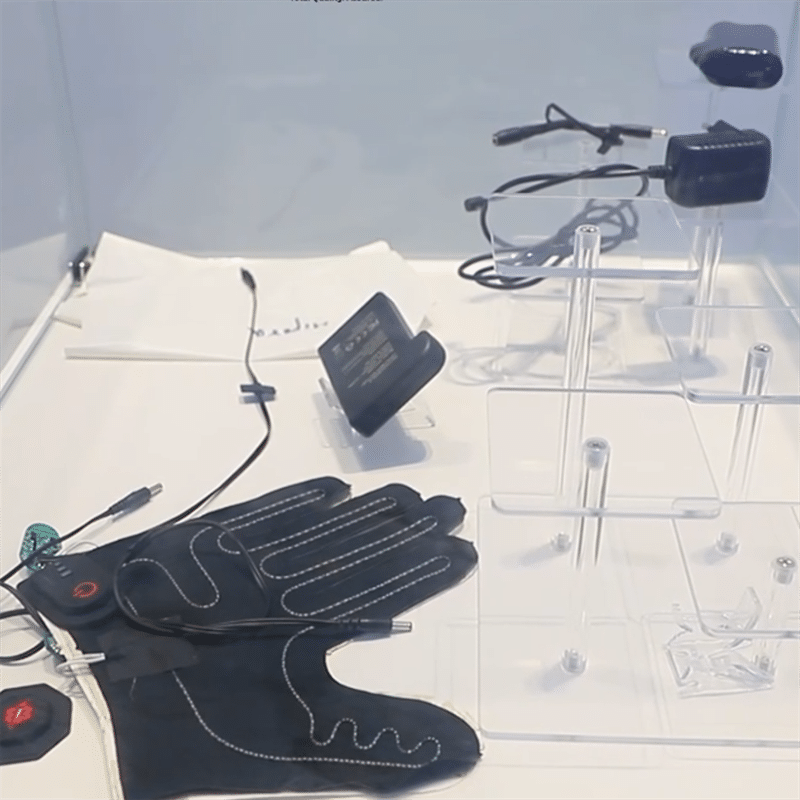

The decision of the correct battery to use in heated apparel is not just a matter of how much battery to use it should have but a selection that is directed by the nature of heating requirement, safety and stability of the system. The selection of the battery has direct influence on the consistency of heating performance and user safety, as well as whole product operation in cold conditions in the real world. Most brands wrongly believe that the higher the mAh rating, the longer the operation time and higher the quality. Practically, system matching? matching the requirements of battery specs to the heating load and discharge demands and the architecture of the garment is even more crucial than the raw capacity itself.
The appropriate battery needed in heated apparel is a battery that strikes the right balance between capacity, discharge stability, protection circuitry and its integration with the heating architecture.
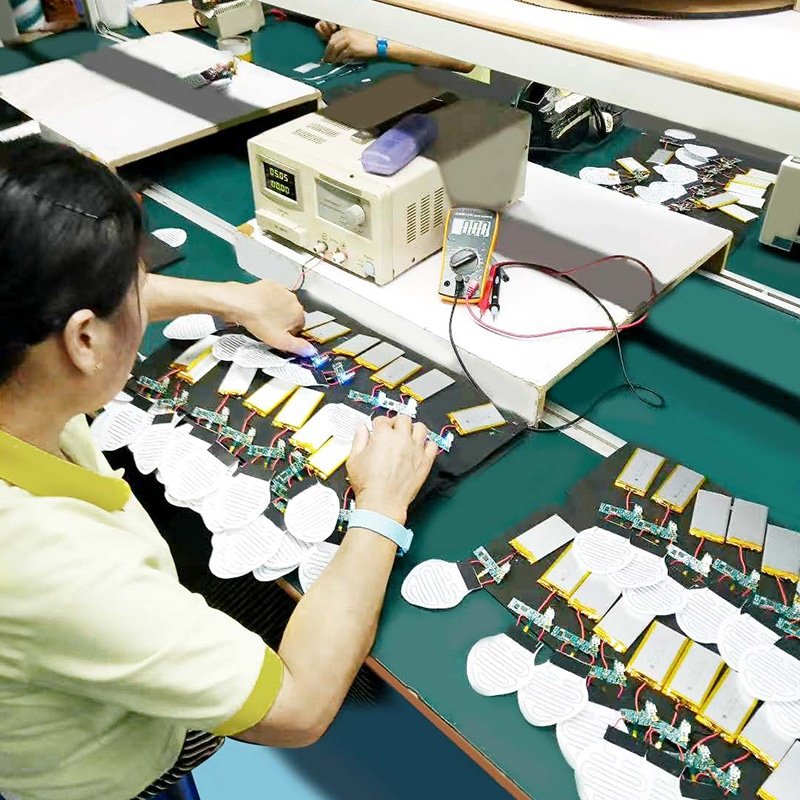
Start With Heating Load and Power Requirements
The first step in the process of battery selection is to establish the power and heating needs and load of the apparel system, this should be done before going further with battery selection because of the possibility of mismatch at the downstream, which would lead to malfunction and even fire.
Resistance in heating components in heated clothing (usually carbon fiber or resistive wire) acts as a fixed resistance, and implies the amount of current to flow at a given voltage. The available power is proportional to voltage squared divided by resistive value (P = V 2 / R, or I 2R) such that the larger the voltage the greater the heat produced, also, higher the current drawn on the battery. The majority of heated apparel is run at 5 V, 7.4 V or 12 V systems; mismatched voltage results in under heating, too much current (with an overheating risk) or poor run efficiency.
Wh (watt-hours) also is estimated at the run time: battery energy (voltage times capacity in Ah)/average power draw in the system. As an example, a 7.4V 5000mAh pack will give about 37Wh; at an average load of 5W (a typical live load in many settings in the various zones) runs theoretically to 7+ hours, though in practice at low temperatures efficiency losses eat up that.
| Heating Parameter | Battery Implication |
| Resistance level | Determines current draw at fixed voltage |
| Required current | Dictates minimum continuous discharge rate |
| Target temperature | Influences power levels and zone distribution |
| Power draw | Drives total energy (Wh) requirement |
| Heating zones | Affects load distribution and peak current |
| Load distribution | Requires stable voltage under varying loads |
| Runtime goal | Guides minimum usable capacity planning |
It is always better to compute the peak and average power first before setting out to size the battery instead of beginning with capacity.
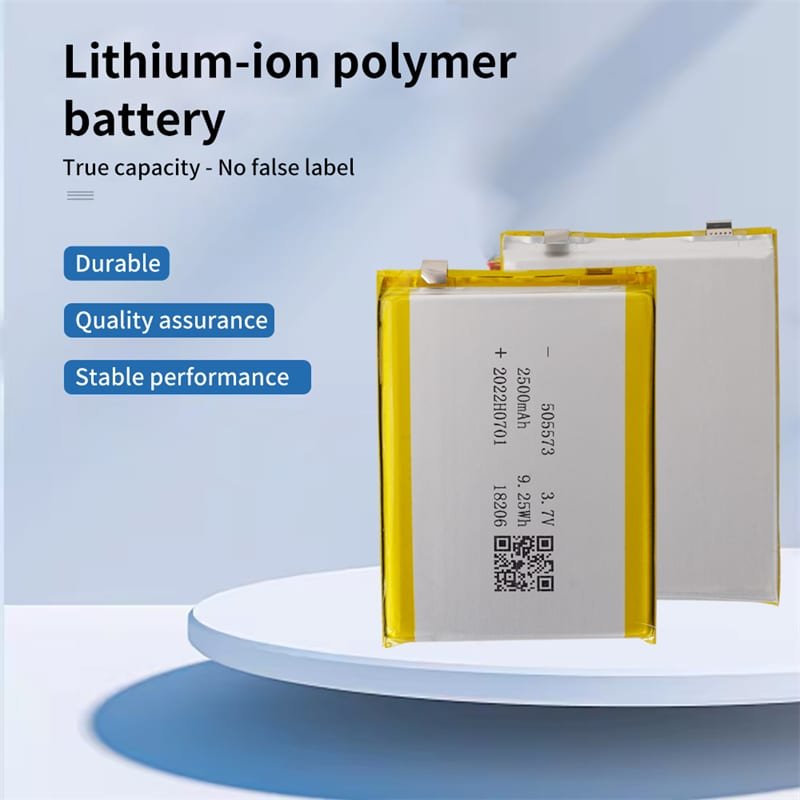
Capacity vs Discharge Rate: Understanding the Trade-Off
Capacity (mAh or Wh) is disproportionately considered, however discharge rate sometimes constrains actual performance to a greater degree in the real world of heated apparel.
Large capacity cells are being promised to have longer run times, but often have lower rate chemistries that have trouble competing with the constant current required in stable heating. Lack of discharge capability results in voltage sag when there is a load, therefore reduced heat production, imbalanced heating or system shutdowns. On the other hand, high continuous discharge (e.g. 5C10C ratings of brief bursts, 1C3C sustained) will provide steady operation but could compromise the overall energy density, adding weight.
Poor discharge operation also introduces thermal load within the cells, accelerating it and increasing its safety risk when used on a long-lasting high-load basis in cold environmental conditions. Large capacity contributes to a lot of unnecessary bulk and weight which are not worth the comfort that the wearer.
| Battery Feature | Engineering Impact |
| High capacity | Longer runtime but heavier; potential low-rate cells |
| High discharge rate | Stable heating output even under peak loads |
| Low-quality cells | Voltage fluctuation, premature failure, safety concerns |
| Over-spec battery | Integration imbalance, excess weight, cost inefficiency |
In hot wear, use target batteries of known low temperature discharge (down to -20o C) and long time current response at your highest level of heating.
Battery Protection and Safety Architecture
There is no such thing as efficient battery protection architecture which is not the fundamental requirement of any safe system of hot apparel – even the most adequate capacity and discharge requirements cannot be de-averse with respect to risks.
An effective Battery Management System (BMS) measures and manages cell-level parameters, which offers the necessary protections: overcurrent (too much current can be fed to the cell to cause overheating), overcharge (can cause damage), over-discharge (can reduce capacity permanently), short-circuit (isolates faults), and thermal cutoff (turns off at unsafe temperatures).
Balancing circuits to multi-cell packs and precise reporting of state-of-charge to prevent unintended power loss during use and the need to balance multi-cell packs: This is in hot wearable applications where batteries are subjected to mechanical flexing, exposure to moisture, and to variant loads, necessitating integration of BMS. To gain greater understanding on system-level integration and battery matching, consult professional engineering support for heated apparel resources early in development.
Battery Form Factor and Wearable Integration
Battery form factor and battery integration has a direct impact on garment wearability, durability, and long-term user satisfaction – in this case, poor decisions lead to even technically sound electrical performance translation.
Use slim, lightweight packs (polymer pouch cells frequently instead of cylindrical) which fit special pockets, without forming pressure points. Positioning the weight is crucial, a front-pocket placement has a feeling of balance and a rear or side application can be displaced during motion. Connectors should be able to survive many cycles of insertion and flexing as well as possible moisture – IP rated or sealed versions minimize the risk of failure.
Outdoor apparel is necessary waterproofing or water-resistant design since corrosion can otherwise occur in the contacts due to condensation or sweat. Finally, a technically perfect aids in test prototypes of comfort on body forms and activities: technically good and ergonomically bad will not have a good reception in the market.
Certification and Compliance Considerations
Compliance planning should start with the battery choice phase retrofitting certifications following the stage of design freeze cause costly delays and market entry barriers.
The important ones are CE marking (EU safety and EMC), FCC (US electromagnetic compliance), UL testing (UL 1642 cell-level compliance and pack-level battery safety), and UN38.3 (mandatory transport certification on lithium batteries by air, sea or land). UN38.3 requires the intensive testing of the altitude, thermal cycling, vibration, shock, and short-circuit conditions to ensure that the shipping does not leak, rupture, or ignite any fire.
To distribute worldwide, make sure that there is complete compliance documentation on the front of the pack, non-certified batteries are stopped at customs, fined or banned completely. The compliance is not something to be decided upon after launching the product, it has to be built into it.
Common Battery Selection Mistakes in Heated Apparel
These common pitfalls can be avoided to differentiate between reliable products and those that can easily experience field failures and returns:
- Choosing battery prior to inverting heating load – results in long term under or over-specification.
- Disregarding performance on discharge – leads to voltage drop and non-heating uniformity on high settings.
- Omitting endurance testing – omits cycle life degradation at actual cold weather loads.
- Selecting cheap cells without checks/tests – dangers substandard chemistry, low-energy BMS, and accidents.
- Failure to estimate connector wear- causes intermittent or total failure after short use.
Each error increases exposure to risk; errors are stopped by writing excellent specifications.
Conclusion — Battery Selection Determines Long-Term Stability
The proper selection of battery to use in heated garments is an informed engineering choice that accomplishes the requirements of heating loads, heating protection architecture, integration planning, and compliance planning – not a mere capacity upgrade. Stable performance has been guaranteed with high priorities given to balanced specifications rather than high values, and safety as well as performance performance of durable products that can be applied year after year. At the selection level, system-level thinking has been the only sure way to ensure consistency on the heating, trust on the user and the product life in this category of demanding products.