
Heated wearable design does not just mean having various degrees of heat on a single garment but rather creating a regulated system that balances the necessary protection to users while not compromising the uniform thermal performance.
Most brands believe that they can add more heat to the product which will automatically make it better, yet the poorly tuned control logic may cause the opposite effect; varying heating, shorter battery life, or even a safety hazard fire in one place. In reality, the unstable control systems are still among the most prevalent causes of failure of the field in visible apparel of gloves and jackets as well as vests and insoles.
Wearable heating devices that provide excellent temperature regulation will be based on the combination of integrated hardware and software design balancing heating power, battery load, and safety limits.
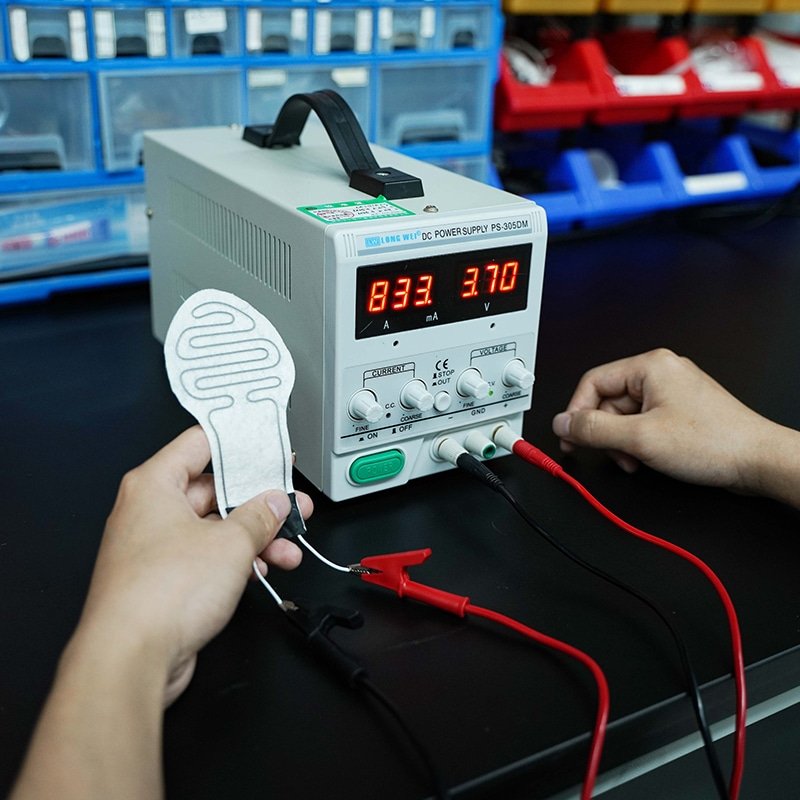
Why Temperature Control Is Critical in Heated Wearables
Regular temperature controlled in the heated apparel directly reflects the safety of the products, comfortability to the users and reliability.
Wearables that are heated run on constant power consumption supplied by small lithium-ion batteries and are typically used in the most challenging conditions where outside temperatures change quickly. Uncontrolled heating components may quickly exceed the working temperature resulting in comfort, skin reactions, or (in worst-case scenarios) thermal runaway. Customers demand consistent, stable warmth over long periods of wear, but most initial designs have not provided this due to lack of real-time temperature control.
Efficiency in the battery is greatly lost when the power delivery cannot be modulated by the control logic. Heat constantly-on is wasteful and can charge the cells, whereas uncontrolled cycling may create voltage drop and nonlinear performance. Without feedback to implement safety thresholds, the latter becomes meaningless.
The controlling factors and their effects on engineering are summarized in the table below:
| Control Factor | Engineering Impact |
| Feedback system | Stable temperature |
| Load balancing | Battery efficiency |
| Thermal cutoff | Safety protection |
| Voltage regulation | Consistent heating |
All these factors should collaborate and exclusion of any of them leads to the breakdown of the whole system.
Types of Temperature Control Systems
The selection of control architecture inherently defines heating consistency, user interaction and stability of the entire system in heated garments.
At the simplest extreme; single-level on/off control is either full power or an inactive dummy. It needs very little hardware, but has only poor temperature stability – particularly at different ambient conditions – and consumes energy by operating at full load all time.
Multi-level manual control adds stepped power setting (typically low/medium/high), typically using physical controls in the form of physical buttons or dials. This is more user adjustable and possesses a higher level of consistency than basic on/off, but must still rely heavily on the awareness of the user as well as manual intervention.
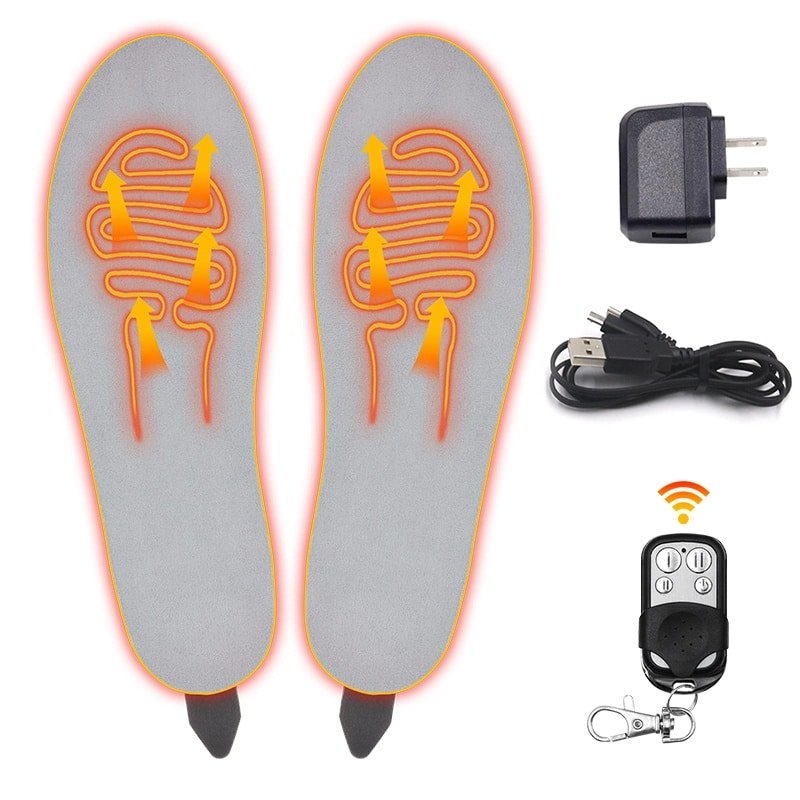
Remote based systems provide wireless ease and frequently incorporate RF(radio frequency) or simple Bluetooth components with a handheld controller. They can be adjusted without having to reach into pockets or under clothes, and give fair range of flexibility with fairly simple firmware.
Smart control App-based is the ultimate level of integration that uses Bluetooth Low Energy (BLE) connectivity with a smartphone. These systems allow finely tuned adjustments, preset control, data recording and (with sensors) semi-autonomous control.
Here is a comparison of the main types:
| Control Type | Complexity | Stability | User Experience |
| On/Off | Low | Basic | Limited |
| Multi-level | Moderate | Stable | Improved |
| Remote | Moderate | Stable | Flexible |
| App-based | High | Advanced | Smart customization |
In advanced designs, smart temperature control design for heated wearables focuses on integration at the system-level, to bring these systems in line with the heating holes and power supply.
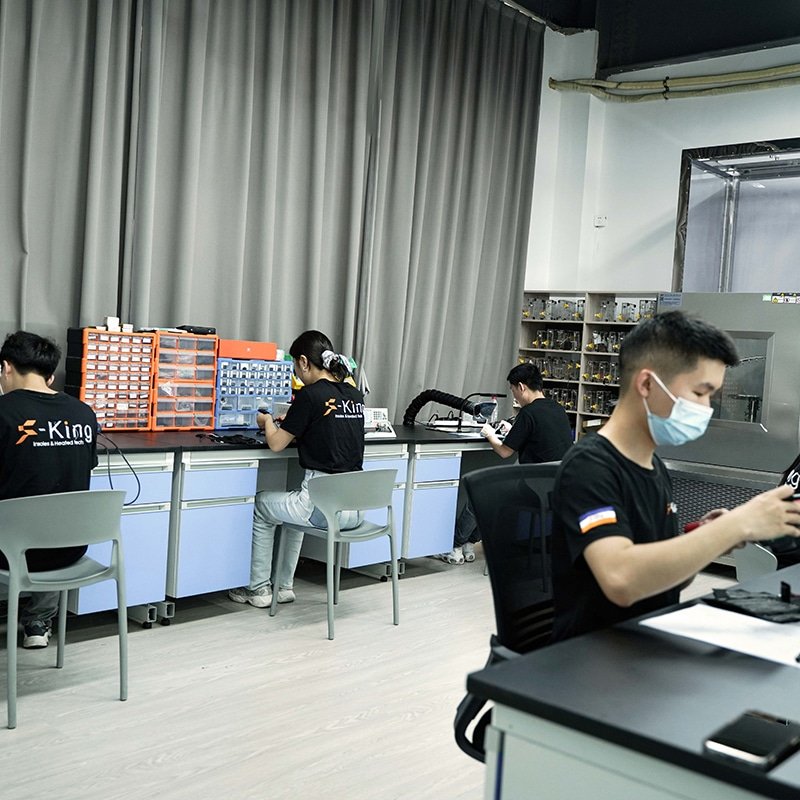
Sensor Integration and Feedback Mechanisms
The principle of closed regulating and closed loop control is important in gaining accurate temperature regulation in heated apparel.
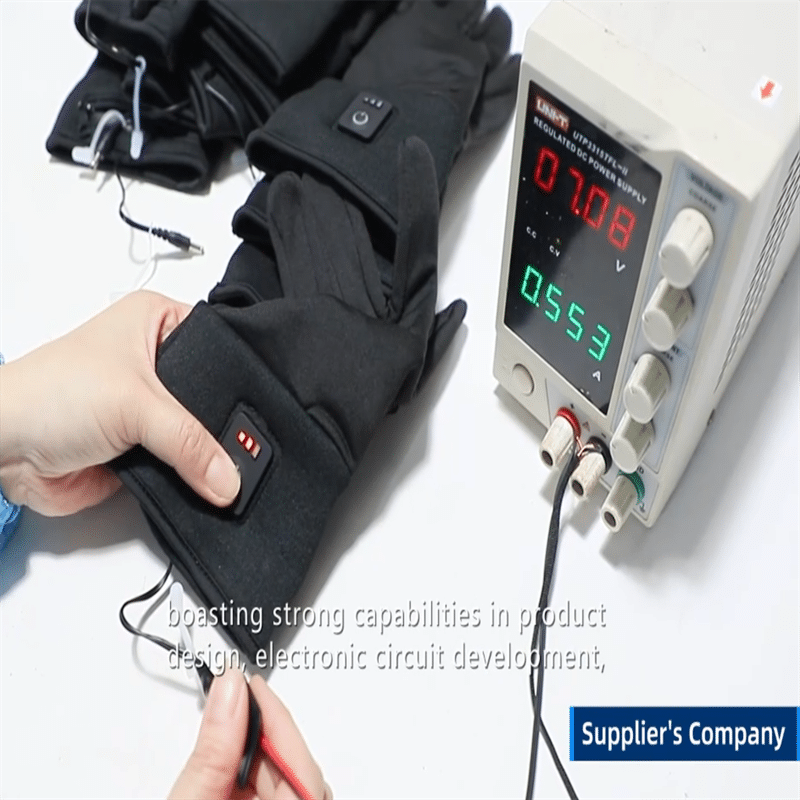
In most contemporary systems, temperature is measured directly near heating parts (carbon fiber wires or flexible films or conductive yarns) by either NTC-based thermistors or a special temperature sensor (typically digital); an electrical system with analogous components, like a regulated power supply or regulated heating source, is also present. The readings of these sensors are reported to the microcontroller which varies the PWM (pulse-width modulation) duty cycles to feedback the setpoint.
The closed-loop control works continuously where real temperature is compared with the desired temperature and the corrective action of adjusting the temperature is provided like a thermostat used in the home heating. In open-loop systems, in contrast the fixed power is applied without further feedback, causing drift as the ambient conditions or body heat vary.
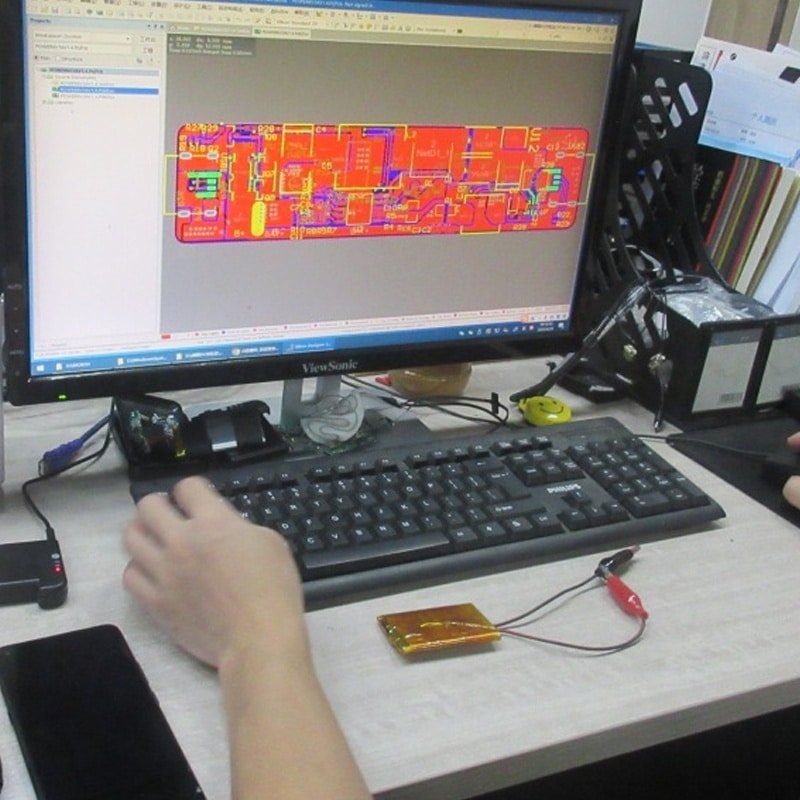
The microcontroller becomes the core element: it includes sensor data, safeguards against high temperature (or other safety cutoffs), and manages load balancing between various heating zones. In denser designs, fault tolerance is provided by redundancy (two sensors on the one zone), and, in manufacturing, calibration routines are used to achieve accuracy in spite of component tolerances.
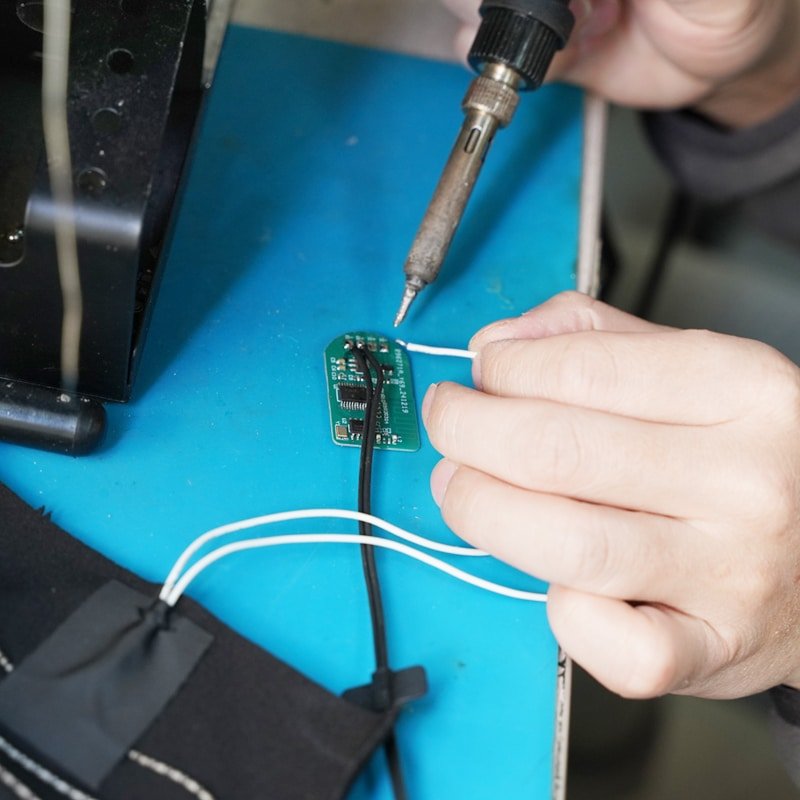
Impact of Control Logic on Battery and Safety
Complex control algorithms directly increase battery life and reduce the safety risk in hot wearables.
Power delivery is dynamically modulated through PWM instead of the simplest on/off switching that is used in poor systems. This minimizes peak currents, eliminates over current spikes, and minimizes voltage drop that can cause battery protection circuits.
Consumer further smoothing Consumption versus heating Power cycling (fast on off at high frequency) further smoothing Consumption with perceived constant heat, reduces average draw, and thermal stress in cells. Only when these firmware parameters are actively monitored and acted upon, or the firmware is coded to react to the parameters, do overcurrent protection, thermal cutoffs, and low-voltage disconnects become enforceable.
Due to imprecision in matching control logic to battery output, in practice shortened run time or early cell degradation will occur; integrated designs matching heating demand to available capacity will provide more predictable operation.
Engineering Challenges in Smart App-Based Systems
The app-based control has robust capabilities and suggests multiple engineering challenges to overcome in order to operate reliably.
With bluetooth connection, there is a weakness to other devices that can disrupt the connection (Wi-Fi, nearby smartphones or even body positioning) and has a possibility of dropping or delaying commands. Firmware should provide a strong reconnection logic and error handling as to reduce the frustration of the user.
Response time (between app input and heater) – a matter of even milliseconds – may respond sluggishly under dynamic conditions. Close timing of BLE packets and priority queuing are beneficial, though this variability (clothing, movement) is problematic in practice.
Reliability of the user interface is important: unintentional change of the heat level using the pocketed phones or the touchscreen bugs must be secured by ATLs like confirmation measures or locking. Diagnostic or compliance data logging is value adding, but requires secure, low-overhead storage and transmission.
Stability of firmware needs to be wagered above all problems with the temperature PID loops or the safety overrides are able to ruin the whole product. Vigorous testing in the limits of the environment and battery conditions is necessary.
Common Temperature Control Design Mistakes
A lot of the unsuccessful experience of wearables is remedial to control system mistakes.
- None too many sensors – Having one such thermistor is dangerous since it has no fallback operation: when it fails the heating is out of control.
- Poor calibration – Factory calibration not done or not done correctly leads to poor performance of different production batches.
- Unrealistically fast heating ramp — The quickly powering up without slow modulation of power heats elements quickly and strains batteries and materials.
- Under the assumption of a linear voltage, ignoring variations in voltage across the load — No consideration of battery sag under load leads to dimmed heating or undiscouraged cutoffs.
- Absence of safety override – Systems will be susceptible to software bugs due to the absence of autonomous hardware cutoffs (even when such mechanisms are not implemented by software).
By doing these at the design stage, this will avoid expensive reworking and returns to field.
Conclusion — Control Logic Defines Product Stability
Safe and stable performance are based on temperature control systems of the wearable design that aims to be heated. Trustworthy products are based on a developed logic of control that creates equality between heating need, battery power, and protective thresholds – not merely on providing them with more heat settings.
Starting with the simplest forms of manual systems all the way to complex systems that are integrated with apps, the engineering emphasis should be on the fact that closed-loop feedback, precision of sensors, and solid firmware will improve. When all these components are in balance, the warm wearables provide steady temperature control, longer run time, and more importantly, durability of the user during complicated conditions in the field.
Frequently Asked Questions
Why does a multi-level garment still feel inconsistent?
Because levels set power, not temperature. The same power in still air and in wind produces different results, and neither is measured. Consistency requires feedback, which means a sensor and a control law — extra levels simply give the wearer more fixed points to choose from.
What does app control actually add?
Visibility and scheduling, mostly. It shows state, records use patterns and lets a wearer set sequences a button cannot express. It does not make heat more even. Selling it as better warmth is selling the interface as if it were the mechanism.
Where should the temperature sensor sit?
On the heat path, close to the skin side, and shielded from the element itself. A sensor next to the heater reads the heater, not the wearer, and the loop then holds the wrong thing constant. Placement matters more than sensor accuracy.
What is the most common control design mistake?
Designing the interface before the thermal model. If the modes are chosen first, the electronics get built to produce them, and the result is a set of levels that happen to be achievable rather than useful. The thermal behaviour should define the modes.