
App-controlled heating is not automatically worth it for every brand — its value depends on product positioning, target market, and long-term development strategy. Many brands assume that adding app integration automatically boosts product value and sales, but in practice, it must align with a coherent overall strategy to deliver meaningful returns.
App-controlled heating creates value when it aligns with premium positioning and scalable product development, not when it is added purely as a feature trend. For heated apparel brands considering a heating system upgrade strategy, the decision requires careful analysis of differentiation potential, added costs, and actual consumer demand in target segments.
Brands in mid-to-high-end outdoor gear often find that app-controlled heated apparel enhances user experience through precise temperature management and integration with other smart devices. However, for entry-level or simplicity-focused lines, the added engineering and support demands can outweigh any perceived benefits.
When App-Controlled Heating Delivers Strategic Value
App-controlled heating delivers clear strategic value primarily for brands targeting technology-savvy consumers in premium segments, where it supports elevated positioning and enables advanced features that justify higher pricing.
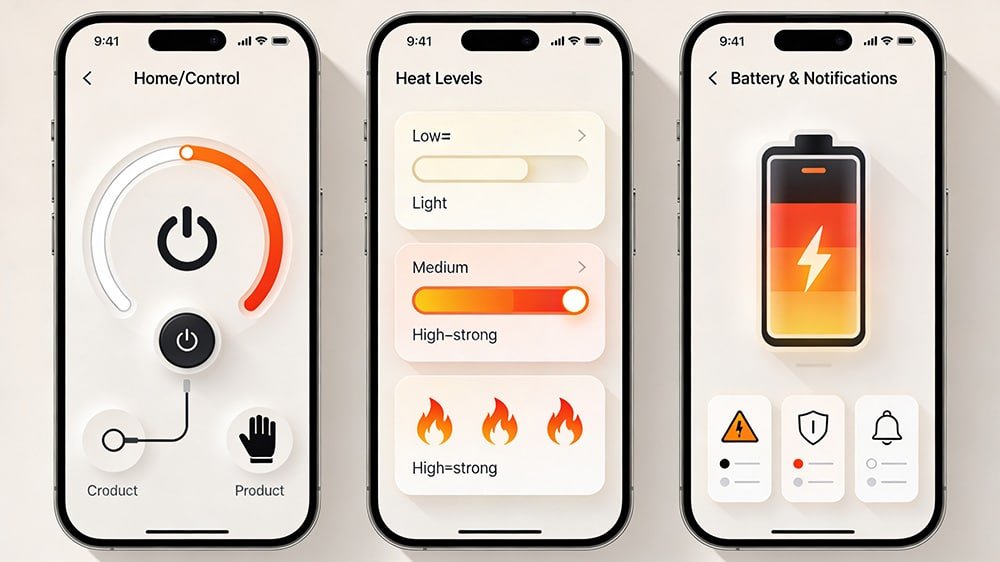
In mid-to-high-end outdoor gear, such as ski jackets or technical winter apparel, app control allows users to fine-tune temperatures remotely, monitor battery levels, and sometimes integrate with weather apps or activity trackers. This appeals to serious outdoor enthusiasts who view their gear as part of a broader performance ecosystem.
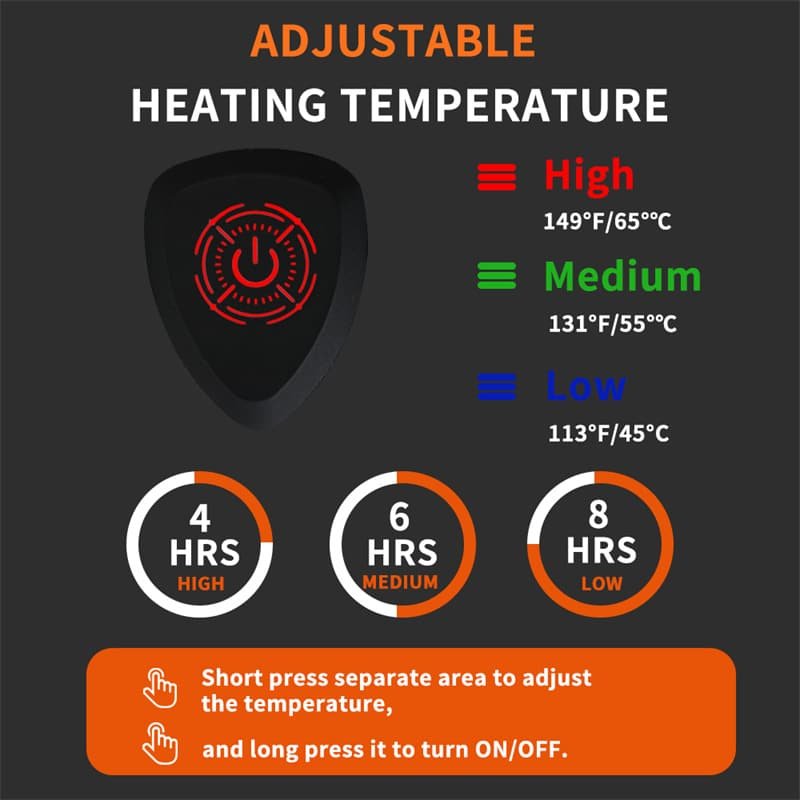
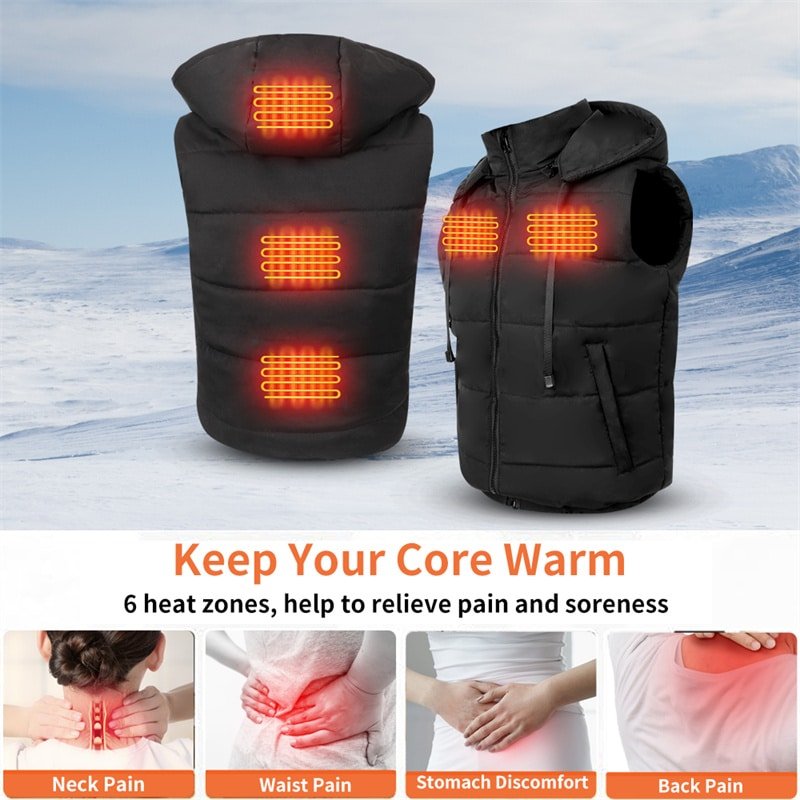
For multi-zone heating products — those with separate controls for core, back, sleeves, or gloves — app interfaces provide the precision needed to manage independent zones effectively, something basic button controls struggle to achieve without cluttering the garment.
Brands emphasizing technology integration benefit most, as app features signal innovation and modernity. In markets like North America and Europe, where consumers in premium winter sports and tactical categories expect smart connectivity, this can strengthen competitive positioning.
Long-term product platform development also favors app control. When brands plan to build a family of compatible products (jackets, vests, gloves, insoles), a unified app becomes a central hub, improving user retention and opening pathways for future firmware enhancements or cross-product features.
For deeper insight into implementation options, explore our app-controlled heating solutions for heated apparel brands.
Here’s a quick overview of key scenarios:
| Strategic Scenario | Why App Control Adds Value |
| Premium positioning | Enhances perceived technology level |
| Multi-product ecosystem | Enables scalable control platform |
| Advanced heating zones | Allows precision management |
| Custom brand experience | Supports app customization |
Cost and Complexity Considerations
Adding app-controlled features significantly increases both upfront and ongoing costs, making it a substantial commitment that must be weighed against expected ROI.
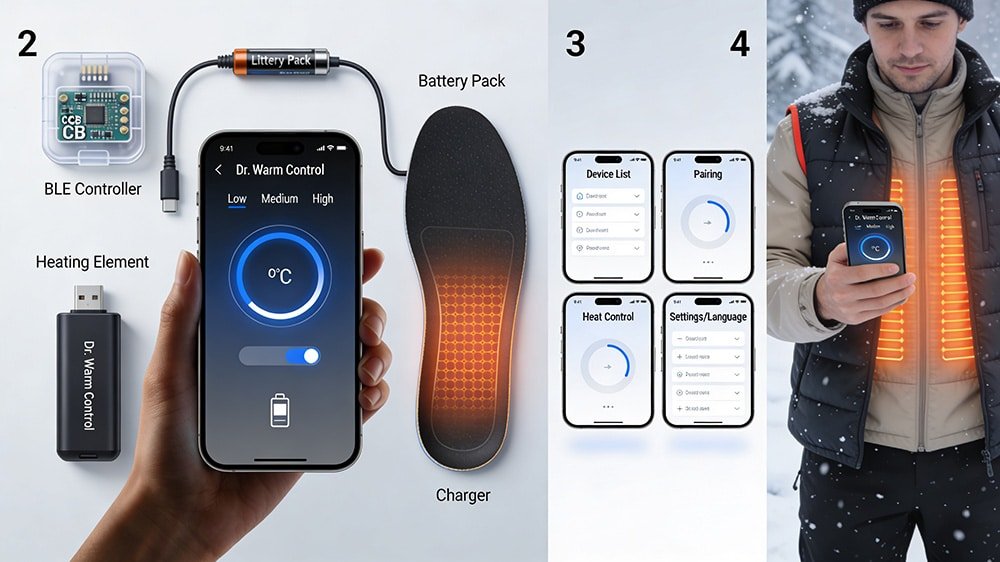
The transition from simple button-based controllers to Bluetooth-enabled smart controllers requires more sophisticated PCB design, including wireless modules, secure pairing protocols, and compatibility with iOS and Android ecosystems. This raises hardware complexity and bill-of-materials (BOM) expenses.
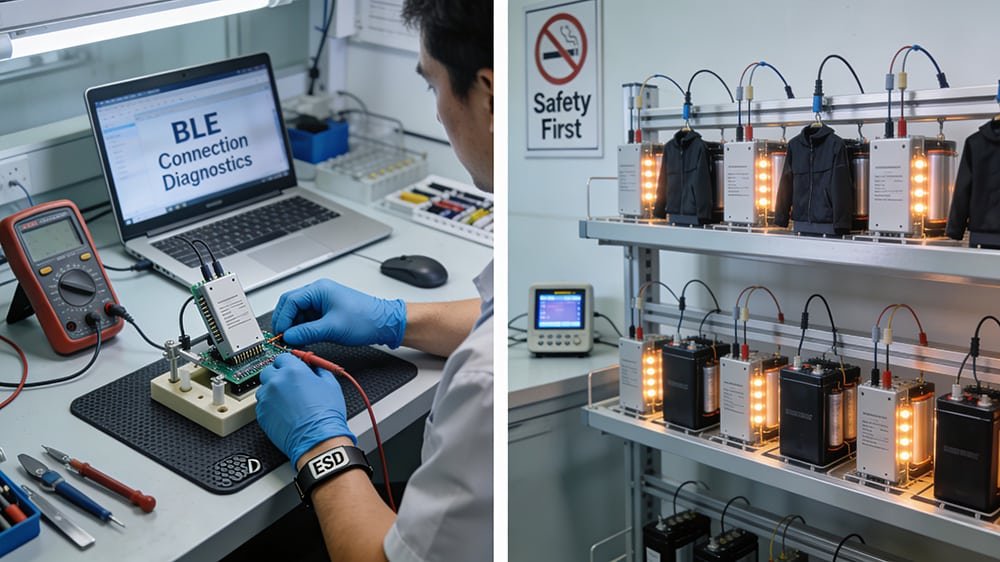
Software development demands investment in app creation (or licensing third-party platforms), user interface design, firmware coding, and cross-device testing. Many brands underestimate the resources needed for reliable Bluetooth Low Energy (BLE) implementation, especially signal stability in cold environments where battery performance can fluctuate.
Testing and validation extend timelines considerably. Beyond standard heating endurance and safety checks, brands must verify app connectivity under real-world conditions — interference from clothing layers, extreme temperatures, moisture — plus rigorous cybersecurity assessments to prevent vulnerabilities.
Ongoing firmware maintenance adds another layer: bug fixes, compatibility updates for new phone OS versions, and occasional feature additions to keep the app relevant.
| Cost Factor | Impact |
| Software development | Upfront investment |
| Controller upgrade | Higher BOM cost |
| Testing & validation | Extended development time |
| Maintenance | Ongoing resource allocation |
Product Differentiation and Market Perception
App-controlled heating can meaningfully elevate perceived technological sophistication, particularly in premium segments where consumers actively seek innovative features.
In North American and European markets, where outdoor and winter sports buyers often prioritize performance and modernity, smart heating systems signal a step above basic heated apparel. Brands using app-controlled heated apparel frequently position themselves as forward-thinking, which supports higher average selling prices and stronger brand loyalty among tech-oriented users.
However, differentiation only holds when the feature delivers tangible benefits — such as granular control, battery monitoring, or integration potential — rather than superficial connectivity. In lower-to-mid segments, consumers may view app requirements as unnecessary hassle, preferring straightforward on-garment controls.
Long-Term Scalability and Product Roadmap
The strongest case for app control emerges when brands adopt a platform-level development strategy that supports future expansion.
Firmware upgrades allow continuous improvement without hardware changes — fixing issues, optimizing power efficiency, or adding new modes over time. This extends product lifecycles and reduces long-term support costs compared to purely hardware-based systems.
Cross-product compatibility becomes feasible: one app managing jackets, vests, gloves, and accessories creates ecosystem lock-in and encourages repeat purchases within the brand.
Expansion into new categories (e.g., heated underwear or insoles) benefits from shared app infrastructure, accelerating time-to-market for line extensions.
A concise comparison of scalability:
| Feature | Button-Controlled | App-Controlled |
| Firmware updates | Limited or impossible | Regular improvements |
| Cross-product support | None | Unified platform |
| Future feature addition | Hardware-dependent | Software-scalable |
| User retention potential | Low | Higher via ecosystem |
Situations Where App Control May Not Be Necessary
App control may not be necessary — and can even detract from competitiveness — in several common scenarios.
- Entry-level price segments, where cost sensitivity outweighs any smart features and buyers prioritize basic warmth at the lowest possible price.
- Single-zone basic heating products, where simple on/off and 3–4 level buttons provide sufficient functionality without added complexity.
- Markets prioritizing simplicity and cost, such as certain workwear or budget outdoor lines, where reliability and ease of use trump connectivity.
- Brands with limited R&D or support resources, as maintaining an app long-term requires dedicated engineering capacity.
Risk Assessment Before Upgrading to App Control
Before committing to app control, brands should rigorously assess manufacturing and integration risks to avoid costly setbacks.
Supplier capability is critical: not all OEMs have deep experience with Bluetooth modules, low-power wireless design, or app ecosystem integration. Verify their track record with similar projects, including successful FCC/CE certifications for wireless components.
Controller integration expertise matters — poor antenna placement or inadequate shielding can lead to unreliable connections, especially in layered apparel or cold conditions that affect battery voltage.
Signal reliability deserves special attention: Bluetooth performance can degrade with body interference, moisture, or extreme cold; thorough field testing is essential.
Production stability risks include higher defect rates during initial runs due to added components and assembly steps. Factor in yield impacts and potential rework costs.
Common Misconceptions About “Worth It” Decisions
Several misconceptions lead brands to overestimate the automatic value of app control.
- “Technology always equals higher sales” — Not true; features must solve real pain points for the target customer, or they become unused gimmicks that inflate costs without lifting conversions.
- “App control guarantees premium pricing” — Premium pricing requires demonstrated value; if the app adds minimal practical benefit, consumers resist paying more.
- “All customers demand app features” — In reality, many users (especially in workwear or budget segments) prefer simple, reliable controls and view phone dependency as a drawback.
Conclusion — Value Depends on Strategic Fit
Ultimately, app-controlled heating is worth the investment when it supports a coherent product architecture and long-term brand positioning strategy rather than being adopted as a standalone feature trend.
For brands with premium aspirations, multi-zone products, or plans for a connected ecosystem, the added capabilities can drive meaningful differentiation, customer loyalty, and scalable growth. For others focused on cost leadership or simplicity, the complexity and expense often outweigh any marginal gains.
The key is alignment: evaluate your target market expectations, roadmap ambitions, and internal resources before deciding. When thoughtfully implemented, smart heating system investment becomes a strategic asset rather than an expensive experiment. Brands that approach it with clear engineering and market rationale tend to see the strongest returns on their wearable heating system ROI.