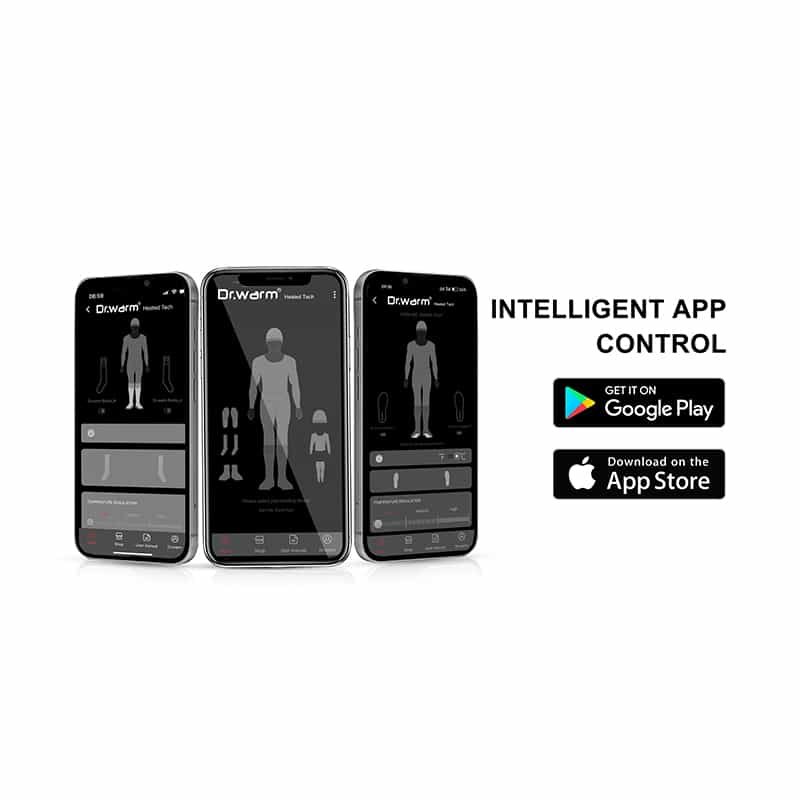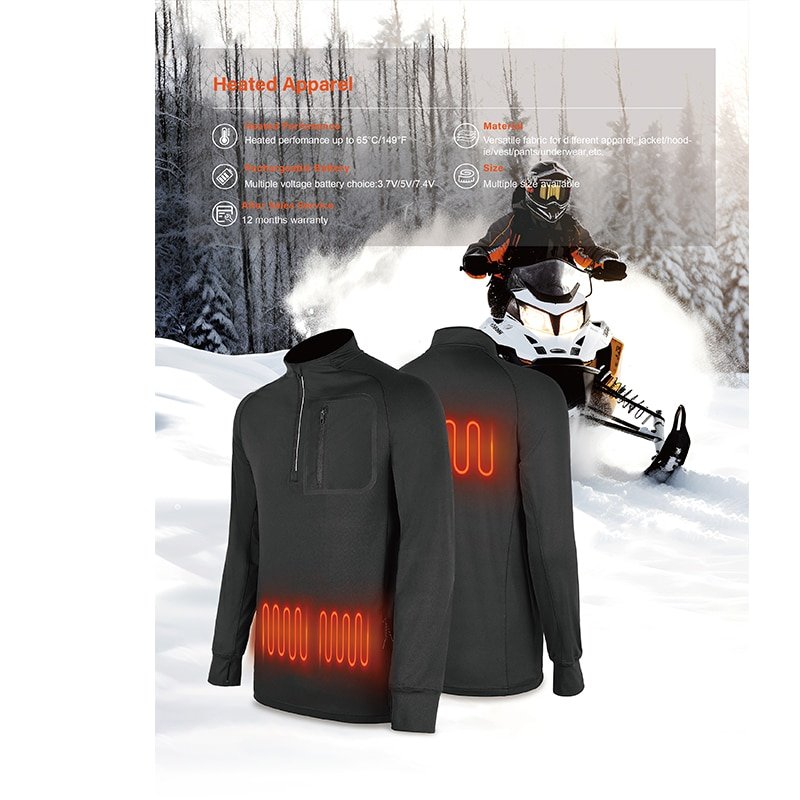

Integrating app control into heated apparel is not an add-on process — it requires coordinated planning of electronics, thermal layout, garment structure, and firmware logic from the very beginning.
Successful app control integration depends on aligning electronic architecture with garment structure from the earliest design stages. Many brands mistakenly assume that electronics and smart features can be layered onto a finished garment design. In reality, attempting late-stage integration almost always leads to performance compromises, comfort issues, reliability problems, or costly redesigns.
The most stable and user-satisfying smart heated apparel products result from treating app control as a core system requirement rather than an accessory.
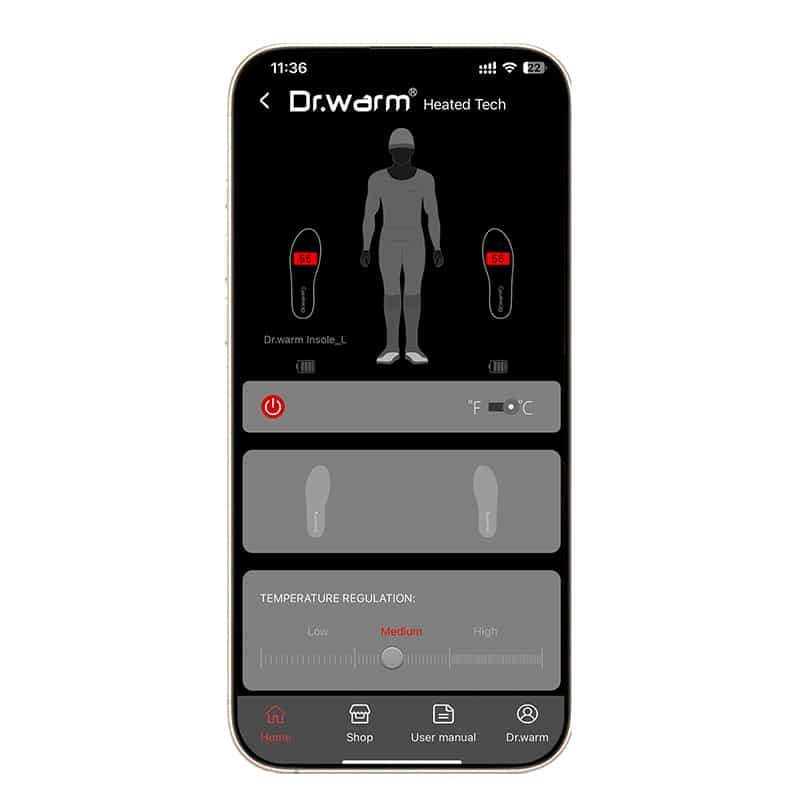
Integration Begins with System Architecture Planning
App control integration must begin during the initial product architecture phase — before fabric selection or pattern making is locked in.
This early planning phase defines:
- Number and placement of heating zones
- Controller type and size
- Battery capacity and location
- Wireless communication module positioning
- Wiring or flexible circuit routing paths
Poor decisions made at this stage become extremely expensive or impossible to correct later.
| Planning Element | Why It Matters |
| Heating zone layout | Determines even thermal distribution across the body |
| Battery location | Directly affects weight balance and wearer comfort |
| Controller placement | Influences signal stability and user accessibility |
| Communication routing | Reduces electromagnetic interference and connection dropouts |
For a deeper look at the foundational choices involved in building reliable smart heating systems, see our guide on app control integration for heated apparel products.

Aligning Garment Design with Electronic Layout
Garment structure and electronic layout must be developed in parallel — they cannot be treated as separate disciplines.
Key considerations include:
- Fabric insulation properties — Thicker insulation may require higher power output or different heating element density to achieve the same perceived warmth.
- Heating element embedding — Carbon fiber wires, flexible heating films, or conductive yarns must be routed to avoid pressure points, stitching damage, or excessive stiffness.
- Controller and battery enclosures — Pockets or laminated compartments must balance accessibility, water resistance, impact protection, and thermal isolation from the body.
- Ergonomics during movement — Components must remain stable during bending, stretching, twisting, and layering under outer shells.
Designers who treat electronics as an afterthought frequently end up with controllers that dig into the body, batteries that shift position, or heating elements that create hot spots or cold zones.
Firmware Coordination and Temperature Logic
Firmware is the invisible layer that determines whether a product feels precise, predictable, and safe — or erratic and frustrating.
Effective firmware must coordinate:
- Multi-zone temperature mapping
- Real-time feedback from thermistors or NTC sensors
- User-selected temperature setpoints vs actual surface temperatures
- Safety cutoffs and gradual ramping
- Compensation for changing ambient conditions and body heat
| Firmware Feature | Integration Impact |
| Temperature mapping | Ensures uniform warmth across different zones |
| Zone balancing | Prevents one area from overheating while others stay cold |
| Safety thresholds | Provides reliable overheat and low-battery protection |
| Signal smoothing | Reduces perceived temperature fluctuations and improves user trust |

Calibration tables and control algorithms must be tuned specifically for each garment’s thermal mass, insulation level, and zone layout — generic firmware almost never delivers acceptable real-world performance.
Battery and Power Management Integration
Battery choice and placement have outsized effects on both runtime and long-term product satisfaction.
Critical decisions include:
- Nominal voltage — Commonly 7.4 V or 11.1 V systems affect heating strength and efficiency
- Capacity vs weight trade-off — Larger capacity increases runtime but adds noticeable weight
- Current delivery capability — Must support peak draw when all zones are at maximum
- BMS (Battery Management System) sophistication — Protects against over-discharge, over-charge, short-circuit, and temperature extremes
| Power Consideration | Design Impact |
| Voltage selection | Determines maximum heating strength and efficiency |
| Capacity planning | Directly affects realistic runtime per charge |
| Current regulation | Prevents voltage sag during high-demand phases |
| BMS logic | Ensures long-term cell stability and user safety |
Incorrect voltage or inadequate current handling frequently causes uneven heating, premature shutdowns, or reduced battery lifespan.
Prototyping and Testing Before Mass Production
Prototyping must validate the complete system — not just individual components.
Essential early validation steps include:
- Physical integration samples (electronics + early garment shells)
- Firmware debugging under real thermal loads
- Thermal imaging to verify even heat distribution
- Wireless signal stability testing during body movement
- Battery runtime and recharge cycle confirmation
- Over-temperature and fault-condition behavior
Skipping or rushing any of these steps almost always results in field failures that damage brand reputation.
Scaling from Prototype to Production
Mass production introduces new variables that prototypes often hide.
Key production-stage disciplines include:
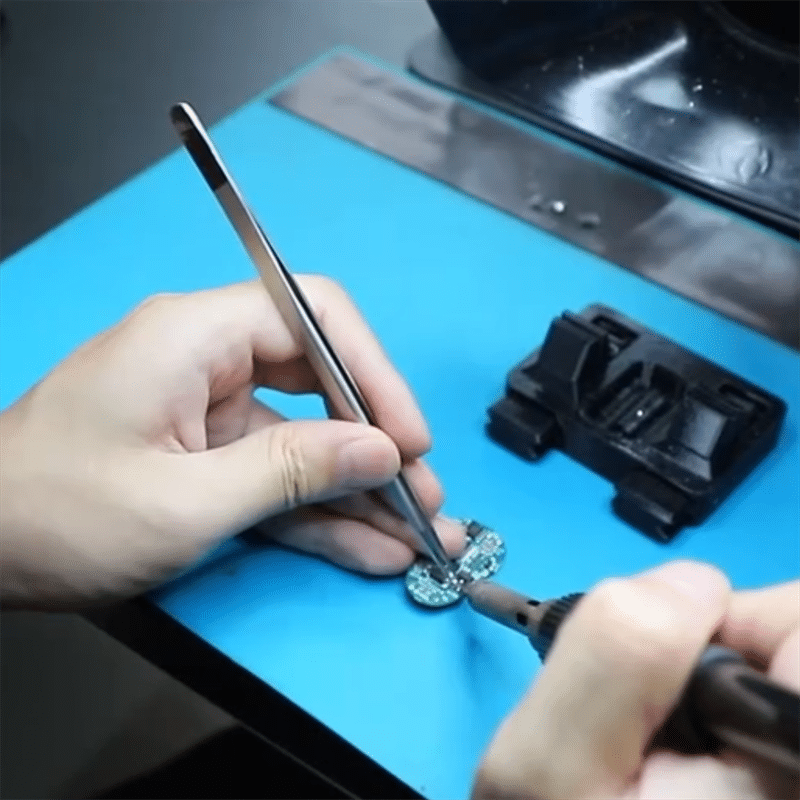
- Consistent PCB population and soldering quality
- Repeatable wire/film routing and attachment methods
- Uniform enclosure sealing and strain relief
- Batch-to-batch firmware calibration consistency
- Automated or semi-automated functional testing stations
- Traceability of critical components (batteries, controllers, heating elements)
Brands that underestimate production repeatability frequently face high return rates due to “between-batch” performance variation.
Common Integration Mistakes Brands Make
The following errors appear repeatedly across brands new to smart heated apparel:
- Finalizing garment patterns and construction methods before locking in electronic architecture
- Placing batteries in locations that cause poor weight distribution or pressure points
- Using generic controller firmware without zone-specific calibration
- Ignoring electromagnetic interference from nearby conductive fabrics or zippers
- Under-testing wireless range and stability during realistic motion
- Treating thermal mapping as optional rather than mandatory
- Assuming heating element layout can be changed late without affecting performance
Each of these mistakes creates compounding problems that become visible only after launch.
Conclusion — Integration Is an Architectural Decision
Integrating app control into heated apparel requires architectural coordination across electronics, firmware, garment design, and power management rather than treating smart control as a detachable feature.
Products that perform reliably in real-world winter conditions — delivering consistent warmth, stable connectivity, safe operation, and acceptable runtime — are the direct result of disciplined, system-level planning that begins long before the first fabric is cut.
When brands approach app-controlled heated apparel as a true electro-mechanical system rather than a garment with added electronics, the probability of long-term success increases dramatically.