

Integrating smart heating systems into heated gloves requires precise coordination between thermal mapping, flexible electronics, power management, and ergonomic design. Heated gloves present unique integration challenges compared to other heated apparel. The constant hand movement, tight fit requirements, thin insulation layers, and need for dexterity make uniform heat delivery and reliable control far more demanding. App control improves precision through real-time adjustments and multi-zone management, but it adds complexity in firmware stability, Bluetooth signal integrity, and power efficiency during dynamic use.
In heated gloves, comfort and flexibility are as important as heating intensity. Many assume gloves only require stronger heating elements, but control precision and ergonomic integration are more critical. Overly intense heat in confined finger spaces can cause discomfort or burns, while poor flexibility leads to restricted movement—defeating the purpose of a performance glove for skiing, motorcycling, or tactical applications.
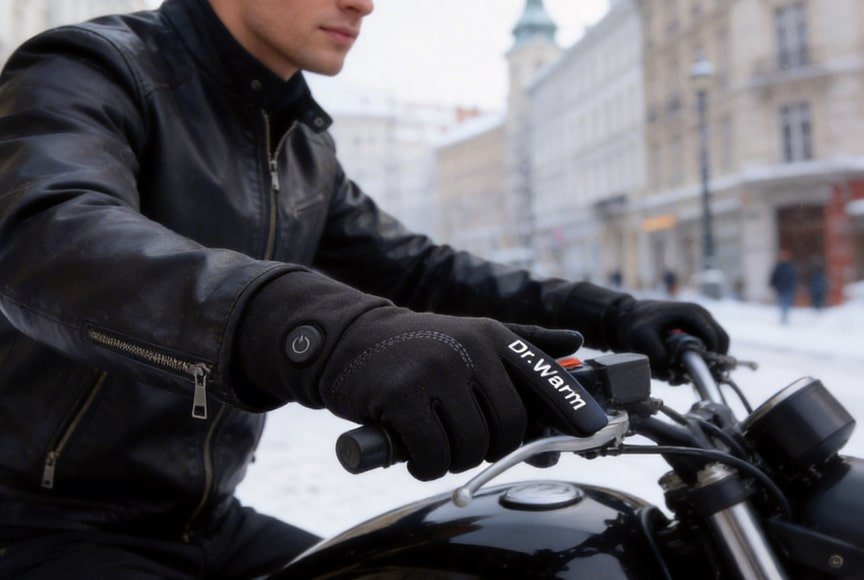
Architecture of Smart Heating Systems in Gloves
Smart heating systems for heated gloves demand a compact, motion-resistant architecture that balances heat output with unrestricted hand function.
The core components must fit within limited space while enduring repeated flexing. Heating elements use flexible carbon fiber or thin-film wires routed through fingers and palm. Controllers are miniaturized and positioned near the wrist or cuff to minimize bulk in the palm area. Batteries sit at the wrist for weight distribution, and Bluetooth modules require careful antenna placement to maintain signal strength through insulating materials.
For those exploring glove-specific smart architecture, our smart app-controlled heating solutions for gloves provide a proven foundation for reliable integration.
| Component | Integration Challenge |
| Heating element | Flexibility across fingers |
| Controller | Miniaturization |
| Battery | Weight balance at wrist |
| Bluetooth module | Signal stability inside insulation |
This layout ensures the system remains lightweight and unobtrusive, preserving glove ergonomics while delivering consistent performance.
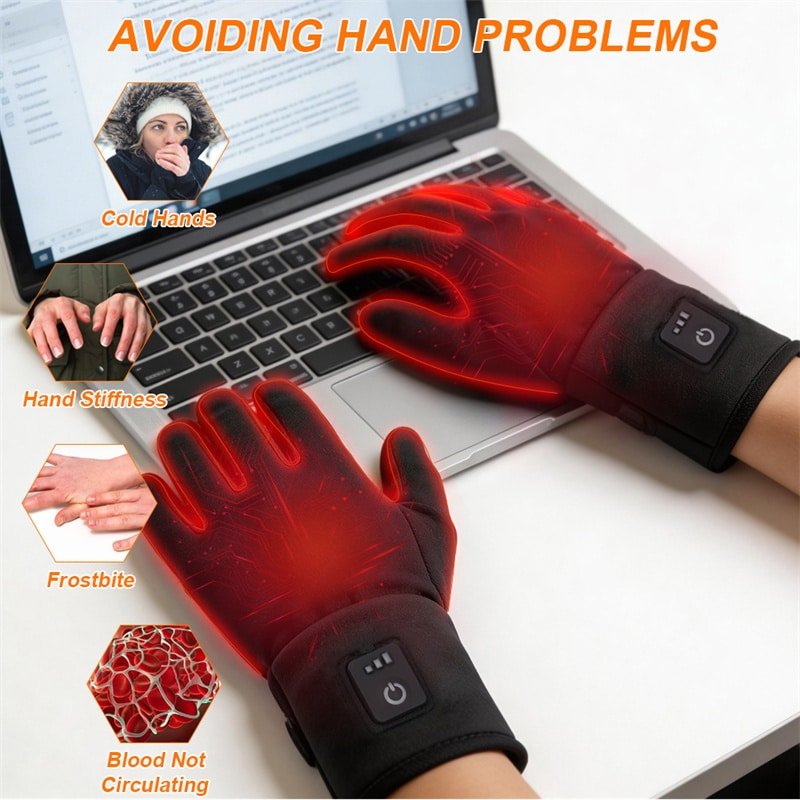
Thermal Mapping for Fingers and Palm
Effective thermal mapping in heated gloves prioritizes even heat across high-heat-loss areas without creating hot spots in enclosed finger zones.
Fingers lose heat rapidly due to their small surface area and exposure, requiring dedicated heating zones with precise temperature control. The palm benefits from uniform warmth to support grip, while the back of hand focuses on wind and cold protection. Wrist areas often incorporate battery compartments, influencing local heat distribution.
Overheating in fingers is a real risk—insulation traps heat, and blood flow variations during activity can amplify unevenness. Good mapping uses zoned elements with independent control to maintain 40–55°C across surfaces, adjusted for ambient conditions.
| Heating Zone | Design Focus |
| Fingers | Precision and flexibility |
| Palm | Uniform warmth |
| Back of hand | Wind protection |
| Wrist | Battery balance |
Heated glove thermal mapping must account for these zones to deliver balanced warmth without compromising dexterity.
Control Logic and Firmware Adaptation
Firmware in app-controlled heated gloves must adapt dynamically to hand motion, preventing temperature spikes or drops during flexing and gripping.
Temperature scaling adjusts output based on user-selected levels, while multi-zone synchronization ensures fingers and palm heat coherently. Safety cut-offs monitor for over-temperature in any zone, and motion compensation uses signal filtering to smooth power delivery—reducing flicker from wire movement or sensor noise.
Bluetooth heated gloves rely on low-latency communication; firmware handles packet loss or interference inside thick insulation by implementing retry mechanisms and adaptive power modes.
| Firmware Function | Purpose |
| Multi-zone control | Balanced heating |
| Overheat protection | Safety |
| Motion compensation | Stable output |
| Signal filtering | Reduced interference |
These adaptations keep wearable hand heating systems responsive and safe under real-world use.
Battery Integration and Runtime Optimization
Battery integration in heated gloves centers on balancing capacity, weight, and runtime while maintaining glove balance and comfort.
Common voltages range from 3.7V to 7.4V, with higher voltages enabling stronger heating but requiring better regulation. Capacity typically falls between 2000–4000mAh per glove pair, trading off against added weight—critical since excess mass fatigues hands during extended activities like skiing or riding.
Power efficiency strategies include pulse-width modulation (PWM) for heating control and low-power Bluetooth modes. Runtime expectations vary: 4–8 hours on low in moderate cold, dropping to 2–4 hours on high in extreme conditions.
| Power Parameter | Impact |
| Voltage | Heating strength |
| Capacity | Duration |
| Weight | Comfort |
| Current regulation | Safety |
Heated glove battery integration succeeds when weight distribution and efficiency prevent fatigue while supporting app-driven adjustments.
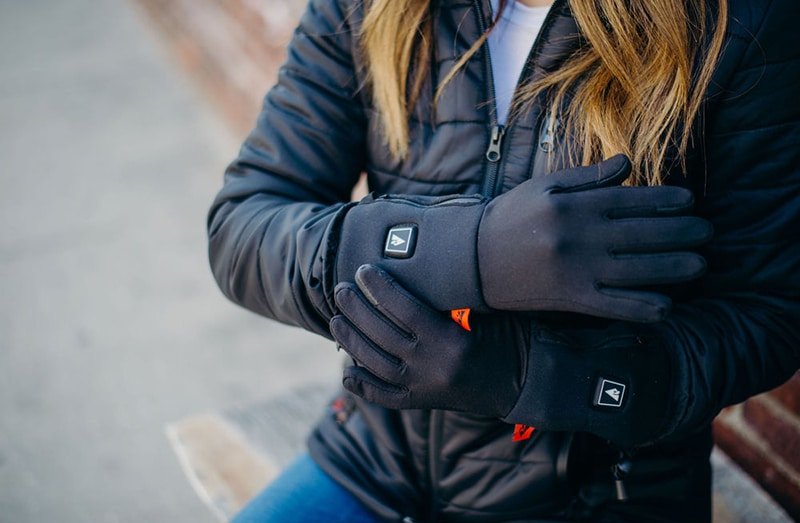
User Experience and App Interaction
App interaction in heated gloves emphasizes quick, glove-on operation for activities where stopping to adjust settings is impractical.
Pairing should be seamless—one-time Bluetooth connection with auto-reconnect on power-up. Mode switching (low/medium/high or custom zones) occurs via intuitive sliders or presets, allowing mid-activity changes during skiing or motorcycle riding without removing gloves.
Multi-zone adjustment lets users prioritize fingers during extreme cold or palm for grip tasks. Temperature feedback appears clearly—real-time readings per zone, battery percentage, and estimated runtime—helping users make informed decisions without guesswork.
Engineering-informed UX focuses on reliability: stable connections even with sweaty hands or insulated barriers, plus vibration or LED confirmation for glove-side feedback.
Testing and Validation for Heated Gloves
Rigorous testing ensures smart heating systems in gloves withstand real-world demands beyond lab conditions.
Flex endurance testing cycles elements and wiring thousands of times to simulate gripping and finger movement. Cold-environment testing verifies performance down to -20°C or lower, checking heat consistency and battery discharge curves.
Waterproof performance (often IPX4–IPX7) protects electronics during snow or rain. Signal stability during movement tests Bluetooth range and packet integrity while flexing hands rapidly.
Production reliability demands batch consistency—aging tests on heating elements, over-temperature cycling, and drop tests for controllers.
Common Integration Mistakes in Smart Heated Gloves
Several recurring errors undermine performance in smart heated gloves:
- Over-concentrated heating on fingers, leading to hot spots and discomfort in enclosed spaces
- Bulky battery placement in the palm or cuff, disrupting balance and restricting wrist motion
- Insufficient firmware calibration for motion, causing temperature fluctuations or erratic app readings
- Weak signal routing inside thick insulation, resulting in dropped Bluetooth connections during use
Addressing these early in design prevents costly revisions and ensures production scalability.
Conclusion — Precision and Flexibility Define Glove Performance
Smart heating systems for heated gloves succeed when thermal mapping, firmware precision, battery integration, and ergonomic design are engineered as one cohesive system rather than treated as isolated components. Thermal balance—delivering consistent, controllable warmth without excess—outweighs raw heating power. By prioritizing flexibility, motion resilience, and user-centric control logic, these systems meet the exacting demands of winter sports, tactical, and outdoor work applications while maintaining glove usability and comfort.