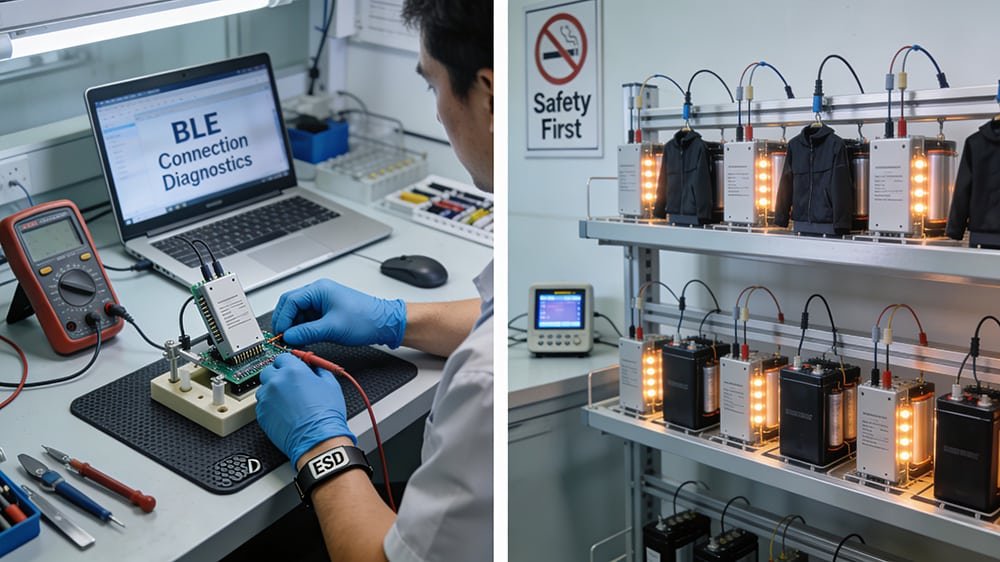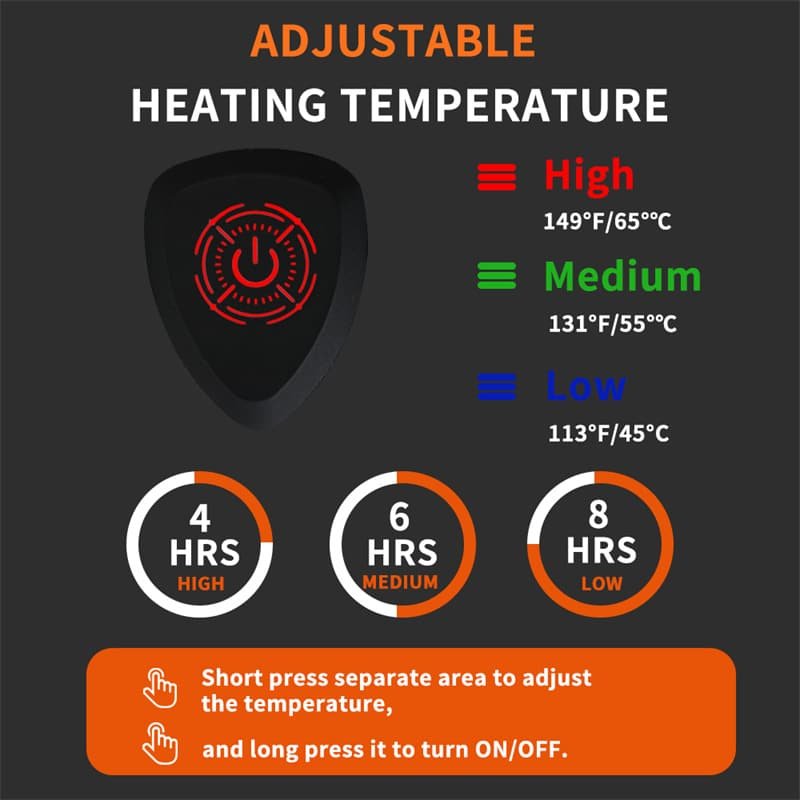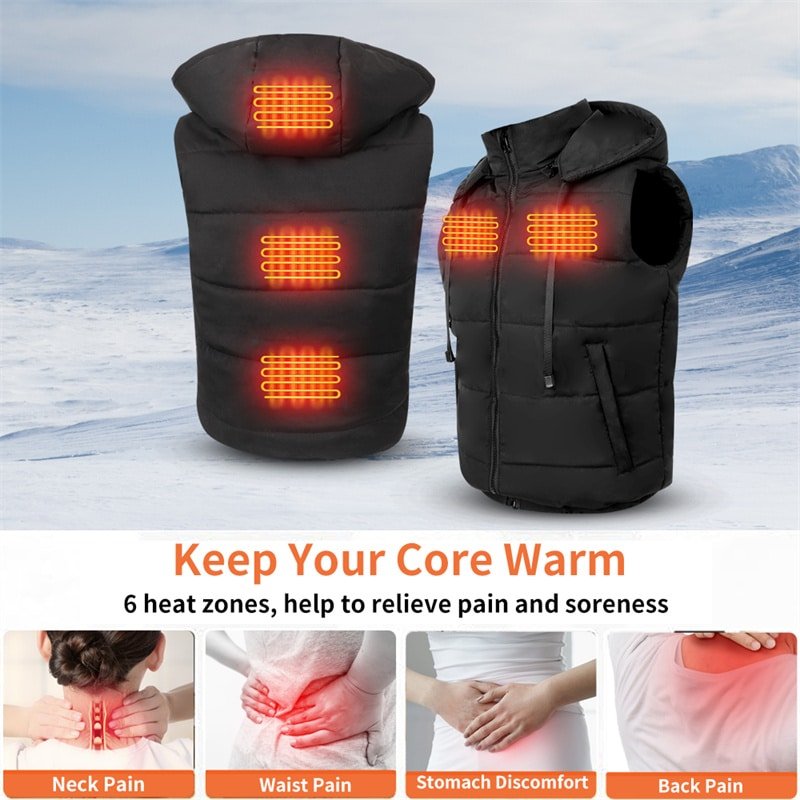

In heated jackets and vests, app-controlled heating systems enable multi-zone precision, scalable control logic, and balanced thermal distribution across larger garment structures. Unlike smaller wearables such as gloves or insoles, jackets and vests cover significantly more surface area—often the full torso and sometimes extending to arms or collars. This expanded coverage allows for larger heating zones but demands more disciplined heating architecture to maintain consistent temperature and energy efficiency.
Many teams assume that larger garments simply require more heating elements or higher total wattage. In practice, thermal distribution and intelligent control logic prove far more critical than raw power output. Poorly mapped heat placement can create hot spots, uneven comfort, or rapid battery drain, especially under wind, layering, or movement. App control addresses these challenges by providing real-time, zone-specific adjustments that align with the garment’s structure and the user’s activity.
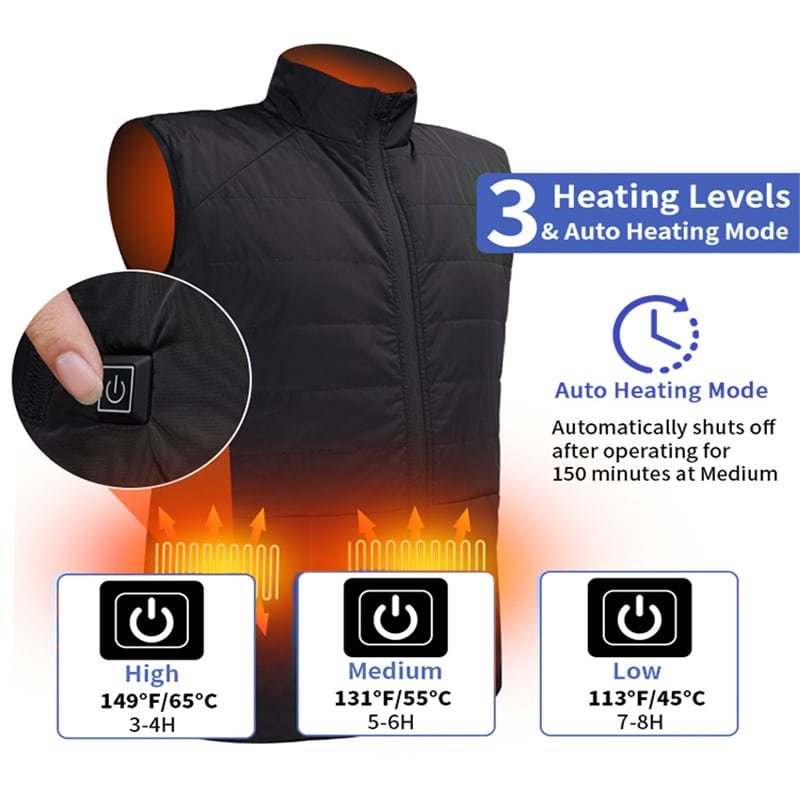
Architecture of App-Controlled Heating in Jackets and Vests
Effective app-controlled heating in outerwear starts with a structured, multi-zone layout that respects the body’s thermal needs and the garment’s mechanical constraints.
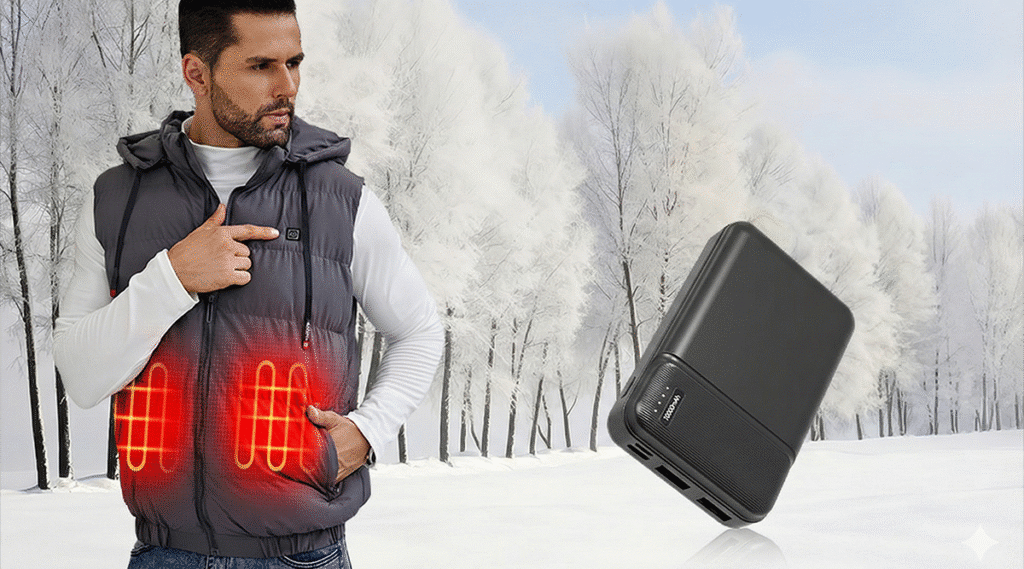
Jackets and vests typically feature heating panels distributed across the chest (left and right), mid-to-upper back, and often the lower back or waist area. This placement prioritizes core warmth while accounting for natural heat loss patterns. The controller usually sits in a centralized, accessible position—commonly an inner pocket or reinforced panel near the chest or waist—to minimize wiring length and signal interference. Battery pockets are positioned for balanced weight distribution, most often at the lower front sides or mid-back, avoiding shoulder strain or interference with movement.
Insulation layers play a key role in coordination: heating elements must sit close to the body-facing side for efficient transfer, while outer insulation traps generated heat and reduces external losses. Bluetooth modules require careful placement to ensure stable connectivity through dense fabrics and metallic zippers.
For more details on implementing these systems, see our guide to app-based heating solutions for jackets and vests.
Here’s a summary of core components and their integration considerations:
| Component | Integration Consideration |
| Heating panels | Even distribution across torso |
| Controller | Centralized control hub |
| Battery | Balanced weight distribution |
| Bluetooth module | Stable signal through insulation layers |
Multi-Zone Heating and Thermal Mapping
Multi-zone heating is essential in jackets and vests because torso-sized garments experience varied heat loss depending on posture, layering, and environmental factors.
Independent control of zones—typically chest, back, and waist—allows targeted delivery where it’s needed most. The chest zones stabilize core temperature, as this area loses heat quickly during inactivity. Back zones focus on retention during movement, when body heat rises and escapes upward. Waist or lower-back zones block cold air infiltration at garment openings. Optional collar zones provide neck warmth in extreme conditions.
Thermal mapping must consider wind resistance, which strips heat faster from exposed or less-insulated areas, and layering, where mid-layers can trap heat unevenly. Proper mapping prevents overcompensation in one zone while others remain cold.
| Heating Zone | Design Objective |
| Chest | Core warmth stabilization |
| Back | Heat retention during movement |
| Waist | Cold air protection |
| Collar (optional) | Targeted neck warmth |
Control Logic and Firmware Optimization
Scalable firmware is what transforms basic heating into reliable, user-adaptable performance in larger outerwear.
App-controlled systems use zone-specific algorithms to coordinate output, preventing imbalances that cause discomfort or inefficiency. Temperature scaling adjusts power proportionally across zones rather than applying uniform levels. Smart energy management monitors usage patterns, reducing output in warmer zones or activating sleep modes during low activity. Built-in safety thresholds include over-temperature cut-offs and automatic shutdowns if anomalies occur.
| Firmware Function | Benefit |
| Multi-zone coordination | Balanced warmth |
| Precision scaling | Comfort control |
| Energy optimization | Extended runtime |
| Safety thresholds | Overheat prevention |
Battery Integration and Power Efficiency
Battery choices directly influence runtime, weight, and overall garment balance in jackets and vests.
Higher-voltage systems (7V–12V) deliver stronger heating for larger surface areas without excessive current draw, improving efficiency. Capacity must balance duration against added weight—typically 5000–10000mAh packs provide 4–10 hours depending on settings and zones active. Placement favors symmetry to avoid pulling on one side during activity.
Efficient power routing minimizes losses through short, low-resistance paths and current regulation to maintain stable output under varying loads.
| Power Parameter | Design Impact |
| Voltage | Heating strength |
| Capacity | Duration |
| Battery location | Comfort balance |
| Current regulation | Stability |
User Experience and App Interaction
From an engineering perspective, app interaction must remain functional in real-world winter conditions.
Zone-specific sliders or presets let users fine-tune chest versus back warmth independently. Temperature memory saves preferred combinations for quick recall. Pairing should be reliable and fast, with robust Bluetooth protocols that handle cold-induced battery drain on the phone. Interfaces prioritize large, glove-friendly controls—simple buttons or gestures over tiny sliders—to ensure usability when fingers are numb or gloved.
Testing and Production Validation
Consistent performance across production batches requires rigorous, repeatable testing protocols.
Cold chamber trials simulate -10°C to -20°C conditions with wind simulation to validate thermal mapping and zone balance. Insulation compatibility checks confirm that heating elements do not degrade loft or create pressure points. Signal stability testing evaluates Bluetooth connectivity through multiple fabric layers and under compression. Batch calibration ensures firmware and hardware tolerances remain tight, preventing variations in heat output or runtime.
Common Integration Mistakes in Heated Jackets and Vests
Even experienced teams encounter pitfalls when integrating app-controlled systems into outerwear.
- Overheating in localized zones due to inadequate thermal spreading or poor element sizing
- Uneven battery placement causing noticeable weight imbalance or restricted movement
- Insufficient firmware tuning, leading to abrupt temperature swings or wasted energy
- Ignoring insulation heat retention, resulting in higher-than-needed power draw and shorter runtime
Conclusion — Scalable Architecture Defines Outerwear Performance
App-controlled heating in jackets and vests succeeds when multi-zone architecture, firmware logic, and garment insulation are engineered together to maintain stable performance and user comfort. Disciplined thermal mapping, balanced power integration, and thoughtful control design separate reliable systems from those that underperform in demanding conditions. For brands and engineers developing smart heated outerwear, prioritizing these coordinated elements ensures consistent results across diverse use cases and environments.