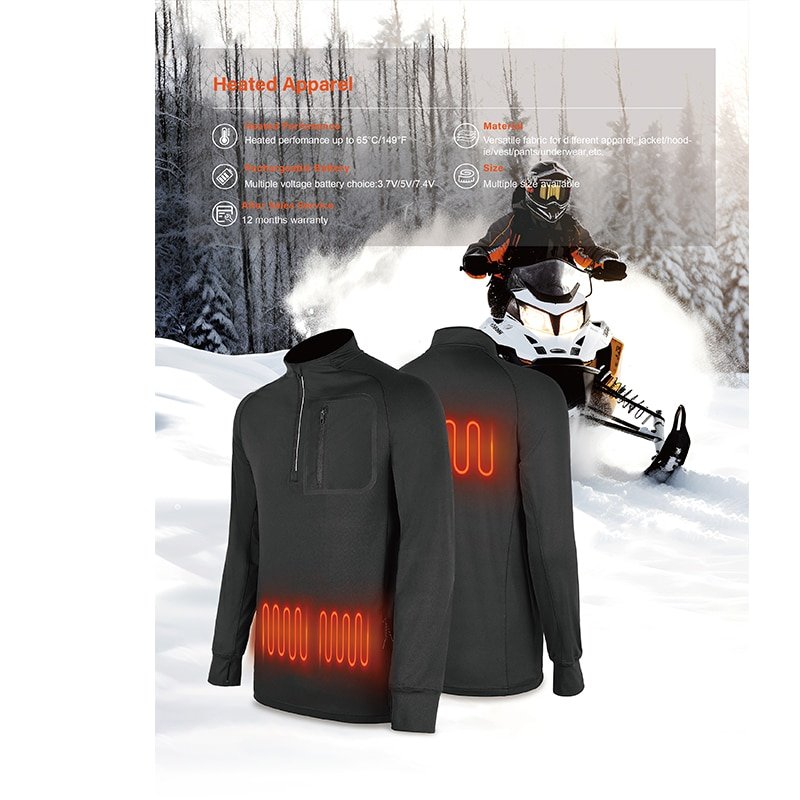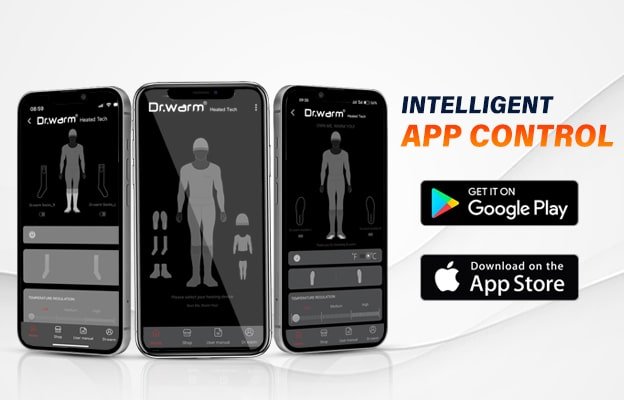

Modern heated apparel performance depends more on control algorithms than on raw heating wattage. Temperature control in app-based heated apparel is governed by algorithmic logic that dynamically regulates current, voltage, and heating output rather than simply switching between fixed power levels. Many assume temperature levels are simple preset power outputs, while real systems use dynamic regulation and feedback mechanisms. App systems allow precise, continuous scaling of heat delivery, directly influencing wearer comfort, battery runtime, and thermal safety.
In practice, advanced firmware translates user-selected targets into modulated power delivery, preventing hot spots, minimizing energy waste, and maintaining stability even as battery voltage drops or ambient conditions change. This shift from basic on/off or stepped control to intelligent algorithms marks the difference between mediocre warmth and reliable, adaptive performance in app-controlled heating regulation.
From User Input to Heating Output: The Control Flow
The journey from a user’s app selection to actual thermal output follows a tightly orchestrated signal path in any competent heated apparel control logic system.
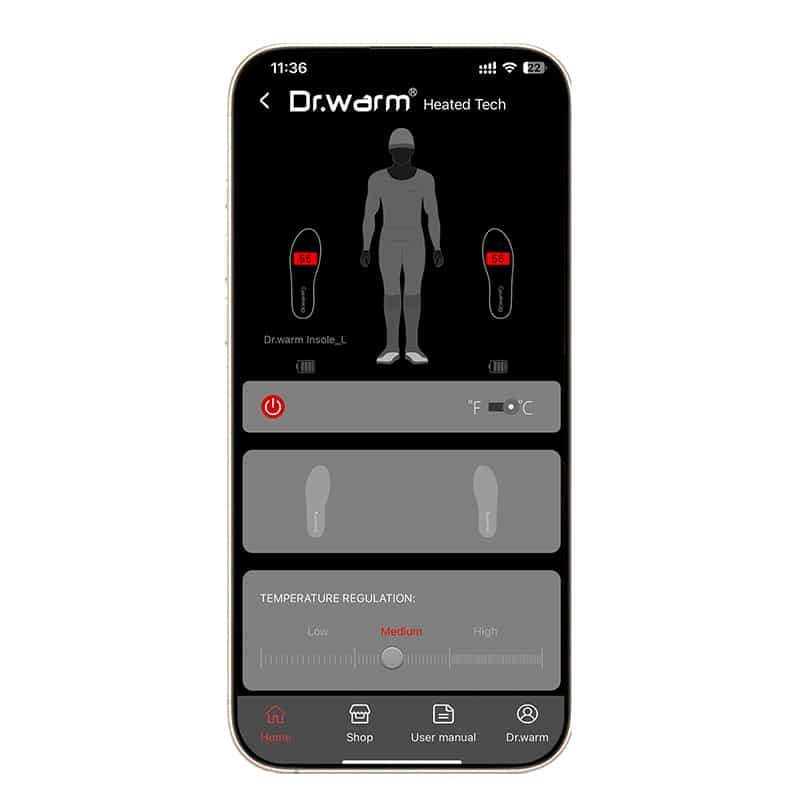
User input begins in the mobile application, where the wearer sets a desired temperature level, mode (e.g., constant, adaptive), or even zone-specific targets. This command travels over Bluetooth Low Energy (BLE) to the garment’s embedded controller—typically a microcontroller unit (MCU) with integrated BLE radio.
Once received, the firmware processes the input through its core algorithm. It compares the requested setpoint against real-time sensor data (if available, such as thermistors near heating elements or skin-proximate sensors) and computes the required power adjustment.
The controller then applies current regulation—most often via pulse-width modulation (PWM) or voltage scaling—to drive the heating elements (carbon fiber wires, flexible film heaters, or conductive yarns). This modulated power generates Joule heating in the elements, producing thermal response that the wearer experiences as warmth.
| Stage | Function |
| App input | Desired temperature setting |
| Signal transmission | Bluetooth data transfer |
| Firmware processing | Algorithm execution |
| Current regulation | Adjust power output |
| Heating element | Thermal response |
This flow, detailed further in our overview of temperature control logic in app-based heating systems, ensures closed-loop precision where open-loop stepped systems fall short.
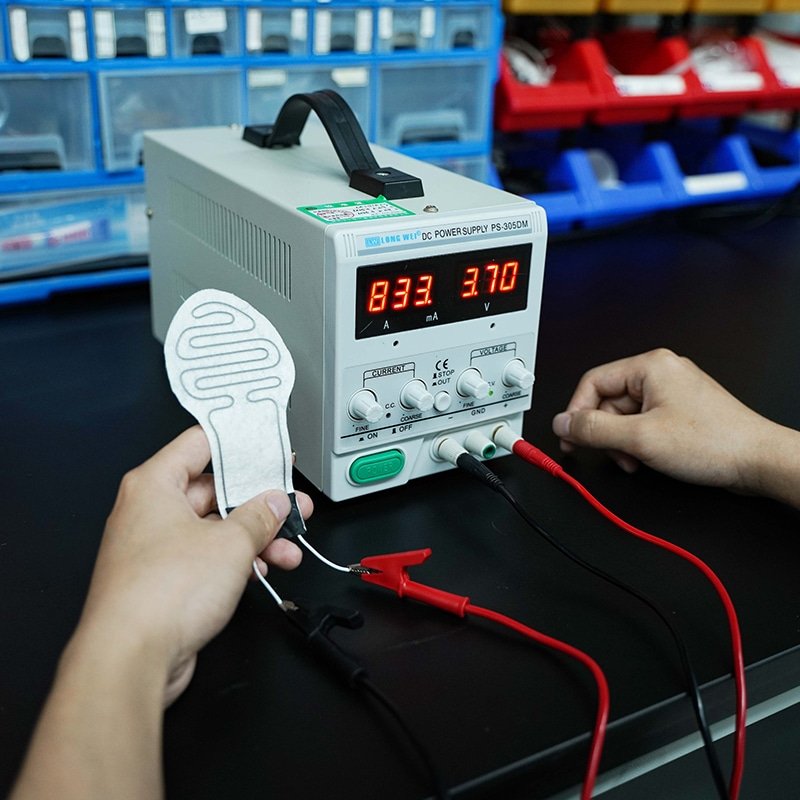
Types of Temperature Control Algorithms
Control sophistication varies widely across heated apparel generations, but effective systems move beyond crude methods toward responsive logic.
Fixed-step control remains common in entry-level products: the firmware simply switches full power on or off for discrete levels (e.g., low/medium/high), offering limited granularity and often noticeable temperature swings.
Proportional scaling improves this by linearly mapping user input to output power, though without feedback it ignores real-world variables like battery sag or ambient heat loss.
Pulse Width Modulation (PWM) dominates modern designs. The MCU generates rapid on/off pulses at a fixed frequency (typically 100–1000 Hz to avoid audible noise or flicker), varying duty cycle to control average power. PWM heating control delivers smooth, efficient regulation with minimal heat loss in the switching circuitry.
Adaptive control algorithms represent the current frontier. These incorporate feedback—often from embedded temperature sensors—and may use PID (Proportional-Integral-Derivative) loops or simpler heuristic rules to dynamically adjust output. Some implementations even factor in activity data from phone sensors or predictive models for proactive regulation.
Multi-zone logic extends this to garments with independent heating areas (e.g., left/right chest, back, sleeves), allowing per-zone tuning to prevent imbalances.
| Algorithm Type | Characteristics | Application |
| Fixed step | Simple on/off | Basic systems |
| PWM | Pulse-based control | Precision heating |
| Adaptive scaling | Dynamic adjustment | Smart systems |
| Multi-zone logic | Independent control | Jackets & gloves |
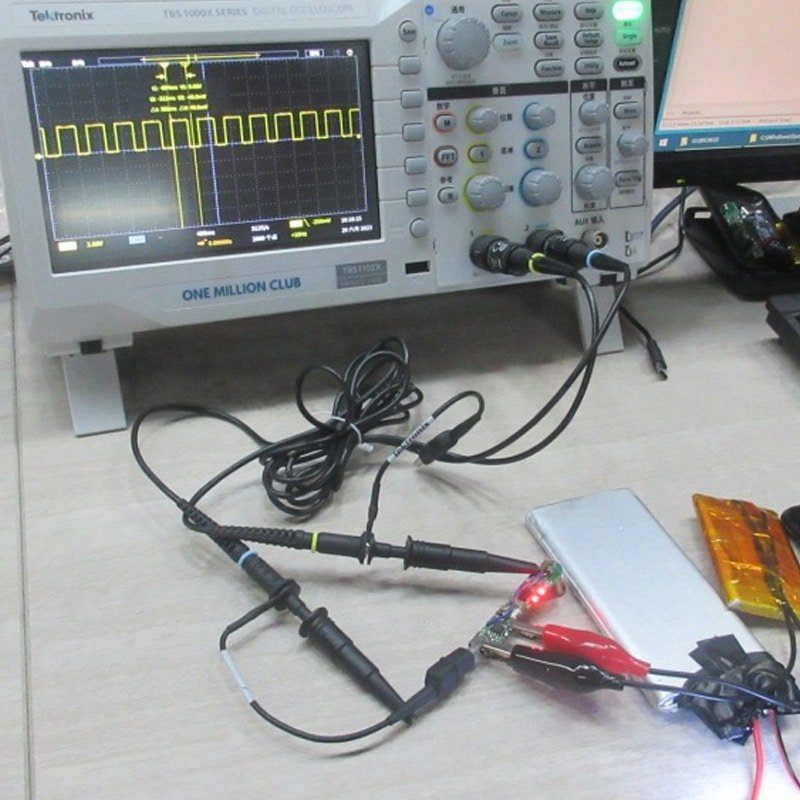
Current Regulation and Energy Optimization
Precise current regulation forms the backbone of efficient, comfortable heating.
Current smoothing—achieved through PWM filtering or capacitor-assisted designs—prevents abrupt power spikes that cause perceptible temperature fluctuations or uneven heating.
Voltage scaling adapts output as battery voltage declines during discharge, maintaining consistent heat delivery rather than letting warmth fade prematurely.
Load balancing becomes critical in multi-zone garments, distributing power draw to avoid exceeding battery or connector limits while prioritizing zones based on thermal need.
Runtime optimization employs techniques like duty-cycle modulation, periodic low-power maintenance phases, or predictive shutdowns when target temperatures stabilize.
| Control Feature | Benefit |
| Current smoothing | Stable warmth |
| Voltage adjustment | Energy efficiency |
| Load balancing | Multi-zone stability |
| Adaptive scaling | Comfort consistency |
These features in smart heating firmware collectively maximize battery life without sacrificing perceived performance.
Multi-Zone Temperature Coordination
Multi-zone heating demands architectural coordination beyond single-element control.
Independent zone regulation assigns separate PWM channels or MOSFET drivers to each area, enabling granular setpoint adherence—vital for jackets where chest may require more heat than sleeves.
Thermal feedback loops (when sensors are present per zone) close the control circuit, compensating for differences in insulation, body proximity, or external exposure.
Load distribution management prevents simultaneous full-power activation across zones from triggering overcurrent conditions or rapid battery drain.
Avoiding power spikes requires staggered activation sequences or capped aggregate duty cycles, ensuring the system remains within safe electrical boundaries.
Safety Thresholds in Algorithm Design
Robust safety logic protects both the wearer and the hardware.
Maximum temperature caps—hard-coded limits (typically 45–55°C at element surface)—prevent burns even under fault conditions.
Overcurrent detection monitors instantaneous or average draw, triggering immediate shutdown if thresholds are exceeded.
Automatic shutdown triggers include low-battery cutoffs, prolonged high-duty operation, or sensor faults.
Error handling logic logs anomalies, notifies the app, and defaults to safe states (e.g., off or minimal output).
| Safety Logic | Purpose |
| Temp cap | Prevent burns |
| Current limit | Avoid overload |
| Fault detection | System protection |
| Fail-safe shutdown | Risk mitigation |
Algorithm Calibration During Production
Production consistency hinges on systematic calibration.
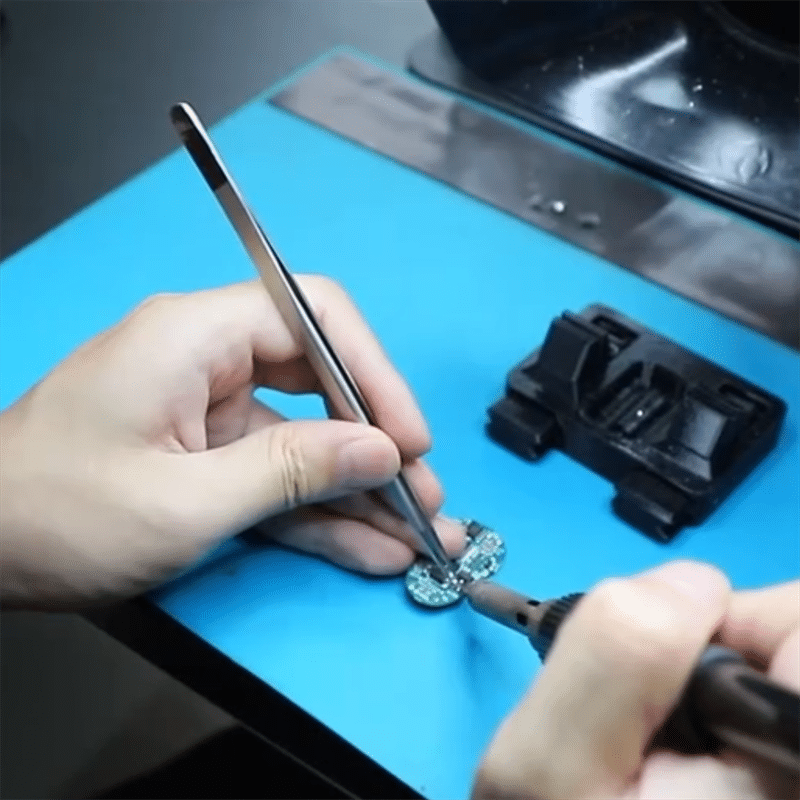
Batch calibration tunes firmware parameters (e.g., PWM frequency, duty-cycle curves) to account for component tolerances in heating elements and batteries.
Sensor validation verifies thermistor accuracy and placement, often using environmental chambers to map resistance curves.
Firmware tuning optimizes PID gains or scaling tables under controlled load, ensuring uniform response across production runs.
Testing under load simulates real-world discharge, validating stability, safety thresholds, and runtime claims.
Common Algorithm Design Mistakes
Several recurring errors undermine performance in heated apparel firmware.
- Oversimplified scaling logic that ignores voltage droop, leading to inconsistent warmth as the battery discharges.
- Ignoring multi-zone load interactions, causing aggregate current spikes or uneven distribution.
- Poor current smoothing from low-frequency PWM, resulting in perceptible pulsing or audible coil whine.
- Insufficient safety thresholds that allow overheating during faults or prolonged maximum settings.
Addressing these during design prevents field failures and builds trust in the system’s reliability.
Conclusion — Algorithms Define Smart Heating Performance
Temperature control algorithms transform wearable heating systems from simple power devices into intelligent systems capable of delivering stable, efficient, and safe thermal performance. By balancing dynamic regulation, feedback, and safety logic, well-designed firmware achieves consistent comfort, extended battery life, and robust protection—priorities that separate professional-grade heated apparel from basic alternatives.