
In app-controlled heated apparel, consistency across production batches depends on coordinated calibration of firmware, power management, thermal output, and communication modules. System inconsistency can quickly damage brand credibility, leading to user complaints about uneven heating, shortened runtime, unreliable app connectivity, or unexpected shutdowns. App-controlled systems introduce more integration variables than traditional heated gear—firmware logic, multi-zone heating, battery voltage stability, and Bluetooth signal timing all interact dynamically. Production-level calibration becomes essential to translate prototype performance into repeatable mass-production results.
Many teams mistakenly assume that passing initial prototypes guarantees production consistency. In reality, firmware calibration, load balancing, and component tolerances must be actively verified at scale. Consistency in smart heated apparel is achieved through architectural discipline and repeatable validation processes, not by relying on component quality alone.
Why System Consistency Is More Complex in Smart Heating Apparel
System consistency becomes significantly more complex in smart heating apparel due to the tight integration of multiple interdependent subsystems.
Firmware interprets user temperature requests via the app and translates them into precise current delivery to heating zones. Battery voltage fluctuations directly affect heating output, while heating element resistance variations cause uneven thermal distribution. Bluetooth timing sensitivity can introduce control latency, disrupting real-time adjustments.
Multi-zone load variability adds further complexity—different zones may draw uneven current, leading to power imbalances if not actively managed. Temperature scaling calibration must remain uniform so that a “medium” setting delivers the same perceived warmth across units.
The following table summarizes key system variables and their associated risks of inconsistency:
| System Variable | Risk of Inconsistency |
| Firmware scaling | Uneven heat levels |
| Battery voltage variation | Runtime fluctuation |
| Heating element resistance | Output deviation |
| Bluetooth latency | Delayed control response |
For deeper context on building reliable app-controlled platforms, see our guide on ensuring system consistency in app-controlled heated apparel.
Firmware Calibration Across Production Batches
Firmware calibration must be treated as a batch-level discipline to prevent performance drift.
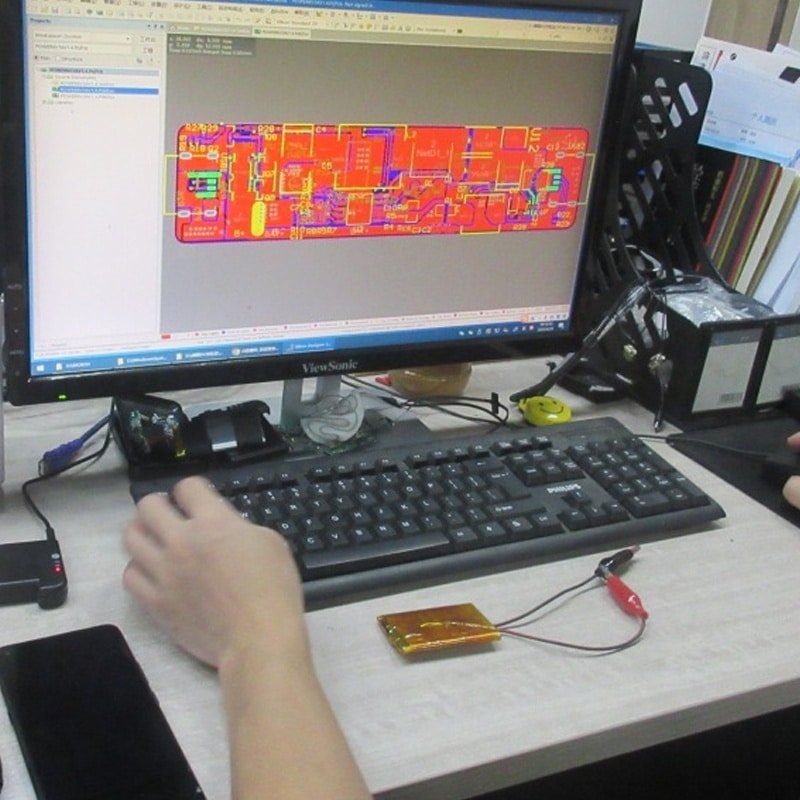
Calibration parameters include temperature-to-current mapping tables, safety threshold limits, multi-zone load balancing logic, and communication timeouts. These values are often fine-tuned during prototyping but require re-verification during production due to subtle component variations.
Temperature-to-current mapping ensures that requested app settings produce uniform heat output. Safety thresholds prevent overheating under edge conditions. Load balancing algorithms distribute power evenly across zones to avoid localized hot spots or battery drain imbalances. Firmware version control prevents mismatches between controller hardware and app expectations.
Batch firmware validation involves flashing samples from each production run and running scripted tests to confirm parameter integrity.
| Calibration Element | Why It Matters |
| Temperature mapping | Uniform comfort |
| Safety thresholds | Prevent overheating |
| Load balancing | Stable multi-zone heating |
| Firmware version control | Prevent mismatches |
Power Management Stability in Mass Production
Power management stability directly determines runtime consistency and heating reliability in mass production.
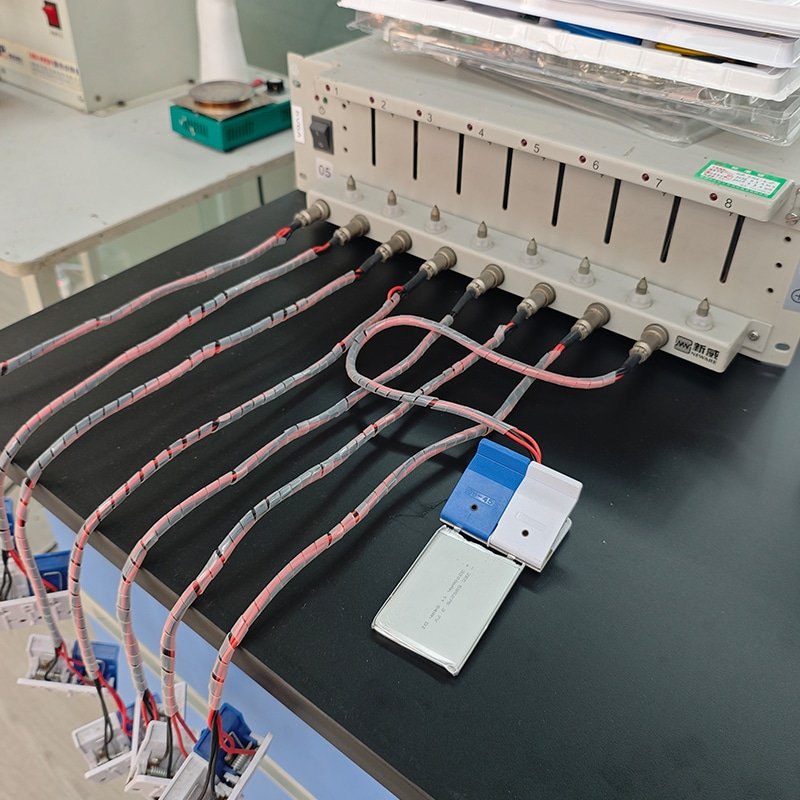
Battery cell variation—stemming from manufacturing tolerances—can cause differences in capacity and internal resistance. Voltage balancing circuits in the BMS (Battery Management System) must compensate for these differences. Current limit accuracy ensures the system does not exceed safe levels under varying loads. Runtime consistency suffers when voltage drops under load disproportionately across units.
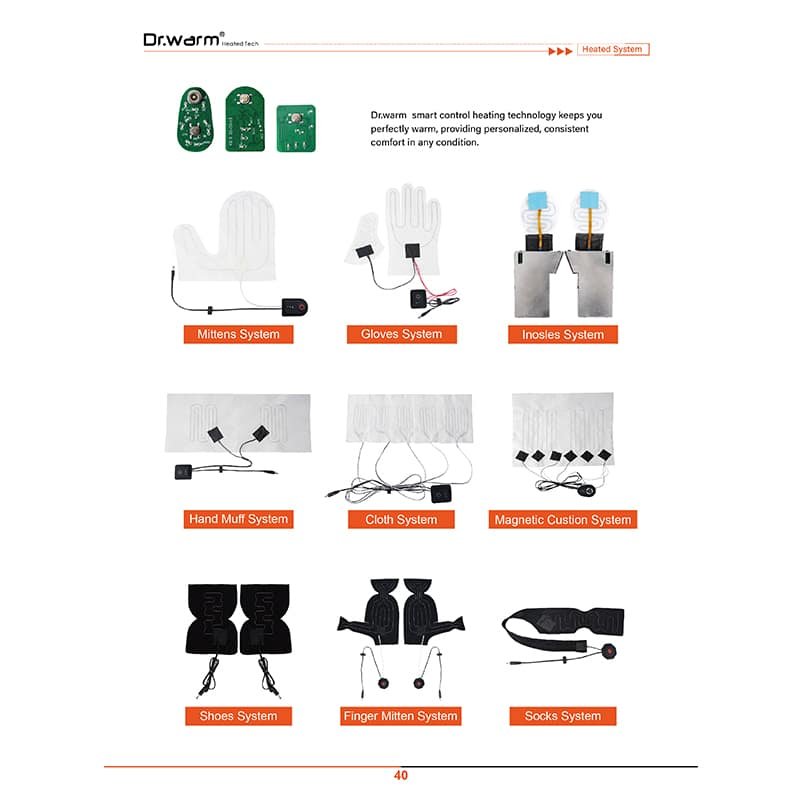
Production impacts include:
| Power Factor | Production Impact |
| Cell tolerance | Heating variation |
| BMS accuracy | Safety consistency |
| Current regulation | Stable output |
| Voltage drop under load | Runtime reliability |
Strict incoming inspection of battery cells and in-line BMS testing help maintain stability.
Heating Element Resistance and Thermal Output Variation
Heating element resistance variation is one of the most common sources of thermal output inconsistency.
Resistance tolerance in carbon fiber or wire elements can deviate due to material inconsistencies or manufacturing processes. Even small resistance differences lead to noticeable variations in heat generation under the same current.
Thermal mapping calibration compensates by adjusting firmware current delivery per zone. Insulation variation around elements affects heat transfer to the user. Environmental test impact—such as humidity or temperature during production—can further influence final resistance.
Hardware variability must be addressed through incoming material testing, resistance binning, and post-assembly thermal imaging validation to ensure uniform output.
Bluetooth Communication Consistency
Bluetooth communication consistency requires repeatable hardware and firmware implementation across batches.
Antenna placement repeatability is critical—minor shifts during assembly can degrade signal strength or introduce interference. PCB layout consistency ensures impedance matching and minimizes noise. Firmware timing validation prevents packet loss during high-load heating periods.
Cross-device pairing tests simulate real-world smartphone variability to confirm reliable connection and low latency.
Production-level testing, including antenna tuning checks and signal strength measurements on random samples, is essential to catch assembly-induced issues early.
Testing Protocols That Ensure Consistency
Robust testing protocols catch inconsistencies before products reach customers.
End-of-line testing verifies basic functionality, including heating output per zone, battery voltage stability, and Bluetooth pairing. Aging tests simulate long-term usage to expose drift in components. Cold chamber validation confirms performance under low-temperature startup and operation. Multi-zone load simulation stresses power distribution logic. Random batch sampling provides statistical confidence across runs.
| Test Type | Consistency Goal |
| Aging test | Long-term reliability |
| Load test | Stable current output |
| Signal test | Bluetooth stability |
| Cold chamber | Performance under stress |
Common Production-Level Mistakes
Several recurring mistakes undermine system consistency in production:
- Skipping batch calibration of firmware parameters, leading to mismatched heating behavior.
- Mixing firmware versions across controllers, causing app incompatibility or erratic control.
- Inconsistent antenna placement during assembly, resulting in variable Bluetooth range.
- Insufficient stress testing under combined heating and communication loads, missing edge-case failures.
These errors often stem from prioritizing speed over disciplined validation and can lead to costly field returns.
Conclusion — Consistency Is an Engineering Commitment
Ensuring system consistency in app-controlled heated apparel requires disciplined firmware calibration, power validation, thermal mapping control, and communication testing across every production batch. This level of cross-layer coordination—spanning hardware tolerances, firmware logic, and production processes—represents a true engineering commitment rather than a simple quality checkpoint. Only through structured validation and repeatable controls can manufacturers deliver the stable, predictable user experience that defines reliable smart heated apparel.