
Rechargeable heated socks are a type of wearable heating system that is designed to be operated by regulated battery modules, whereas disposable warmers are a type of wearable heating that works based on chemicals having a single reaction to provide temporary heat. Most individuals find disposable warmers easier and thus more convenient in nights where heated footwear has to be tested but the effectiveness can be seen through the time, the accuracy in control and ability to prevail upon results in the end.
The more appropriate choice has to be based on the time requirements, temperature control demands, consideration to the impact it puts on the environment, and the consideration of long-term costs. Technically, rechargeable heated socks (or electric heated socks) are active components (with rechargeable batteries) to ensure predictable performance, whilst disposable foot warmers or passive chemist-based heat warmers use passive exothermic reactions.
Core Technology Comparison
Disposable warmers and rechargeable heated socks are two contrasting methodologies of providing the heat to feet: one is electronic and can be controlled, and the other one is chemical and inherently restricted.
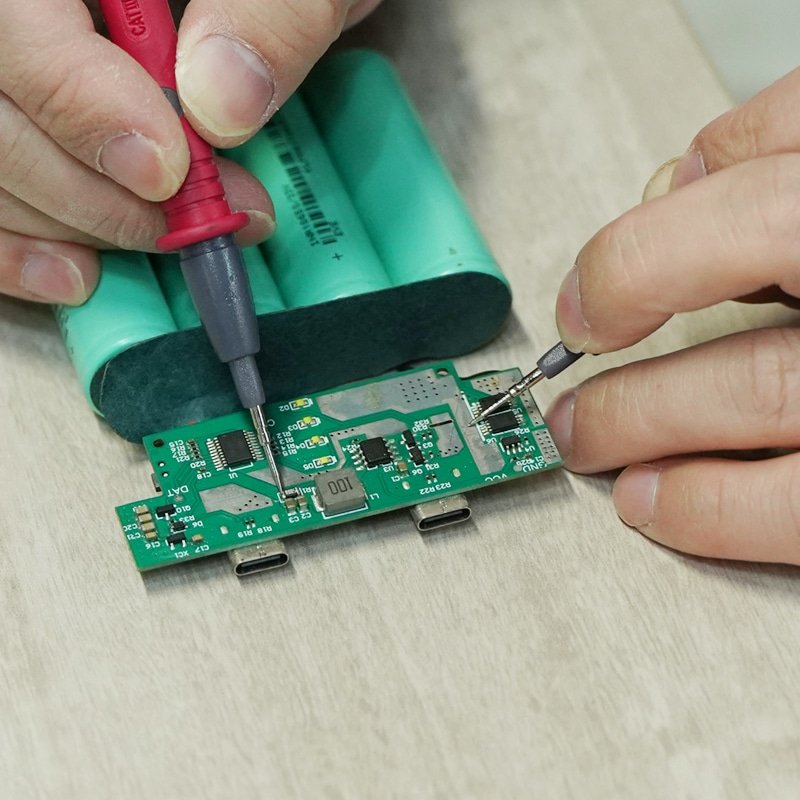
Rechargeable heated socks incorporate very fine, compact resistive heating wires (normally in the form of carbon fiber or wire based) that are embedded in the sock material. These components incorporate a micro-powered lithium-ion battery (usually 3.7V7.4V packs) that is built into the circuit board, and smart controllers regulate both current and voltage to a fine output. This design enables the ability to control the temperature at a number of levels, protection against overheating, and stable operation under different conditions.
Instead, disposable warmers are based on iron-oxidation: a fine iron powder in an air-permeable pouch is reacts with oxygen (with the help of salt, water, activated carbon, and vermiculite) to produce an exothermic reaction, which forms iron oxide (rust) and emits heat. Upon exposure to air, the process becomes irreversible, uncontrollable, so that the final heat profile cannot be altered, and no adjustment options are available.
And here is an obvious side-by-side view:
| Feature | Rechargeable Heated Socks | Disposable Warmers |
| Heat Source | Battery-powered resistive element | Iron oxidation reaction |
| Temperature Control | Adjustable (multiple levels via controller) | Fixed |
| Reusability | Yes (hundreds of cycles) | No |
| Output Stability | Regulated and consistent | Gradual decline after peak |
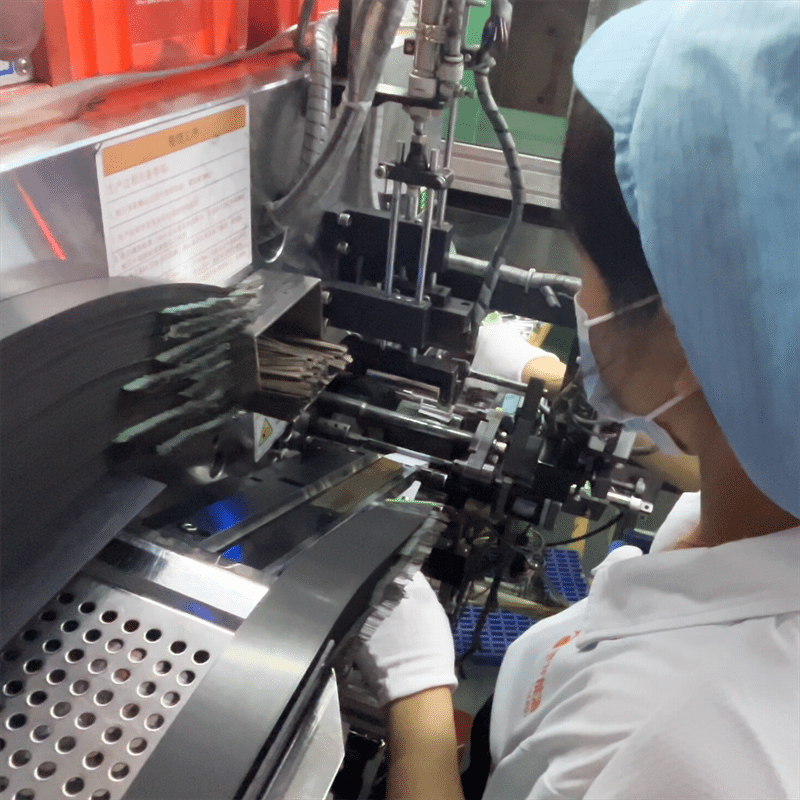
For brands exploring custom solutions, understanding these differences is essential. In rechargeable heated socks manufacturing, engineers focus on integrating durable heating films, battery management systems, and thermal distribution to achieve uniform warmth without hotspots.
Heating Duration and Stability
The time of heating and consistency of the founded output of rechargeable and disposable heat warmers differ considerably; the market control is the key distinguishing factor.
Rechargeable heated socks have adjustable options in their run time with differing levels of heat (low capable of running long runs 8-13 hours based on battery size, such as 8500mAh packs), or high with intensive short bursts (3-6 hours). The battery management circuit keeps the voltage constant and can avoid abrupt drops, as well as evenly distributes the heat over the foot.
The trend of disposable warmers is a predictable but decreasing curve, where after a few minutes of activation, the peak temperature is achieved (usually between 100-140 o C), and the effect decreases over a period of 6-10 hours as the oxidation process breaks down. There is no process to pause, tune, or re-initiate the process and when it occurs in very cold or low oxygen environments, it further reduces the performance.
| Runtime Factor | Rechargeable Heated Socks | Disposable Warmers |
| Duration Control | Adjustable via settings | Fixed |
| Peak Heat | Controlled and selectable | Early peak, uncontrolled |
| Stability | Consistent across session | Declines gradually |
It is thus better to use rechargeable systems in situations that demand persistent and dependable warmth.
Cost Per Use Over Time
Compared to repeated purchases of disposable warmers, rechargeable socks can lower the cost per session over the long-term, depending on initial investment, but the cost per session of rechargeable warmers can be lower.
Heated socks that have to be recharged are more expensive (around 80-150 a pair with batteries), but with proper care, lithium-ion batteries last 300-500 complete charges. Once a first purchase is done, the only costs envisaged in the future are electricity to recharge (minimal) and a few years down the battery needs replacement.
Disposable warmers cost seemingly cheap (around 1-2 a pair depending on foot-specific uses), although they are expensive to maintain over time. When very common and frequent uses of a pack are required say in the shift of work in everyday life or during several winter trips, the necessity of new packs on every occasion increases the costs.
For example, over 50 sessions:
| Usage (50 sessions) | Rechargeable Heated Socks | Disposable Warmers |
| Estimated Cost | Lower long-term (after amortization) | Higher cumulative |
| Waste Generated | Minimal | High (packaging + used pouches) |
Precise values will depend on the market prices, intensity, and quality of the battery, though the lifecycle analysis would continue to give reusables to moderate-to-high-frequency users.
Environmental and Sustainability Considerations
In terms of sustainability, rechargeable warmers, such as heated socks, obviously have a higher benefit than non-rechargeable chemical warmers because of a lower production of waste.
Single-use warmers that are activated on a single use at most result in single-use waste: the byproduct of iron oxide, packaging, and non-recyclable pouch materials all end up in landfills. Although relatively harmless components are used in the chemical reaction, the overall effect is some non-biodegradable residues and emissions of the production/delivery of every pack.
The rechargeable systems reduce waste by being reusable, but use lithium-ion batteries that have their lifecycle effects (mining, manufacturing, and eventual recycling). Modern designs are also adding battery protection circuits to increase longevity and responsible brands focus on recyclable materials and final use disposal. The environmental footprint is decreased significantly in years of use.
In the case of the brands placing their products in the environmental-friendly markets, rechargeable heated socks are more profitable when it comes to resource use and waste, decreasing the total ones.
Comfort and Footwear Integration
The introduction of footwear into either of the two systems has different influences on the real world comfort and usability.
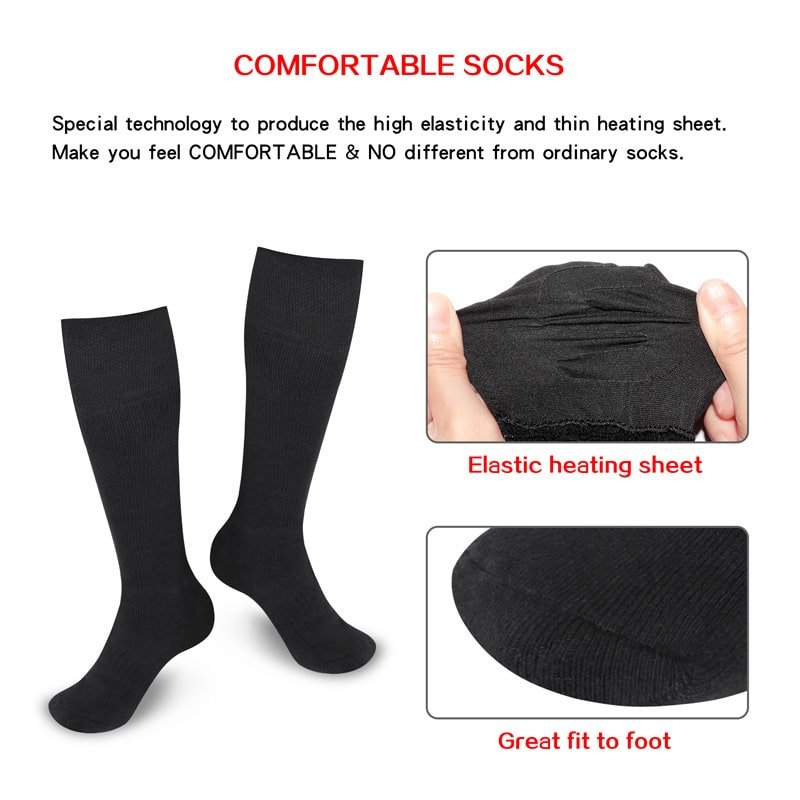
Rechargeable heater socks incorporate heating elements onto the textile (usually in the conscious foot and toe areas), which offer virtually no bulk of bulk-free heat once integrated into the textile, which is active with movement of the foot. The slim battery packs fit in pockets or inside the cuff without any additional bulk that would shift or be felt in the shoes or boots.
Disposable warmers are normally adhesive backed inlays that are attached to insoles or to the foot. Though slender, they create a little weight, move during movement and provide a limited range of placement- generally centered in the toe region. When turned on they cannot be repositioned or stopped.
Sock-built designs usually provide better durability in comfort during active events especially with long wears.
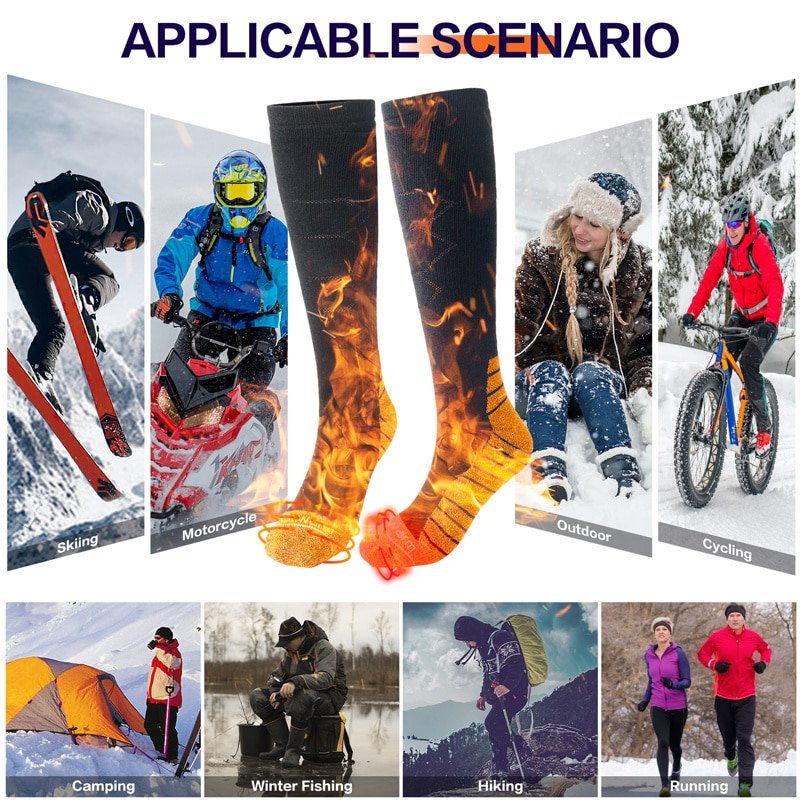
Application Scenarios
Use patterns and the performance requirements best correspond to the decision made between rechargeable heated sock and disposable warmers.
| Scenario | Recommended Solution | Reasoning |
| Short Outdoor Event | Disposable Warmers | Quick activation, no charging needed |
| Long Work Shift | Rechargeable Heated Socks | Adjustable, sustained heat |
| Skiing | Rechargeable Heated Socks | Consistent warmth in extreme cold |
| Emergency Backup | Disposable Warmers | Lightweight, ready-to-use |
Correspondence between the technology and the activity is a guarantee that there is optimal performance rather than over- or under-engineering the solution.
Common Misunderstandings
There are still a number of fallacies between these heating methods:
- Disposable warmers are cheaper all the time -Although at first glance a low per-unit cost option seems like a viable strategy to pursue, a sustained cost of frequent operation can exceed those of a rechargeable alternative.
- Complexity in rechargeable systems – On the one hand, There is no need to make rechargeable systems more complicated by implementing simple plug-and-play charging and user-friendly controllers; on the other hand, engineering advancement has led to a high level of reliability.
- The same heating performance is available in both “Both offer the same heating performance” – Rechargeable socks offer a regulated, even heat; disposables heat briefly and then stop heating, uncontrolled.
- Disregarding the environmental impact – most people are not bothered by the fact that the use of single-use packs generates wastage especially when it comes to waste discharge compared to other reusable battery systems.
These are addressed to assist brands in making evidence-based decisions.
Conclusion — Engineering vs Convenience Trade-Off
Rechargeable heated socks and single use warmers have different heating philosophies where one has a strong emphasis on controlled, reusable performance achieved by electronic regulation, and the other one provides a convenient, short-lived heating process through a simple chemical reaction. The right selection will be based on the length of use, sustainability objective, thermal management considerations and the general position of the product.
To build manufacturers and brands that implement lines of heated footwear, the consideration of such trade-offs in terms of technical and life-cycle will guarantee compliance with target markets and economic sustainability in the long term.