
The unshelf and off-the-shelf products are not similar as the heating insoles are not designed to add a logo on the product, and MOQ, cost, and lead time directly depend on the complexity of the heating system, the battery design, the level of customization, and the production structure.
Most customers entering the category under the impression of their first experience in the category think that a simple plastering of a branding logo on an existing model of a heated insole will be considered a private label. As a fact, even moderate modifications, like the increase of battery capacity, the alteration of heating areas, the modification of control interface, or the improvement of materials, in which the insole is made, cause the changes in the engineering, the components sourcing, the safety verification process, and the production schedule.
MOQ, cost and lead time are interrelated in the context of the production of private label heated insoles, as the level of customization is increasing it is likely to have a direct impact on the pricing structure and the delivery timelines.
Understanding MOQ in Private Label Heated Insoles Production
The MOQ of the private label heated insoles would be much greater than either simple non-electric insoles or simple accessories due to electronic parts used and the safety critical factor of the product.
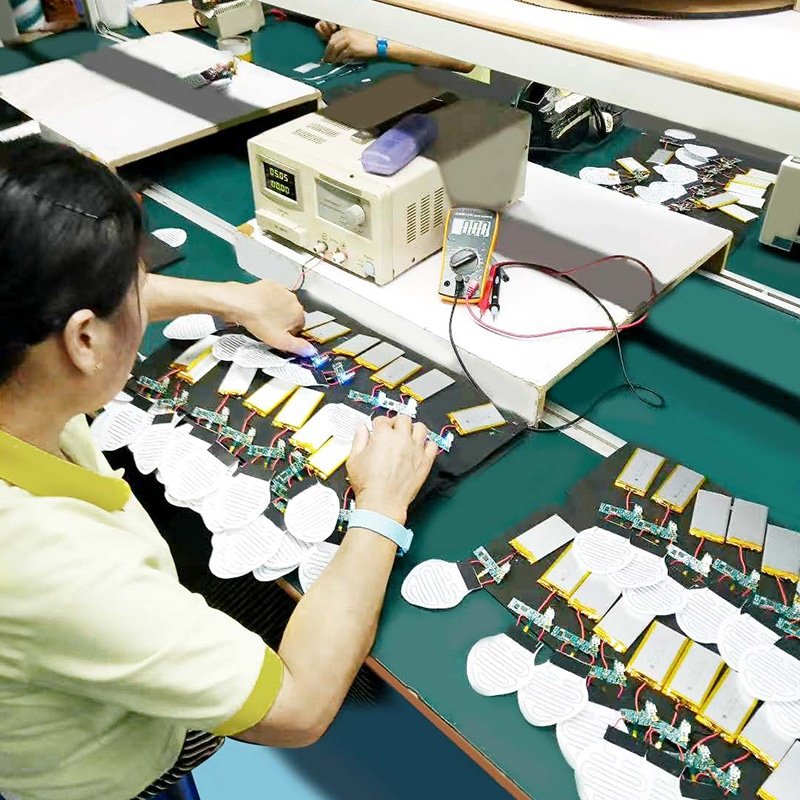
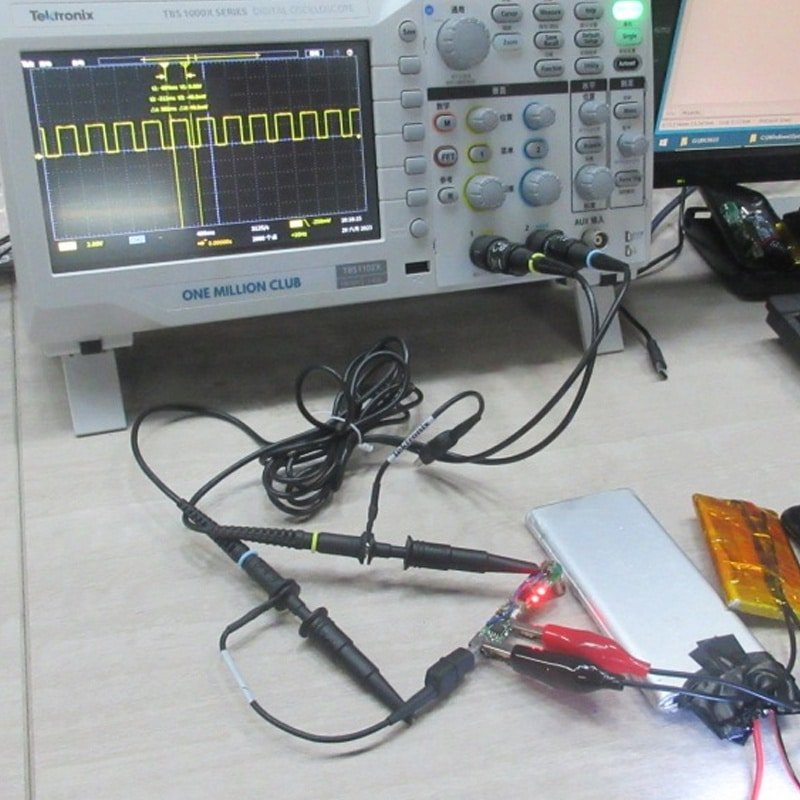
Heated insoles have lithium batteries, heating nearly all carbon fiber or flexible film, controllers, and wiring each with its own supplier minimums and procurement limits. To make the production runs and quality testing justifiable, the battery suppliers tend to impose batch minimums. The heating elements and in particular custom-patterned heating elements can need special material batches, or even set-up fees. Include the modifications to the packaging, inserts related to branding, compliance labeling and the MOQ will soon become greater than many might anticipate of a typical footwear accessory.
The following table depicts the normal effects that the level of customization generally has on MOQ:
| Customization Level | Typical MOQ Impact | Explanation |
| Logo printing only | Lower MOQ | Uses existing structure, minimal setup changes |
| Packaging customization | Moderate increase | Printing setup and custom box/insert production required |
| Battery capacity change | Higher MOQ | New battery batch production and validation needed |
| Heating structure redesign | Highest MOQ | Engineering changes, tooling adjustments, and full component requalification |
When brands are considering private label versions of heated insoles, the further customization (e.g. custom heating zone layouts, application integration, proposed by some software developers) usually raises the MOQ requirement to become economically viable to have the factory produce them.
What Determines the Cost of Private Label Heated Insoles?
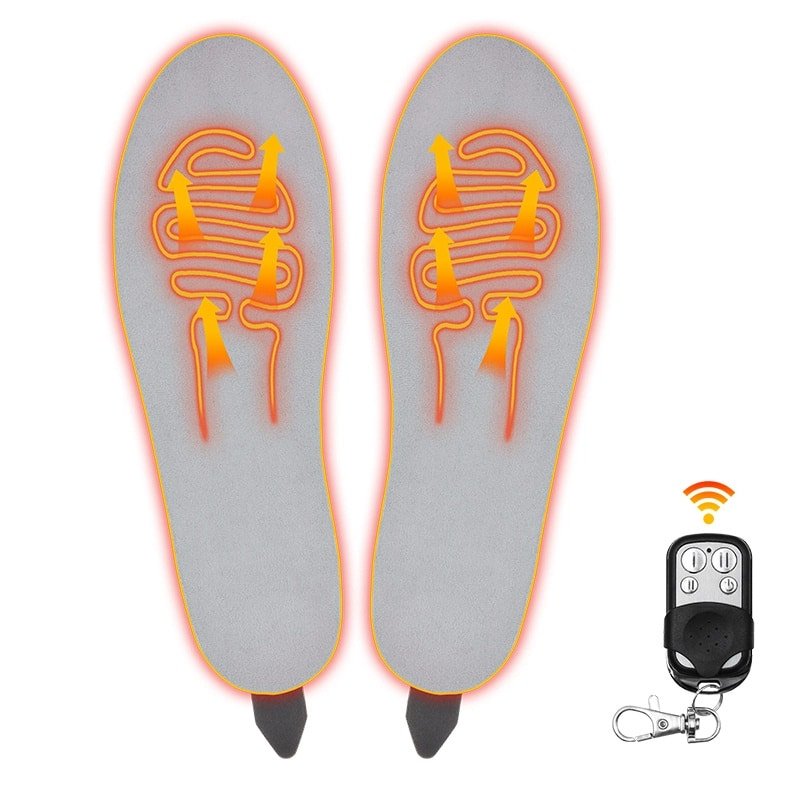
The manufacturing price of a private label heat insoles will be influenced by the technical characteristics of the heating system and not only by its volume or brand. As opposed to passive insoles, heated versions also have the active components, which have to work under the pressure, temperature and moisture exposure.
Key cost components include:
| Cost Component | Cost Influence Level | Notes |
| Heating element | High | Direct impact on performance; carbon fiber vs. heating film choices affect material and durability |
| Lithium battery | High | Safety & lifespan determinant; higher capacity or advanced protection circuits raise costs |
| Controller system | Medium to High | Button-only is simpler; remote or app-enabled integration increases electronics complexity |
| Insole material quality | Medium | Premium EVA, memory foam, or moisture-wicking fabrics improve comfort and longevity |
| Certification testing | Variable | Required for EU/US markets (CE, RoHS, FCC, UL); lab fees and iterations add expense |
Premium models e.g. multi-zone heating, Bluetooth app-controlled, or more durable battery protection to extreme conditions are naturally priced more, because of quality of components used, time of engineering, and the mandatory process of safety certification. Vertical integration (in-house assembly of batteries, manufacture of heating films) sometimes allows factories to overcome some of these pressure, but major markets cannot compromise on compliance demands.
Lead Time Breakdown: Sampling vs Mass Production
Depending on whether the insulated product is founded on an existing ODM platform or needs to be developed as an OEM, lead time on products based on private label and required insulating insoles will greatly differ. The delays caused by electronic components and safety testing are rarely experienced by passive products.
Common of timeline spans:
| Stage | Estimated Time Range | Key Variables |
| Sample development | 7–20 days | Customization complexity |
| Testing & validation | 5–15 days | Safety compliance, battery aging, endurance tests |
| Mass production | 20–35 days | Order volume, production line scheduling |
| Packaging & final QC | 3–7 days | Packaging type, custom labeling |
The most variable are usually battery aging and endurance tests – these tests are necessary to ensure reliability and paramount performance over time but cannot be done in a hurry. There are also seasonal demand peaks (before winter), which may further push mass production scheduling since most manufacturers may have permanent customers or work at close capacity during high season months. It is necessary to plan with realistic buffers to prevent the problem of stockouts when the demand is high.
OEM vs ODM Impact on MOQ and Timeline
In deciding whether to choose ODM or OEM, the basic impact on the lead time and MOQ in a case of project in the private label of the heated insoles is inevitable.
ODM (Original Design Manufacturer) takes advantage of ready-to-use heating platforms, already developed molds, and approved parts. This shortens the development time, lowers initial engineering expenses and on many occasions permits a more versatile (smaller) MOQ since the factory does not need to make huge investments. It is appropriate to brands that have faster entry to the market and could be reliable.
OEM (Original Equipment Manufacturer) is more differentiated – personal heating patterns, special location of batteries, special controllers, but it needs new tools, new circuit design, and more testing. This adds MOQ (to spread the cost of setting up) and adds to timelines dramatically by many weeks or months.
It is obvious that the trade-off lies in the fact that ODM is more interested in speed and cost efficiency; OEM is more interested in brand uniqueness but requires more patience and budget.
Hidden Factors That Many Buyers Overlook
Even the long-time sourcer overlooks some of the back-of-the-scene factors that cost and schedule private label heated insoles.
- Battery aging test time – Monthly cycles required to check on long term stability and safety in a real usage.
- Compliance document preparation – The collection and translation of test reports, DoC documentation, and material declarations to reach compliance either CE, FCC, RoHS, or UL can take weeks of time to complete should revisions be required.
- Coordination of the packaging suppliers – Custom boxes, inserts or blister packs are usually sourced in different vendors, and their delivery creates dependencies on the schedule.
- Chinese New Year and several national holidays cause a lapse in production of products that stops production for 2-4 weeks; timelines would be affected unless this is affected by early order placement.
- The threat of rework caused by unclear specifications – even vague requirements (e.g., temperature curve tolerances, remote range expectations) may often mean a revision of the sample and cost increase (timewise).
Overall these initial concerns can be addressed beforehand by extensive spec sheets and proper communication which reduces unexpected surprises.
How to Plan a Private Label Heated Insoles Launch Realistically
More realistic launch planning of own label heated insoles begins with backward scheduling based on the desired intended sales season, typically late fall or early winter in the case of cold weather apparel.
Starting with must-have features (heating duration, type of control, certifications) and reasonable trade-offs. Buffer Requirement: a minimum of 4 weeks to test and validate the product and also, 4 weeks to 8 weeks to produce and ship the finished product. First orders must be conservative in order to minimize exposure – most brands begin with the moderate volume to test market response and then grow.
Consider seasonal risks: order early enough before peak demand so as to have capacity. Keep in communication with the factory about the possible bottlenecks (supplies of batteries, the availability of testing laboratories) in order to make changes in advance.
Conclusion — In Private Label Manufacturing, Complexity Defines Cost and Time
Realistic expectations form the basis of successful projects involving the use of the strategic private label insoles. Knowledge of the effect of customization level on MOQ, cost and lead time can enable brands to develop product lines that are scaleable and can satisfy compliance without timelines that come as a surprise. Pairs of specifications and manufacturing realities the sourcing of components to safety verification means that companies will be well placed in future launches and robust long-term relationships with the reliable and factories.