

When designed to maintain the protection of the lithium batteries in a proper design circuit, temperature regulation and structured production testing, heated insoles are usually safe. With such low voltage DC operated devices, electrical hazards are greatly minimized as opposed to higher electrically operated gadgets. Certain customers have the concern that any product that has a battery poses a natural fire or burn risk. As a matter of fact, certified lithium battery systems have a series of layered protection to control risks.
It is not marketing claims themselves that make heated insoles safe though the choice to heat the insoles correctly, with high precision in temperature and a disciplined manufacturing validation is what makes them safe. Quality products put emphasis on these factors to provide the same amount of warmth without undermining the security of the user.
How Lithium Battery Protection Systems Prevent Hazards
The protection systems of lithium batteries are well developed to create the basis of heated insole security as it is an active means to monitor and control the electrical parameters to avoid critical situations.
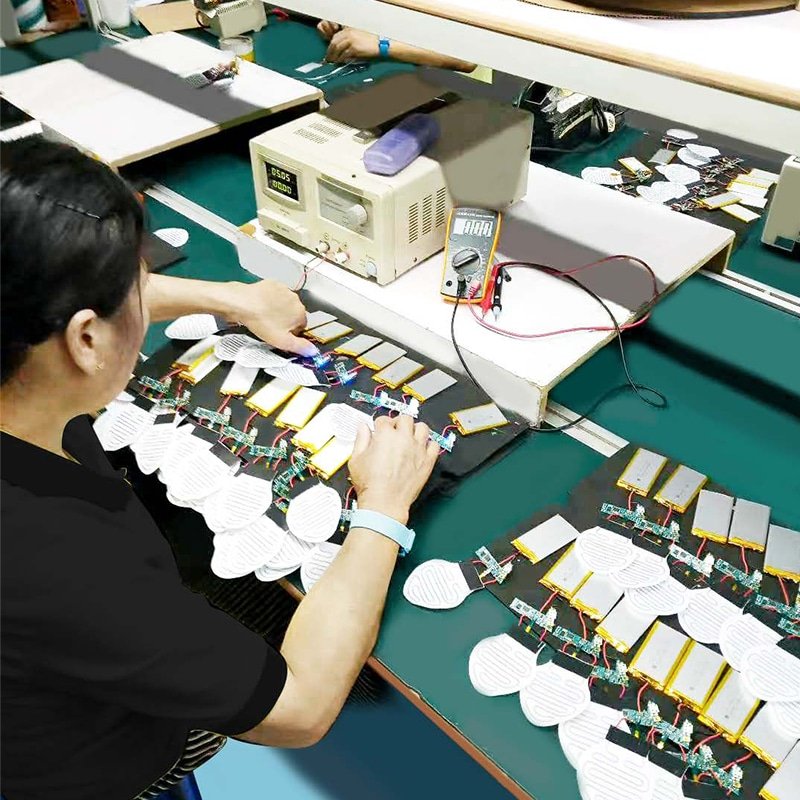
The rechargeable heated insoles of today are based on the use of lithium-ion batteries, including integrated protection circuits (often referred to as PCB or BMS – Battery Management System). The circuits are constantly checking voltage, current and temperature.
The important protection features are:
- Overcharge protection – stops charging when the battery reaches its safe maximum voltage, preventing too much energy to be added to the battery that may cause swelling or thermal instability.
- Over-discharge protection – prevents the power intake when voltage decreases too much, preventing any damages that might weaken the integrity of the cell in the future.
- Short-circuit prevention – This is used to detect high current surges and will automatically cut the circuit to stop the flow.
- Overcurrent limiting – limits current, during operation, or faults, to safe levels.
- Thermal monitoring inbuilt sensors monitor battery temperature, and initiate a shutdown in case of exceeding thresholds.
The mechanisms collaborate to eliminate typical lithium-ion hazards.
| Protection Feature | Function | Risk Prevented |
| Overcharge cutoff | Stops charging at safe level | Battery swelling, thermal runaway |
| Overcurrent limiter | Regulates electrical flow | Circuit damage, excessive heat |
| Short-circuit protection | Automatic shut-off | Fire risk, sparks |
| Thermal sensor | Monitors temperature | Burns, overheating |
For those developing or sourcing products, incorporating robust protection in safe custom heated insoles design is essential to achieving reliable performance and compliance.
Temperature Control Systems and Overheat Prevention
Developed thermal systems make sure that heated insoles are not too hot to touch but provide warmth without burning the users.
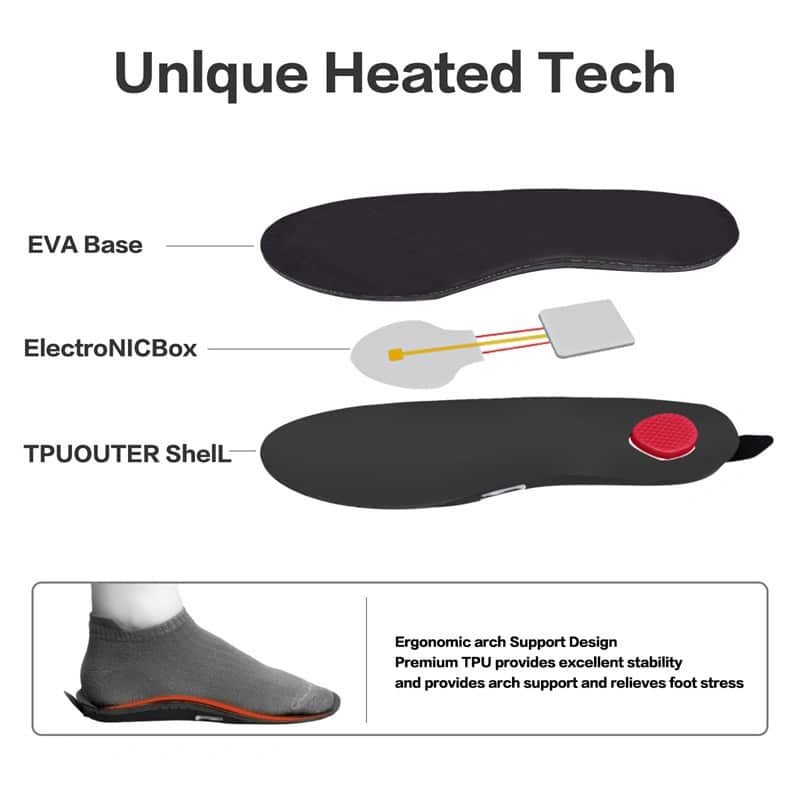
Quality heated insoles also have multi-level controls (usually low, medium, high) of heat controlled by accurate controllers. Internal temperature sensors built-in Built-in temperature sensors may be NTC thermistors mounted close to sources of heat and give real time feedback to the control circuit.
The sensor can automatically switch-off or cut down power when it detects that the temperature is approaching a set limit. Automatic timers (e.g. 30-60 minutes/session) are also in many designs to avoid prolonged continuous heating.
There is a major difference between the maximum possible heat and regulated heat: although a particular insole may be able to function at a higher heat range, good engineering will limit the output to reasonable, comfortable levels, with feedback mechanisms and constant voltage supply. This would stop hot spots and would evenly distribute heat throughout the foot.
Low Voltage Operation and Electrical Safety
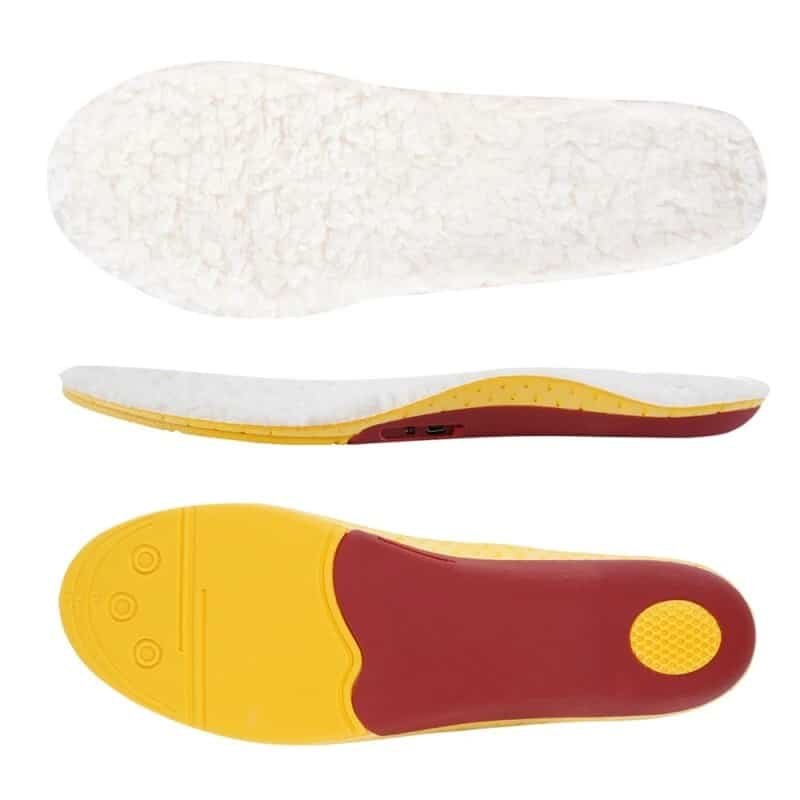
Insoles that heat up run on low-voltage DC, which in turn reduces the risks of electrical hazards as compared to the AC or high-voltage systems.
The rechargeable heated insoles mostly utilize low world voltage such as 7.4V or so. In such amounts, direct current (DC) may not cause significant shock even when touching the skin or water.
Other protection mechanisms include:
- Layers that surround heating wires or films are insulated.
- Mechanical insulation between wiring and direct foot contact.
- Close battery enclosures which isolate parts to sweat or pressure.
A combination of these design decisions reduces the possibility of electrical faults being converted into user injury to a minimum.
Manufacturing Testing That Validates Safety
Strict testing of manufacturing ensures that safety aspects work under the field conditions, and not only by their initial design.
Verified manufacturers have a set of validation testings on heated insoles:
- Battery aging tests make long-term charge/discharge cycles to check long-term stability with more than hundreds of uses.
- Flexibility stress tests mimic walking and bending to guarantee one the wires and connections are not strained by mechanical forces.
- Heat distribution test maps the temperature of the insole surface and removes the hot spots.
- Continuous heating endurance testsines are tests which are used to test devices at long times to ensure that protection circuits work.
| Test Type | Purpose | Safety Benefit |
| Aging test | Long-term battery reliability | Prevent early failure |
| Flex bending test | Simulate walking stress | Prevent wire damage or breaks |
| Heat uniformity test | Avoid hot spots | Comfort and burn prevention |
| Protection validation | Confirm PCB function | Overall electrical safety |
The protocols assist in spotting the weak areas prior to the market release of products.
Certification and Compliance Standards
Certifications offer third party confirmation that the insoles being heated are of a specified safety standard, but they are only an addition, not a replacement, to good engineering practices.
Common standards include:
- CE certification- ensures that the standards of the European health, safety and environmental standards are met.
- RoHS compliance – limits the hazardous materials in the electrical components.
- FCC compliance – takes care of wireless controllers electromagnetic interference.
- UN38.3 battery transport testing — verifies safe shipping of lithium batteries by imitating the altitude, vibration, shock and various extreme temperatures.
These marks are indicative of meeting minimum requirements, but the actual safeguarding is the essence of the design and test performance.
Common Safety Myths About Heated Insoles
There have been a number of misunderstandings regarding the risks of heated insole, mostly based on the news of flawed products.
- All heated insoles are very easy to overheat, based on this fact, unfortunately, not true of properly engineered models; good temperature controls and sensors can keep safe temperatures. The problem normally comes with poor protection circuit of inferior units.
- Higher temperature equals better performance — Too much heat does not extend or enhance effectiveness of warmth; it raises the threat and no usefulness. Monitored, middle ground levels are the most comfortable.
- Any lithium battery is dangerous Lithium-ion cells should be installed with protection circuits, their risks arise only when safety mechanisms are insufficient or when the manufacture is faulty.
- app control: safer by default Safeguarding: It is safer by default, but not necessarily safer than properly designed hardware monitoring and fail-safes, unless combined with app integration.
These differences will allow distinguishing between fact and hyperbole.
Who Should Avoid Heated Insoles?
There are people who ought to take care or not use hot insoles to avoid any complications.
Individuals with diabetes, peripheral neuropathy, and other factors that could limit their ability to sense heat could not realize excess heat early enough, increasing the risk of burns. Individuals who have poor circulation or sensitive skin would also experience problems.
The use of heated footwear should be considered by a medical professional or any person with a medical concern. These are general cold weather comfort products but not therapeutic.
Conclusion — Safety Depends on Engineering Discipline
Heated insoles are not dangerous provided they are developed with relevant battery protection circuits, thermal sensors, and rigorous manufacturing tests. Safety is not a feature but rather the outcome of organized engineering, strict tests, and control of quality in the course of production.
With these areas addressed as the most important aspects instead of hollow rhetoric, manufacturers and users can be assured that heated insoles will have a heating benefit in icy conditions with minimal risk of injury. Always choose those products that are supported by transparent engineering standards and other pertinent certifications.