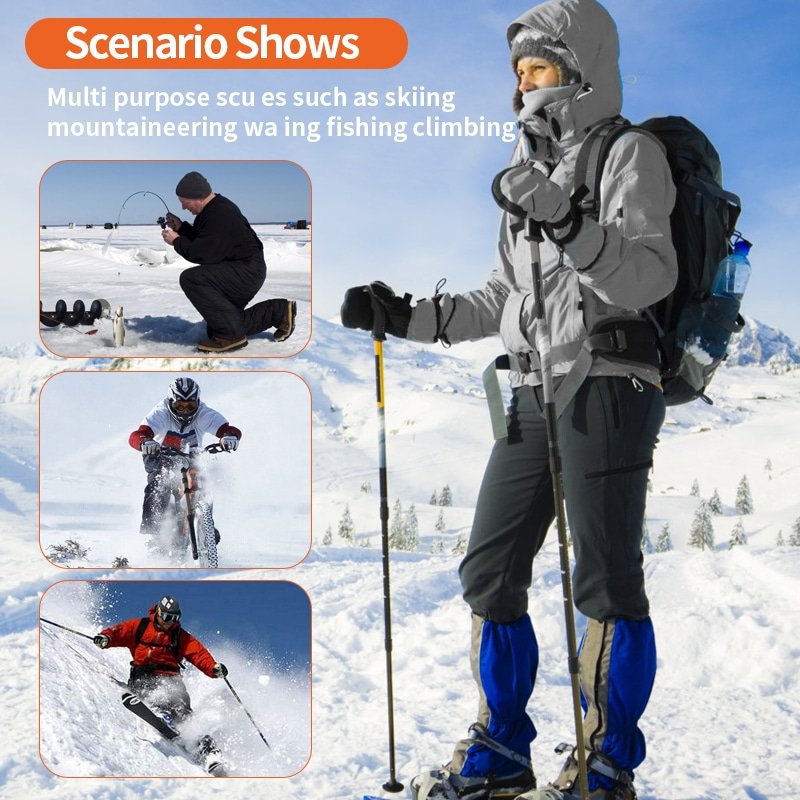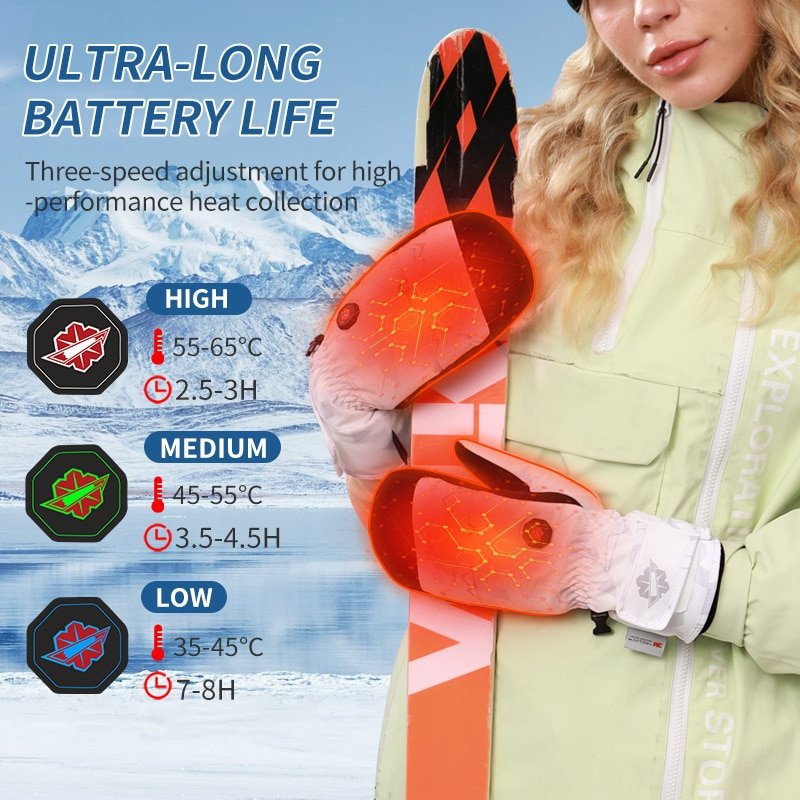

The winter sports such as skiing and snowboarding subject the feet to temperatures that are below 0 degrees, extended periods of activity, and extreme physical workloads in stiff boots. Freezing performance reduces dramatically, and intermittent heat may result in discomfort or loss of operating time. It is believed that higher maximum temperature settings provide better performance, but the problem is that overheating will ensure faster battery consumption and will make the user colder in the middle of the day.
The optimal heated insoles in skiing and winter sports have combined balanced distribution of heat, cold resistance battery operation, strong construction, and the stability of temperature regulation instead of emphasizing the high heat output only. Such an engineering solution is very balanced to enable warmness during long periods of time on the slopes.
Why Winter Sports Require Specialized Heated Insoles
Winter sports require heating insoles that are designed to be used in severe conditions, and the general designs cannot withstand them.
Both skiing and snowboarding practice in sub-zero temperatures typically ranging in -5 C to -20 C or colder with high durability of 4- 8 hours or more per day. Snow, ice and moisture are ever present and the flexing and compression that occur regularly in ski boots exert constant pressure on the insole structure. Commercialized insoles intended to be used in the winter, but not in the winter in a serious manner, do not have the durability to withstand such requirements, resulting in uneven heating, early breakdown or protecting against a safety hazard.
The specialized designs are designed with consideration to thermal stability, mechanical life and environmental sealing to ensure that the feet are comfortable and still perform without interfering with the boots fit or the control of the skiers.
Heating Technology Matters in Cold Environments
Technology in extreme cold heating emphasizes on the continuous supply and not the intensity of the heat.
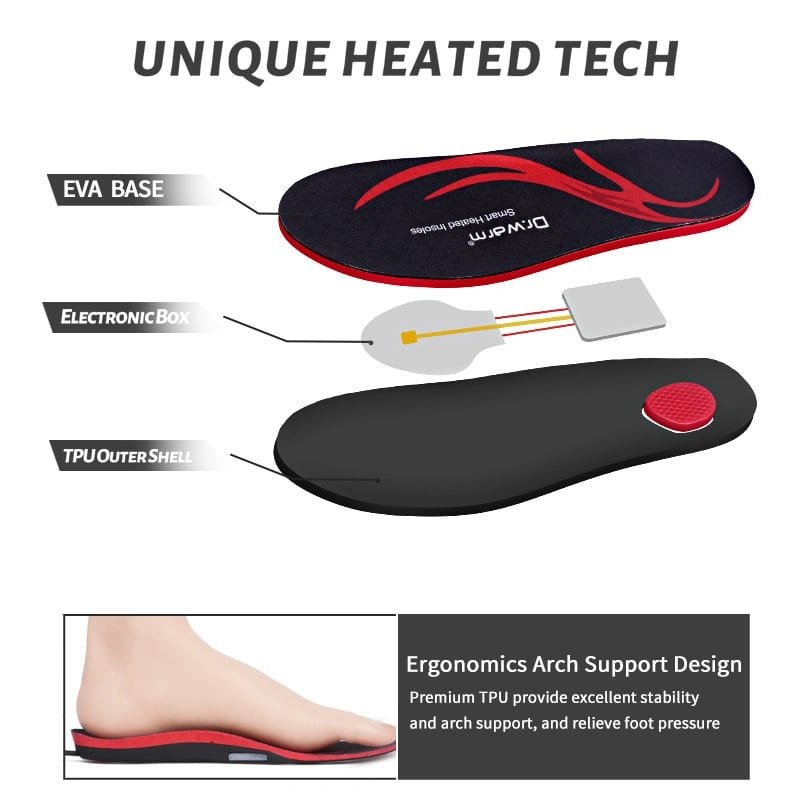
The heating elements made of carbon fiber have unique benefits on winter sports heated insoles. Carbon fiber is able to evenly distribute heat to the forefoot and toes unlike other traditional wire systems where there are cold spots that result in discomfort when turning or in long runs. This material is flex fatigue resistant, which ensures performance on thousands of cycles of boot flexion.
The uniformity of the heat keeps off the localized overheating, and the whole area of contact remains warm. It is also beneficial to efficient power consumption, which also increases usable runtime at low temperatures.
The following is a rough comparison of some of the major heating features:
| Heating Feature | Why It Matters in Winter Sports |
| Even distribution | Prevents cold spots during dynamic movement |
| Stable output | Avoids sudden temperature drops mid-run |
| Flex durability | Withstands constant ski boot pressure and motion |
| Efficient power use | Extends battery life in freezing conditions |
In the case of brands that produce heated insoles under winter sports brands, the advanced heating components such as carbon fiber allow more customization to the particular type of boots and user requirements.Learn more about tailored solutions at heated insoles for winter sports brands.
Battery Performance in Freezing Temperatures
Integration of cold-resistant batteries draws the line between a reliable winter sports insoles and insoles that fail miserably on the mountain.
At temperatures below zero, lithium batteries suffer loss of efficiency because of sluggish chemical reactions which decrease available capacity and discharge rates. Inadequate design can cause the run time to reduce significantly, by 3050 per cent below 0.
The battery is surrounded with insulations to sustain internal temperatures, and lithium cells are optimized to be cold so that they can be used to discharge at low temperatures. Capacity planning should also consider practical use: a greater milliamp-hour rating is a margin, but only when this is accompanied with an efficient heating element.
| Temperature Condition | Battery Performance Impact |
| Mild cold (0–5°C) | Slight efficiency drop |
| Moderate cold (-5–0°C) | Reduced runtime |
| Extreme cold (-10°C and below) | Significant capacity reduction |
To provide dependable power supply during a day in the resort or backcountry setting, rechargeable heated insoles used in skiing have to include these safeguards.
Durability and Structural Stability Under Ski Boot Pressure
Ski boot heated insoles cannot compromise on structural integrity when they are subjected to repeated compressive and shear forces.
Consistent flexing on turns, landings, edge control strains the wiring, heating elements and bonding layers. The bad designs result in the failure of the connection or delamination of the component in the course of little usage.
The conductors are shielded against pinching by reinforced wire routing, and bond the stability of bonding by high strength adhesives and by layered-up construction. In critical areas, shock absorbing materials, like hardpack or moguls, are absorbed in impact-resistant materials to maintain long-term functionality.
Developed strength Altering the insole to provide the desired shape and performance after hundreds of hours in the demanding boots proves this robustness.
Moisture Resistance and Insulation Considerations
The presence of snow and sweat brings in the issue of moisture management and electrical safety.
In serious activity, insoles are exposed to the invasion of snow and internal sweat in ski boots. Waterproof layering is a process that keeps the water off the electrical parts, minimizing the chances of short circuiting.
Proper sweat control pushes the moisture off of heating components and sound electrical insulation prevents corrosion or fault. These characteristics ensure stable performance and safety of the user in the wet and cold conditions.
Control Systems Suitable for Winter Sports
Pragmatic access to control does not interfere with the performance.
The button controls located in the inside of the boot enable the quick adjustments but in some instances they necessitate the removal of the glove. Remote controls are convenient as the skiers do not need to stop to make any changes. The systems with Bluetooth features are accurate with the application, but the glove fit and the efficiency of the touchscreen in cold conditions are not the same.
There is no universal rule as to which system is better than the rest, it will depend on the type of boots designed, preference and the type of activity. Trustworthy controls emphasize the feel and ease of gloved hands.
Common Mistakes When Choosing Heated Insoles for Skiing
It is possible to prevent such pitfalls to make sourcing managers and brands choose more efficient solutions.
- Maximum temperature over stability: High peak heat tends to compromise routine and stability.
- Assuming the battery cold resistance is ignored – Standard lithium cells will die early at freezing unless designed specifically.
- Ignoring flex strength – Thin or loosely made insoles break or become cold to the pressure of the boot.
- Decision making on the basis of the thinness alone- Ultra-slim profiles can affect the insulation, battery placement, or structural strength.
The emphasis on balanced engineering will avoid shortages in performance in the field of real-world winter sports application.
Conclusion — Performance in Winter Sports Requires Balanced Engineering
Skiing and winter sports are the best applications of heated insoles that are designed to give uniform performance in the freezing conditions. The forefoot heat stability, cold-resistant battery integration, and flex and pressure structural durability are much more than peak temperature claims.
The brands, distributors, and product developers of winter sports can gain advantages of assessing interrelated factors: dependable warmth, prolonged work time and resilience. This has brought about insoles that can keep the athletes comfortable and perform well in snow over a whole day, not in brief bursts of heat.