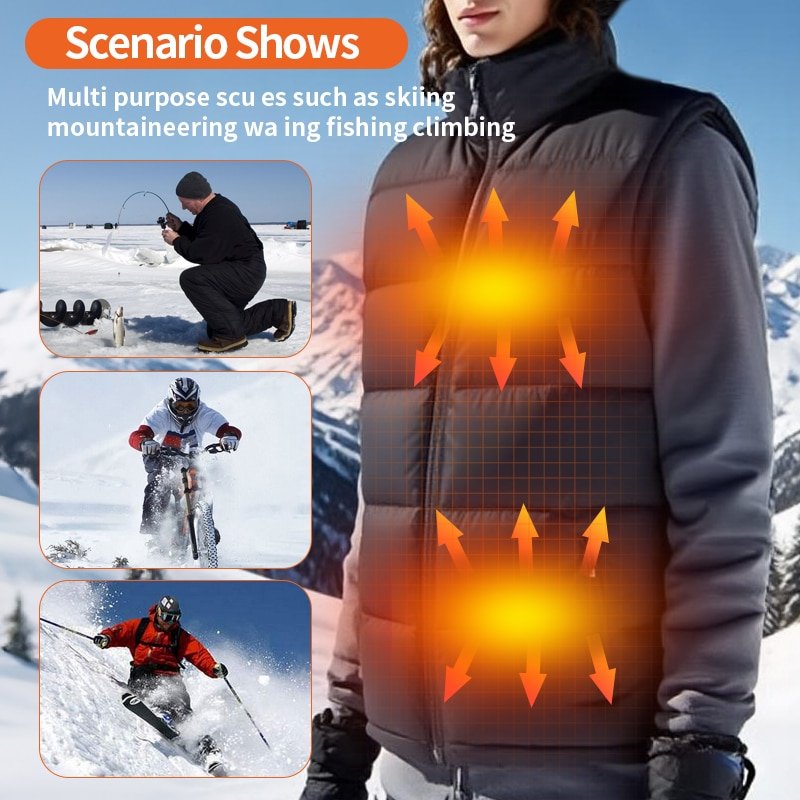

Custom heated insoles are integrated electronic products that combine footwear comfort with active heating technology. Production quality directly impacts user safety, long-term durability, and regulatory compliance. A visually appealing pre-production sample often masks underlying issues in mass production, such as inconsistent battery performance or heating failures.
Many buyers mistakenly believe that approving a pre-production sample guarantees consistent bulk quality. In reality, production process control determines final stability. True quality in custom heated insoles production is validated through structured engineering tests, battery safety verification, process control systems, and consistent manufacturing discipline — not just reviewing finished samples.
Evaluating quality in custom heated insoles production requires assessing engineering validation, battery safety integration, process stability, and structured quality control systems — not just reviewing finished samples.
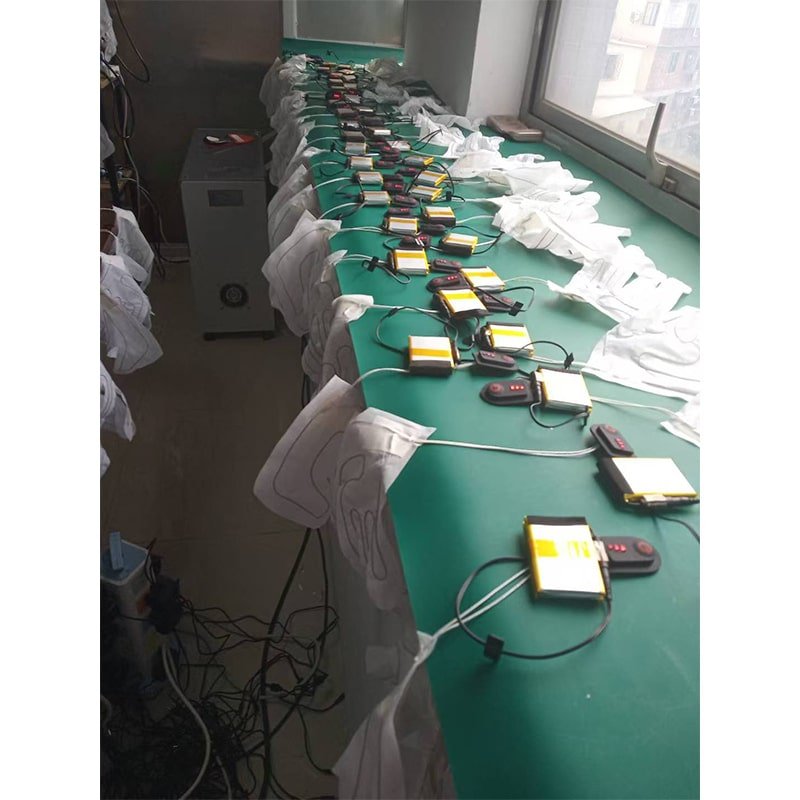
Step 1 — Evaluate Battery Safety and Integration
Battery safety must be the first priority when evaluating custom heated insoles production quality, as lithium-ion cells in footwear face unique risks from compression, flexing, and environmental exposure.
Heated insoles typically use rechargeable lithium-ion batteries embedded or removable, requiring robust protection against overcharge, over-discharge, short-circuit, and thermal runaway. Without proper integration, these risks can lead to overheating, fire, or explosion — even when the product is off.
Key validation steps include reviewing the protection circuit module (PCM or PCB) for proper implementation, confirming overcharge/overcurrent protection functions, and verifying thermal monitoring (e.g., NTC sensors) to prevent excessive heat buildup.
Cycle life and aging tests simulate real-world use, such as repeated charge-discharge under foot pressure. Connector durability testing ensures secure connections withstand walking motion without loosening or arcing.
| Battery Quality Check | Why It Matters |
| Protection PCB test | Prevent overheating and short-circuit risks |
| Charge/discharge cycles | Validate lifespan and capacity retention |
| Thermal stability test | Prevent burn risk and thermal runaway |
| Connector durability | Ensure safe, reliable electrical connection |
For deeper insight into production systems, refer to quality control in custom heated insoles practices that emphasize these checkpoints.

Step 2 — Verify Heating Element Performance
Heating element reliability determines whether the insole delivers consistent warmth without creating hot spots or failing prematurely.
In heated insoles manufacturing validation, the element (often carbon fiber, wire, or film) must provide even heat distribution across the foot, particularly the forefoot and toes where cold is felt most. Poor distribution leads to discomfort or localized overheating.
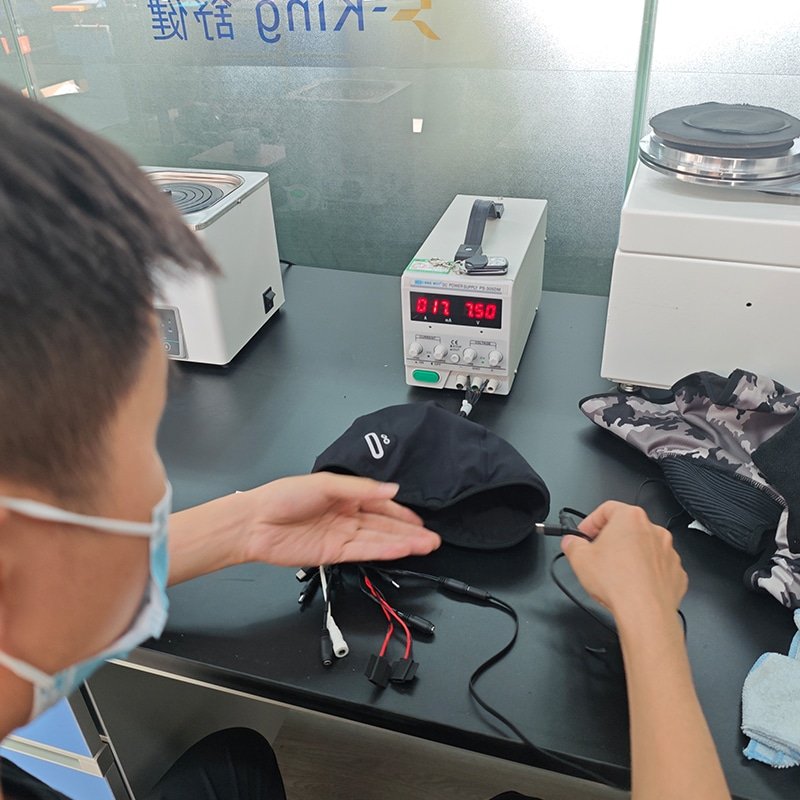
Resistance calibration ensures stable power output across temperature settings. Flex stress testing replicates thousands of walking cycles to check for breakage or degradation. Hot spot detection uses thermal imaging during operation to identify uneven areas that could cause burns or inefficiency.
Continuous heating endurance tests run the element at max settings for extended periods to confirm no degradation or failure.
| Heating Test | Purpose |
| Heat uniformity check | Avoid cold or hot zones |
| Resistance validation | Stable output across settings |
| Flex cycle test | Prevent wire breakage during movement |
| Continuous heating test | Endurance reliability under prolonged use |
These tests help OEM heated insoles inspection teams confirm performance matches specifications.
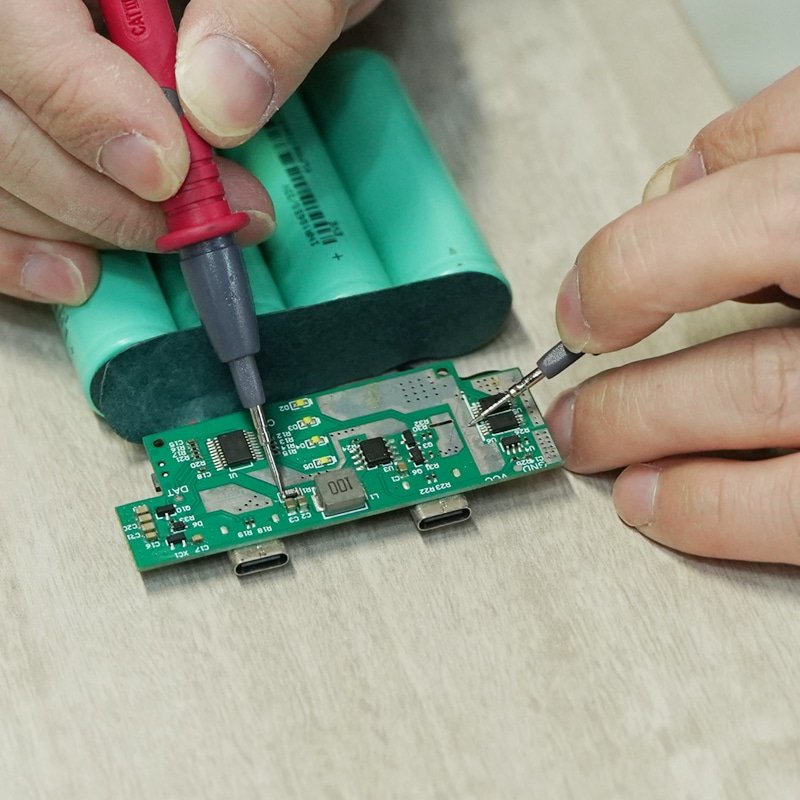
Step 3 — Assess Structural Durability
Structural integrity ensures the insole withstands daily wear without delaminating, compressing excessively, or allowing moisture ingress that could compromise electronics.
Lamination bonding strength testing measures adhesion between layers (e.g., heating element, foam, fabric) under shear and peel forces. Compression resistance simulates body weight and repeated pressure — critical since insoles endure hundreds of pounds per step.
Anti-slip base material evaluation checks grip on shoe interiors to prevent shifting. Moisture resistance testing exposes samples to humidity or sweat simulation, verifying seals protect circuits from corrosion.
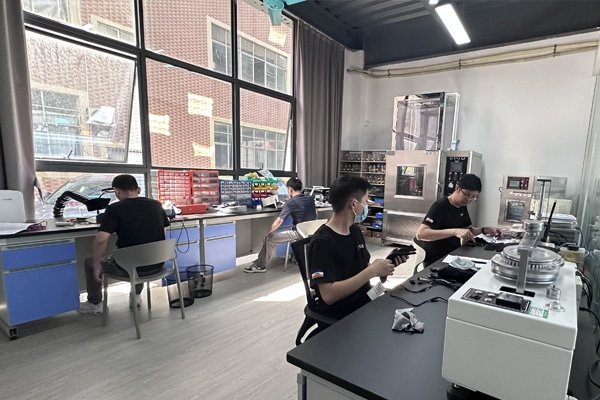
Real-world simulation, such as walk-in environmental chambers or accelerated aging, reveals weaknesses that static samples hide.
Step 4 — Review Production Process Control
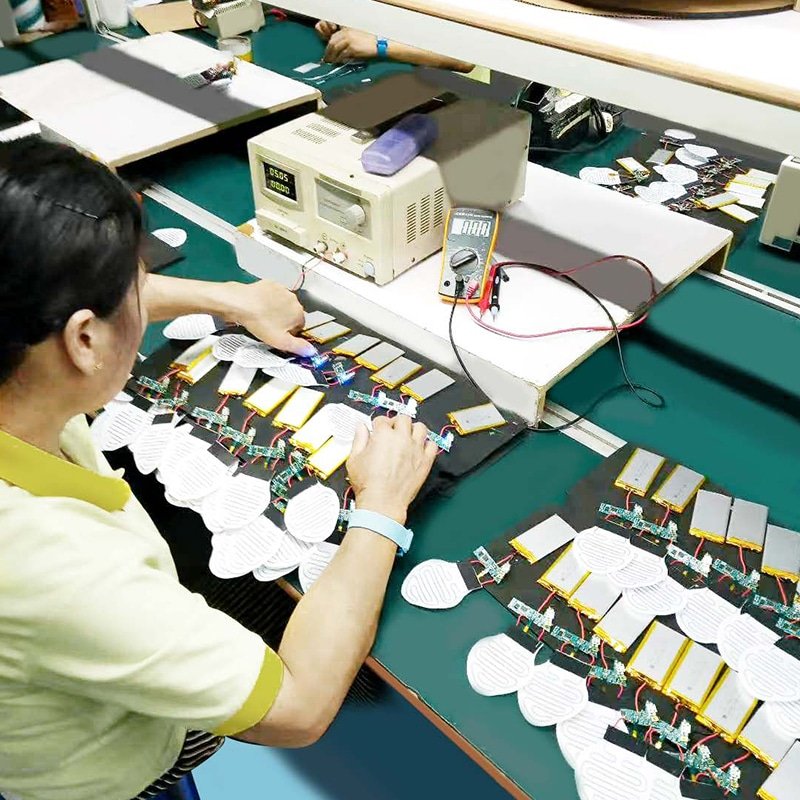
Consistent heated insoles quality control depends on disciplined manufacturing processes rather than sporadic checks.
Standard Operating Procedures (SOPs) must document every step, from material preparation to final assembly. In-line quality inspections catch defects during production, such as misaligned heating elements or poor soldering.
Batch traceability systems link components to finished goods for quick identification in case of issues. Sampling methodology follows AQL standards to balance inspection rigor with production efficiency.
| Process Control Element | Risk Mitigated |
| Incoming material inspection | Component defect risk |
| In-line QC checks | Assembly errors |
| Final product inspection | Functional failure |
| Batch traceability | Recall control and root cause analysis |
Strong process control minimizes variation and supports reliable OEM heated insoles inspection outcomes.
Step 5 — Confirm Compliance and Documentation
Regulatory compliance provides objective evidence that the product meets international safety and transport standards.
Request CE (for electrical safety), FCC (electromagnetic compatibility), RoHS (hazardous substances), and UKCA documentation. For lithium batteries, UN38.3 certification is essential — it verifies safe transport through tests like altitude simulation, thermal cycling, vibration, shock, and forced discharge.
Battery-specific reports (e.g., pack-level safety reports for secondary cells) and material compliance declarations complete the technical file. Missing or incomplete documentation signals potential gaps in battery safety testing heated insoles.
Step 6 — Evaluate Mass Production Consistency
Scalability reveals whether a supplier can maintain quality beyond prototypes.
Assess automation levels for critical steps like heating element placement or battery integration — manual processes increase variability. Component sourcing stability ensures consistent suppliers for batteries and fabrics.
Review performance of previous repeat orders: track field failure rates, return data, or warranty claims. Consistent output across batches demonstrates manufacturing discipline.
Red Flags in Heated Insole Manufacturing
Watch for these indicators of potential quality risks:
- No battery aging validation or cycle testing data
- Missing or incomplete compliance reports (e.g., no UN38.3 for batteries)
- Inconsistent heating output across samples
- Unstable wiring integration or visible soldering defects
- No detailed process documentation or traceability records
These issues often correlate with higher long-term failure rates or safety incidents.
Conclusion — Quality Is Process-Driven, Not Sample-Driven
Evaluating quality in custom heated insoles production requires systematic review of battery integration, heating element performance, structural durability, and manufacturing process control. Reliable production quality results from disciplined engineering validation and consistent operational oversight rather than appearance-based sample approval alone. By focusing on these checkpoints, brands and sourcing managers can mitigate performance risks, ensure compliance, and achieve dependable results in heated footwear programs.