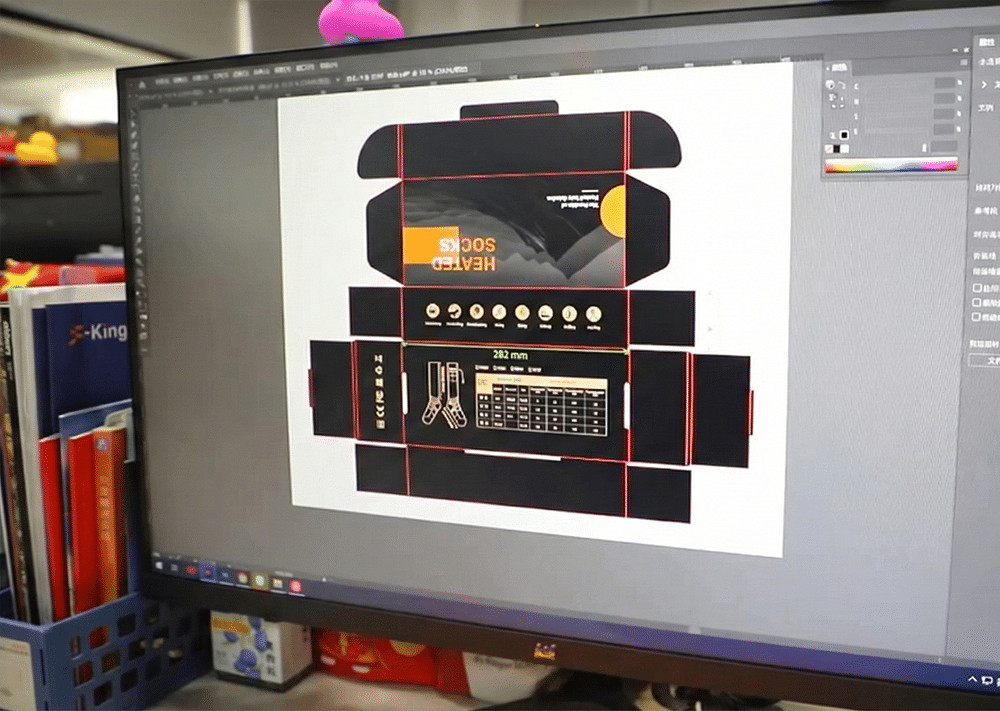

The structure of the packaging design requires a box to be made in a consistent, economical, and at scale. Manufacturing wise, the physical shape of a box, its geometry, fold patterns, supports, and tolerances is the basis of all the other processes that follow in production and performance. Most of the problems that occur in the packaging process during mass production are usually related to the structural decisions made at the initial stages.
One of the biggest myths brand teams have is the idea that the cost and quality results are largely dependent on the choice of materials (board grade or coating). Practically, structure determines the performance of such materials in practice. The consequence of poor structural packaging design is almost always increased cost and low uniformity during mass production. The tooling needs, assembly rate, defect rates and long-term durability depend significantly on structural choices compared to minor material changes.

What Is Structural Packaging Design?
Structural packaging design can be described as the design of the physical appearance of a box such as its size, lines of fold, locking system, and pathways of internal loads. It controls distribution of weight of the package, compression, assembly efficiency and protective of contents in the package when it is handled, shipped and stored.
Structural design defines manufacturability and functionality whereas the graphic design deals with appearance. It is always followed by decisions concerning materials and finishes since the structure will determine the behavior of the latter. A properly designed structure guarantees a sure performance, a bad one introduces issues, which even the quality material and printing method cannot fully overcome.
The main structural aspects and their functional implications are:
| Structural Element | Practical Function |
| Box geometry | Load distribution |
| Fold lines | Assembly efficiency |
| Internal supports | Product stability |
| Tolerance design | Assembly consistency |
All these factors combine to form a package that can be replicated in the same manner.

How Box Structure Influences Production Cost
Box structure directly influences manufacturing expenses by applying to tooling, labor, material consumption and production rate. The complicated geometries may also need special dies, extra setup time, and operator intervention, all of which can add up very quickly at scale.
Much simpler structures, on the other hand, are easier to die-cut, glued, and folded using common equipment. They lower the scrap rates and decrease the necessity of using manual corrections. Slow throughput and increased rework is also an increase in cost when structures disregard the realities of assembly.
Examples of common structural options and cost effects are:
| Structural Choice | Cost Impact |
| Multi-layer construction | Higher labor cost |
| Tight tolerances | Increased rejection rate |
| Excess components | Longer assembly time |
| Unstable structure | Rework and waste |
When the volume of run is high, any improvement in assembly time per unit will mean a lot of additional expense. The simplicity of the structure favors automation and scalability, and makes the per-unit costs predictable.

The Relationship Between Box Structure and Quality Consistency
Mass production requires stable box structure as a quality assurance of repeatability. Boxes work uniformly when it is possible to design boxes to be folded, glued and closed predictably, across thousands or millions of units.
Minor artifacts in the structure, like improper fold lines or insufficient tolerances are magnified in scale-up. Machines operate faster, operators process more, and smaller flaws can manifest themselves in the form of defects such as flaps that have not been aligned, weak points, or fallen walls.
The main variables that can be used to relate structure to quality consistency:
- Structural stability is used to guarantee that all boxes react identically to gluing pressure and folding force.
- Poor load paths result in compression strength variation resulting in random failure during stacking or transit.
- Mismatches between tolerances lead to gaps or overlaps in sealing and appearance.
- The failures in the structure tend to be hidden in the prototype and to be observed when the production volumes reach the level when the process variation is on the rise.
A well designed construction can reduce these risks and it will provide the same level of quality in variable production conditions.
Structural Design for Protection Without Over-Engineering
A good structural packaging design offers the required protection with both economy in material and complexity. Functional strength is achieved by optimized load counts and position-strategic reinforced, as opposed to making more or fatter layers.
Excessive internal supports or excessive heavy geometry (over-engineering) will raise cost, but not have a significant effect on actual performance in the real world. It also decelerates the production and increases the material consumption.
A streamlined architecture is both protective and efficient:
- Installing reinforcing only at local points of concentration of drop, vibration, or compression forces.
- Enhancing strength without additional material with the aid of geometry (angles, ribs, or interlocking features).
- Taking into consideration the real handling and distribution conditions instead of the worst-case assumptions.
For brands seeking balanced solutions, working with experienced manufacturing partners on packaging design solutions ensures protection aligns with production realities. This approach delivers durable packaging without inflating costs through redundant features.
Why Structural Decisions Affect Long-Term Packaging Performance
The structural decisions define the capability of a box to resist in a repetitive process of handling, stacking in the warehouse and cross-docking during the life cycle. A stable design will have integrity by having more than one or two touchpoints, lessening damage and returns.
Buildings whose loading is predictable have fewer corner crushes or buckling sidewalls when subjected to prolonged storage. This homogeneity reduces the number of defects in the long run and promotes a steady brand image.
In the production perspective, disciplined structural design develops packaging with a consistent level of reliability on one batch to another. Gradual quality drift is caused by loose tolerances or untested assumptions which cause more complaints and rework in the field. It has been observed that boxes designed with real-life constraints are the most predictable in both seasons and supply chain changes.
Common Structural Design Mistakes in Packaging
Most packaging issues are based on the preventable structural errors. Such problems tend to be small when they are first sampled but cause a major disturbance when scaled.
Frequent mistakes include:
- Excessively complicated box geometry necessitating special tooling and slows production lines.
- Failure to comply with assembly tolerance, resulting in gluing inconsistency and regular misfeeds.
- The development of structure without regard to automation, which will lead to manual intervention and increase the cost of labor.
- Stiffening structure without exercising actual loading conditions, making unnecessary overbuilt areas that are also costly.
By solving these premature with prototyping and manufacturer feedback, downstream cost overruns and variability in quality is avoided.
Conclusion — Structure Is the Foundation of Cost and Quality
The design of structural packaging is the foundation of cost and quality in production. Brands produce boxes that are manufacturability based, load management and assembly efficient to ensure that the process of producing a box is consistent, efficient and on a large scale. When structure is considered the major instrument as opposed to a supplementary factor, it proves to be the solution to reducing wastage, failures and unforeseen costs and ensuring dependable operations through the packaging lifecycle.