
The product reality, condition of logistic, and manufacturing limitation, rather than just its appearance, determines the right package structure. The right choice of packaging structure achieves equilibrium between the protection of the product, its logistics and its manufacturability. Most of the brands commit the error of choosing structures according to the trend, or even the visual charm, only to learn that they are costing more, causing more damages, and their production is not consistent when they transition to scale.
As a manufacturing point of view, structure is the most important and first decision when making the choice of a package. Selection without consideration of product fit, distribution realities, and assembly practicability practically always results in a rework or increase in cost or budget deficit.
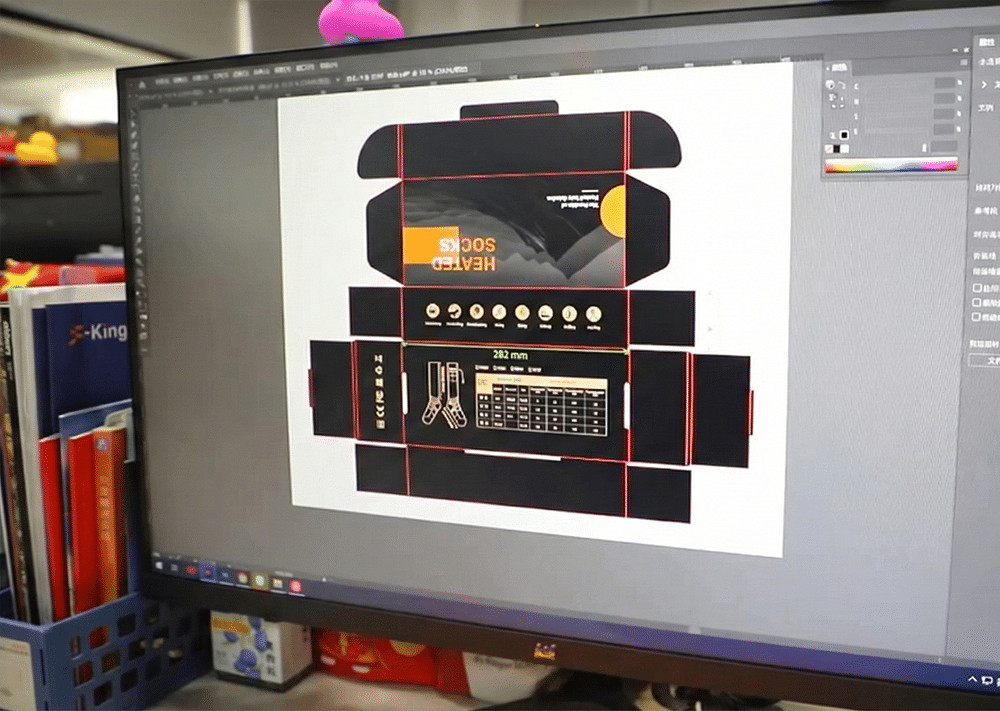
Start With Your Product’s Physical Characteristics
Packaging structure has to be influenced by product characteristics. The geometry, the reinforcements, and internal supports required to protect and be stable are directly dependent upon size, weight, fragility, and shape.
One of the most significant threats of packaging failure is the internal movement. Shifting of products during handling or transit may cause damage to products, box or both. The building should be designed in such a way that the contents are immobilized and can be easily assembled.
Important product aspects, and associated structural implications, are:
| Product Factor | Structural Implication |
| Size and dimensions | Box geometry and fit |
| Weight | Load-bearing strength |
| Fragility | Reinforcement and inserts |
| Shape complexity | Internal support design |
By matching the structure to these factors there is no over or under-design fashion and cost of any structure is in check and maximum protection is achieved.
Match Packaging Structure to Logistics and Distribution Conditions
Packaging structure also has various demands that are imposed by logistics and distribution conditions. Somewhat effective in retail shelf presentation would not in the international freighting or online delivery of goods.
There is multi-handling, dropping, and sorting on conveyors of e-commerce parcels. Retail distribution values stackability and outward appearance. Bulk or long distance shipping needs structures that would not compress and vibrate during a long period.
Popular logistics situations and their structural conditions:
| Logistics Scenario | Structural Requirement |
| E-commerce shipping | Impact resistance |
| Retail distribution | Stackability |
| International freight | Compression strength |
| Warehousing | Dimensional stability |
The existence of structures that disregard these conditions increases the number of claims of damages, returns, and dissatisfaction of the customer.
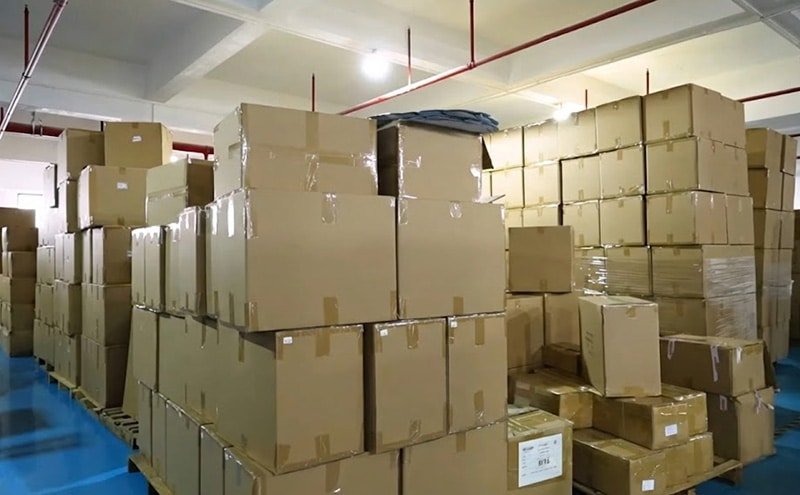
Evaluate Structural Complexity Against Manufacturing Feasibility
The need of protection needs to be determined as well as the feasibility of manufacturing. Complicated structures – though possible to provide superior aesthetics or apparent high-quality feel – cause work, tooling, and variability risks, which add to cost and decrease repeatability.
Strausses are simpler and well-engineered, enabling increased speed in die-cutting, gluing and folding on commercial equipment. They reduce set up time, scrap rates and operator biases.
The main factors to be considered during evaluation of complexity:
- It can be seen that complex fold patterns and multiple components raise the assembly time and labor cost.
- Strict tolerances increase rejection as a result of small changes in material or machine performance.
- Structures that need to be done by hand reduce the potential of automation and scaling.
- The initial feasibility tests avoid expensive redesigns when tooling is made.
Packaging structure options that are manufacturing friendly provide consistency when used at large scale, and do not compromise required protection.
Common Packaging Structure Types and Their Use Cases
Learning about types of common structures enables their association with real product and logistics requirements. They are both types with advantages and disadvantages in terms of use.
| Structure Type | Typical Use Case |
| Folding cartons | Lightweight products |
| Rigid boxes | Premium or fragile items |
| Drawer boxes | Presentation-focused products |
| Reinforced corrugated | Heavy or bulk items |
For brands seeking to align structure with both protection and production realities, packaging structure design services offered by established production partners can offer viable appraisals and prototypes representing the real constraints of production.

Why the Right Structure Reduces Cost and Improves Quality
They are optimized packaging construction which also reduces the total cost of ownership. Properly framed structures minimise the amount of waste of material as there are no additional reinforcements or excessively large dimensions. They do not over-pack, but give sufficient protection.
Product-specific structures and stable reduce overheads in defect rates and claims of products in the offing because movement causes harm on the products. Mass production uses the repeatable structures to achieve the same quality in a batch of production, minimizing variability that can manifest itself only upon scale.
It has been proved that constructions made with the consideration of manufacturing and logistics provide long-lasting consistency, reduced the number of complaints in the field, and gained control of direct and indirect expenses.
Common Mistakes When Choosing Packaging Structures
Most packaging issues are because of the errors that can be avoided in terms of choice of structure. During prototyping, such errors may seem cost neutral but are very problematic at scale.
Frequent mistakes include:
- Selection of the structure on appearance without paying attention to the product fit and logistics requirements.
- Disregard of logistics and processing conditions, resulting in an increase in the rate of more damage in practice distribution.
- The excessive reinforcement of the job through over-engineering that increases the cost of materials and labor.
- Recalculated assembly and labor cost, and got low production speed and rejection.
Earlier countermeasures by way of formulated evaluation can save downstream redoing and cost.
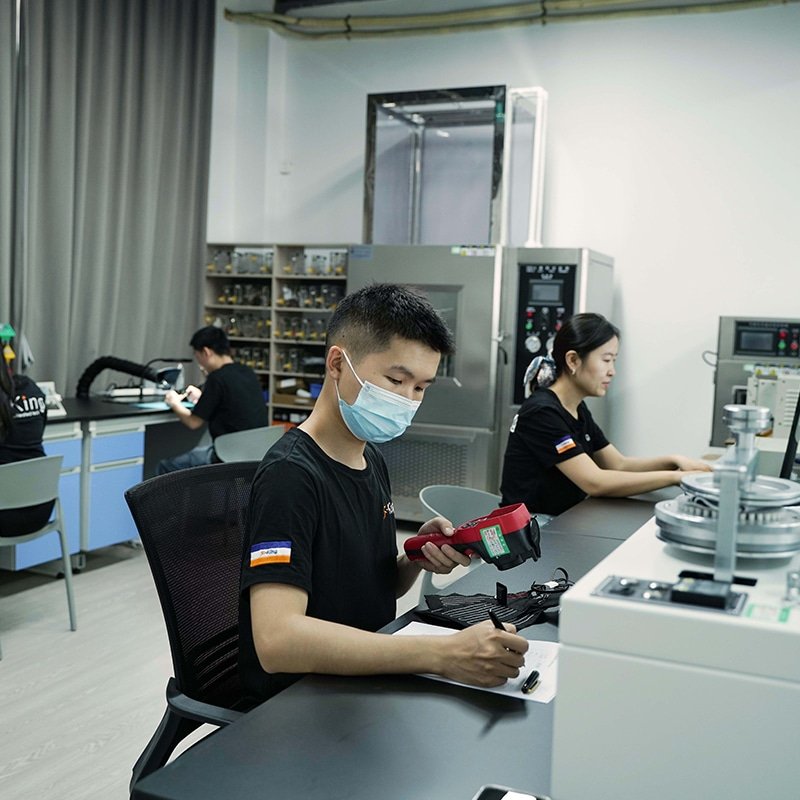
Conclusion — Packaging Structure Selection Is a Strategic Decision
The choice of packaging structure has the effect of cost, protection, and scalability in the aspects of visual design cannot take account of. Being treated as a process, which is product-driven, logistics-conscious, and manufacturing viable, it is a strategic decision which will help in a stable performance across the supply chain. It has the right structure which guarantees efficient production, extreme reduction of risk and uniform quality; that is, it is among the most vital initial decisions in any packaging program.