
Introduction — Why More Brands Are Customizing Heated Gloves
The hot glove market is blistering with the high demand in winter sports, outdoor labor and even in commutes. Brands are scrambling to tailor their own brands to make them unique – imagine special models tailored to skiers who require touchscreen ability or hunters who require noiseless, camo-compatible models. Based on OEM work with European outdoor brands, I have observed that customization provides the brand with the opportunity to differentiate themselves with features such as adjustable heat zones or longer batteries, seizing niches where standard products have failed. It does not come without challenges though:bad decisions in materials or electronics may cause unreliable warmth, dissatisfaction of customers, or even safety hazards. Being a senior product developer and having more than 10 years of experience with the heated apparel, I realize that it depends on attracting a proper manufacturer of heated gloves in China and combining the innovation with the reliability and maintaining your line in the real cold without ruining the cost or the quality of the product. Our factory specializes in high-quality custom heated gloves that deliver consistent performance for winter sports, outdoor work, and daily use.
Understanding What Makes OEM Heated Gloves Different
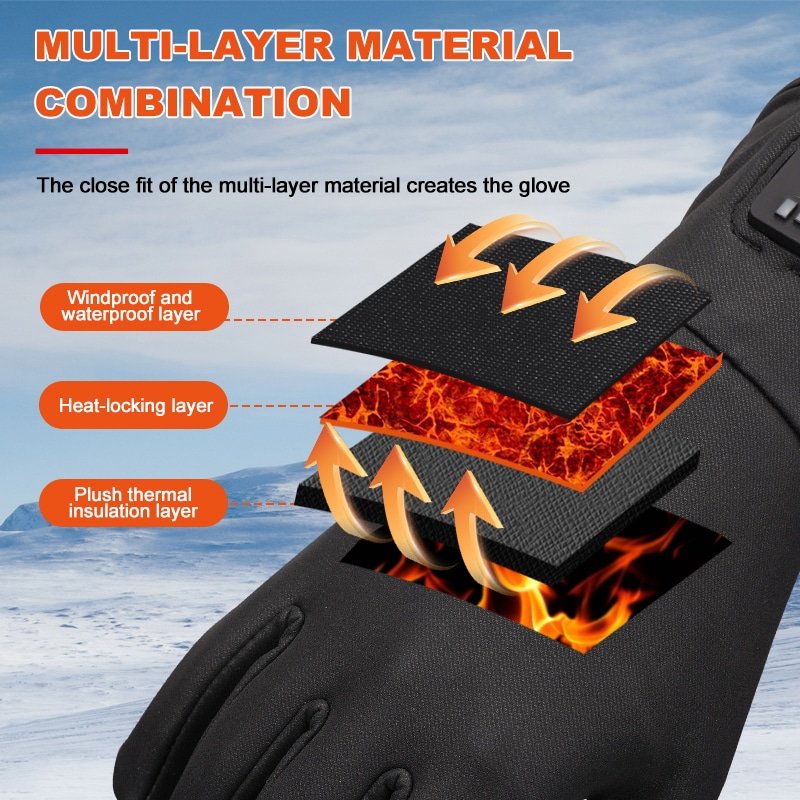
OEM heated gloves can be distinguished by the regular ones by the means of layered construction that can respond to the particular needs. The outer layer is usually made of leather or nylon, to give the outer grip and weather protection, with the inner insulation being either fleece or Thinsulate, where the warmth is trapped. Heating areas – Carbon fiber part of the palm and fingers type are woven heating elements that provide a specific amount of heat that is controlled by an integrated circuit. Electronic equipment such as switches or remotes is installed in cuffs, and these are attached to flexible wiring to prevent breaking during flex. The TPU waterproof membranes keep the snow or the rain at bay, battery, typically lithium-ion, can be easily recharged in compartments. With custom designs that I oversee with motorcycle brands, this method makes sure that dexterity is not compromised, and reinforcements of knuckles are made so that it is durable. The difference? OEM enables brands to customize these to their audience, such as vibration protection to riders or better insulation to workers in the arctic. Our comprehensive OEM/ODM services give brands full flexibility to create truly differentiated heated gloves.
Step 1 — Define Your Product Requirements Clearly
The first step is to have a clear set of specs, a rushed decision in this case will result in an expensive re-write in the future.
Target Users (Skiers, Hunters, Motorcyclists, Workers)
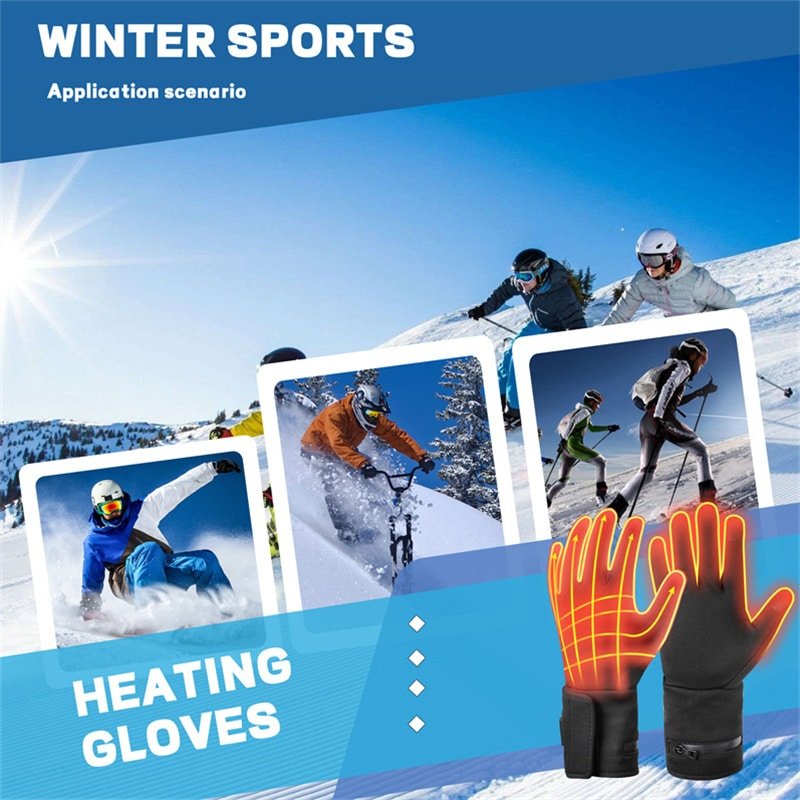
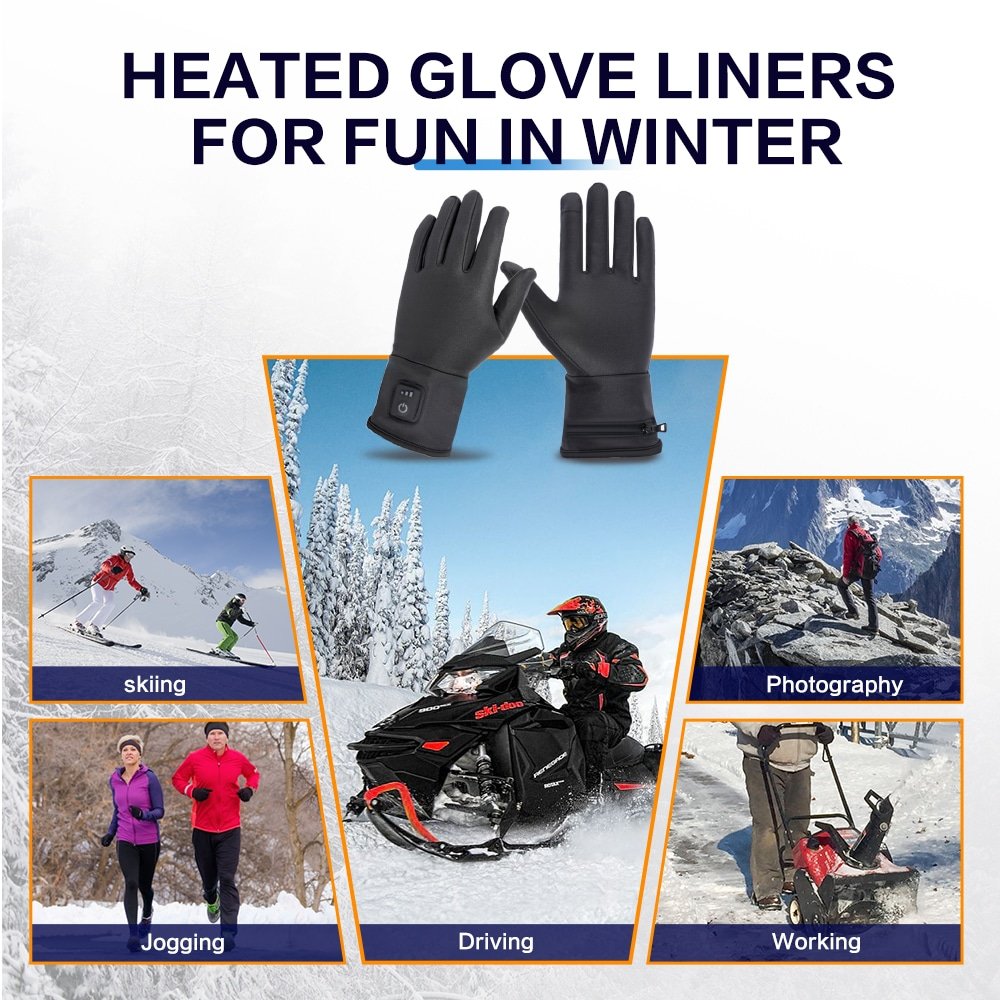
Find out who you are selling to: Skiers would require high level of dexterity and heat to handle pole grips, and the hunters would prefer to have low-light visibility and silence. Bikers need vibration resistant wiring to deal with the road bumps and employees in the cold storage need tools that cannot be punctured. Since the idea behind sourcing to a hunting brand was to cause a spook to the game, we concentrated on camo fabrics and subdued controls to ensure that the specifications of a product were matched to the user so that they could not have a product that did not match the purpose.
Heating Performance & Temperature Levels
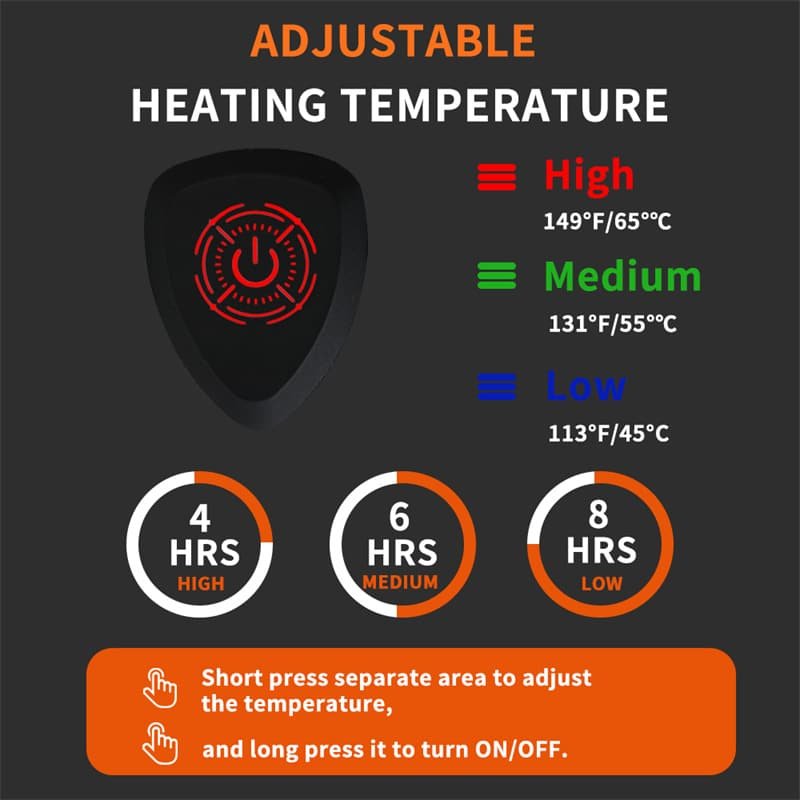
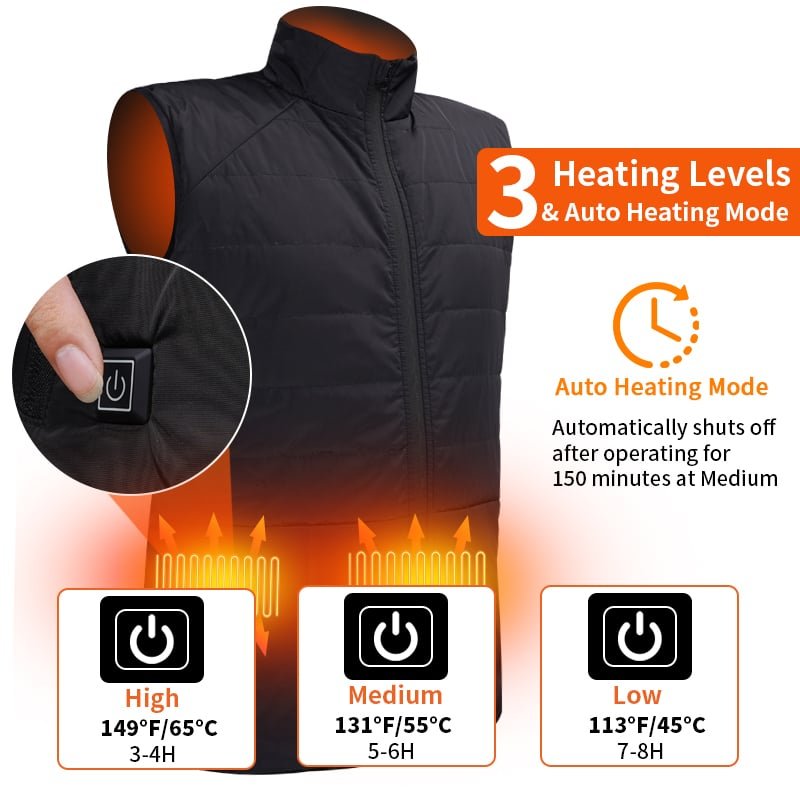
Choose levels -three levels (low/medium/high) are easy or app-adjustable are precise. The temperature must be between 100-140deg F, and there must be areas where fingers can be circulated. In a ski glove project we stressed rapid medium heat so as to have lift rides at all times and be stable without sweat.
Battery Size, Voltage & Runtime Expectations
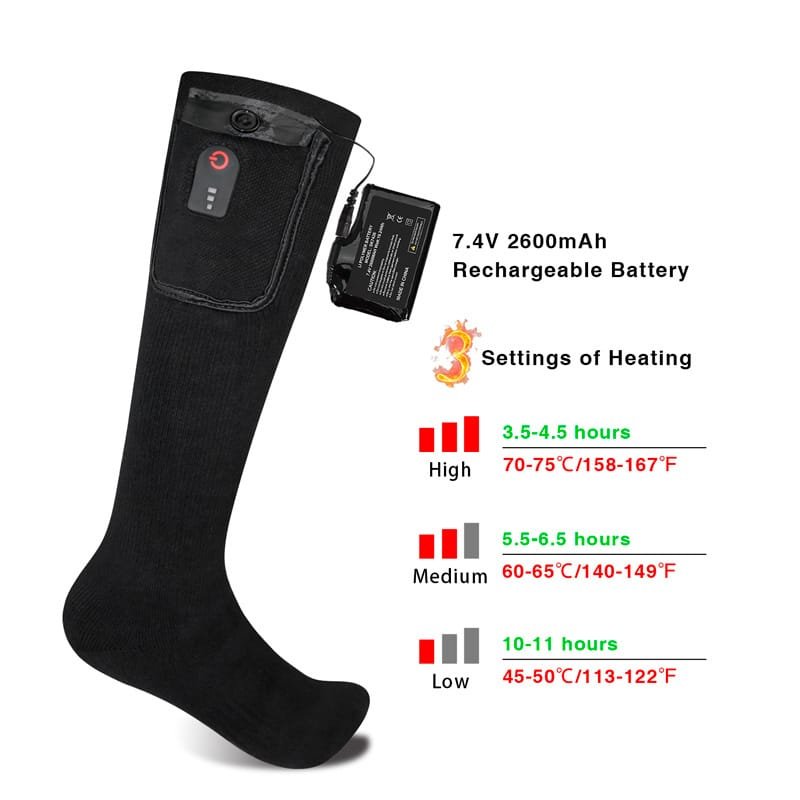
Select 5V USB, 7.4V Li-ion, or 12V, which offers the benefit of being lighter, warmer (4-6 hours), or intense heat respectively, but shorter operation. Cold sims: runtime tests are essential, anticipate that at freezing, it will drop by 20 percent. In the case of worker gloves, we selected 7.4V in order to reach 5-hour shifts minus bulk.
Waterproofing & Windproofing Levels
Strive to make IPX4+ /electronics/ to be resistant to splashing; possibly full-gloves are required in IPX7. Shells such as Gore-Tex equivalents are windproof. This also avoided shorts spraying out in the road, which is a high failure mode in motorcycle designs.
Fabric & Insulation Choices
Grip cloth in working gear, softshell in sportswear. Bulk-free insulates Thinsulate (fleece). In the case of a skier line, softshell Thinsulate that was breathable was used to keep hands dry during activity.
Step 2 — Understanding the Key Components of Custom Heated Gloves
Understanding of components to assist in conveying your needs to your Chinese manufacturer of heated gloves.
Heating Element Type
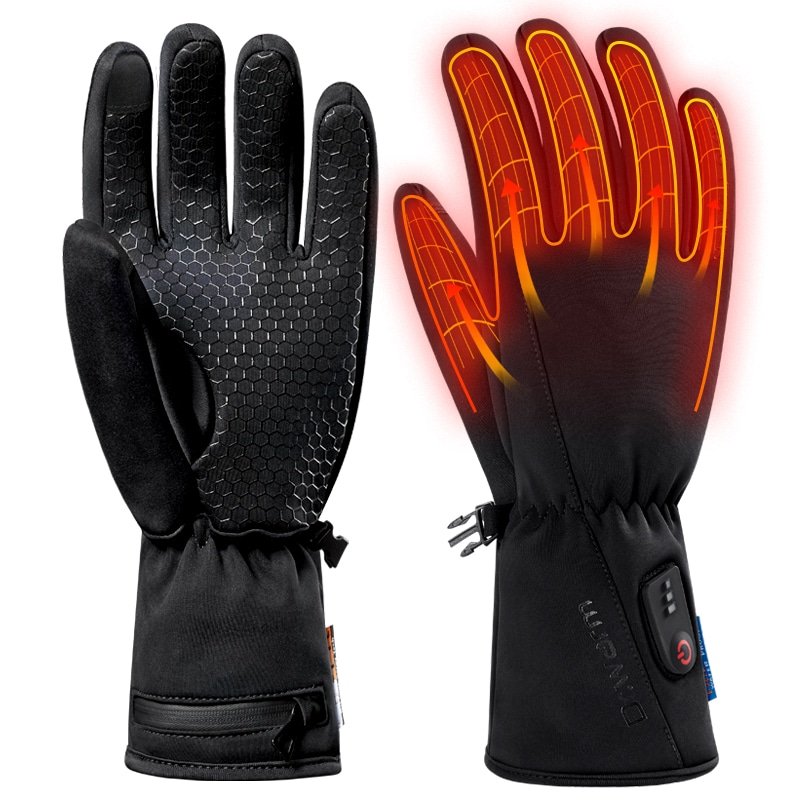
Carbon fiber is flexible, even heat; film is skinny fitting; wire is cheap, yet stiff. Carbon fiber will please an active user – in a hunting glove, it bent without a hotspot. Our expert heating element design team helps select and optimize the best solution for each glove application.
Temperature Control System
Simple switch buttons, remote controls, and polished apps. Remotes were most effective when used by motorcyclists which enabled them to change without halting. Proper PCBA design ensures reliable integration of controls, wiring, and safety features in heated gloves.
Battery Options
Capacity (2000-4000mAh) and safety (BMS against overcharge protection) are important. Grade-A cells are reliable- we requested them in a workwear brand, so that failure will not happen in the middle of the day. We help brands develop reliable custom battery packs tailored to specific runtime and safety requirements.
Wiring & Circuit Integration
Wire is flexed silicone coated and the circuits should be encased. In heavy designs of the fingers, this eliminates repeated grips of breaks.
Protective Layers & Safety Features
Under circuit protection and short-circuit are a necessity. These were incorporated in ski gloves to reach a limit of 140degF to avoid burns.
Step 3 — The OEM Development Process (From Idea to Prototype)
Ideas are transformed into real goods-work together and achieve success.
Concept & Requirement Confirmation
Provide a technical pack and drawings, specifications and references. This is optimized by manufacturers, in one ODM project we optimized finger zoning to achieve improved heat flow.
Material Selection & Sample Preparation
Select fabrics, elements and batteries; prototyping will take 2-4 weeks. Evaluation of early materials prevented a failed prototype when it got wet. Our in-house mold development capabilities support precise custom shaping for battery compartments, reinforcements, and ergonomic fit.
Prototype Testing
Run Heat, battery and flex tests. In the case of a motorcycle brand, this displayed the weaknesses of vibration, fixed prior to full-runs.
Engineering Modifications
Modify according to feedback- such as tightening up wiring. This action spared a hunter party field grievances.
Step 4 — What to Evaluate During Sample Testing
Samples prove you–prove it to the test.
Actual Heating Temperature & Stability
Set the oven to medium and set the measure zones to even 120degF. Poor circuits were marked using instability in lab sims.
Real Battery Runtime
Test in cold rooms–2 hours high, 3 medium. A sample work glove was not working well at -10degF leading to updates to the battery.
Comfort & Flexibility of Fingers
Grip test; stiff parts cause failures in skiers. The prototypes were flexed 5000 times to secure mobility.
Waterproof Tests
Check seals by spraying and immersing. A hunting glove was tested at a snow sim to ensure that there were no leaks.
Durability Tests
Bend, vibrate, and cold-soak. This wire fatigue was observed in one of the rider prototypes.
Step 5 — Certifications & Safety Compliance for Heated Gloves
The market will not accept certifications. CE guarantees EU safety, FCC electronics compliance, RoHS restrictions on material, UL general integrity and UN38.3 battery transport. Waterproofing is confirmed by using IP ratings. To US brands, these blocked the importations; otherwise, your designed custom heated glove is likely to be denied.
Step 6 — Production, QC, and Mass Manufacturing Considerations
Scale-up demands vigilance.
Material QC
Look at garments and components when it comes to uniformity– discard poor qualities.
Electronic QC
Faults BMS and test circuits.
Final Product Testing
Full batch heat and aging inspections.
Peak Season Planning
Peak season Winter demand soars- reservation needs Q3 production.
Step 7 — Common Mistakes Brands Make When Customizing Heated Gloves
Brands tend to run high with unrealistic 8 hours with cold drain neglected. Disregarding the ratings of waterproof causes shorts in snow. Incorrect zones cause fingers to be cold. The breaking is a result of ignorance on wiring durability. The collaboration with traders rather than with factories distends the expenses and diminishes the control.
Step 8 — How to Choose the Right Heated Glove Manufacturer
R&D Capability
Find in-house engineering solutions.
Factory Size & Experience
More than 100 employees who had a working experience of 5 years in heated gear.
Testing Laboratory Availability
Hatched laboratory and battery analysis.
OEM/ODM Experience
Proven with sports brands.
Transparent Communication & Sample Consistency
Definite updates and corresponding prototypes.
Final Recommendation — What Brands Should Focus On
Attention should be given to battery life, heating mechanisms to uniform heating, and the demand of users such as flexibility. Focus on safety certifications to achieve markets. To prevent errors, sample testing and selection of skilled manufacturers should be done. Partnering with an experienced OEM heated gloves manufacturer with strong R&D, testing labs, and production capacity is the key to successful customization. The due diligence in the hot glove OEM process will be a guarantee of high performance products that are safe and that will make your brand gain reputation.