

For heated apparel, the battery is the single most regulated component. A compliant product typically needs: CE and UN 38.3 for Europe, FCC and UL-referenced battery testing for the United States, and — increasingly the strictest line of all — China’s GB 47372-2026 and CCC requirements for lithium batteries. This guide explains what each standard covers, why they differ by market, and exactly which documents you should request from any factory before signing an order.
Why the Battery Is the Biggest Risk in Heated Clothing
A heated jacket is a wearable electronic device. The fabric and stitching rarely cause problems — batteries do. Overcharging, short circuits, thermal runaway and low-temperature failures are the risks that regulators care about, because they are the ones that can hurt users. That is why battery standards are mandatory almost everywhere heated apparel is sold, while textile requirements are comparatively light.
Ask for the battery’s paperwork first, the garment’s paperwork second. If a supplier hesitates on the battery documents, everything else on their certificate wall is decoration.
Standards by Market
| Market | Standard / Requirement | What It Covers |
| European Union | CE (with EN 62133 for cells) | Product safety directive compliance for the battery system |
| European Union | UN 38.3 | Transport safety testing for lithium batteries (air/sea) |
| United States | FCC | Electromagnetic compliance for products with electronics |
| United States | UL-referenced battery testing (e.g., UL 2054 / UL 1642 lineage) | Cell and pack safety evaluation |
| United States | DOE | Energy-efficiency requirements for external battery chargers |
| China | GB 47372-2026 | National safety standard for lithium-ion batteries (newest, strictest generation) |
| China | CCC | Compulsory certification regime now covering lithium-ion batteries |
Exact scope and documentation depend on product configuration and destination market — confirm the current requirement set with your manufacturer in writing before production.
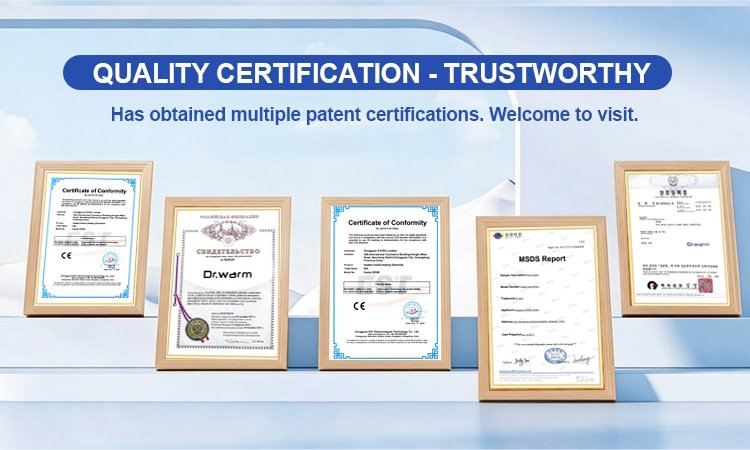
China’s New Baseline: GB 47372-2026 and CCC
Two developments matter for anyone sourcing battery-powered apparel from China:
GB 47372-2026. China’s newest national standard for lithium-ion battery safety. Its technical requirements — covering overcharge, over-discharge, short-circuit, thermal abuse and mechanical tests — are in several respects stricter than what export markets currently demand. In practical terms: a battery pack that passes the newest Chinese national standard has cleared one of the toughest safety bars available.
CCC certification for lithium batteries. China has brought lithium-ion batteries under its compulsory CCC (China Compulsory Certification) regime, with enforcement phased in through 2025–2026. Batteries sold in China must now be CCC-certified; batteries produced for export are not automatically exempt from the underlying test standards.
For buyers, the takeaway is simple: ask whether the factory’s battery supply chain is already aligned with the new Chinese baseline. A supplier whose cells and packs meet GB 47372-2026 / CCC requirements is working to a stricter internal bar than one who only chases the minimum export paperwork.
Documents to Request from a Heated Apparel Manufacturer
Before any deposit, request:
- UN 38.3 test summary for the exact battery pack (model-matched, not a “similar” model)
- CE / EN 62133 documentation for EU-bound products
- UL-referenced test reports for the cells and pack (US market)
- MSDS (Material Safety Data Sheet) for the battery
- GB 47372-2026 / CCC documentation where the factory’s battery chain is China-standard aligned
- Certificate validity and scope — who holds the certificate, for which battery model, and until when
Certificate vs. Test Report: Know the Difference
- A certificate (CE, CCC, FCC) is issued by or registered with a certification body for a defined product scope and holder.
- A test report (UN 38.3, UL tests, GB standard tests) is laboratory evidence that a specific sample passed specific tests.
You need both, and they must match your actual product: the right battery model, the right certificate holder, and a validity date that covers your production window. A “certificate” for a different pack model is worth nothing.
Red Flags When Evaluating Battery Compliance
- “We will have the certification soon” — classic sign the battery is being sourced ad hoc
- Certificates without a model number, or for a different capacity than quoted
- Refusal to share the cell brand and grade
- UN 38.3 reports that don’t name the exact pack configuration
- No MSDS offered, or offered only after payment
Manufacturer Insight
On our own production lines, battery compliance is checked at two stages: incoming cells and packs are verified against specification and documentation, and finished garments go through function and battery-connection testing before packing. The most common failure we see from new brand partners is not choosing the wrong battery — it’s inheriting a battery decision from a previous supplier without ever seeing its paperwork. Make document review part of supplier selection, not an afterthought after the deposit.
FAQ
Does heated clothing need UN 38.3? Yes. UN 38.3 is the transport-safety baseline for lithium batteries shipped by air or sea, and freight forwarders will ask for the test summary before booking.
Is CE enough for heated apparel batteries? CE is required for the EU market, but it does not replace UN 38.3 for transport or cell-level safety documentation. A compliant export set is CE + UN 38.3 + supporting test reports.
What is GB 47372-2026? It is China’s newest national safety standard for lithium-ion batteries. Its test requirements are among the strictest currently applied anywhere, which is why manufacturers supplying to the Chinese baseline tend to have an easier time passing export-market testing.
Do heated clothing batteries need CCC certification? Lithium-ion batteries sold in China now fall under CCC. Export products are not automatically covered, but asking about a supplier’s CCC/GB alignment tells you how strict their battery quality system really is.
Which document should I check first? The UN 38.3 test summary matched to your exact battery model — it is the fastest reveal of whether a supplier controls its battery chain.
The Bottom Line
Treat the battery as the product’s most regulated component, ask for documents before deposits, and prefer factories whose battery chain meets the strictest standard on the table — currently China’s new GB 47372-2026 / CCC baseline — not just the minimum for your destination market.
Planning a heated apparel line? See our guide to certifications for the US and EU market, or contact our OEM/ODM team for the full battery compliance document set on your project.