

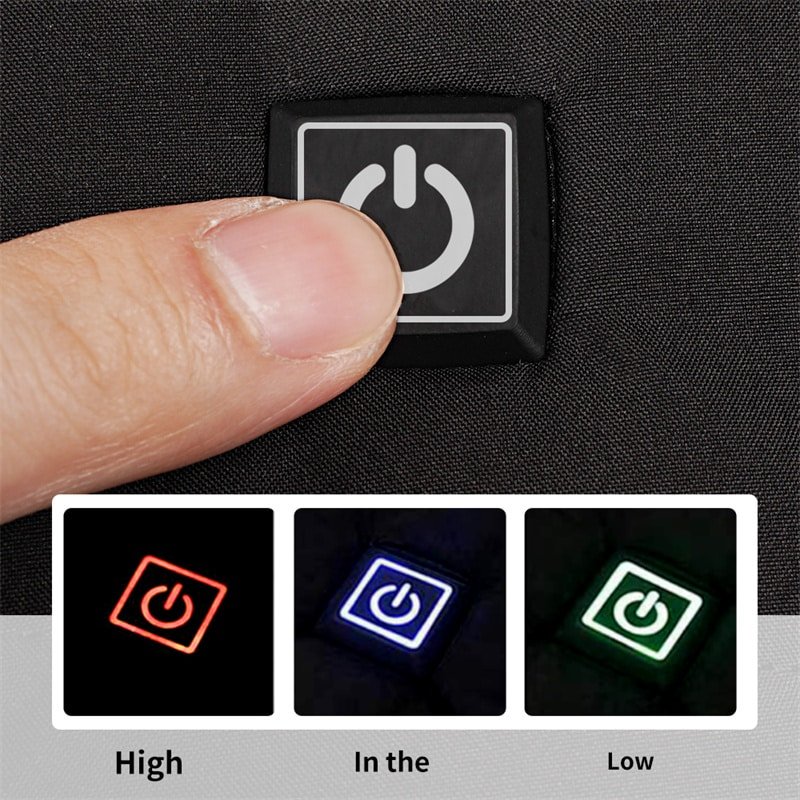
A range of app-controlled and remote-controlled heated clothing items are common in the current market that provides users with the opportunity to control the amount of heat received by such wearable items as jackets, gloves, and insoles. Nevertheless, none of the methods is superior in nature since the effectiveness depends on the general system design, and not on the control interface. Most buyers make the assumption that app control has always been more sophisticated whereas in reality control can perform only as well as the integration of the system. They should not be determined by feature perception, but rather system requirements, user behavior and reliability priorities should lead to the decision between app-controlled and remote-controlled heated clothing.
App-controlled and remote-controlled heated clothing are two philosophies of control with the different trade-offs of flexibility, stability, power management, and system complexity. The following comparison assesses these factors as an engineer and OEM and emphasizes on the effect of the control methods on the performance of the heated apparel systems. With awareness of these differences, product managers, sourcing teams and engineers will be able to make informed decisions in accordance with particular design objectives and user requirements.
What “Control Method” Means in Heated Clothing Systems
The means of control in the clothing that is designed as heated clothing dictate the interaction of the user with the system but not the heat generation itself. Essentially, the control method is the user interface that it uses to send commands to the embedded controller that in turn controls the amount of power sent to the heating elements. This division guarantees that the core heating functionality will be the same, whereas the approach will influence usability, integrations depth, and the risk point of failure.
To explain, it is better to consider the most important aspects of control in these systems:
| Control Aspect | Description | User Interface | Command Logic | Execution | Outcome |
| Input Mechanism | How the user initiates a change | App or physical remote | Digital signals | Controller & hardware | Heat level change |
| Feedback Loop | System response to user input | Visual or tactile | Processed algorithms | Real-time adjustment | Temperature stabilization |
| Integration Level | How control ties into overall design | Software-dependent or hardware-fixed | Variable or predefined | Embedded firmware | Consistent performance |
This framework identifies that perspectives on the industry on the control of heated clothing focus on the digital versatility or the mechanical simplicity, which impacts all processes of prototyping to mass production in an OEM setting.
How App-Controlled Heated Clothing Works
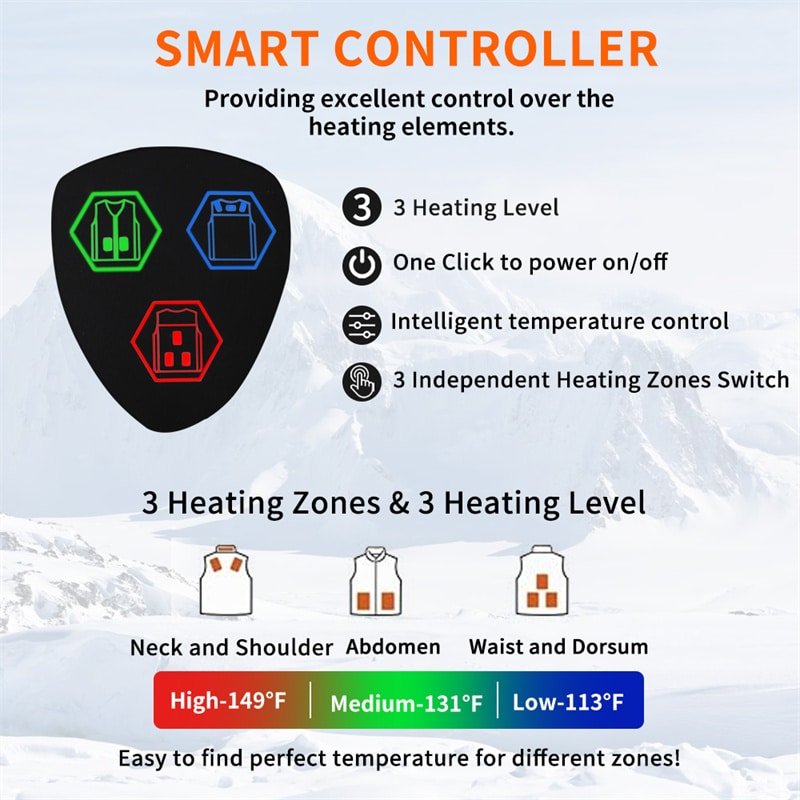
Software interfaces are incorporated to make app-controlled heated clothes more customizable, although its performance depends on a seamless hardware-software interaction. It is generally done through the user picking settings through a mobile application, which sends out the Bluetooth to the controller of the garment. This controller then trims up the voltage to heating elements, e.g., carbon fiber wires or films to reach the required temperature.
Core Components and Signal Flow
Software interfaces are incorporated to make app-controlled heated clothes more customizable, although its performance depends on a seamless hardware-software interaction. It is generally done through the user picking settings through a mobile application, which sends out the Bluetooth to the controller of the garment. This controller then trims up the voltage to heating elements, e.g., carbon fiber wires or films to reach the required temperature.
At the OEM perspective, the construction of such systems needs a strong app design for heated wearables to ensure compatibility across devices. For deeper insights into the underlying mechanics, explore how app control works in heated wearables.
Potential for Advanced Features
The apps allow such features as timer scheduling or battery monitoring, yet they introduce the aspects of dependence on the smartphone OS version and its connection power, which engineers should consider during the development.
How Remote-Controlled Heated Clothing Works
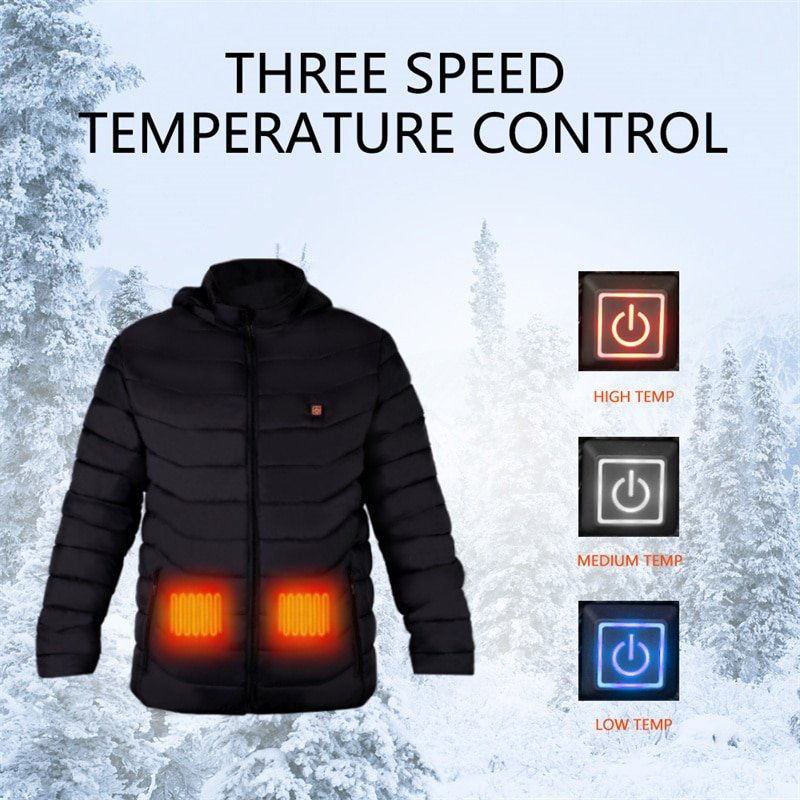
Smart clothing, especially the remote controlled and heated types, have a focus on hardware centricity operation and do not need external devices to perform at a consistent level. It is based on a physical remote, usually a small keyfob (or wristband) that transmits radio frequency (RF) or infrared signals directly to the receiver on the garment. The control sends instructions to the controller, which controls power to the heating elements without the efforts of intermediary software.
Operational Simplicity and Design
The fixed command structures, including the button press level of heat (low, medium, high) guarantee the lowest latency and the absence of pairing processes. This strategy reduces the complexity of systems allowing OEMs to expand production without spending a lot of time testing the software.
Compared to more complex systems, the realization app-controlled heating system in heated clothing can highlight why remotes favor reliability over expandability in certain designs.
Hardware-Focused Reliability
Remotes are usually worked on simple protocols with specific frequencies, eliminating the vulnerabilities of more general connectivity standards.
Temperature Control Accuracy — App vs Remote
System calibration rather than control method depends on temperature control accuracy in heated clothing, but interfaces determine the perceived precision by the user. Finahr finer granularity is often offered in apps, with adjustments in 1-2 degrees Celsius steps available as sliders, whereas remotes can only work through presets. But, in fact, largely it depends on the quality of sensors and controller algorithms not the input device.
Key Factors Influencing Precision
The control is perceived because of the feedback: apps display real-time images, remotes are based on the LED lights or the touch buttons. The digital interfaces of apps make command resolution superior than their response speed which may be slow after the Bluetooth processing, compared to the direct execution of the remotes.
| Factor | App Control | Remote Control |
| Control Resolution | Higher (e.g., variable sliders) | Lower (e.g., 3-5 fixed levels) |
| Response Speed | System-dependent (potential delays) | Immediate (direct signal) |
| User Feedback | Visual (app dashboards) | Limited (LEDs or vibrations) |
| Calibration Dependency | Sensor integration critical | Hardware presets dominant |
For brands optimizing this aspect, consider how mobile apps control temperature in heated clothing to balance precision with usability in product specs.
Battery Consumption and Power Management Differences
Control overhead affects battery consumption in heated clothing, and apps add extra draw due to connectivity not avoided by remotes to a great extent. App systems need constant Bluetooth connectivity to track and update, and this may add 10-20 percent to idle power consumption when compared to remotes, which can only be activated upon command.
Energy Trade-Offs Explained
The Bluetooth energy effect comes as a result of the continuous scanning or data syncing, and remote systems operate with low-power RF bursts. The appropriate use of power in applications means effective sleep and streamlined protocols, whereas improper use can reduce the execution time. The simplicity of remotes means that they have longevity as a priority, thus they are better suited to situations that require long usage.
These dynamics require consideration by engineers in the prototyping phase; an example illustration of these is to understand the impact of heating applications on battery life and come up heating apps affect battery life reveals strategies to mitigate drain through firmware tweaks.
Optimization Strategies
No adaptive power algorithm can be used to equalize the difference in OEM designs, but in high-drain scenarios the baseline consumption is biased towards remote simplicity.
Reliability and Stability in Real-World Use
Environmental resilience is a key factor in reliability in heated clothing control with remotes frequently beating apps in signal strength even though they do not have sophisticated diagnostics. Apps are more vulnerable to signal loss situations, e.g., interference in a busy location or device distance because Bluetooth has a range of approximately 10-30 meters, whereas remotes operate on a channel that can be relied upon.
Common Stability Challenges
Physical remote durability can survive drops and weather conditions unlike the software dependent connectivity that is susceptible to software bugs or depleting batteries on the phone. Nonetheless, apps enable fixes via the air, which offers long-term flexibility.
In the case of OEMs dealing with these, examining bluetooth stability in app-controlled heated apparel helps in selecting robust modules and testing protocols.
Mitigation in Design
System engineers put more emphasis on the provision of failover mechanisms such as manual overrides in order to provide stability between methods.
Safety Considerations Across Control Methods
Control level requirements of safety in heated clothing make the control approach to take a back seat to embedded safeguards against threats. Each method utilises autonomy of logic in over-temperature shut off, low-battery shut off, and short-circuit prevention to guarantee the protection of the user irrespective of interface.
Independent Safety Layers
Safety logic is self-regulating: the sensors check the heat discharge, and in case of going above that point, the shutdown is activated. Core reliability is the result of hardware, not user interface, as software alerts can be added in apps. Remotes which have less variables reduce the risks of failure of connections.
This highlights the significance of over-temperature protection in app-controllable heated wearables, despite the development of approaches.
Compliance and Testing
OEMs conform to standards such as UL or CE through adding redundant checks, simple system-wide integrity rather than control type.
Which Control Method Fits Which Use Case?
The choice of control approach to heated clothing is determined by particular requirements of operations wherein user profiles and conditions determine the appropriateness rather than generic tastes. An example is that technologically oriented users enjoy the flexibility of apps whereas rough conditions prefer distant sturdiness.
Tailoring to Scenarios
Sports involving outdoor activity type of applications can be customized with zones, whereas at far-off areas, workwear apps would be more suitable with the use of remotes to prevent phone addiction. Remotes are easy to use by elderly or non-technical users, who will not have to deal with the frustration of setting up an app.
| Use Case | Recommended Control | Rationale |
| Tech-savvy users | App control | Allows personalization and data tracking |
| Harsh environments | Remote control | Resists interference and device failures |
| Long battery priority | Remote control | Minimizes connectivity drain |
| Feature-rich products | App control | Enables updates and integrations |
| OEM product positioning | Depends on market | Balances cost with differentiation |
To ensure that brands fit in this area, the brands entering this area ought to consider developing an app-controlled heated product to align with target demographics.
Conclusion — “Better” Depends on System Priorities
To conclude, there are two solutions to the problems with app-controlled and remote-controlled heated clothing. Their trade-offs at the system level enable the brands and buyers to select the most appropriate control method that is most fitting to the performance, reliability, and the expectations of users. Instead of finding a general higher-level solution, consider how the approach helps in achieving overall design aims, such as concentrating on innovation by using apps or reliability by using remotes. This is the evidence-based solution that makes sure that the heated apparel is used to address the real-life needs without falling into the trap of assumptions made by marketing.