

In app-controlled heating systems for heated apparel, lithium-ion batteries introduce inherent safety risks, including thermal runaway, overcharge, and short-circuit scenarios. The addition of app-based control increases complexity through dynamic power demands, real-time adjustments, and multi-zone heating coordination. Safety cannot rely solely on high-quality battery cells; it demands deliberate engineering at the system level.
Effective battery safety design requires layered protection mechanisms integrated across hardware, firmware, and thermal mapping systems.
Many in the industry mistakenly assume that battery safety depends primarily on cell quality from suppliers. In reality, system integration—particularly control logic and thermal management—plays an equally critical role in preventing failures under variable operating conditions typical of wearable heating products.
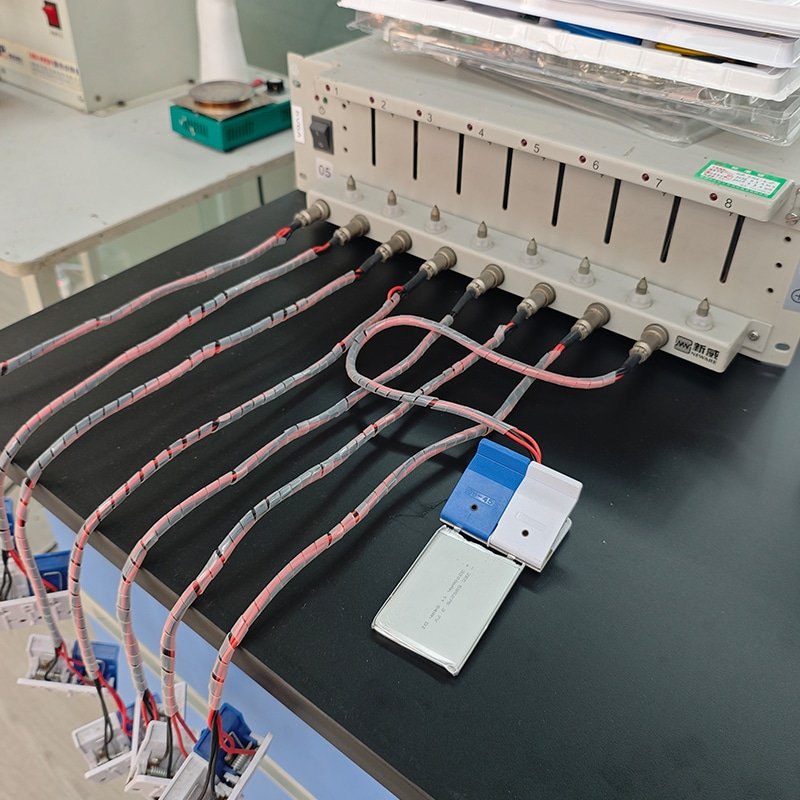
Why Battery Safety Is More Complex in App-Controlled Systems
Battery safety design in app-controlled heating systems becomes significantly more challenging due to variable and unpredictable power profiles that standard passive heating systems do not encounter.
App-enabled systems allow users to adjust heat levels remotely, often across multiple independent zones (e.g., core, sleeves, back in a heated jacket). This introduces dynamic current draws that can spike rapidly, creating voltage fluctuations and potential load imbalances. Firmware actively scales power based on user input, ambient temperature data (via sensors), or predefined algorithms, leading to frequent on/off cycling and partial-load operation.
Real-time interaction between the app, Bluetooth/Wi-Fi module, controller, and battery adds layers of complexity: communication latency, erroneous commands, or software glitches can result in unintended overcurrent conditions. These factors elevate risks beyond those in simple on/off heated apparel.
In contrast to basic systems, app-controlled designs must handle:
- Dynamic current adjustment — Sudden shifts from low to maximum heat.
- Multi-zone heating load — Uneven distribution causing localized stress.
- Firmware-controlled power scaling — Algorithmic decisions that influence discharge rates.
- Real-time signal interaction — Potential for firmware errors to bypass hardware limits.
To illustrate key challenges:
| Risk Factor | Safety Challenge |
| High current draw | Overheating |
| Dynamic scaling | Voltage fluctuation |
| Multi-zone load | Load imbalance |
| Firmware error | Overcurrent risk |
Addressing these requires viewing battery safety design in app-controlled heating solutions as a holistic discipline rather than isolated component selection.

Battery Management System (BMS) Architecture
A robust Battery Management System (BMS) forms the foundational hardware layer of protection in lithium battery-powered heated apparel, actively monitoring and intervening to maintain cells within safe operating areas.
The BMS continuously tracks individual cell voltages, pack current, and temperatures using integrated sensors. It implements protection circuits that respond in milliseconds to anomalies.
Core BMS functions include:
- Voltage balancing — Equalizes charge across series cells to prevent overvoltage in weaker cells during charging.
- Overcurrent protection — Cuts off discharge if current exceeds predefined thresholds, preventing excessive heat from high-load scenarios.
- Overcharge and over-discharge protection — Halts charging above safe voltage limits and discharge below minimum to avoid cell damage.
- Temperature monitoring — Triggers shutdown or derating if temperatures approach unsafe levels (typically 60–70°C for discharge).
These features work together to extend cell lifespan while mitigating acute risks like thermal runaway.
| BMS Feature | Safety Function |
| Voltage balancing | Cell lifespan |
| Overcurrent cutoff | Prevent overheating |
| Overcharge protection | Battery longevity |
| Thermal monitoring | Fire risk prevention |
In wearable heating, compact BMS designs must balance protection with minimal added weight and footprint, often using integrated ICs optimized for low-power operation.
Firmware-Level Protection Logic
Firmware provides the intelligent, adaptive layer that complements hardware protections, implementing algorithms that respond to real-world usage patterns in app-controlled systems.
While the BMS handles immediate electrical cutoffs, firmware manages proactive safeguards through software-defined thresholds and logic.
Key elements include:
- Current limit algorithms — Smooth out spikes by ramping power gradually during zone activation.
- Automatic shutdown thresholds — Enforce stricter limits than hardware (e.g., lower temperature caps for prolonged use).
- Multi-zone load distribution — Prioritize or stagger activation to avoid simultaneous peak draws.
- Fail-safe signal response — Monitor app communication; default to safe state (low heat or off) on lost connection or invalid commands.
These logic layers detect subtle anomalies—like gradual temperature creep or inconsistent current—that hardware alone might miss.
| Firmware Safeguard | Purpose |
| Current smoothing | Stable heating |
| Temperature cap | User safety |
| Error detection | Immediate response |
| Load balancing | Power stability |
Firmware must undergo rigorous validation to ensure no edge-case scenarios (e.g., rapid app commands) overwhelm protections.
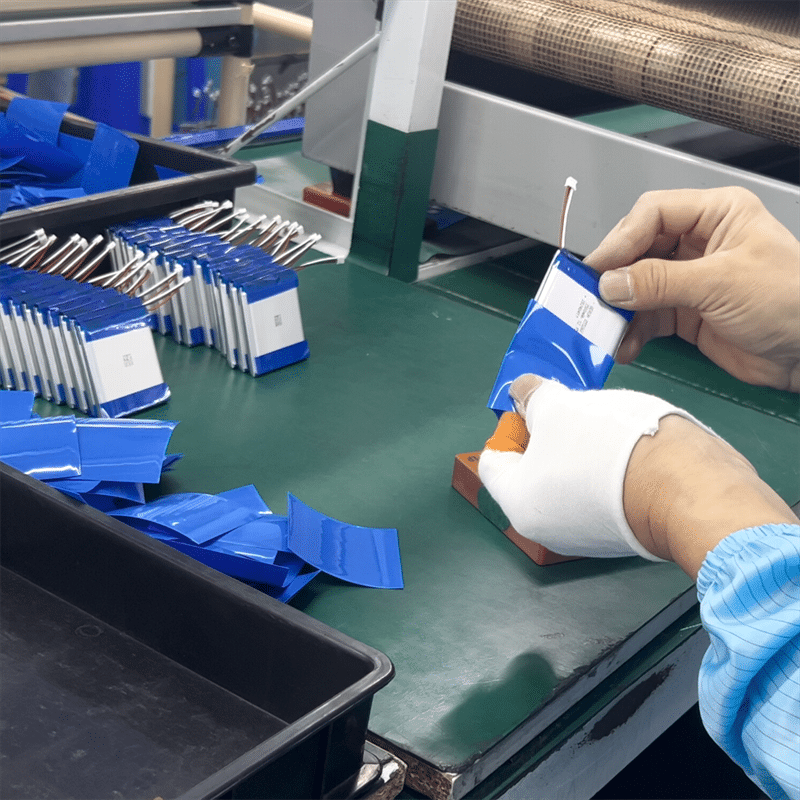
Thermal Coordination and Heat Dissipation
Thermal coordination treats heat generation as a system-wide concern, where battery placement, heating element proximity, and enclosure design prevent localized hotspots that could initiate thermal runaway.
In heated apparel, batteries are often positioned in pockets near the body, while carbon fiber or wire elements generate concentrated heat. Poor coordination allows conductive or convective heat transfer to the battery pack, elevating internal temperatures.
Key design considerations:
- Maintain physical separation between high-heat zones (e.g., chest/back panels) and battery compartments.
- Use insulating materials (e.g., aerogel or foam barriers) to reduce heat flux.
- Incorporate passive ventilation paths or phase-change materials for dissipation.
- Map thermal gradients during prototyping to identify and mitigate runaway pathways.
Structural layout must prioritize battery isolation while preserving garment ergonomics and washability.
Testing and Validation for Battery Safety
Rigorous testing validates that layered protections function under worst-case conditions, ensuring compliance and real-world reliability.
Essential protocols include:
- Overcharge testing — Forces charging beyond limits to verify cutoff.
- Short-circuit testing — Simulates internal/external shorts for containment.
- High-load stress testing — Cycles maximum multi-zone draws with app commands.
- Cold and heat endurance testing — Operates at -20°C to 50°C to check performance envelopes.
- Aging cycle validation — Repeats charge/discharge under simulated use to assess degradation.
| Test Type | Safety Objective |
| Overcurrent test | Cutoff verification |
| Thermal stress test | Stability validation |
| Aging test | Long-term durability |
| Short-circuit simulation | Risk containment |
These tests, often aligned with UL or IEC standards, confirm system robustness beyond cell-level specs.
Compliance and Certification Considerations
Compliance requires demonstrating that the entire system—not just the battery—meets international safety benchmarks for lithium-powered devices.
Relevant standards include:
- CE — Conformity for EU market entry, covering EMC and low-voltage directives.
- RoHS — Restriction of hazardous substances in components.
- UL testing — Often UL 2054 or 1642 for battery packs, focusing on abuse tolerance.
- Transportation battery standards — UN 38.3 for air/ground shipping safety.
Design logic must embed these requirements early: selectable protection thresholds, fault logging, and documentation of failure modes.
Common Safety Design Mistakes
Even experienced teams can overlook critical aspects in heated apparel integration:
- Underestimating multi-zone current load, leading to voltage sag or imbalance during peak simultaneous activation.
- Ignoring firmware failure scenarios, such as app glitches causing continuous high-power output.
- Poor battery placement near heating elements, allowing conductive heat to accumulate and reduce safety margins.
- Insufficient stress testing, particularly aging under combined environmental and load cycles, resulting in undetected degradation.
These oversights often surface only after field failures, underscoring the need for system-level simulation and iterative validation.
Conclusion — Safety Is a System Discipline
Battery safety in app-controlled heating systems depends on disciplined system integration, layered protection mechanisms, and rigorous validation rather than relying solely on battery cell specifications.
Coordinated interaction between BMS hardware safeguards, firmware adaptive logic, and thoughtful thermal layout creates robust defense against risks inherent to dynamic wearable heating. Engineers must treat safety as an architectural priority from concept through production to deliver reliable, compliant performance in demanding cold-weather applications.