

In app-controlled heating systems, Bluetooth stability is not a software convenience feature — it is a core architectural requirement that directly affects system reliability and user trust. Bluetooth connectivity directly impacts user control over temperature settings in real time, and any signal instability reduces confidence in smart heating systems designed for demanding environments like winter sports or outdoor work. Reliable Bluetooth performance depends on antenna design, PCB layout, firmware timing, and environmental considerations working together as one integrated system.
Many teams assume Bluetooth reliability depends only on software, but in practice, physical layout, material choices, and insulation environment significantly affect performance. Signal drop, latency, or pairing failures often trace back to hardware-firmware interactions rather than app code alone.
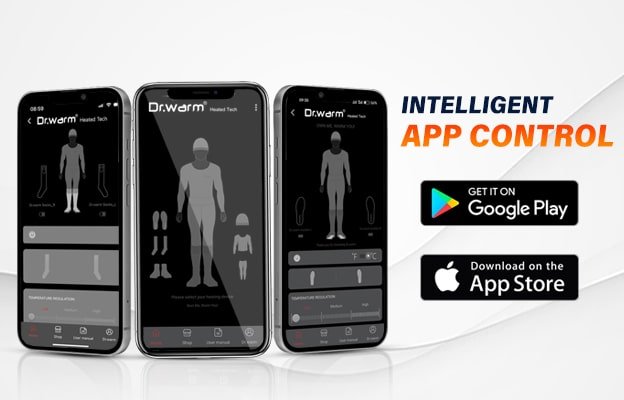
Why Bluetooth Stability Is Critical in Heating Systems
Bluetooth stability in app-controlled heating systems forms the backbone of responsive user control, where even brief interruptions compromise the entire experience.
Real-time temperature adjustments rely on stable communication to deliver precise heating without overshoot or lag. In multi-zone heating setups—common in heated jackets, vests, or underwear—synchronized signals across zones prevent uneven warmth that could lead to discomfort or inefficiency. Signal delay directly affects heating precision, as users expect instantaneous response to app commands, especially during activity where conditions change rapidly.
Instability erodes trust: a delayed command might leave the user too cold in sub-zero temperatures, while unexpected disconnections force manual intervention, defeating the purpose of smart control.
For more on building robust foundations, see our guide to Bluetooth stability in app-controlled heating solutions.
Here’s a quick overview of typical instability issues and their system-level impacts:
| Instability Issue | System Impact |
| Signal drop | Loss of control |
| High latency | Delayed heating response |
| Pairing failure | Poor user experience |
| Weak range | Limited functionality |
These effects compound in heated apparel Bluetooth issues, where users depend on uninterrupted smart heating signal reliability.
Hardware-Level Causes of Signal Instability
At the hardware level, Bluetooth stability in app-controlled heating systems suffers most from poor integration of RF components with power-hungry heating elements.
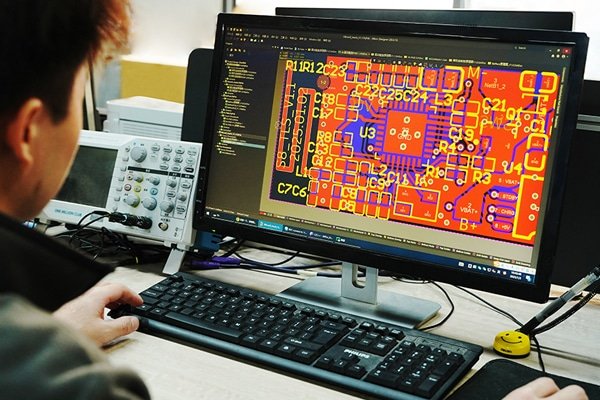
Antenna placement near heating elements is a frequent culprit: carbon fiber wires or resistive heating pads generate electromagnetic fields that introduce noise or detune the antenna. PCB shielding issues exacerbate this, as inadequate ground planes or missing vias allow crosstalk between high-power traces and the Bluetooth module. Battery interference arises from voltage ripple during high-current draw, while metal components in garments—such as zippers, snaps, or reinforced panels—create reflections and blockage.
Tight enclosure designs in compact battery packs further cause attenuation, squeezing the antenna into spaces with limited clearance.
| Hardware Factor | Effect on Signal |
| Poor antenna routing | Reduced range |
| High-current traces nearby | Signal noise |
| Metal insulation layers | Signal blockage |
| Tight enclosure design | Attenuation |
Wearable heating connection problems often stem from these physical constraints, where the human body and clothing materials add further dielectric loading.
Firmware and Timing Coordination Issues
Firmware plays an equally critical role, as even well-designed hardware fails without precise timing coordination.
Packet timing conflicts occur when heating control loops and Bluetooth stacks compete for MCU cycles, leading to missed acknowledgments. Data buffering delays build up during bursty transmissions, while signal handshake mismatches—such as improper GATT notifications—trigger connection drops. Firmware update inconsistencies can introduce regressions, and weak retry logic fails to recover from transient interference.
| Firmware Issue | Consequence |
| Timing mismatch | Data loss |
| Weak handshake protocol | Connection drop |
| Improper retry logic | Signal instability |
| Version mismatch | Pairing errors |
In app-controlled heating systems, these firmware-level oversights manifest as smart heating signal drop, even when hardware performs adequately in isolation.
Environmental and Usage Challenges
Real-world usage introduces variables that lab prototypes rarely capture fully.
Cold temperatures impact battery voltage, reducing transmit power and weakening signal strength—lithium-ion cells in sub-zero conditions suffer from slowed chemical reactions, leading to voltage sag under load. User movement interference creates dynamic multipath fading as the body shifts position relative to the antenna. Moisture and sweat effects degrade conductivity around connectors or fabrics, while signal reflection in layered clothing (e.g., thick insulation or outer shells) scatters packets unpredictably.
These factors highlight why Bluetooth antenna design in heated clothing must account for dynamic, harsh environments rather than static bench testing.
Design Strategies to Improve Bluetooth Stability
Improving Bluetooth stability requires deliberate engineering across layers.
Optimized antenna positioning moves the module away from heating zones and high-current paths, often to garment edges or dedicated pockets. PCB separation of power and signal paths—using dedicated ground planes and filtering—reduces noise coupling. Firmware retry algorithms with adaptive backoff handle transient drops, while signal shielding techniques (cans, ferrites, or grounded traces) mitigate interference.
| Improvement Strategy | Benefit |
| Antenna relocation | Increased range |
| Signal shielding | Reduced noise |
| Retry logic tuning | Stable connection |
| Firmware optimization | Lower latency |
These strategies, when combined, transform intermittent wearable heating connection problems into consistent performance.
Testing and Validation for Communication Stability
Production-level validation separates reliable designs from those that fail in the field.
Range testing measures effective distance under realistic body proximity and clothing layers. Cold chamber signal testing evaluates performance at -20°C or lower, checking for voltage-related drops. Movement simulation testing—using robotic arms or human trials—replicates bending, stretching, and activity-induced fading. Cross-device compatibility testing ensures pairing stability across iOS/Android versions and phone models.
Emphasizing these protocols during validation catches issues like insulation interference early, preventing costly field returns.
Common Bluetooth Integration Mistakes
Many integration failures trace back to recurring oversights:
- Placing the antenna near the battery pack, inviting ripple-induced noise.
- Ignoring high-current interference from heating traces routed too close to RF lines.
- Insufficient firmware stress testing, skipping edge cases like rapid reconnects or multi-zone bursts.
- Overlooking real-world field testing, relying solely on controlled environments that miss body effects or cold-induced degradation.
Addressing these early avoids the majority of heated apparel Bluetooth issues.
Conclusion — Signal Reliability Defines Smart System Credibility
Bluetooth stability in app-controlled heating systems is achieved through disciplined integration of antenna design, PCB layout, firmware coordination, and environmental validation rather than relying solely on software configuration. Communication must be treated as an architectural layer where hardware and firmware work in concert to deliver predictable performance. When stability is engineered intentionally—from initial layout to final production testing—smart heating systems earn user trust in the most challenging conditions.