

Both technologies, carbon fiber and heating film, are based on the principle of heating by a resistance, although the structural properties, durability, flexiveness, and integration options are the ones defining which solution is superior in particular heated insole use. No single technology is always better one, and the choice of the best would solely rely on the purpose of application, structural design, and production specifications.
Most of the purchasers presume the superiority or longer life of one material in comparison to another. As a matter of fact, the integration design and the quality of manufacturing are a lot more important in performance, compared to the name of the raw material itself.
Carbon fiber or heating film has been shown to be effective in heated insoles but this is not so much about the material itself but rather how it is designed, insulated and incorporated within the insoles. For brands developing custom heated insoles heating systems, understanding these nuances helps avoid common pitfalls during sourcing and prototyping.
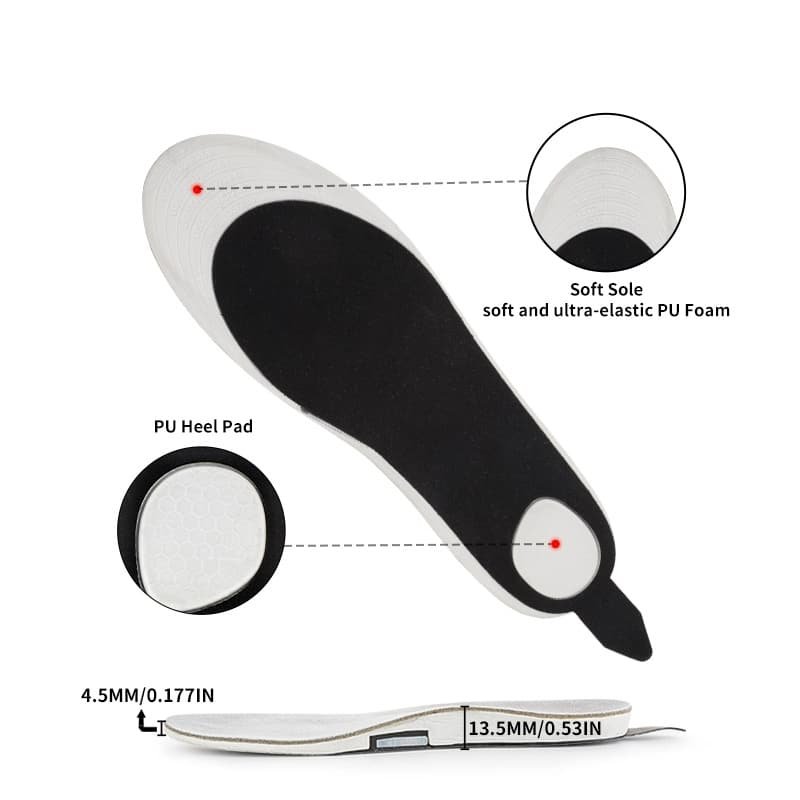
Understanding the Resistance Heating Principle
Both the carbon fiber and the heating film produce heat on the basis of the same principle, electrical resistance.
In low-voltage DC systems (usually 3.7V to 7.4V rechargeable battery), the energy is transformed into thermal energy by making current pass through an element with variable resistance to Joule heating. Through current flow control, usually by using pulse-width modulation (PWM) controllers which allow various temperature settings, heat output is controlled.
Even distribution is again an important factor in heated insoles, where uneven heating will cause hot spots that make the insoles less comfortable and pose a localized wear or safety risk. Insulation, layering, and the placement of elements all have an effect on the ability of resistance heating to be converted to consistent foot warmth during dynamic walking.
Carbon Fiber Heating Elements: Structure and Performance
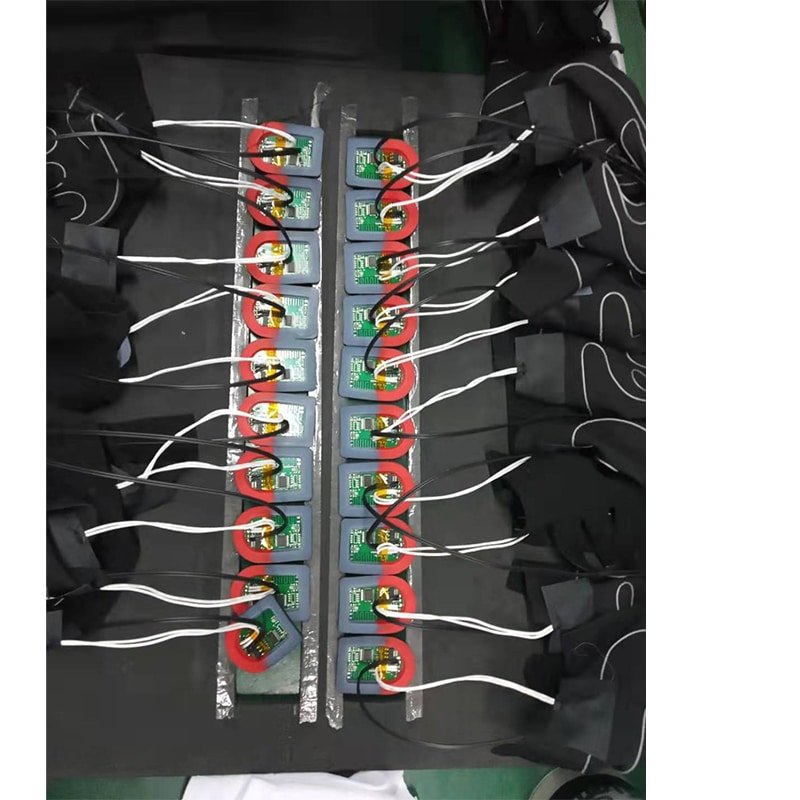
Heating elements made of carbon fibers are made of fine conductive carbon strands, often in the form of flexible woven meshes, tows or tapes.
This design enables the element to radiate heat through a network of interconnected fibers, and this forms rather steady thermal emission throughout the surface. The layered or woven structure gives natural mechanical reinforcement and thus carbon fiber is especially strong when bending and compressing multiple times – major footwear stress factors.
When spacing and insulating elements well carbon fiber elements can provide even heat with no hot lines, but performance is dependent on the density of the fiber and layout.
| Feature | Carbon Fiber |
| Heat distribution | Even and stable |
| Flexibility | High |
| Durability | Strong under bending |
| Cost level | Moderate |
| Typical application | Outdoor & sports insoles |
Heating Film Technology: Structure and Performance
Heating film technology involves thin continuous conductive layers, usually carbon based inks or deposited materials coated on to flexible polymer substrates.
The sheer amount of surface area of the film allows the generation of heat in large areas at the surface, which can be more immediate and homogenous in thin profiles. Constructions of ultra-thin (usually less than 0.5 mm) can be easily incorporated into thiner insoles without much change to footbed thickness or fit.
But, quality of lamination is very critical to film performance: a low bond or insufficient protection layers may result in cracking or delamination under shear stress.
| Feature | Heating Film |
| Heat distribution | Surface-level even heat |
| Thickness | Ultra-thin |
| Flexibility | Moderate |
| Durability | Dependent on lamination |
| Cost level | Higher |
Durability Under Continuous Flexing
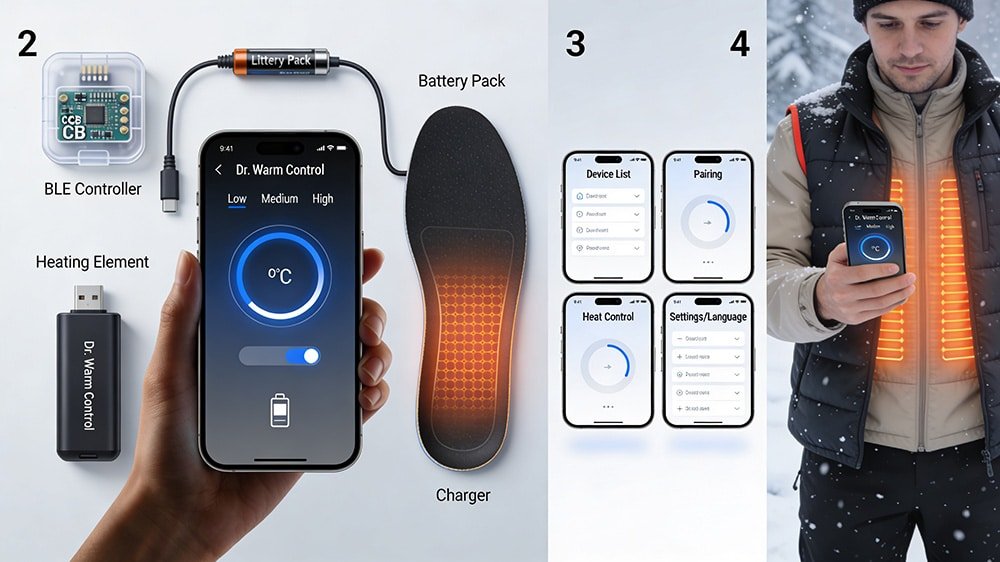
Flexible insoles undergo thousands of flex motions in the daily walking experience, and maximum stresses at the forefoot and the midfoot at the toe-off period.
Fibrous and woven structure of carbon fiber dissipates mechanical loads over many strands, eliminating the possibility of single-point failure. This causes it to be more tolerant to repeated bending without over-engineering protection.
Planar and thin, heating films are more susceptible to micro-cracks when substrates or layers of adhesives wear out. The poorly laminated films can be separated or change resistance with time resulting in inconsistency in heating or open circuits.
| Factor | Carbon Fiber | Heating Film |
| Flex stress resistance | Strong | Moderate |
| Risk of breakage | Lower | Higher if poorly bonded |
| Structural stability | High | Dependent on layering |
Long-term reliability is also of significance to both technologies in terms of insulation and wire routing.
Heat Distribution and Comfort Differences
Even distribution of heat in the forefoot, midfoot and heel enhances perceived comfort and eliminates cold areas during prolonged usage.
Elements made of carbon fiber, with their distributed fiber network, are likely to provide uniform, even heating when properly laid out, although interspacing should be optimised to prevent small gradients.
Heating films offer extensive, flat coverage with the capability to reduce hot spots within well-designed systems. Nevertheless, when there is an uneven lamination or poor insulation localized overheat may happen around connection points or edges.
The final test of thermal uniformity lies not in the heating element itself, but in the design of the entire system; the material used on the top layer, the reflective barriers and the accuracy of the controller.
Cost Structure and Manufacturing Impact
The two technologies have a big difference in the cost of raw materials and integrations.
Carbon fiber components are medium priced but easy to integrate in most designs because woven designs can be cut and fit through normal bonding systems.
Precision coating and lamination requirements make heating films more expensive to make. The complexity of the production is enhanced by the requirement of uniform application of adhesive and the multi-layers encapsulation to avoid the damages caused by moisture and flex.
| Cost Factor | Carbon Fiber | Heating Film |
| Material cost | Moderate | Higher |
| Integration complexity | Moderate | Higher |
| Production risk | Lower | Moderate |
| Quality control sensitivity | Standard | High |
Testing procedures such as cycle endurance, thermal images, and insulation resistance are still imperative to the two.
Which Technology Fits Different Brand Strategies?
Brands that deal with outdoor performance that is either skiing, hiking, or heavy-duty winter work typically prefer carbon fiber because it has good flex strength and predictable heat under strenuous conditions.
Lifestyle brands that focus on thinness and wearability can be tempted to adopt heating film where the ultra-thin constructions and fashion designs are compatible.
Carbon fiber is often used as an entry-level product with its own label because the costs and reliability are balanced during mass production.
Carbon fiber is tough in high-cycle applications, which is why it can be used in the industrial cold-work (e.g., warehouse or construction) setting.
There is no dominant technology – it is a question of fit based on the price point that the technology can be sold at, the environment that it is supposed to be used in, and what sort of trade-offs can be made on what the target market considers to be acceptable in terms of thickness and longevity.
Common Misunderstandings About Heating Element Materials
There have always been a number of misconceptions in the sourcing discussion:
- Slimness is not necessarily good- Ultra-thin coating enhances fit at the expense of durability unless coating is laminated exceptionally.
- More cost does not equate to longer life cycle – Premium films need stringent process control to be a better performer than mid-range carbon fiber systems.
- Carbon fiber does not necessarily have a higher power capacity – The amount of heat generated is a matter of wattage, resistance, and controller values, rather than the type of material.
- Film is not necessarily delicate especially when properly designed and shielded film provides very high reliability in a controlled environment.
By explaining these issues, the decision-makers can judge the suppliers based on the ability to do the engineering, not material marketing claims.
Conclusion — Integration Quality Defines Performance
Both carbon fiber and heating film heating elements are reliable sources of resistance-based warmth when properly designed. The actual difference in performance is in integrating the system, designing the insulation and manufacturing stability and not the choice of the material.
In the real-life product manager and sourcing professional, focus on sound engineering steps, such as element layout and bond, cycle testing and quality check, defines the difference between a hot insole that provides consistent comfort, safety, and life-span in the field and in reality.